Pimlico

The morning of this walk began misty, but by the time I met the group I was walking with (our leader a Blue Badge Guide), the sun was out and blue sky was all around us.
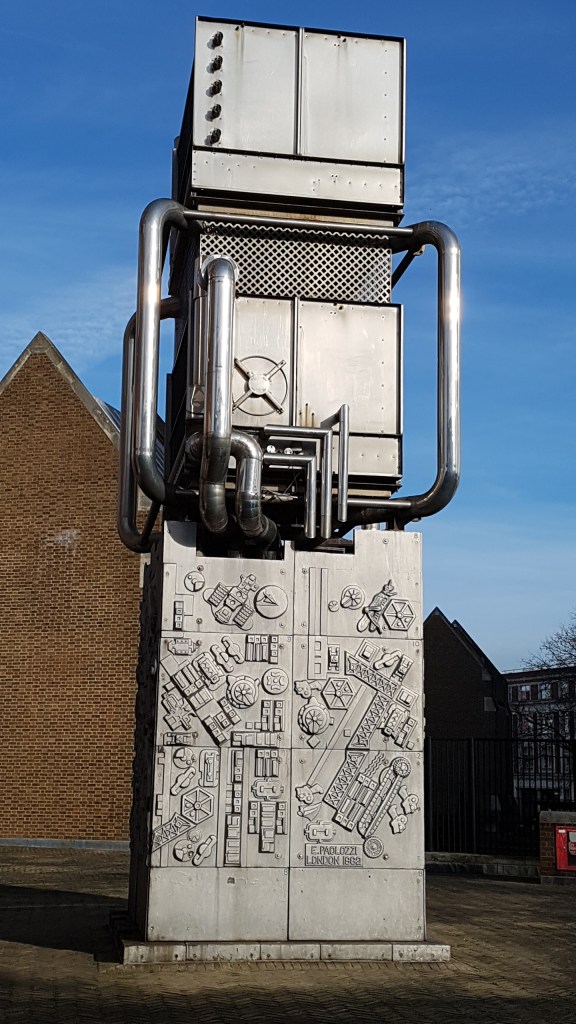
Ventilation Shaft near Pimlico tube station – sculptor –  Eduardo Paolozzi. This is a listed artwork

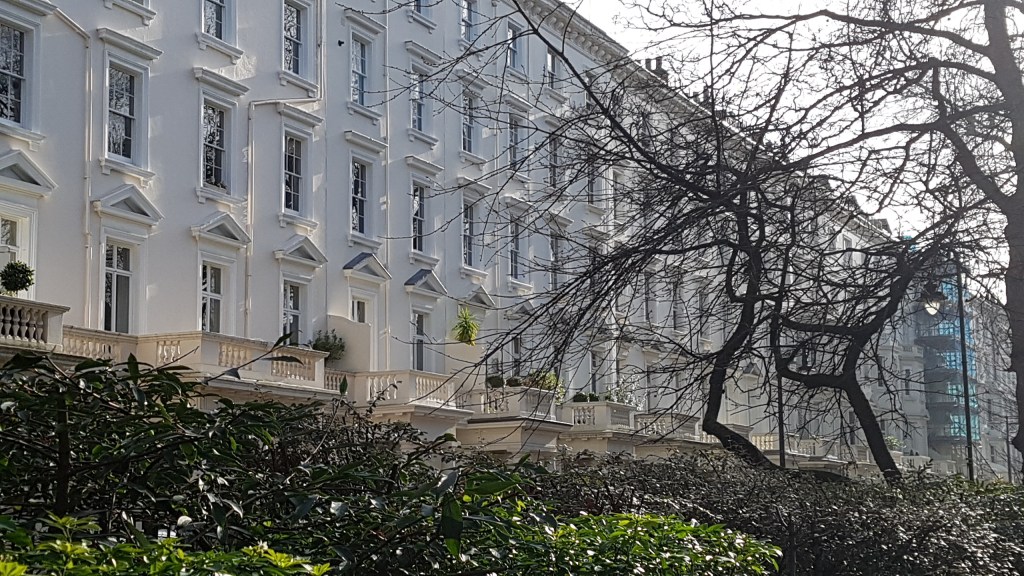
Pimlico is close to Westminster, up (or is it down) river. It started out as marsh land. Hardly anyone lived there. The Manor of Ebury (or The Five Fields) is a triangular piece of land which eventually passed into the hands of Mary Davies, who as the age of twelve married (yes, really) Sir Thomas Grosvenor in 1666. By the time of the nineteenth century there was a demand for houses and so Pimlico, not as popular as its neighbours of Belgravia and Mayfair, began a building campaign. The man to do it was Thomas Cubitt and he used reclaimed soil from St Katherine’s Dock (close to the Tower of London) to help with construction and built a grid of handsome white stucco buildings.
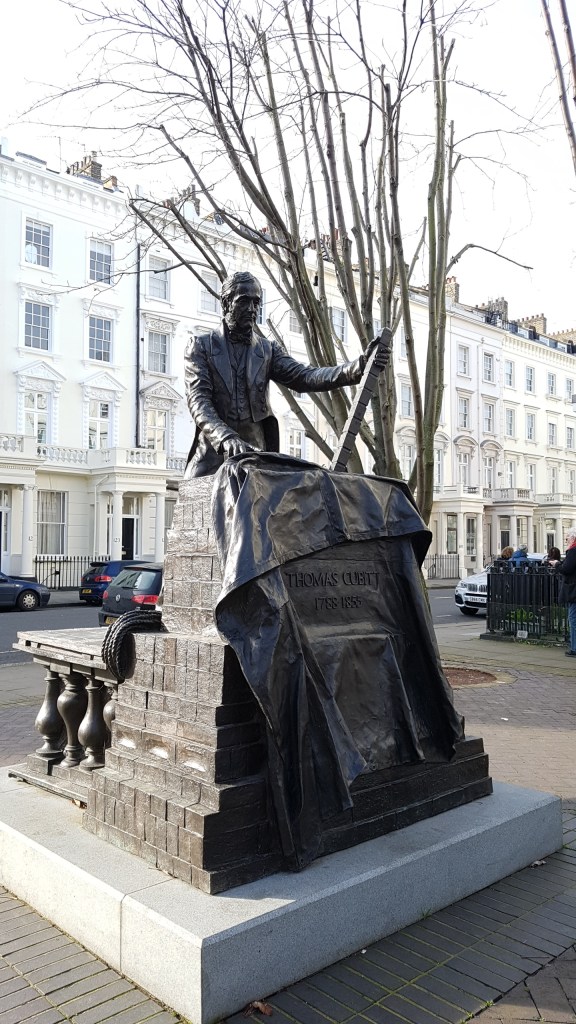
Statue of Thomas Cubitt

Cubitt preferred to be known as a builder rather than an architect. He was also consulted by Prince Albert to help redesign Osborne House. There is a statue of Thomas Cubitt in Denbigh Street.

Pimlico has three squares, all of which have their own gardens. Only one of these, St George’s, is open to the public. The other two you need keys for (the residents of the houses on those squares hold keys as it’s part of their shared gardens), and very beautiful those gardens look, too.
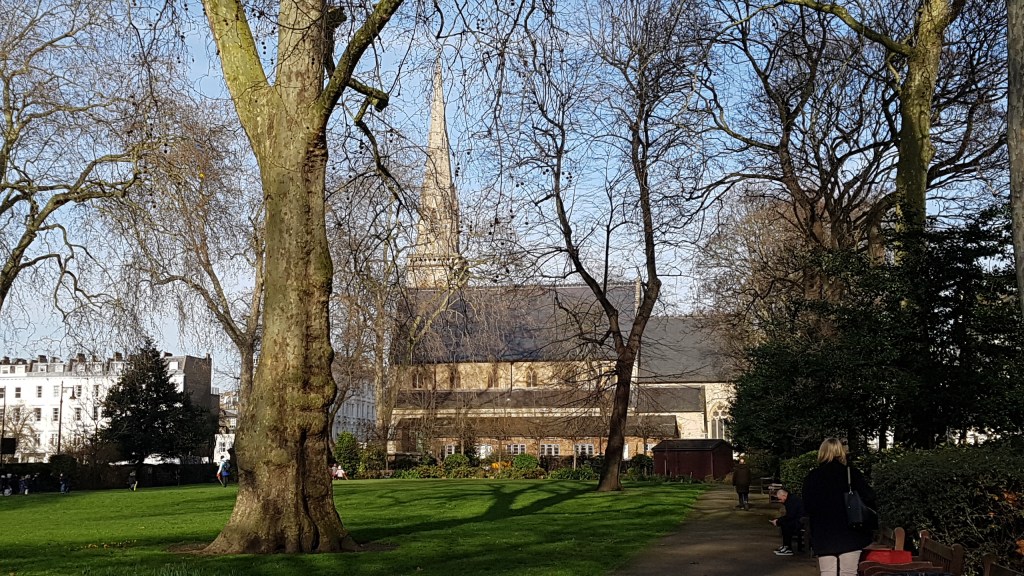
St Saviour’s Church from St George’s Gardens

We walked through St George’s garden to the right, through the trees, is St Saviour’s Church built by Thomas Cundy (Junior). This church’s claim to fame is their kindergarten in which Diana, Prince of Wales, worked before she married Prince Charles. Apparently, there is a bench in the gardens dedicated to her and the work she did there.

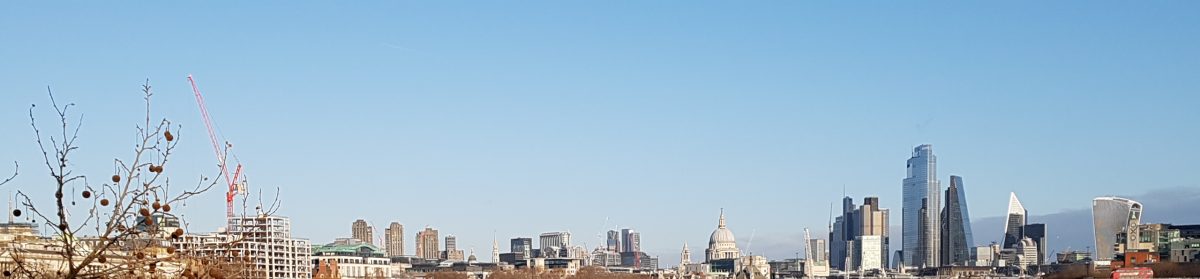
Over the road from St George’s Gardens is the River Thames. From here you can see the many tall buildings of Vauxhall, including the 8th tallest in England. Unfortunately, in 2015 a helicopter clipped to top of this in fog one morning killing several people. At one time there was a landing stage, or pier, leading from the Thames to St George’s Square, very nice for the residents! Today there is Pimlico Gardens with a statue of William Huskisson, a politician who unfortunately became the first person to be killed in a train accident, that train being Stephenson’s Rocket.
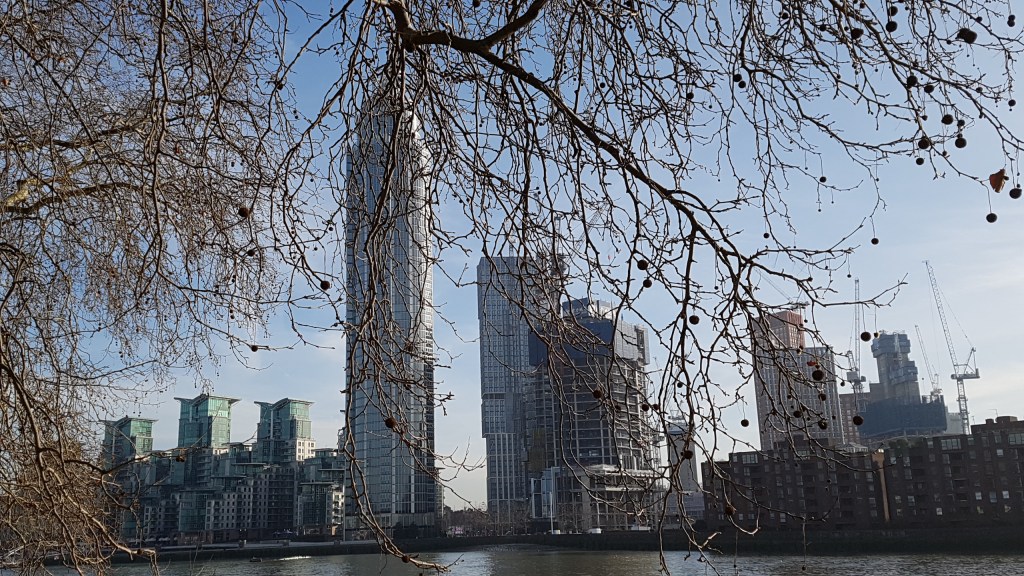
The 8th tallest building

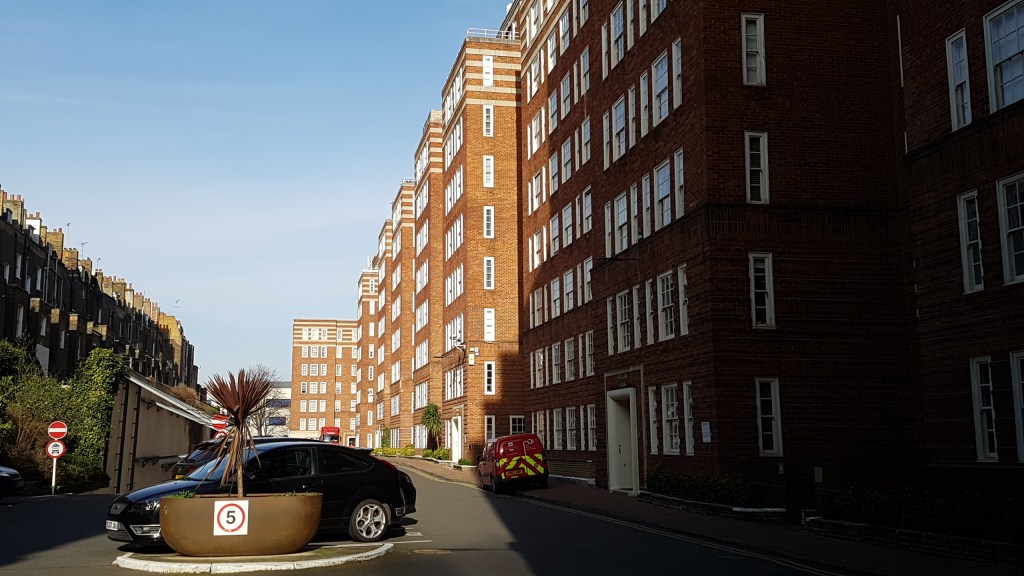
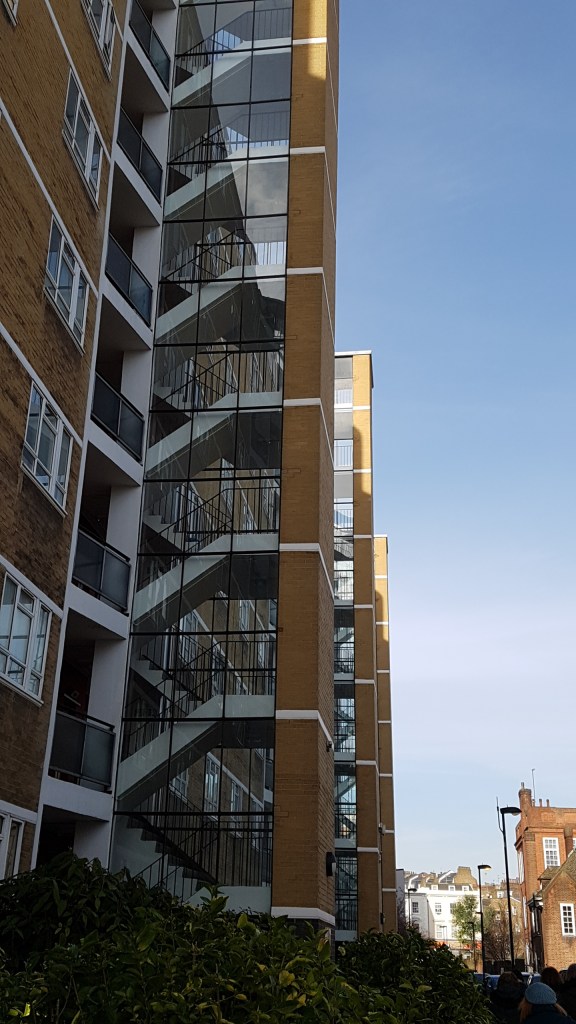
There is a great mix of housing in Pimlico, the beautiful buildings of Cubitt, new (1960’s) award winning estates near St James the Less Church, and the Churchill Gardens estate which boasts Grade I Listed status. There is even a line of Grade I Listed telephone boxes. One estate, the Dolphin, has its own shops and a swimming pool. Being close to Westminster it was popular with MP’s, but also housed a spy, Oswald Mosley and Diana Mitford.
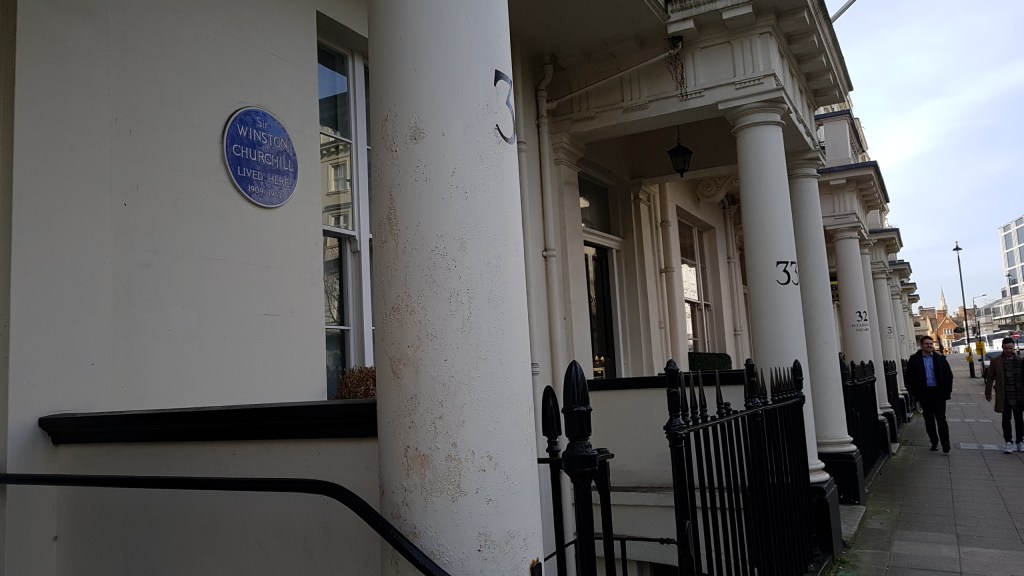
Nearby in Eccleston Square, is where Winston Churchill himself lived and where his first two children were born. Next door is the Labour Party’s former Headquarters from where they ran their 1926 General Strike Campaign.

There are other famous people who once lived from Pimlico, including the man who invented Lawn Tennis (Major Walter Wingfield), Laura Ashley, Michael Costa (conductor of music) and Aubrey Beardsley (artist).
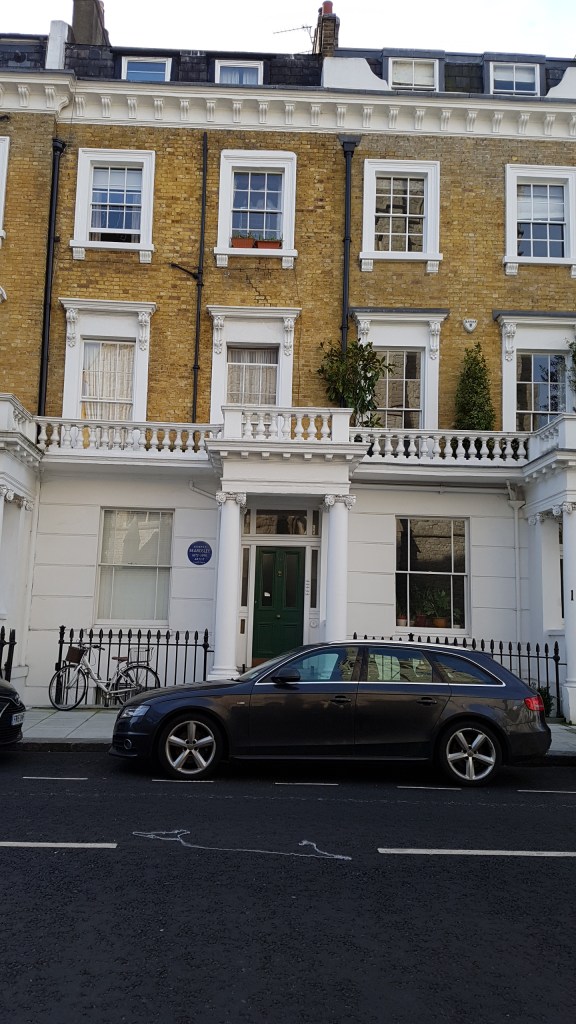
Aubrey Beardsley’s house

Finally, we ended our walk at St James the Less, a very unusual church. Very dark inside but the detail is amazing – the ironwork, bricks (same brick as the estate it adjoins) and it has the lovely artwork by George Frederic Watts, a Victorian artist of the aesthetic movement. Originally a painting, the paint began to come apart, so the work was made into a mosaic. Being a fan of the aesthetic movement, I was delighted to come across this.
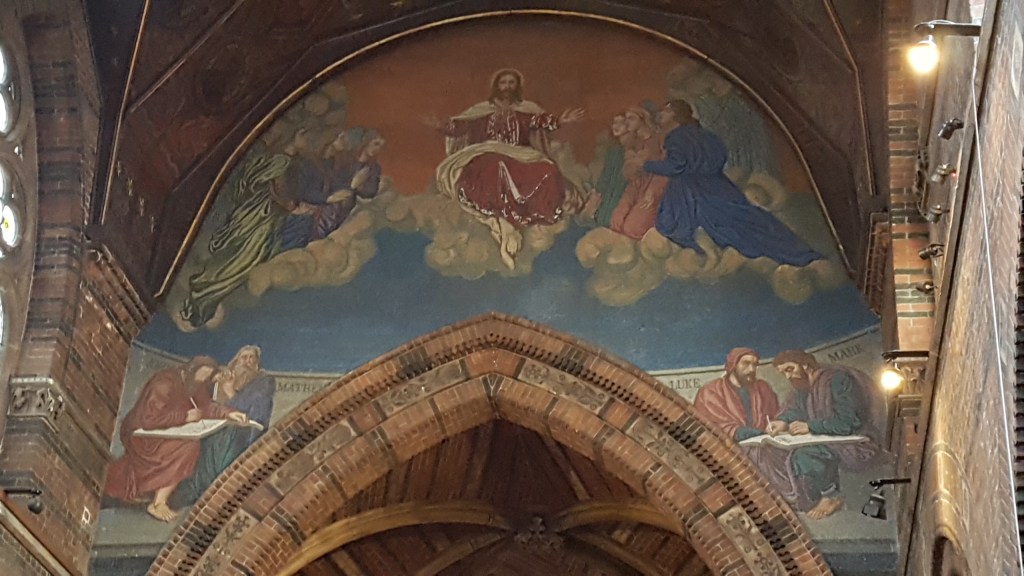
Mosaic by G F Watts

This was the end of the walk and back at Pimlico tube station we said our goodbyes and went our separate ways. Pimlico may be small but it is more interesting than I ever knew.
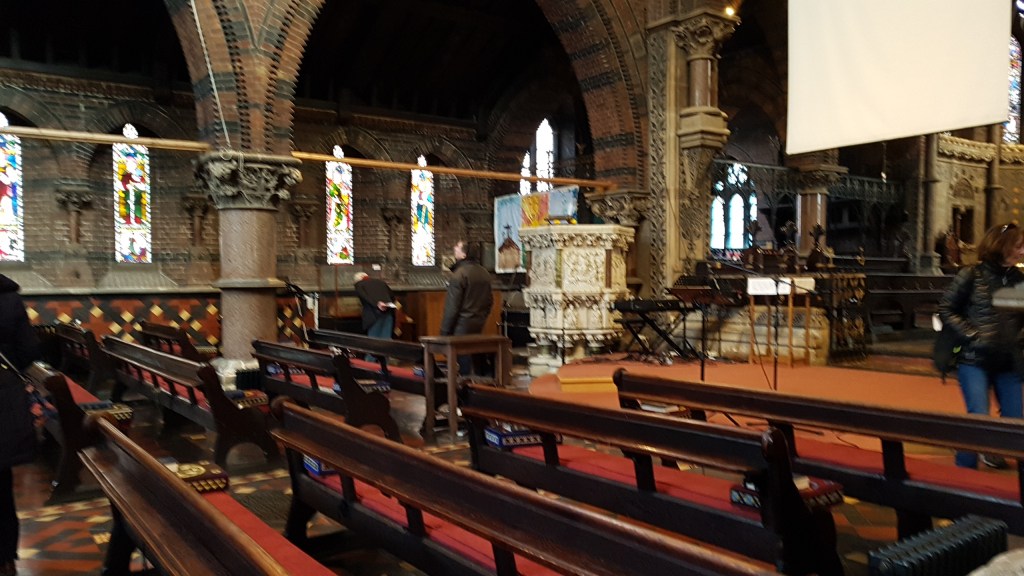
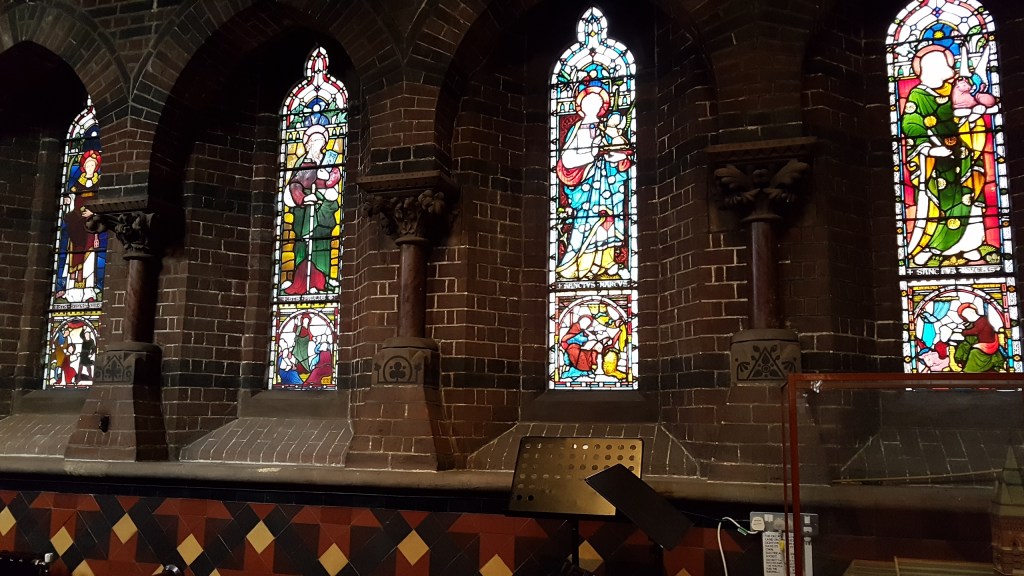
St James the Less, Pimlico
Dolphin Court
Thomas Cubbit housing, St George’s Square
One of the listed estates
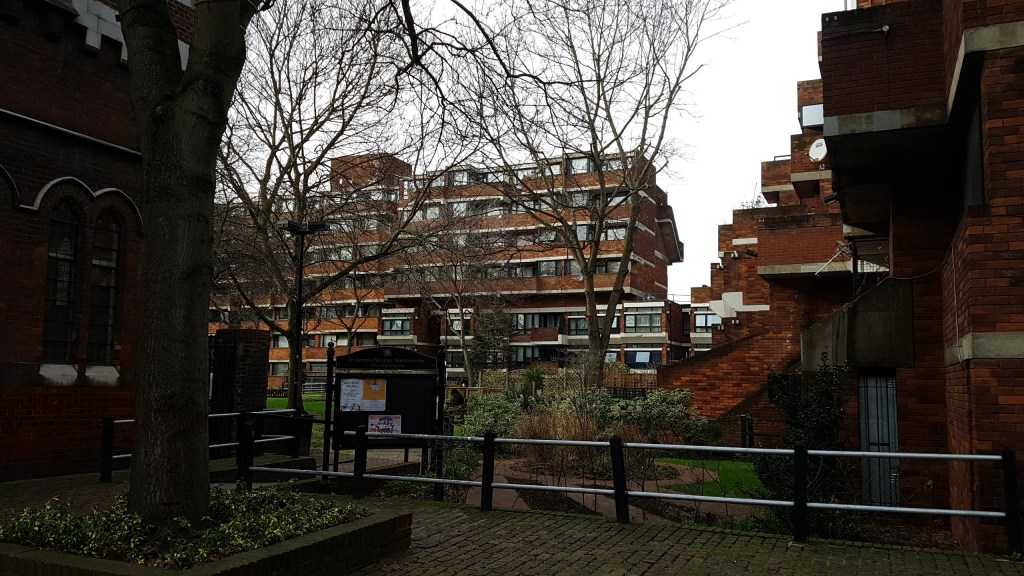
The Packington Estate by St James the Less has won numerous awards for best estate. Each unit has its own balcony or garden

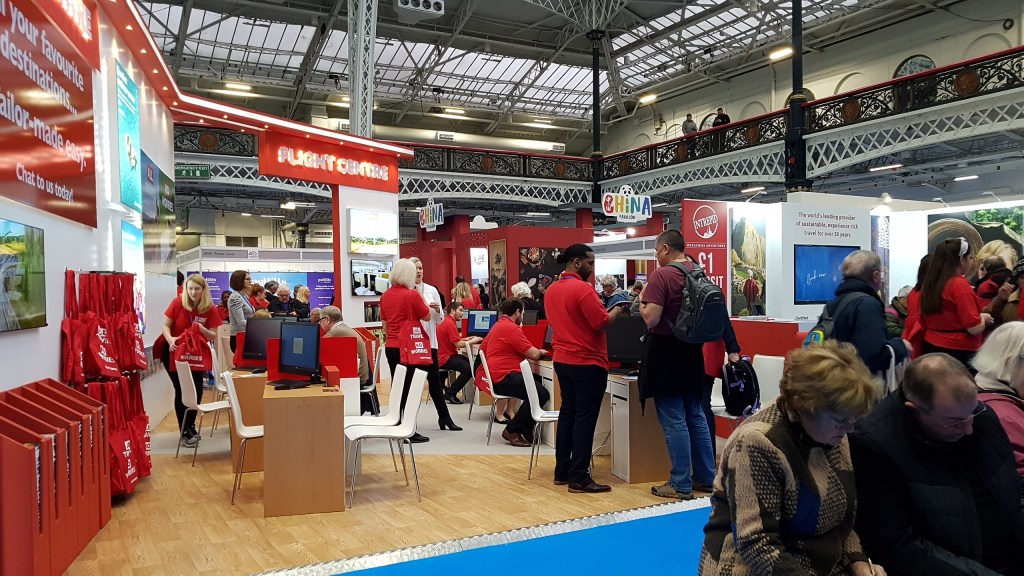
Holiday Destinations Exhibition, Kensington Olympia

The Holiday and Travel Show sponsored by The Times/Sunday Times is an annual outing, and we have been going for many years. I do mourn the demise of the performance stage, which was dropped a few years ago. It had its own timetable of events with demonstrations of different styles of dancing from Flamenco to Bollywood and everything else in between. It was my favourite part of the show. These days mini performances take part in small areas and don’t seem to be timetabled. You just come across them as you work your way through the exhibition hall. There are, however, still spaces where you can listen to talks about countries, travel and holiday tips, and interviews with famous travellers. One year I got to hear Simon Reeve and one of the chaps from the series Coast.
If you are planning a trip somewhere this is a good place to visit to gather information, and often companies offer discounts for booking a holiday through them on the day.

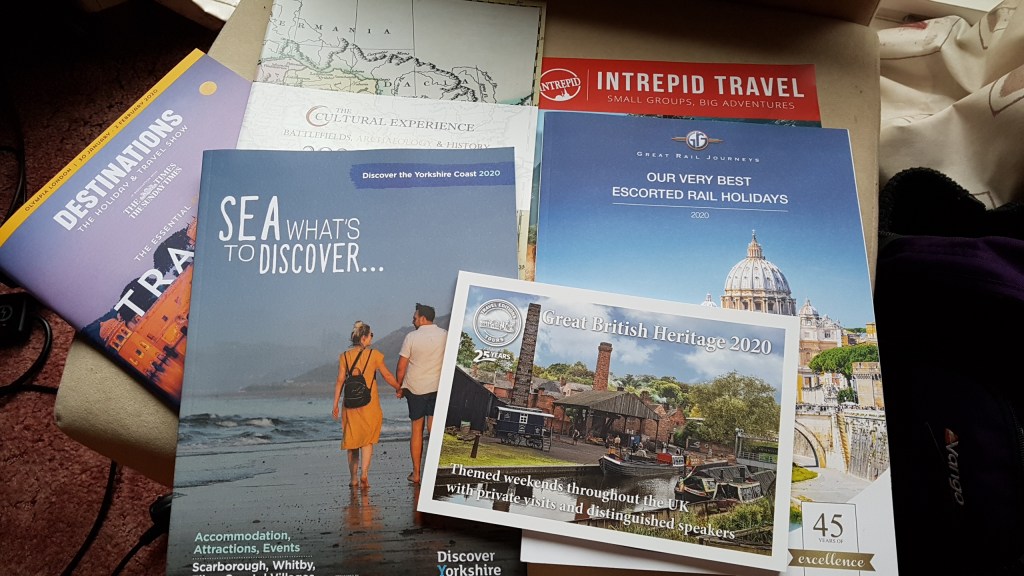
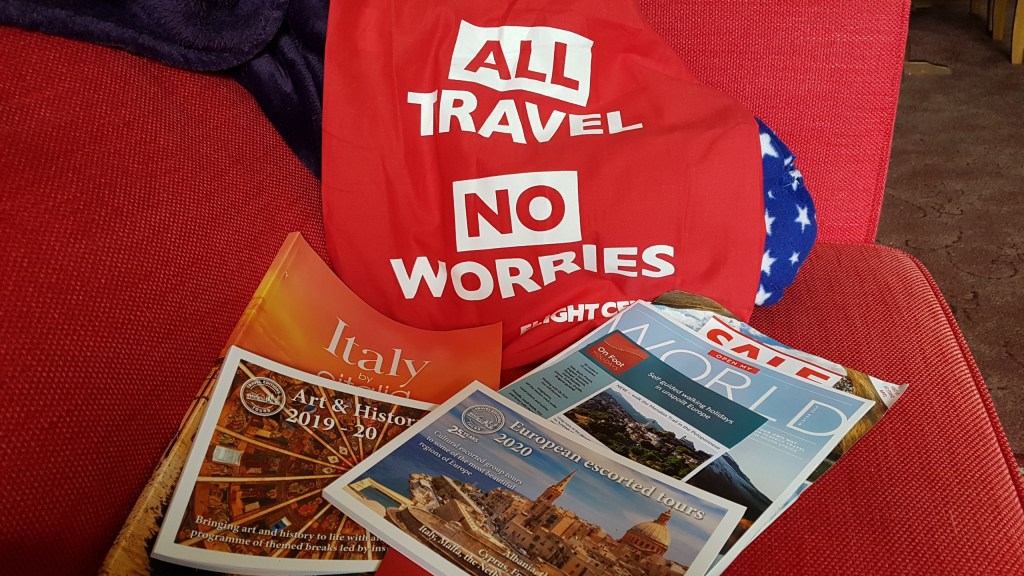
On the old days we would stagger home with a great many brochures, but these days we limit it. It’s just too temping to go for everything just because it’s there.

One of two piles to read later

The Wanderlust Photo of the Year Gallery is another stop on my walk through the exhibits. They are always breathtaking, and you can vote for your favourite.

Speaking of photography, you can book Photography Masterclasses in advance. They cost £30. Learn how to take those stunning travel shots!

Each year the amount of companies advertising UK holidays has diminished but there are still the Ramblers Association and my personal favourite HF Holidays. I did get chatting to a girl from a company that arranges self guided walking holidays in the UK and abroad and that appealed to me and I intend to do some research on their website.

As well as the different holiday companies there are food stalls (though I am mean and take my own food and drink!), two book stalls and clothing outlets with knock down prices on everything from walking boots and socks to shirts, rucksacks, hats and water purifiers. Everything you might need (or think you might need) is here.

One big change I totally approve of is the ditching of all those plastic bags that are handed out as you pass. They are now reusable cotton tote bags. Brilliant!

The exhibition runs for four days. Today is its first. It finishes on Sunday 2nd February. The nearest tube is Kensington Olympia (Overground) which is just opposite the venue.

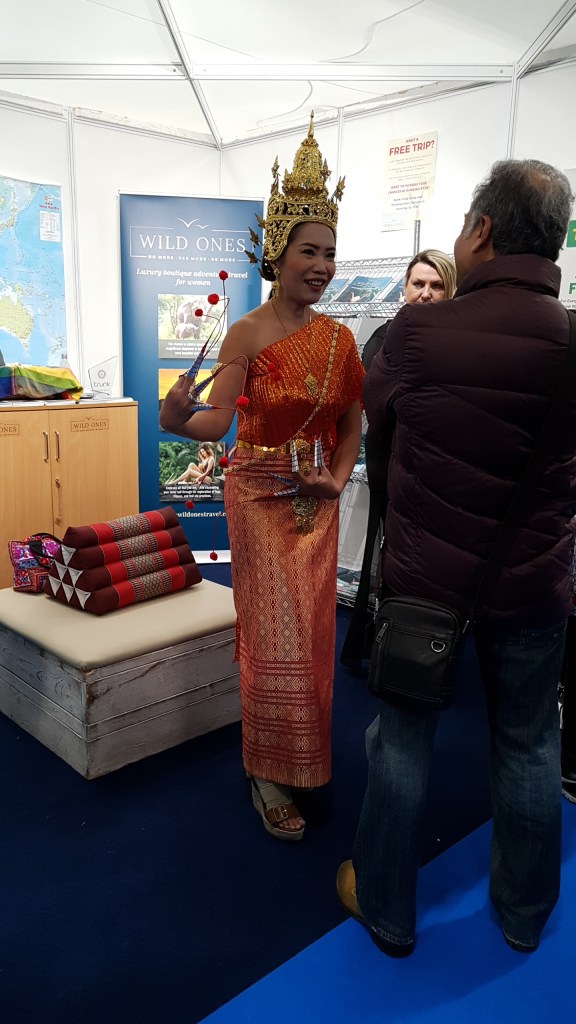
Luckily caught some dancing!

I always received a free ticket (which allows one guest). I think I must have gone with a friend originally and then when they had my details on the form they automatically sent me a ticket every year after that. That’s the best way because tickets are otherwise £11.

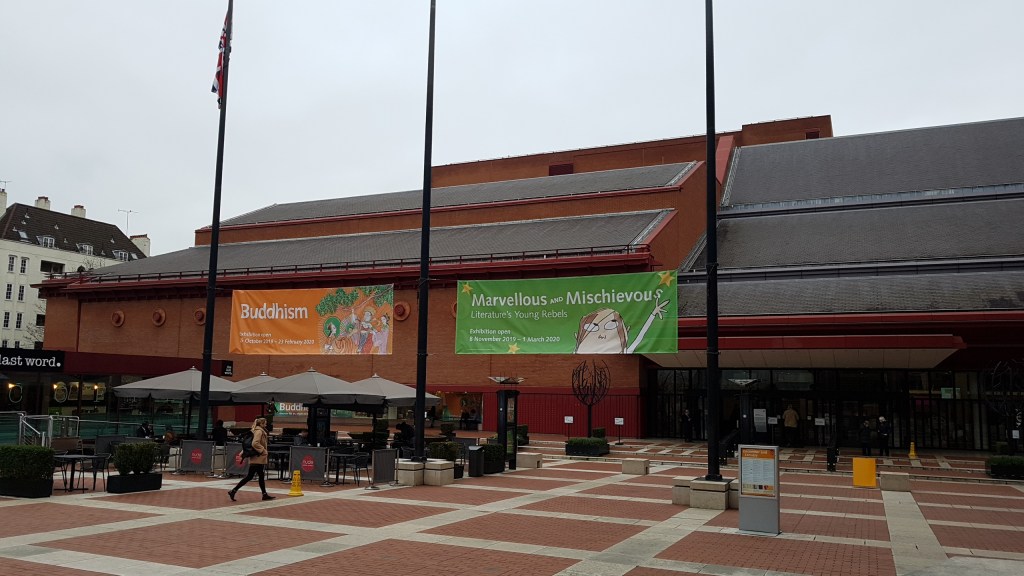
Buddhism Exhibition at The British Library

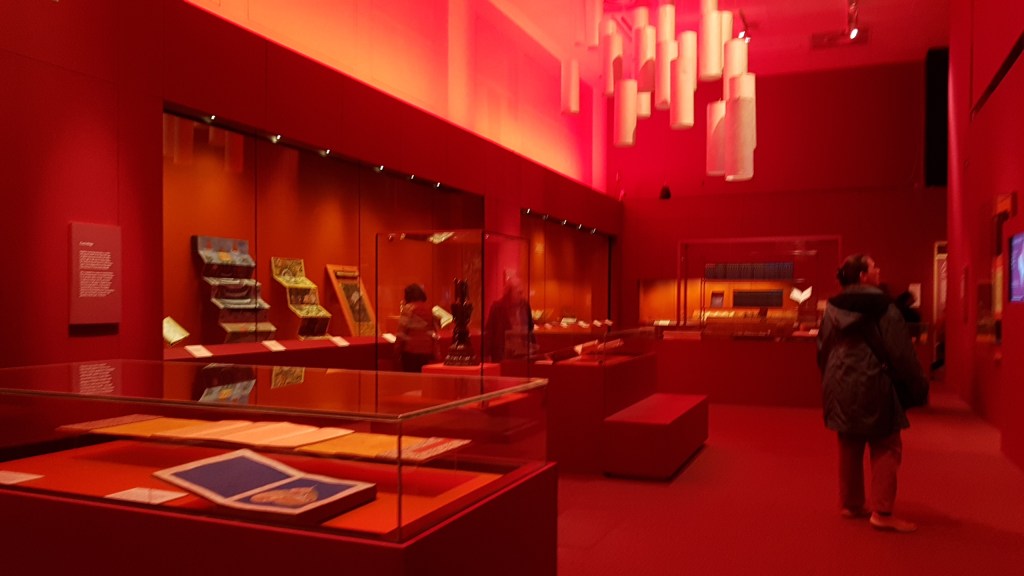
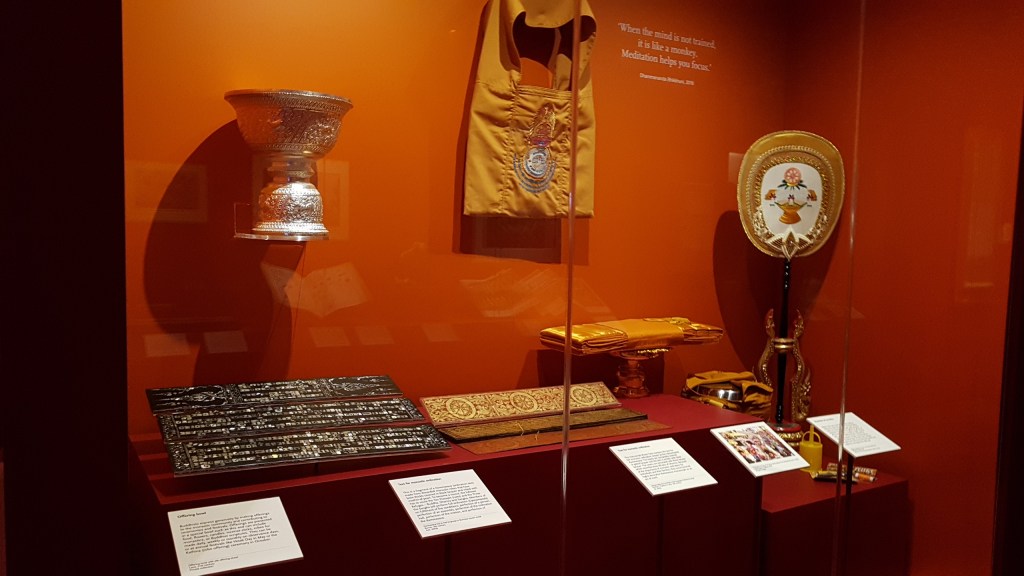
A very red interior to the exhibition, The British Library

There are three main traditions of of Buddhism, Theravada, Mahayana and Vajrayana with around 500 million followers. The leaflet accompanying the exhibition tells me that 300,000 of those live in the UK. Originating from India, the Buddha was born Prince Siddhartha Gautama over 2,500 years ago in modern day Nepal.

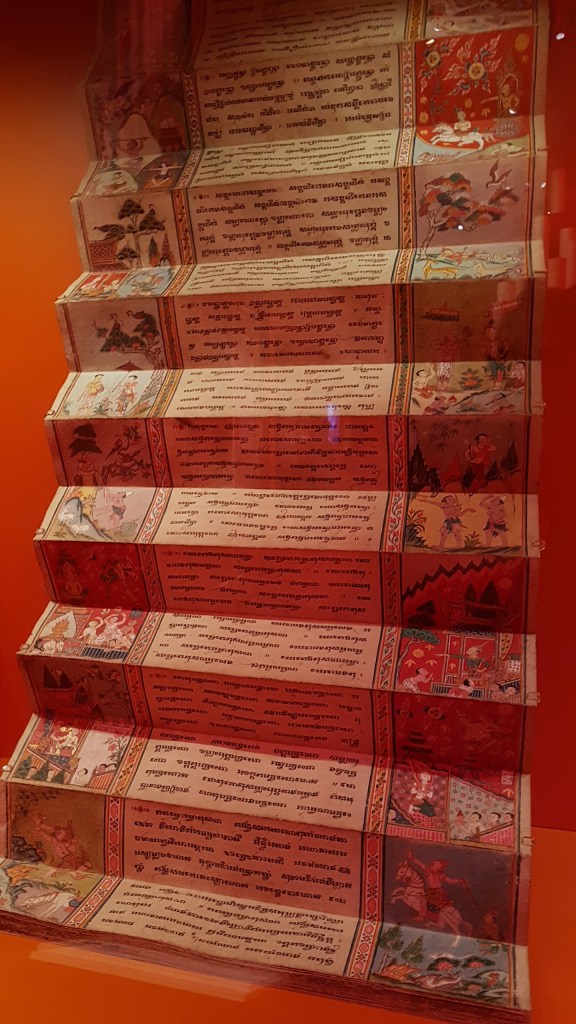
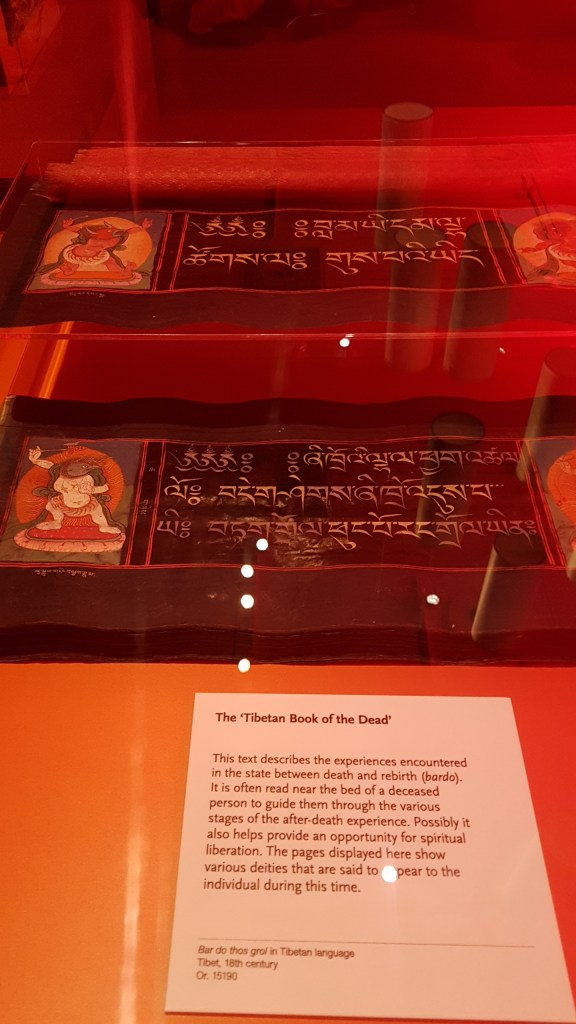
The exhibition documents the Buddha’s life from birth to death in beautifully coloured scrolls and then goes on to explain Buddhist philosophy, the spread of Buddhism and its practice. The Buddha’s teachings were written on palm leaves and later block printed. Gold and silver was also used. The calligraphy and art work is quite beautiful.

Meditation Manual to overcome fears and aversions

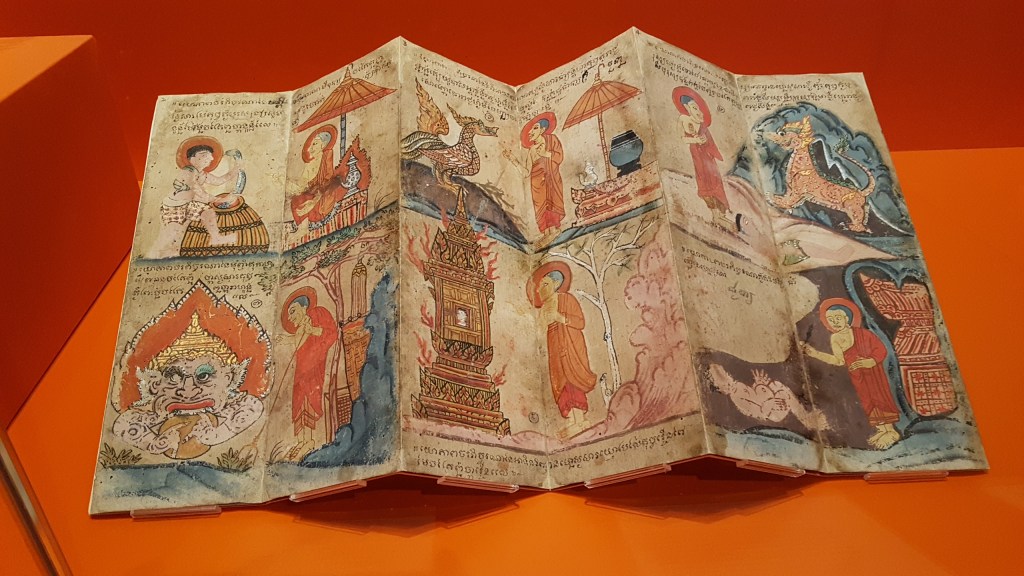
It is said that the Buddha had previous lives (reincarnation being one of the major believes, as in Hinduism) and the last ten of those are mentioned in a document on show (see photo below). There are at least twenty-four previous Buddha’s, who predicted Buddhism. Buddhist believe that there is another Buddha to come. He is known as Maitreya he currently resides in one of the Buddhist’s heavens.

The last ten lives of Buddha

For monks there are 227 rules they have to follow. For the women there are 311 rules, the extras are mainly for their own protection. The Noble Path, or Middle Way, offers a path to liberation from the cycle of suffering and rebirth.

An interesting exhibition, the colour work on the scrolls is amazing, very bright. I came away knowing a little bit more than I did in the beginning, the stories a reminder of its close relation….Hinduism.

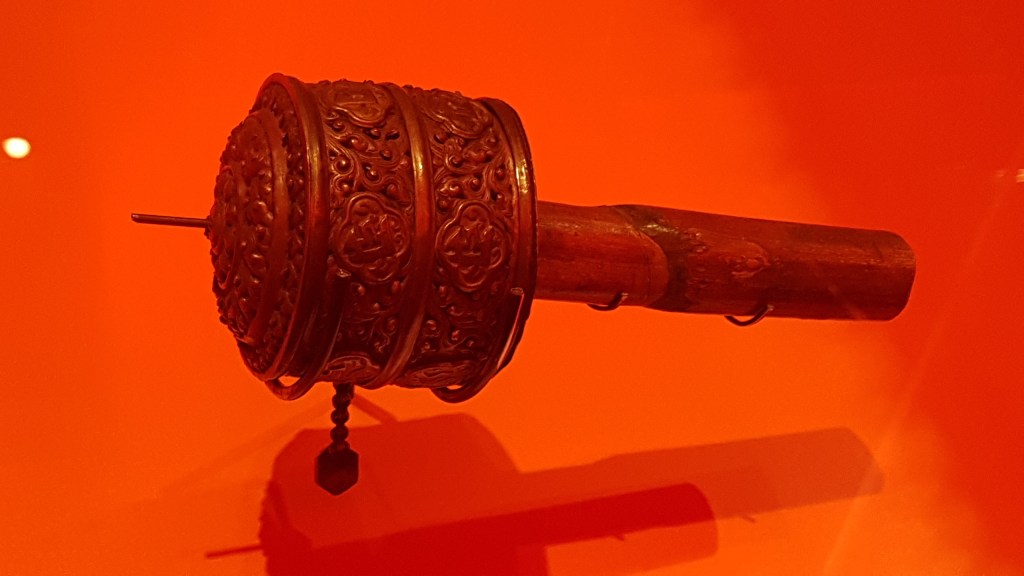
Prayer Wheel

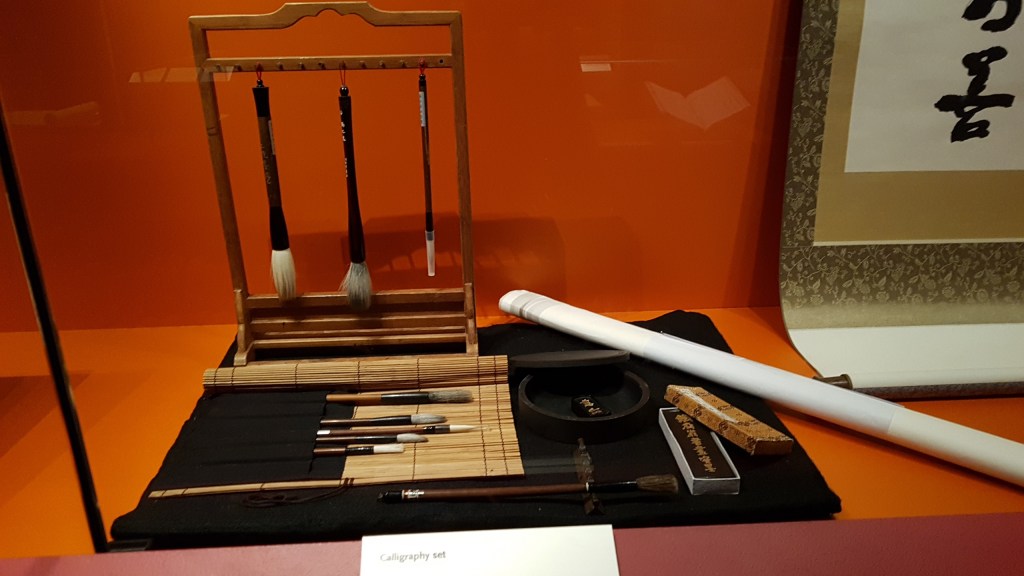
Calligraphy set – China
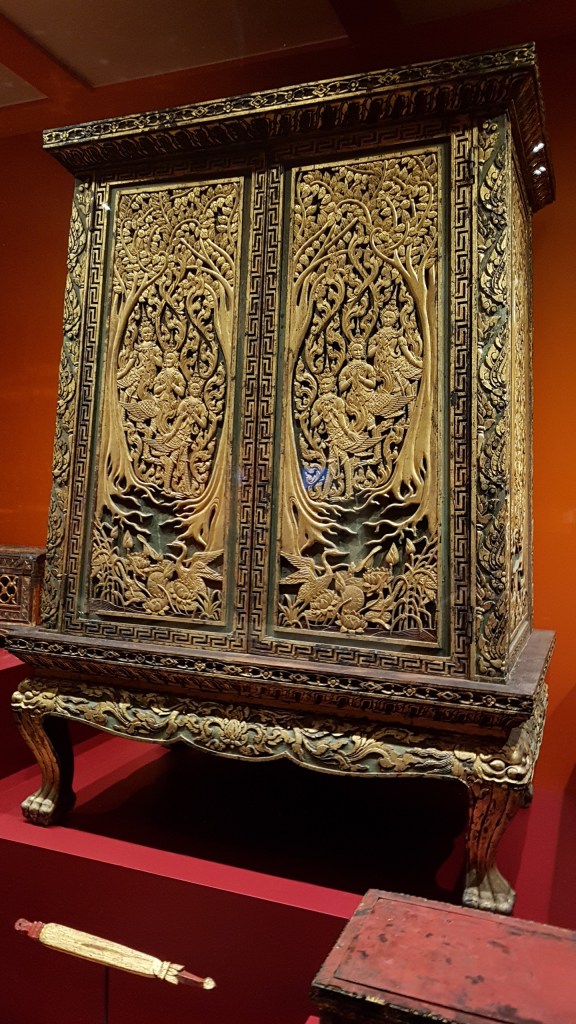
Manuscript Box
Ordination items

The exhibition is on until 23rd February

Nearest station is Kings Cross/St Pancras

Wandle Trail – River Walk (Wandle Park to Carshalton Ponds)

Wandle Park, Croydon

What do you do on a bright and frosty day? You pack a rucksack with a flask of hot chocolate and head out for a walk. The map for this walk can be downloaded from the Merton Council website, or follow it in the book London Waterside Walks. The whole walk is around twelve and a half miles (Croydon to the Thames), but we actually started in Wandle Park (where you pick up the river) as we travelled on the tram. Our aim was to walk to Carshalton Ponds and then review whether to continue to Merton Abbey Mills (the river eventually meets the Thames at Wandsworth, but that’s for another day!) In fact, we did end our walk at Carshalton Ponds.

The beauty of this walk is that there are various places you can drop out and catch a bus, train or tram. If you are travelling from a London terminal, trains run from Victoria to East Croydon from where you can walk or catch the Wimbledon bound tram and get off at Wandle Park.

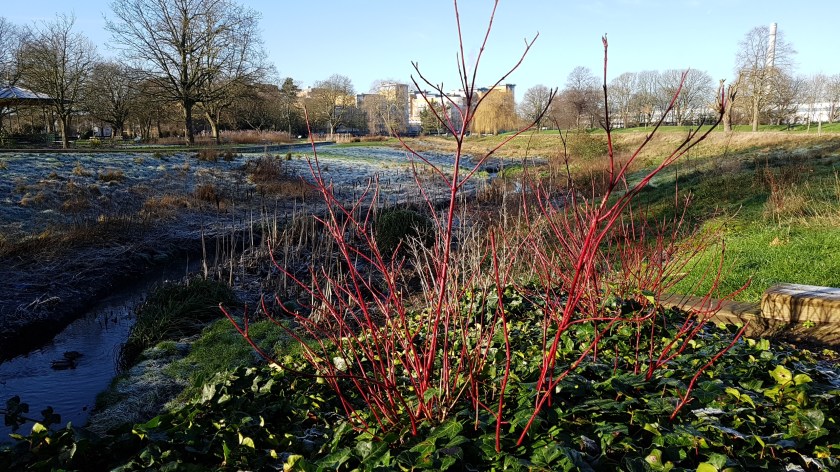
The River Wandle winds through the park until it disappears underground through the distant housing estate.

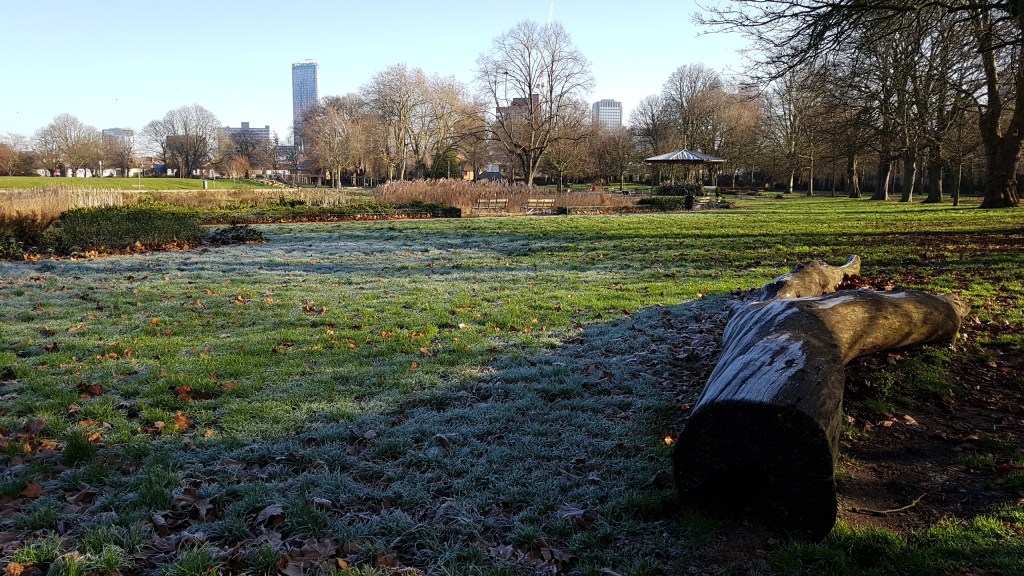
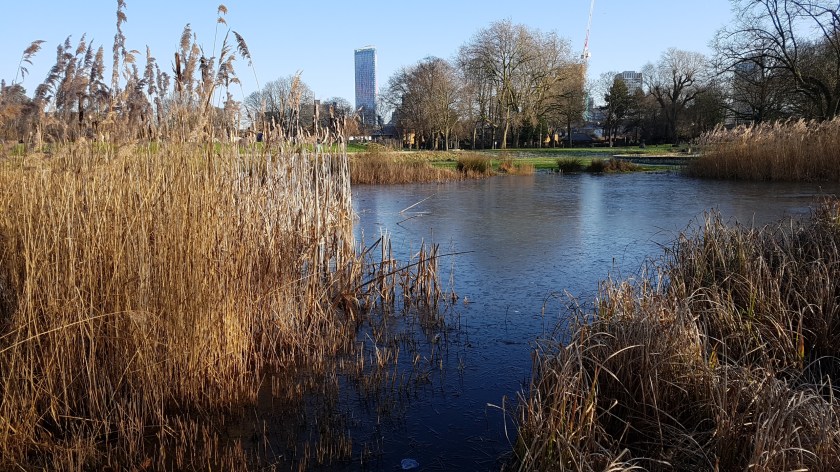
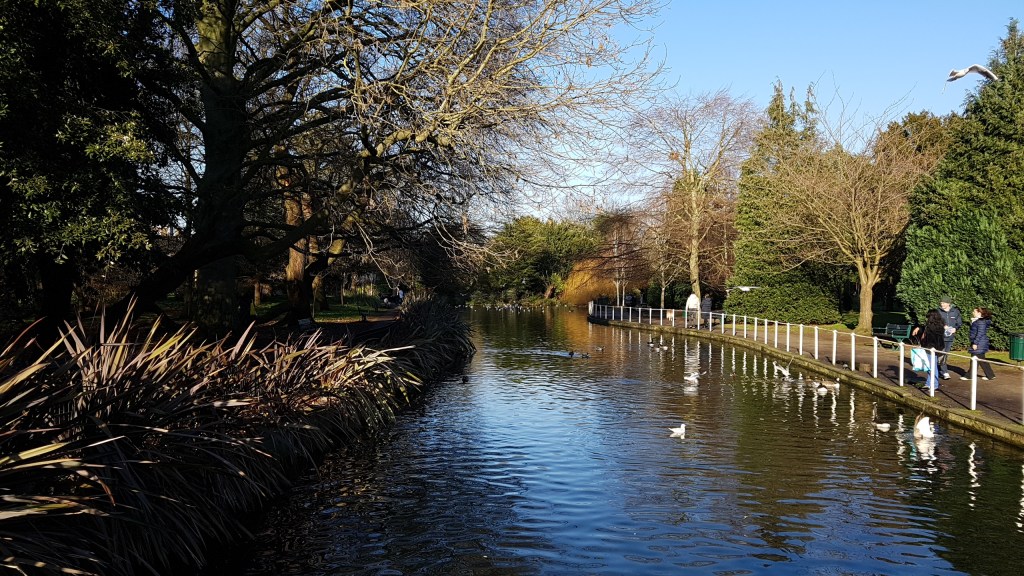
Wandle Park looked pretty with the sun on the frost. A stones-throw from the busy town of Croydon with its many shops, the Whitgift Centre and Fairfield Halls, the park is an oasis with playpark, bandstand, lake, grassed areas, skatepark, and of course, the river. This is where it begins, running through the park before going underground through a housing estate and meeting again at Waddon Ponds.

Frozen lake in Wandle Park, Croydon

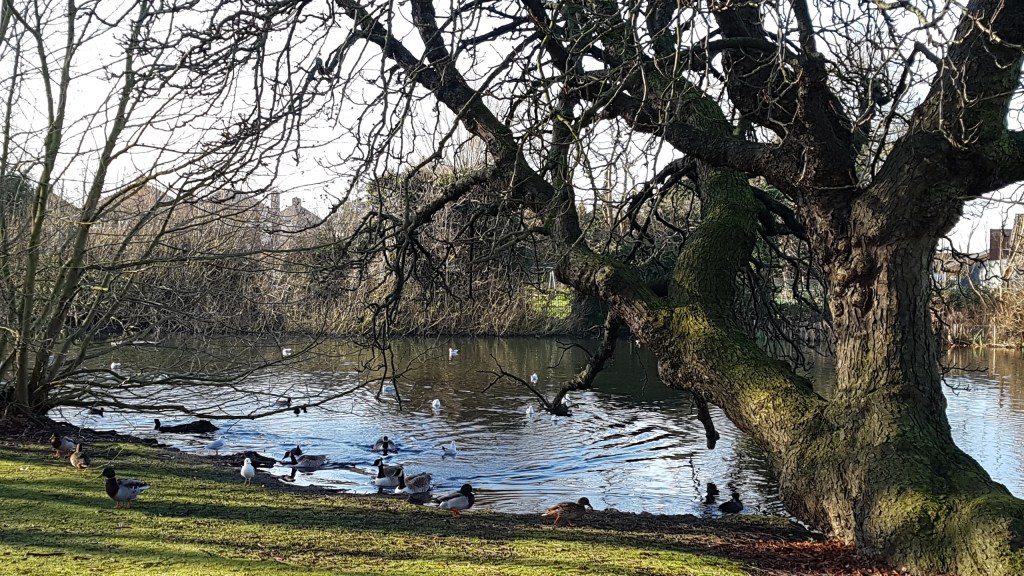
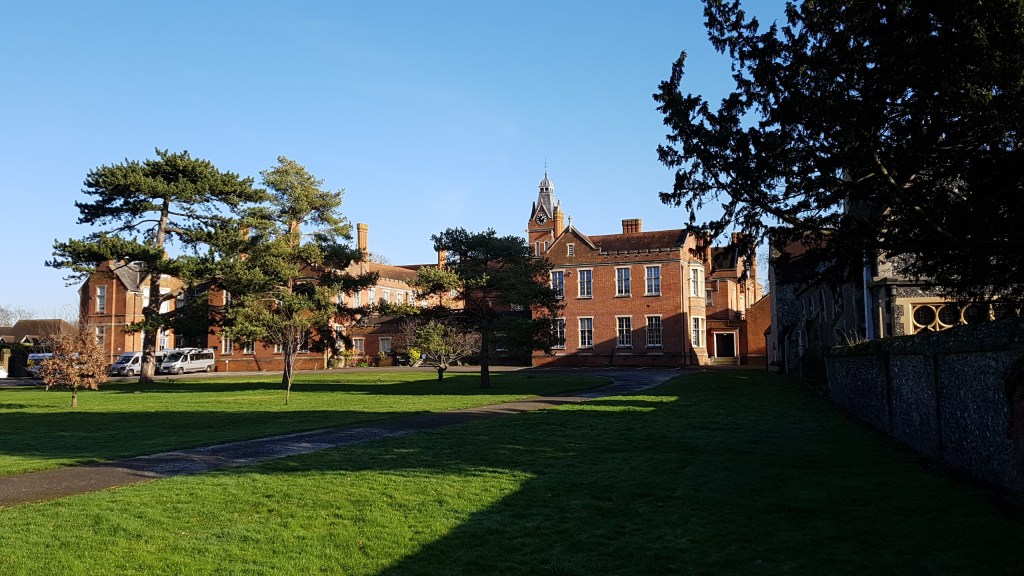
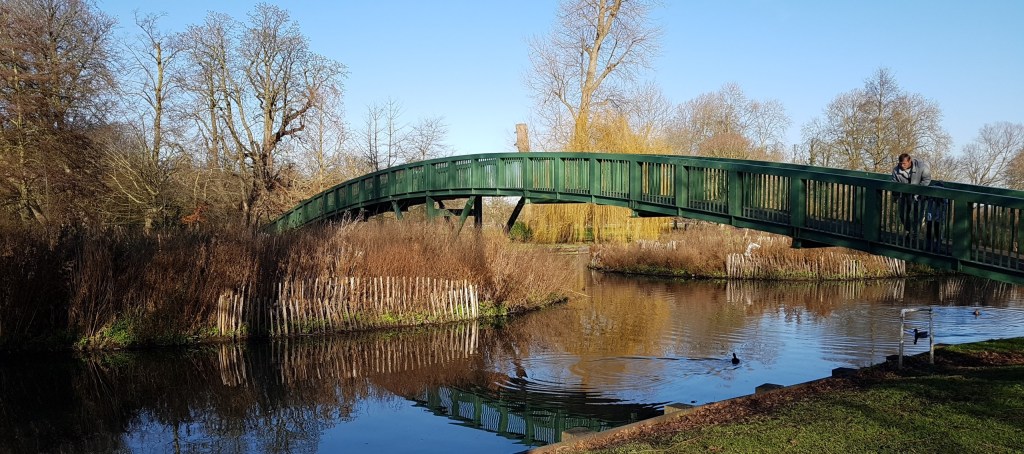
Waddon Ponds is a beautiful area hidden away behind the industrial estate off Purley Way. With benches, lookout points, a little bridge, this must be a great place to unwind in the spring and summer. You can circle the ponds before setting off to Beddington Park. This huge park (94 acres) is now split into several sections. In the past it was part of a deer park and Carew Manor and is mentioned in the Doomsday Book. It was sold off to pay family debts. It is now Council offices and an Academy.

Waddon Ponds
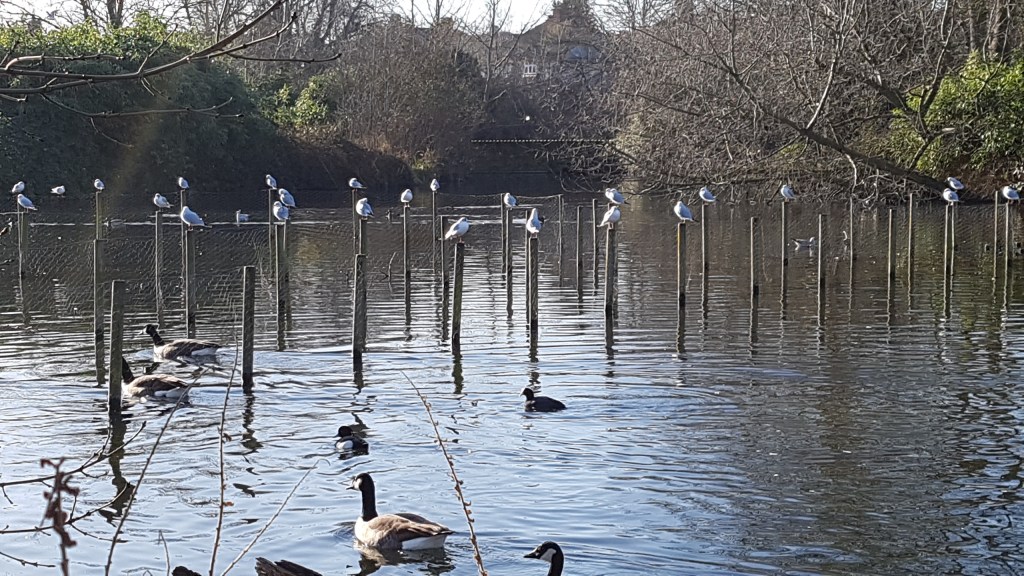
Gulls at Waddon Ponds

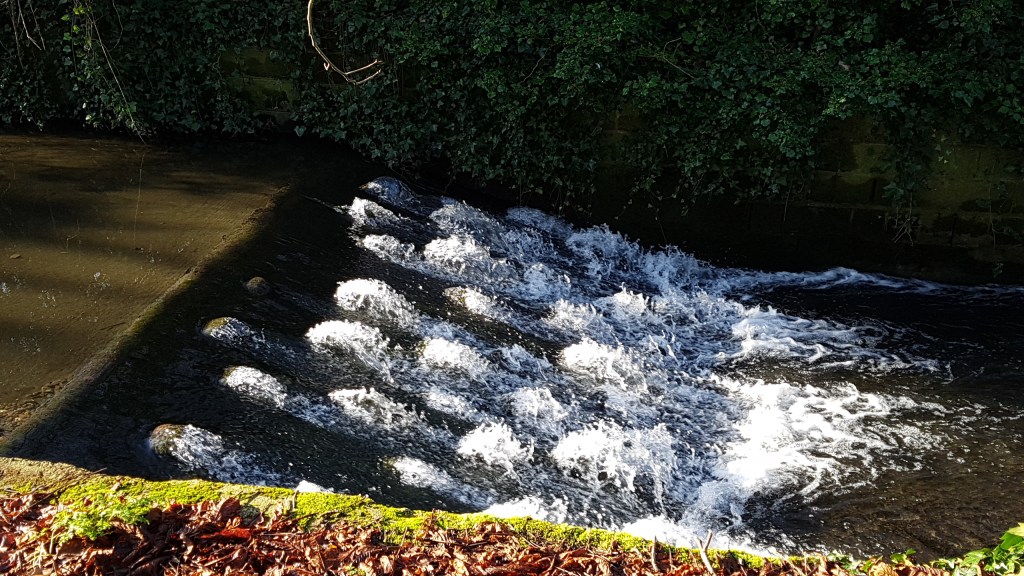
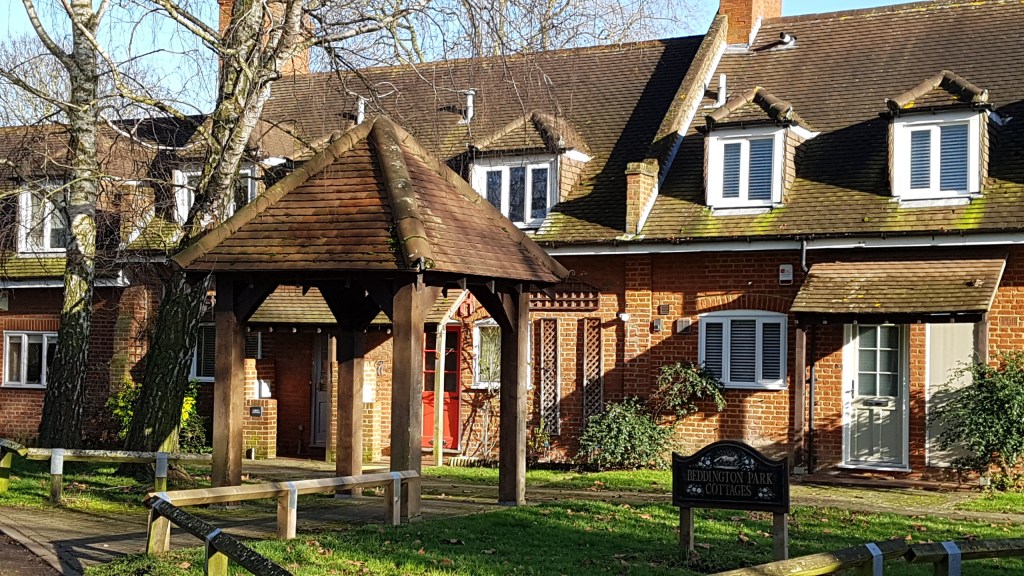
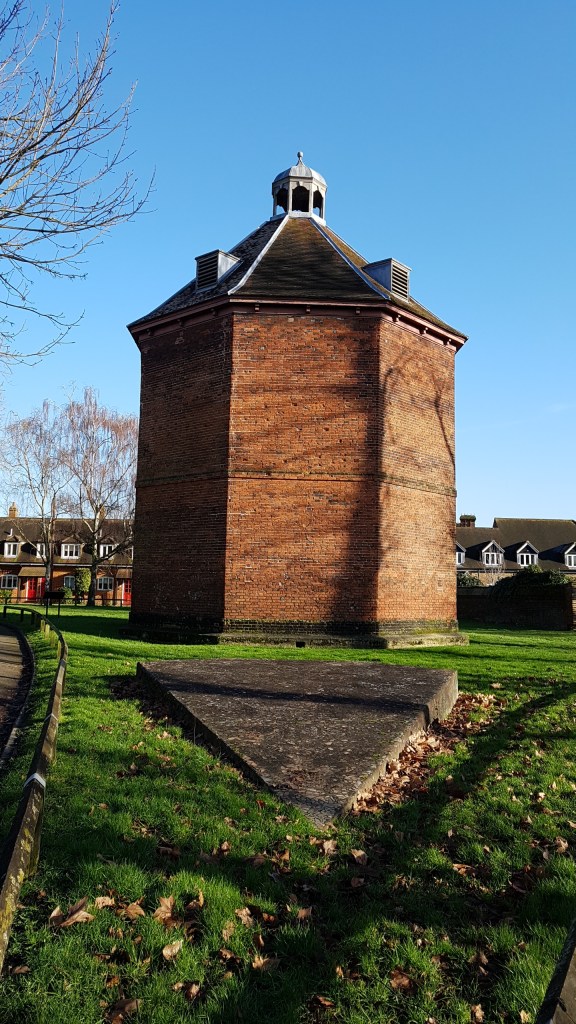
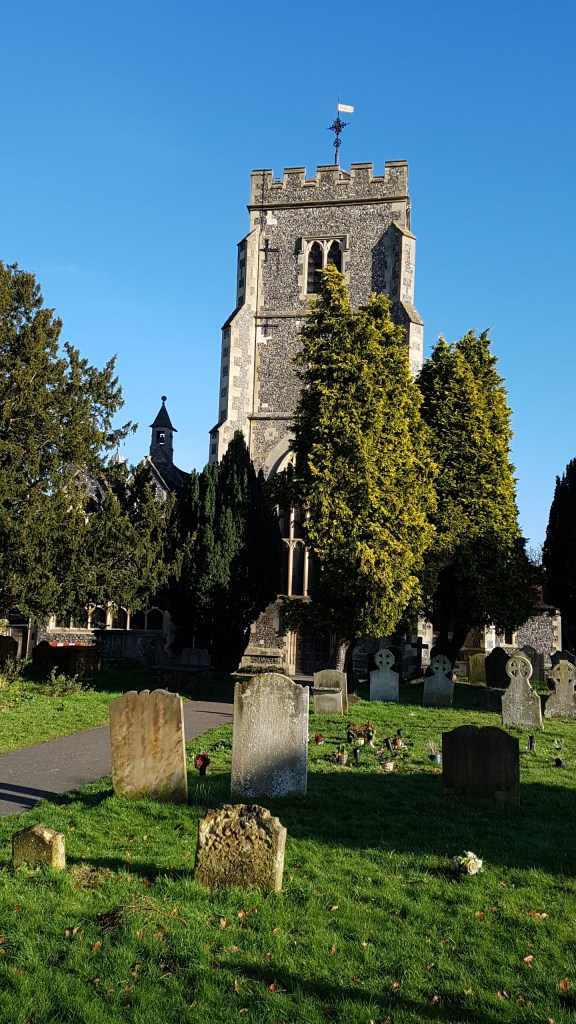
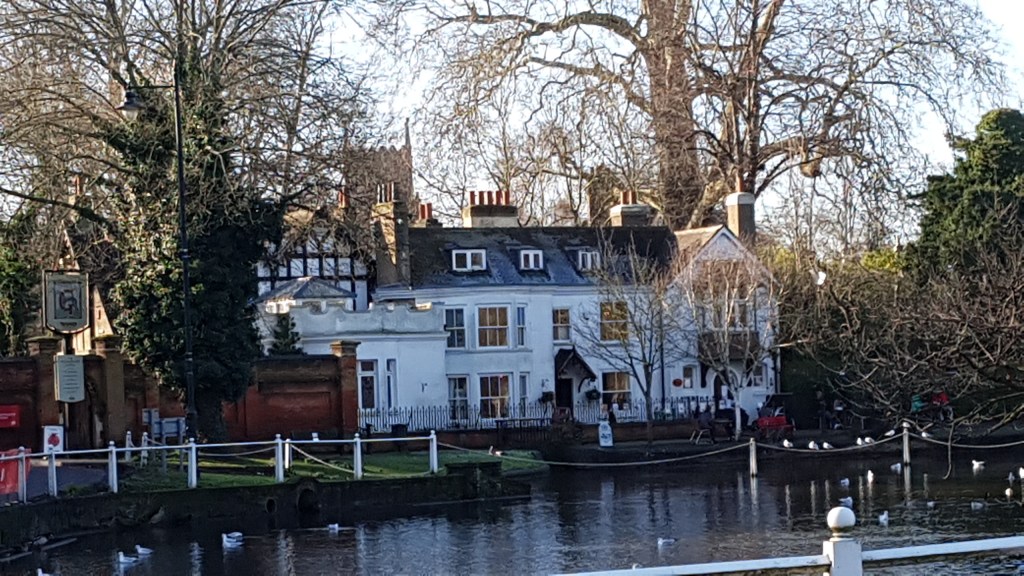
Following the river through the minor sections of the park it meanders before tumbling down weirs and passing a row of cottages. When you arrive at the main section of the park where the Manor House is, it opens up to reveal playing fields where Sunday football was taking place. Hence the Pavilion was busy (we were going to stop for food but the queue trailed outside), and the toilets appeared to be locked! Nearby is a Dovecote and St Mary’s Church before you double back over the Terracotta Bridge and head up river where we encountered some very muddy ground. We continued to Elm Pond and in to Grove Park (adjacent to Westcroft Leisure Centre) where there is a café and toilets (finally!). From here it is just a short walk to Carshalton Ponds where we ended our journey. Across the pond is Honeywood Museum which dates back to the 17th century. You will find lots of history about the area inside, and I can recommend the café!

Pretty weir through a minor section of Beddington Park
Carew Manor
St Mary’s Church
Carshalton Ponds
Honeywod Museum, Carshalton

Whitehall House, Cheam Village

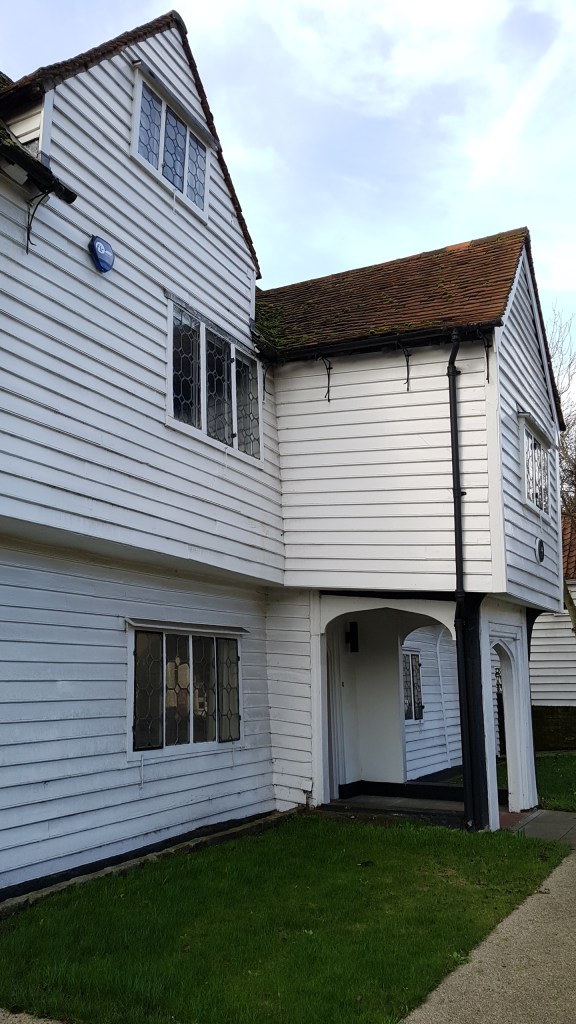
Whitehall House

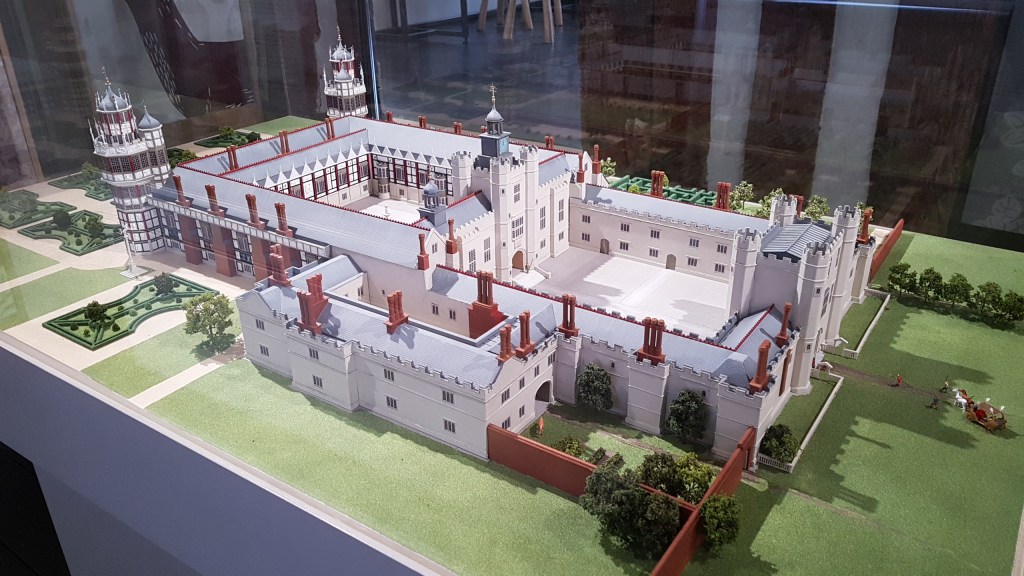
Built in around 1500, the white wooden façade of Whitehall House stands out on Malden Road as the bus pulls into the village. The whole of this area is steeped in history. It was occupied by stone age people and the Romans built London Road (the A24) into London. The village stands between Worcester Park and Sutton (London Borough of Sutton). Farmers, potters and brewers worked here, and later Cheam bricks were produced here. King Henry VIII built a palace at Nonsuch Park (a short walk away) after having seen a palace in France. The name Nonsuch comes from there being non such palace like it! Gold leaf was used in abundance.

Model of Nonsuch Palace, built by Henry VIII

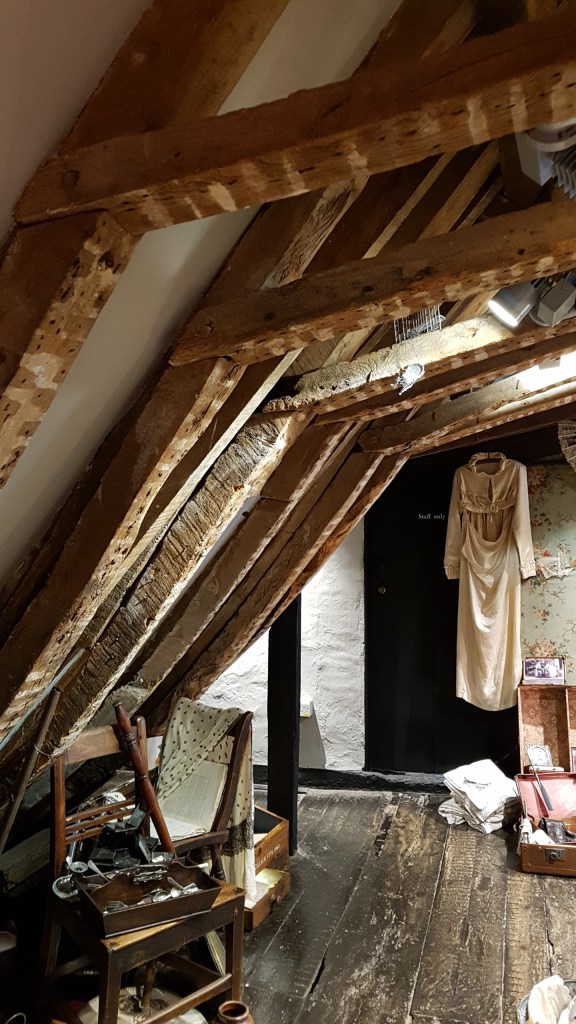
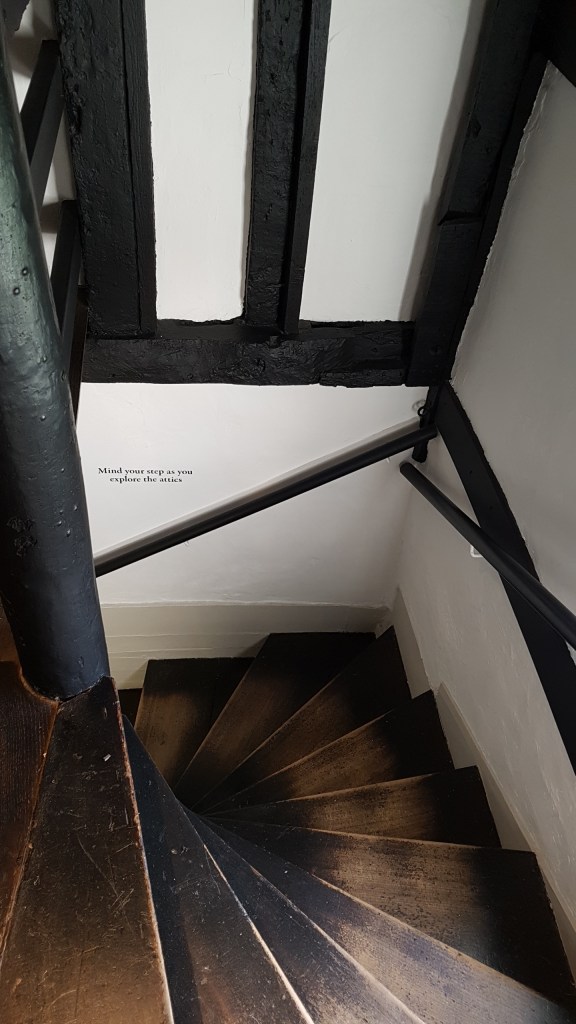
Whitehall House is open on Thursday, Saturday and Sunday and is run by volunteers who are knowledgeable and helpful. The house is free to explore. Inside are original beams and a wall where the property once ended (before it was extended). We were offered a leaflet pointing out the main features/things of interest to guide us through the ground, first floor and attic rooms. Firstly, we watched a short video about the history of Cheam. Then it was off to explore the rooms. I loved the twisty staircase (handrail for safety), and particularly enjoyed the attic rooms with the mish-mash of items from the past. Collections of things belonging to the previous occupants are set out in bundles around the rooms. Even in the roof space there are things dangling – children’s clothes, a chandelier – and the roof itself is original! My camera was clicking away like crazy.

Original roof. The attic rooms

There was lots of information up in the attic rooms. Lists of people who lived there, including the family and servants, a door which was marked with Royalist leanings, a marked place on the floor where the original staircase was, and lots else.

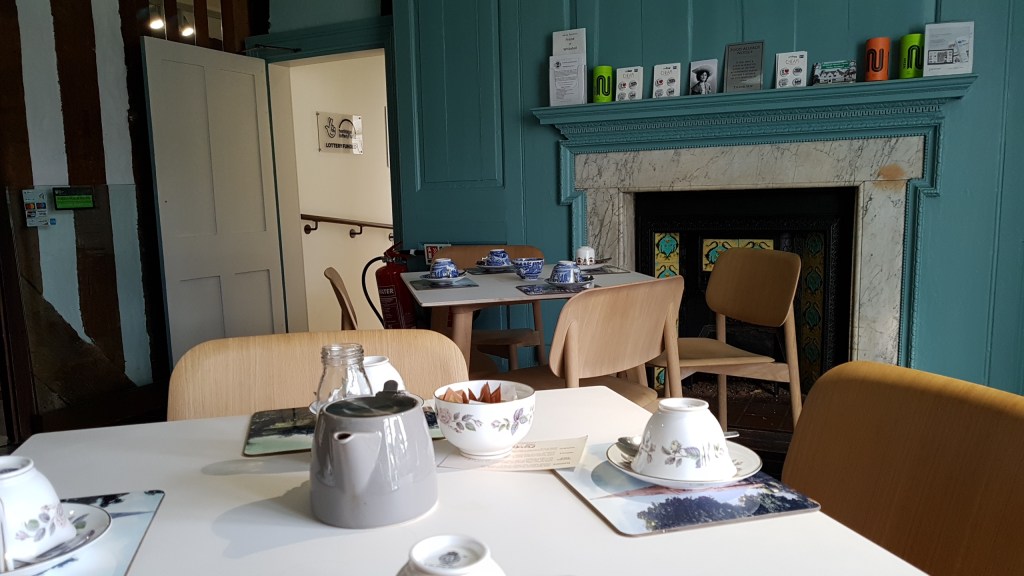
When we finally returned to ground floor we were in need of a cup of tea! The lovely vegetarian/vegan café was waiting for us. Dainty cups and saucers sat waiting on tables and behind us a view of the garden. A relaxing end to our visit. I must add that the toilet facilities are really good. These things are important!

The cafe

The house had a makeover a while back and they’ve done a splendid job. I was told that the company who did the work have been in business since before Whitehall House was built! I guess they felt right at home. It really is an amazing place with a great history.

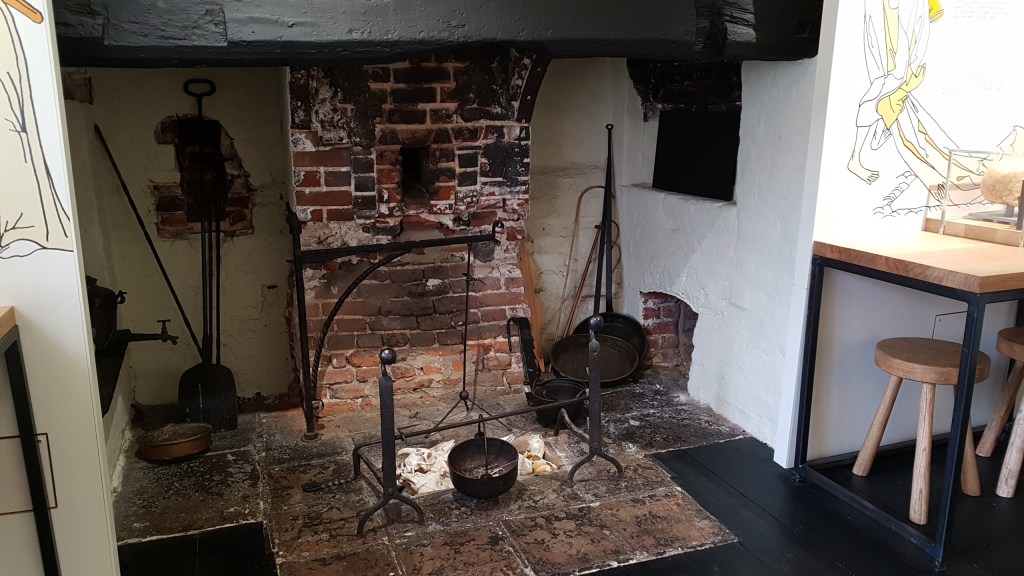
Fireplace, Ground floor room

While we were there, we picked up a couple of leaflets – Whitehall street trail and Cheam trail. We shall be back to check those out at some time as Cheam village has a glut of wonderful buildings and spaces to enjoy.

The view from the cafe over the garden and beyond

About this blog

LONDON IS MY HOME CITY I love to explore, and London is the place I do a lot of exploring. London is a huge city, it extends into Surrey, Kent and Essex, Middlesex and Herts (I may have missed a county). You see what I mean? Outer London has some fine places to visit, many I’ve never been to.

However, I also enjoy exploring places outside the London boundaries. That might mean a day trip to Oxford or the coast, say Eastbourne or Brighton. It’s easy to get to other places from London. And then there are short breaks and holidays. All of these will crop up here as I go on my travels. I hope you will enjoy the ride and like what you see of London and beyond through my eyes.

About Me: I have an Oyster 60+ card and will travel! I journey by bus, train and tube with my camera, maps, reusuable cup (and cutlery) and a tentative schedule. I explore with family, friends, sometimes with a group of like-minded people, and sometimes alone. I try to travel lightly on this planet, yet enjoy the wonders it offers.

Design a site like this with WordPress.com
Get started