Norwich – Part 2 -Cathedral

Arriving at Norwich Cathedral, we realised our visit coincided with a day of graduation ceremonies. The nave was closed off and we were given a complicated route into the parts still open to the general public. We were all for giving up, especially when a surge of robed attendees and their families spilled out into the cloisters for photos and buying gifts. It was hard to know just where to go. But if they were coming out, then surely we could go in. We found another entrance and went in. We managed to visit between ceremonies, giving us long enough to wander around before the next bath arrived.

Norwich Cathedral

For the first 450 years of the Cathedral’s 900 year life, the Cathedral was a Benedictine monastery. Read about the Rule of St Benedict here. Believe it or not, I have a copy of his Rule on my bookshelf! The Cathedral still goes by the ethos of St Benedict today. It is a rule for living a Christian life, based on the vows of stability, conversation and obedience through prayer, work, study, hospitality and renewal.

Taken from the cloisters

The Cathedral has a stunning interior, and I really liked the simplicity of the chapel above. It’s quite modern with little embellishment.

Writing on the wall

Below is the old font.

Norwich Cathedral is the burial place of Edith Cavell, a British nurse executed in 1915 during the First World War by the Germans after she helped British, French and Belgian soldiers escape. I was drawn to the paintings of Brian Whelan ‘The Way of the Cross’ describing The Passion of Edith Cavell. Cavell was born in Norfolk, and there is a pilgrimage you can take from her village to the Cathedral (or vice versa). Leaflets are available in the Cathedral with a map of the route. Her grave can be seen just outside. Access can be gained through a door to the side of St Saviour’s Chapel.

The painting of The Way of the Cross are very moving, and made me think about the wars currently going on in the world.

The Way of the Cross – The Passion of Edith Cavell

Detail

I love the detail on the gates into this chapel

Nave

Choir

A modern window

The modern font was once used for the manufacture of chocolate. Baptism by chocolate anyone?

The Peace Globe where you can light a candle and place your concerns for the world, your family, friends and people in need before God.

The cloisters

That completes the tour of the Cathedral, though there is so much more to see than I have said here. A trip to Norwich is not complete without a visit to the Cathedral. It is currently free to enter too. Part 3 of my long weekend in Norwich will follow shortly.

Norwich Part 1 – Julian of Norwich and a little of the City

River Wensum, Norwich

When my husband and I were invited to a wedding in Norwich (County of Norfolk), my first thought was a long weekend with time for sightseeing! And that’s the way it went.

We arrived on Friday in the early afternoon and stayed at a hotel overlooking the river, and a short walk into the city. I didn’t waste any time and was soon out exploring. I’d always wanted to see where the anchorite, Julian of Norwich had once lived. No, not at the cathedral, where you might think, but a tiny church near our hotel. There is a Julian Centre there (she has left a whole spiritual legacy). Although the cell where Julian live is no longer there, inside the church there is a shrine.

St Julian’s Church
In the community garden

Lady Julian Bridge over the River Wensum

On Saturday morning, we headed into the city along by the river (the opposite direction to where I’d walked the previous afternoon). I have to say my favourite parts of Norwich were by the riverside. We were on the way to the Cathedral, and this was a much better route than walking through the busy city.

By the river
Pull’s Ferry

Pull’s Ferry the former ferry house was once a 15th Century watergate where stone for the cathedral made its journey along the river and into the city.

Cow Tower was another unexpected find in the gardens around the Cathedral Quarter of the City.
While you cannot go inside the tower, I could squeeze my camera through the gate!
Swan Pit

Had a job getting the best photo of the Swan Pit as the sun was in my eyes. I managed to hide behind a bush! A swan pit was used to fatten up swans for human consumption. They were given to Kings, clerics and noblemen. This one stands in the grounds of the Great Hospital.

Jarrold Bridge

We then found ourselves at Norwich Historic Churches Trust where there was an art exhibition taking place. No longer used as a church, it hosts various events. I took the opportunity to take some photos of the stained glass windows.

The little garden is dedicated to people who have made a difference in Norwich.

The next post will take us into Norwich Cathedral which has a stunning beauty and stories of its own.

The Arts and Craft Church

Holy Trinity, Sloane Square

Holy Trinity, Sloane Square was given the name ‘Arts & Crafts Movement’ by Sir John Betjeman. It really is a splendid church. Quite unusual and houses a stained glass window by Edward Burne-Jones and William Morris & Company. So, of course I had to visit!

Not by Burne-Jones, but impressive

The building work began in 1888 on the site given by the Earl of Cadogan. He also financed the building and its furnishings, designed by J D Sedding. Sedding died before the church was completed and his assistant Henry Wilson carried through the work as the architect intended.

Holy Trinity has many stained glass windows, but the one I had come especially come to see was the east window – the one of Burne-Jones and William Morris. It is the window first seen as you walk in as it is behind the altar. To the right is an information board with a description of all the panels in the window.

It was lovely to see the busts of William Morris and John Ruskin as sort of bookends over the case containing the frontal altar cloth designed by John Sedding.

East Window by Edward Burne-Jones & William Morris & Co.
Who’s who in the window!
Detail
Detail

There was interesting decoration around the top of wall by the chapel. The chapel itself is quite dark, but has a lovely stained glass window of St Michael and Gabriel.

The church
The church showing the east window

Certainly a very interesting church to walk around. While I was there, a group of dancers were rehearsing for an up-and-coming performance. There was also a Christmas shop for ‘Good Causes’ so I bought my first pack of Christmas cards, advent candle and an advent calendar!

Holy Trinity features in the book London’s 100 Best Churches by Leigh Hatts. I’ve visited only sixteen of them so far! The church is just a short walk away from Sloane Square tube station.

Read more here.

National Gallery visit and a short walk

From my walk

I gave my friend a list of art exhibitions on in London and asked her to choose. With the prospect of dodgy weather, being indoors sounded like a good option. As it turned out, the day wasn’t too bad at all weather-wise, and the exhibition she chose was excellent.

Winslow Homer (1836-1910) was an American Realist painter of landscapes and best known for his marine paintings. The exhibition at The National Gallery is called Forces of Nature. The paintings here include scenes from the American civil war and life after slavery for black people (not such a good life with all the restrictions about what they could and could not do). There was a lot in this exhibition that made us think that sadly, not a lot has changed in the world.

It is always helpful to know what is behind a particular artwork, but I got the feeling that Winslow Homer didn’t like explaining. So, do art critiques guess?! Homer used a lot of symbolism in his art, which is common with artists, and has been for hundreds of years. Homer worked in oil and watercolour, but it was his oil paintings that we were drawn to the most.

Winslow Homer’s depiction of light is well done. His use of white against dark backgrounds really brings his work to life. His sea paintings are stunning. He loves stormy seas and has a knack with the brush of creating the waves and splash against rocks. We both enjoyed this exhibition and learning about this artist who neither of us had really come across before.

In Trafalgar Square we got to see the new art work on the fourth plinth. It rather fitted in with the exhibition we had just seen. Entitled Antelope, the work is by Samson Kabalu, and you can read about it here.

One cannot write a blog without a photo of the River Thames! Always a delight whatever time and season.

A short walk in the October sunshine

My local park

Yesterday morning dawned with blue sky that said ‘come and walk under me’! So I did. Just a local walk in places I know well and frequented many times during Covid lockdown.

I love to photograph leaves against sunlight and the changing seasons. Autumn is a great time for photographers with so many wonderful colours. Even the road where I live is alive with vibrant tones of gold, yellow and red.

A tree in the road where I live
In the park
Doesn’t this make you think of Christmas?
Long shadows in the park
A walk known as the Beeline
Like by dog walkers, joggers and there is a cycle lane (right)
Sunday football on the field
This is actually a footpath leading to the busy A3 bypass but it could be in the countryside.
Dandelion head

All photos were taken with my trusty mobile.

Canning Town to Isle of Dogs

Looking towards Canary Wharf (No that’s not grass but chickweed!)

This was a wonderful walk, made all the better by a lovely warm sunny day. I woke to rain pouring down. The weather forecast was for the rain to clear, and by the time my friend and I arrived in Canning Town the skies were blue.

We began the walk by visiting Bow Creek Ecological Park (part of the Lee Valley) where I have visited earlier in the year, but unlike the last time I was here, we headed for Trinity Buoy Wharf by way of a different route. At the wharf, we stopped for refreshment at the cafe, sitting outside to enjoy the sunshine.

Leamouth Peninsular from Bow Creek Ecological Park
Trinity Buoy Wharf Lighthouse and Faraday Museum
Inside the Faraday Museum
River Thames looking towards the Emirates Cable Car

From the wharf we walked to East India Dock, another place I had visited earlier in the year, but after this, the walk became new to me.

East India Dock
There are lots of new apartments around the Thames and inner docks, and building is still going on.

We came to The Gun, a gastro pub, and decided we would lunch there. Unfortunately, there is no chef on Mondays or Tuesdays due to staff shortages. Such a pity as we would have liked to stay. It is an interesting pub and has a lovely garden overlooking the Thames. There is history to this pub as it is said that Horatio Nelson entertained Lady Emma Hamilton in one of the upper rooms, and I noticed one of the downstairs lounges was named Horatio.

The Gun
View of the O2 building across the River Thames

We carried on walking, having to come off the Thames Path sometimes. Because of all the apartment building works, it is often difficult to navigate walks as you find parts are off limits. We were mindful of finding somewhere to eat and were told in The Gun that we would find something in Wood Wharf, but Wood Wharf looked a little like a building site! However, we stuck to the opposite bank in South Dock which leads to Canary Wharf. In the end, we bought sandwiches at a Tesco Express and ate them alongside South Dock and then crossed over the bridge into Canary Wharf to use the facilities!

Coming into South Dock
Three balls and mirror (my name for this!)
Pigeon heaven!
Where your average millionaire parks!
From the bridge (Canary Wharf left)
In the other direction

Slightly losing ourselves, I used Google Maps to guide us on the next leg of our walk and on the other side of the DLR (Docklands Light Railway) station we headed into Millwall Dock. This has to be one of the largest docks.

Arena Tower, Millwall Dock

Millwall Dock
Glengall Bridge
Millwall Dock – so peaceful
Millwall Dock looking back to Canary Wharf

From Millwall Dock we headed towards Millwall Park and across to Island Gardens DLR and our journey’s end at the Isle of Dogs. Why is it called the Isle of Dogs? The most likely explanation (according to Google) is that Henry VIII kennelled his hunting hounds here!

At Island Gardens we found a lovely cafe called Number 92 for a well earned cuppa.

This was such a lovely walk. London keeps on surprising me, and that’s why I love it so much. London and the River Thames and all its other waterways have so much to offer.

Note: Canning Town can be reached on the Jubilee Line Underground from central London at various points. The walk features in the book London Waterside Walks by David Hampshire.

Something from the archive: Isle of Wight

2016-06-04 18.23.16
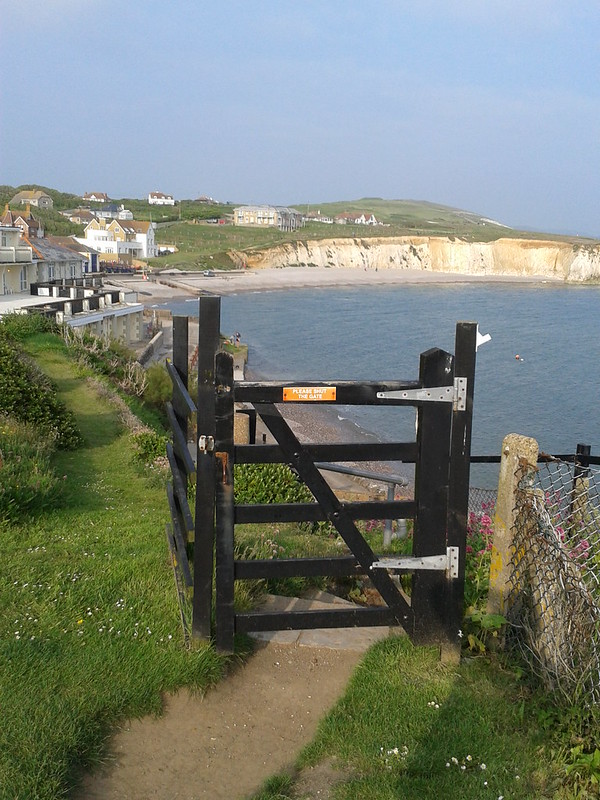
Freshwater Bay

This week I am falling back on the archive and we are visiting the Isle of Wight. This was the place of many holidays with my parents. We stayed in Ryde where we used to watch the hovercraft come in, mounting the beach on its cushion of air. Me and my brother were fascinated by it. I have memories of sitting in a cafe with the windows steamed up (it was probably raining outside), and giggling at the whoosh of the coffee machine..

My memories of the Isle of Wight are getting sunburnt, rain, and my dad in one of those photo booths taking silly pictures. But also I remember long walks alongside the beach by Appley Park and Puckpool Park. I remember my dad lugging the suitcase (before they had wheels and retractable handles) down the length of Ryde Pier to save money. There was, and still is, a train (old London Underground trains used to service the island from the pier to Shanklin.) You can read about the current train service here.

IMG_7049

The bus service is good too. In later years my brother and I returned, buying weekly ‘rover tickets’ to go all over the island. More years later, I came with my husband and two boys. We used to walk alongside Appley Park and watch the bats emerge in the evenings.

The beaches are sandy and the island was a holiday escape for Queen Victoria (Osborne House). There are country parks, a steam railway, thatched cottages, interesting towns. Sadly and the wonderful Flamingo Park, has permanently closed.

Even more years later, I returned with a friend, staying on the other side of the island at Freshwater Bay. We were on a walking holiday and we hit good weather, and Freshwater Bay has fast become my favourite place. It is quiet, and our hotel was set overlooking the bay one way and Tennyson Down the other.

IMG_6960
Fingerpost
IMG_6971
The Needles
IMG_6985
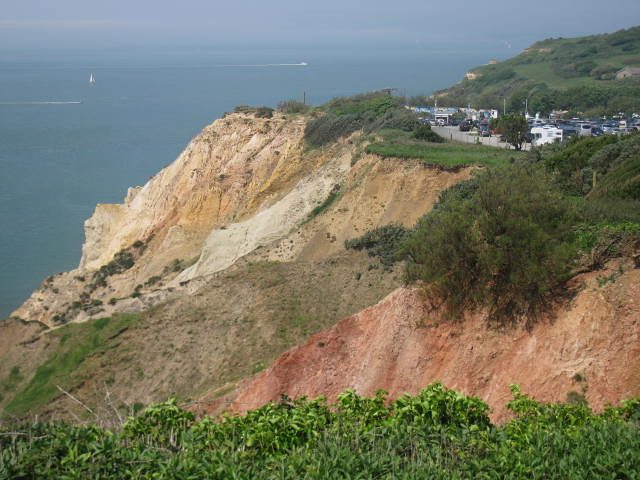
Alum Bay
IMG_7021
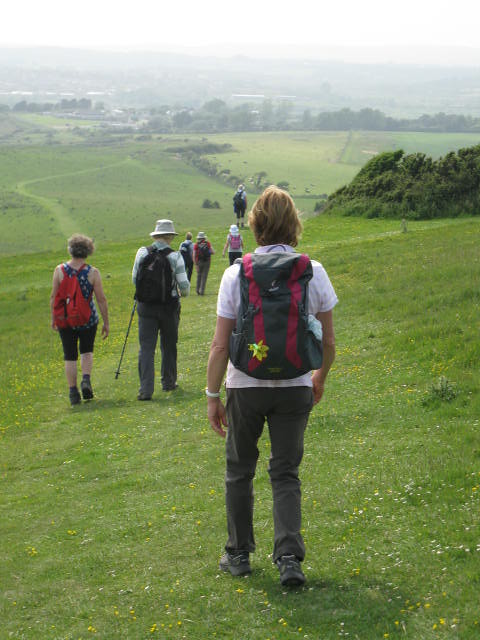
Walking the downs

The walks are lovely from Freshwater. Our walking leader mainly kept away us from the tourist spots. Even at Alum Bay we found quiet spots on the cliff.

IMG_7053
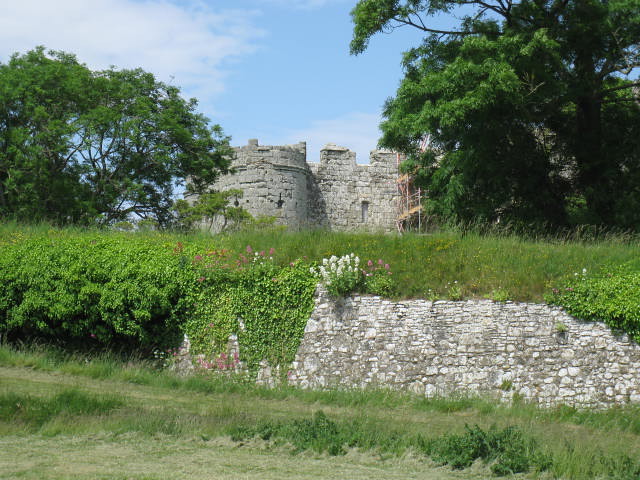
Carisbrooke Castle
IMG_7031
IMG_6992
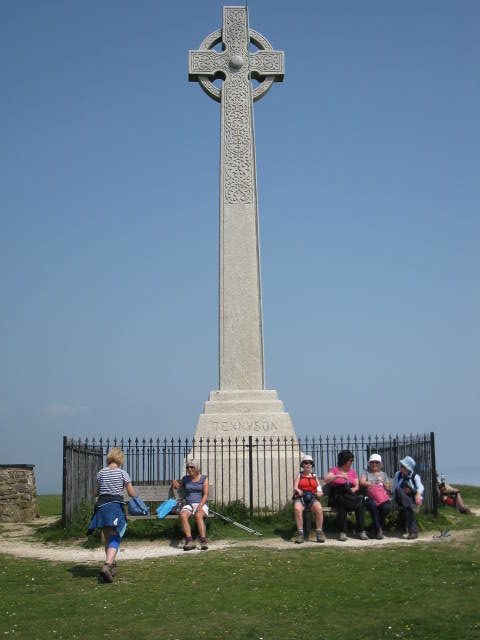
Tennyson Down where our leader read us The Charge of the Light Brigade

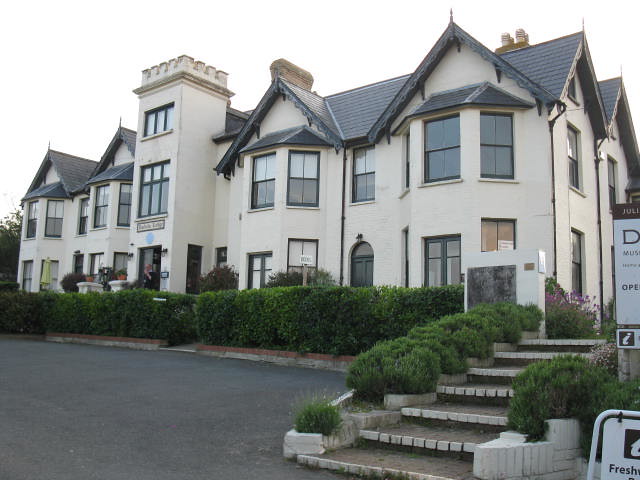
One of the highlights for me was visiting Dimobla Museum, the home of photographer Julia Margaret Cameron. The museum was just over the road from our hotel and as a group we went after dinner one night, gathering for a talk in the lovely tearoom, before exploring the house.

IMG_7073
IMG_7072
Dimbola
IMG_7076
There was much swooning over the bedroom with its William Morris wallpaper!
IMG_7075

I would like to return to Freshwater Bay in the future and also there is this dream of walking the whole island along the coastal path! The island has so much to offer, I’m sure I’ll be back soon.

IMG_7010

Winchester City Mill

Although I have been to Winchester many times, I had never been to the old city mill. But what a beautiful place. Owned by the National Trust (and free to visit) the mill has a long past. It has been there since Saxon times, lived through the black death, and then with the loss of the Calais wool trade, the mill declined and in 1471 it was derelict.

The cafe is at the far end. Here is the milling room.

In Tudor times the mill came under ownership of the crown, but after Winchester hosted the marriage of Queen Mary Tudor to Philip II of Spain, Mary gifted the mill back to the city. In 1743 the mill was owned by James Cooke who replaced timbers, exchanged thatch for tiles and added lead to the windows.

In 1795 JMW Turner drew a sketch of the mill.

1931-2005 the mill had a new role. It became a Youth Hostel and you can view the records and photos from that period in the mill. In 2004, after repairs, the first milling demonstration took place 90 years after it stopped.

Winchester is known to flood when excessive rain hits, and the mill was flooded during the winter of 2013/14. You can view a video on their website of flood water pouring through.

The waterwheel

The mill still does milling demonstrations and sells bags of flour in the gift shop. Going downstairs to see the waterwheel is very exciting. Water rushes in from the River Itchen, and the noise is wonderful! The mill also has a lovely garden running alongside the river, as well as a cafe, where I stopped for lunch. There is lots of information about how the mill works, its history, as well as some hands-on things. There is also a video in the secondhand bookshop explaining the history of the mill. They also run courses there.

The gardens
The back of the mill
The cafe

The mill is open from Wednesdays to Sundays 11.00am-4.00pm. Well worth a visit.


The working mill

Worthing, West Sussex

Pier, Worthing

I am posting this blog a day early as tomorrow is the funeral of Queen Elizabeth II, and out of respect, I will not post then.

It has been a difficult week, and sometimes I have just had to escape the media coverage of every minute of happenings since the Queen died. So, I escaped to the coast for the day on Monday. It felt like the last day of summer. It was hot and sunny, and this was also a walk down memory lane.

My parents used to bring my brother and me here as kids. We holidayed here and also came for day trips. So, I sought out the old haunts. But the first thing I did when I arrived was go on the beach! I sat there for a while, just listening to the waves pounding as they rolled in and sucking at the stones as they retreated.

From the beach I headed for the pier and walked to the end, stopping off at the Amusement Arcade where I lost my money many a time on the penny falls. I didn’t bother trying this time, and just walked through.

On the pier
Taken from the pier
The Amusement Arcade

Back on the promenade, I walked towards West Worthing and to Marine Gardens where the putting green is. I used to worry my mum and dad everyday to play on here. It’s looking a little worse for wear since the heatwave. The cafe is still there where we drank cups of tea. It’s been modernised, but it’s not that different. I bought lunch here and then went to spend some time watching bowls, another thing we used to do.

West Worthing
A rather scrappy looking putting green in Marine Gardens
Bowls green

Next was to walk the short distance to where the hotel was where we used to stay. It was demolished some years ago now. In its place are luxury apartments but still overlooking the same green and the sea.

The snazzy apartments standing on the site of the former hotel

Then it was back to the beach. A different spot this time. I didn’t want to leave. The day was perfect. Eventually I packed up and headed back along the prom and then into town where I had a look around before grabbing a cup of tea and walking to the station.

The beach
Enjoying the sun and sea
Time for a paddle
Looking back towards the pier
Walking back
The afternoon is fading

Trains run from London Victoria to Worthing. The journey is short, about an hour and twenty minutes. I love it when the train gets to Hove and then Shoreham where you catch glimpses of the sea. I realised how much I need to be by the sea that day. Apart from one morning in Herne Bay during a gale in February, this was the first time I’d spent any quality time by the sea. How I’d missed it.

Final farewell to the sea
Shopping arcade

Cutty Sark and Greenwich

Cutty Sark

I cannot believe I have lived in London all these years, yet this was my first time visiting the Cutty Sark. What an interesting ship.

Built in Dunbarton, Scotland in 1869, specifically for the China tea trade, it set sail from London in February 1870 for Shanghai loaded with wine, beer, spirits and manufactured goods. The Cutty Sark arrived there in May, where it took on board 1,305,212 lbs of tea and headed back to London. It arrived in October. Later, when steam ships took over the tea trade, the Cutty Sark had to find other cargo, including jute and later wool from Australia.

You can read the history of this fascinating ship here.

Floor of the hull
The white part of the ship is the original
Middle deck
Wool from Australia
From the deck
Cabins
Captain, or Master’s cabin
Note the hanging drinks holders! (Captain’s personal loo at the back where the white tiles are)
There’s even a fireplace
Pantry – no, I’m not washing up!
Figureheads from other shops in the cafe downstairs underneath the Cutty Sark
Underneath the Cutty Sark

After a cuppa and snack in the cafe, we headed into Greenwich Park and up the hill for the view.

Belson’s ship which I think was once on the 4th plinth in Trafalgar Square (outside the Maritime Museum)
That’s the view!
By the Royal Observatory
Here you can see the O2 building
The Royal Observatory and Greenwich Park

We came back into central London on the Uber Boat from Greenwich Pier to Westminster. This was great fun.

HMS Belfast with Tower Bridge behind
London Eye

This was a lovely day, and we were lucky because there were no crowds. I think we timed it well. Schools had just returned after the summer break so too early for school trips, and it was a Monday.

There’s lots of information on board and you even have a chance to steer your own ship from Australia back to London on an interactive map. Both my friend and ended up shipwrecked within a short space of time! It was great fun though.

Kingston to Hampton Court Thames Path walk

Kingston

This is a walk I know well. I’ve walked it with family when the kids were small, and I’ve walked it with friends. Sometimes my eldest son accompanies me now, and sometimes I walk it alone. This time I was alone.

I’ve been having problems with my right foot for some time now, and I have self-diagnosed it as metatarsalgia. A couple of friends know about these things too, and my symptoms fit. I’ve bought some special pads to relieve the pressure on my foot, and a short walk was what I needed to see if it worked. The pad is a little fiddly to position right, but once right, it does help. I enjoy my walking too much to stop!

Kingston Bridge
Walking down to the river at Kingston

I’ve written a post about this walk before, I know, but I never tire of this stretch. Light changes like the seasons. It was good to see some green coming back after all the hot weather we’ve had.

My route
To the right of the other path is Home Park, always worth a walk through too. Often you see deer here.
Hampton Court Bridge
Hampton Court Palace

I thought I would visit the gardens at Hampton Court Palace, but since Covid they charge around £20, whereas before Covid it was free to walk around the gardens. I had intended to use the cafe, but I’m not paying £20 just to go in. Their loss. Instead, I found a lovely cafe opposite Hampton Court station, and sat outside with a gorgeous veggie/vegan lunch.

Hampton Court Bridge looking towards Molesey Lock
The cafe
Lunch! Tortilla with spicy beans and avocardo

The walk was successful and the metatarsal pad worked. I think I’m back in business! There are too many walks out there I want to do to give in.

Design a site like this with WordPress.com
Get started