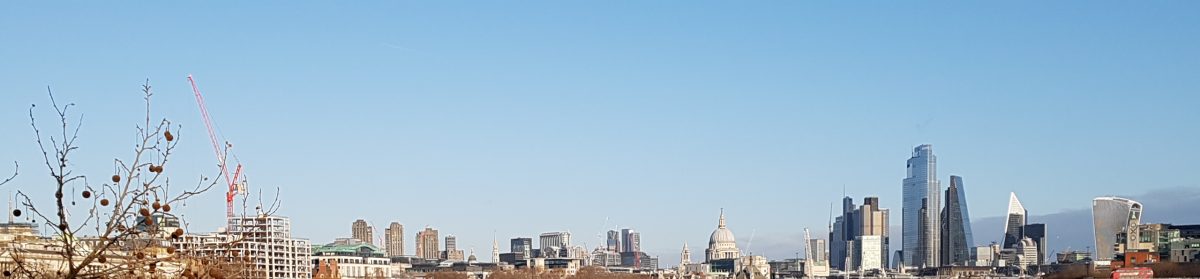
East London: Bow Creek, Trinity Buoy Wharf, East India Dock Basin, Virginia Quay, Royal Victoria Dock

Bow Creek Ecology Park, Bow Creek

What a full day I had in East London recently. Bow Creek Ecology Park had been on my list for a while, and then I read about the area in a wonderful book entitled London Clay by Tom Chivers (just one of many London books in my every growing collection!).

Bow Creek is an offshoot of The Lea river, and it runs into the River Thames. The nearest tube station is Canning Town on the Jubilee Line (the DLR also runs here). It was hard to know where to start on arriving, but decided the park would be the best place. In fact, one of the DLR lines runs right through the middle of it. The park is small and oblong in shape, and there is the option of a ‘Lee Valley’ walk, via a path taking you under a bridge. All around me were tall buildings and cranes. Like the rest of London, it seems to be a continuous building site as more apartments are built.

Bridges are everywhere! Bow Creek Ecology Park
View from Bow Creek Ecology Park
Some information
Across the water

Doubling back on myself, my next adventure would take me over the red bridge to City Island. Now this really did look like apartment city! Building work is still going strong, but there is a path along the river that leads to Trinity Buoy Wharf, another place I wished to visit.

The bridge that leads to City Island (right)
Map of City Island

I have to admit it does feel like an island, but what I liked was how quiet it was considering it was the Easter school holidays. Maybe they were all off exploring the usual tourist places in London. In fact, later I discovered one of those popular places, and walked away!

Again, there are roads running through here
At last, my destination

Just to the left in the above photo, I entered the wharf. This is container world! This once derelict area is now a place for arts, crafts and industries, workspaces and event space. And, of course, it is the home of the Trinity Buoy Lighthouse. Built in 1864, it now houses the installation of ‘Longplayer’, a record which has been playing for twenty-two years. You can listen to it either on visiting (open weekends) or online here.

The lighthouse
Longplayer information
Container world! Home to art and industry

Michael Faraday worked here as Trinity House Scientific Adviser, and there is a school here named after him.

Faraday School

At the Gate House you can pick up a plan of the area, showing all the buildings and information on what they do. There are two places to eat, though Fat Boy’s Diner seems to be up for rent. There are tug boats, part of the maritime heritage, and art works, a story box and the Faraday Effect, one of London’s smallest museums documenting the life and times of Faraday.

One of the smallest museums
Inside the museum

Knocker White built in 1924
Lighthsip LV95 built in 1939. First ship to be converted to solar power in the 1990’s, it is now a floating recording studio.
Information about the wharf
Over the river is the O2 building
To the left is the Emirates Cable Car
Just one of many art works at the wharf
My lunch stop, The Orchard

Returning the way I’d come, but before crossing the bridge again, I found a path leading to East India Dock Basin, still with some buildings reflecting its past.

East India Dock Basin
No ship building anymore.
A lovely walk around the basin

Just around the corner is Virgina Quay, where a ship sailed off to America. Part of the old memorial has been saved in this now new housing area built by Barratt Homes.

Finally, I headed off on the DLR to Royal Victoria Docks. I took the wrong exit (as you do, or I do!), but came across this lovely wall running along the roadside. Here is what people say about living in London, what they did in the past, all sorts of comments.

Sometimes there is a good payoff for taking the wrong exit!
Nice to see notices up about the Elizabeth Line. Can’t wait to travel on it!
Found myself walking through Excel London!

In among the new is a reminder of the old
I just love these views

How the other half live!
Across the water
This made me giggle.
This is where everyone was! I thought I might cross over on the cable car, but look at the queue!
The new City Hall

I have actually been over on the cable car at least twice before. Great views.

And here I ended my day. It was lovely exploring somewhere new, though I’ve been to the Royal Docks a few times. I would happily return to Bow Creek and Trinity Buoy Wharf. That was a wonderful place, and easy to get to. I hope you enjoyed my journey too.

Titanic Exhibition, Surrey Quays, London

Three propellers on Titanic

This is the third Titanic exhibition I have been to. The first two were in Liverpool and Belfast. I just couldn’t resist! All the exhibitions are slightly different. Here there was an audio guide I downloaded to my mobile (or you could borrow a headset for an extra £3). It takes you round the exhibition picture by picture and cabinet by cabinet, telling the stories of the people who travelled on the liner through photos and finds, postcards or telegrams sent and diaries kept. We have all probably heard about the orchestra who played as the ship went down. In the exhibition there is a picture of those men.

A lot of the stories are sad, heart-breaking, but there were stories of great gallantry and of people who survived, some by sheer luck. The tour takes about 90 minutes and it was well worth going. I took loads of photos, so here I will share just some.

A cutaway model of Titanic
White Star Line

The ring in the above photo slipped off the finger of a lady as she drowned. Her husband managed to climb into the lifeboat, but there was no more room, or the boat would have capsized. Someone held onto the lady’s hand, but eventually she slipped from his grip. The ring came off her finger as she went under and landed in the lifeboat. The ring wasn’t discovered until some days later. Her husband died of hypothermia shortly after the lady drowned.

Third Class cabin
Second Class dining room
Chair from Second Class Dining room
It is possible this is the first discovery from Titanic
Menu

Mock up of First Class corridor
As above – First Class Cabins corridor
First Class bedroom
And of course a suite!

Shoes of a little girl who escaped with her family

The ice wall. Here you can put your hand against the ice and see how long you can bear it. This is what it would have been like in the water for those overboard.
The men of the orchestra who went down with the ship

A model of Titanic on the sea bed
The last display is a list of all the passengers and crew who set off in Titanic

The piped music is the theme to Titanic, though not the Celine Dion version. The film characters were fictional, but the events were based on facts.

When I returned home, I thought about where Titanic sailed from, which was Southampton, and that got me thinking that there might be a Titanic exhibition there. I looked it up, and yes, there is one. Looks like a trip to Southampton sometime!

This exhibition finishes soon (later this week, I think). The nearest tube station is Canada Water.

Canada Water

Other links: Titanic Experience, Belfast

Titanic Liverpool

A touch of spring

On the railings of a local school

Yesterday, I took a stroll along one of my old ‘lockdown’ walking routes to admire the spring flowers. First was a local park where I used to jog (I jog no more!), and then via back roads and over a railway bridge to what is now known as Beeline Way, a path that runs along the railway line. Here the Friends of Beeline Way have planted spring bulbs. I’d heard that it looked pretty, so I decided to take a look for myself.

The park
Tulip

Beeline Way

Sunday football

At the end of the path there is a playing field where boys were well into a game of football. It’s been many years since I spent Saturday mornings in a cold, wind-blown park watching my boys play in Little League. And it was always cold or wet. In winter I would lose the feeling in my toes. Even on sunny days, the wind would sweep across the field. While I hated the standing around, I loved watching them play.

The golf course

Jay. I didn’t have much time to capture this, and only had my mobile with me.
All along the verge are tulips

A host of golden daffodils

And then these final two photos were taken in my back garden.

See you next week.

Thames Path: Greenwich to Thames Barrier

Greenwich

At the fourth attempt, we finally took this walk last Wednesday. Weather, tube strikes and me not feeling well, had stopped us before, but we had the perfect day all round.

My friend and I met at Waterloo station and took the Jubilee Line tube to Canary Wharf, where we changed onto the DLR to Greenwich. The walk on the map is classed at around two miles. It was nearer five!

Canary Wharf (Jubilee Line)
Canary Wharf (DLR)
All aboard the driverless train!
Greenwich

Greenwich is an interesting place in its own right, with the Navel College, National Maritime Museum, Queen’s House, Cutty Sark and the Royal Observatory. Plenty to keep you going all day and more.

The walk along the Thames Path takes you past some interesting places, including the O2 (Millennium Dome), Greenwich Ecology Park and, of course, the Thames Barrier itself. The views are great across the river, and the trees are quite unexpected. With the tide out, there was rather an exotic feel to the river with some sandy spots. You could almost think you were at the beach!

Tide mark
Trinity Hospital and Almshouses, Greenwich

I like a bit of industrial stuff to photograph, and there is always some public art around on these walks.

I like this!
Rather exotic. Would you expect to see this by the river?
These buildings seemed to follow us around – Canary Wharf

Along this stretch of river there is a large bend. The O2 sits on the point of it, so you cannot see the Thames Barrier for quite a while. Like Canary Wharf, the O2 seems to take an age to pass! As I have walked this once, if not twice, before, I remember how this part seems to go on forever.

Mile marker

During Storm Eunice in February this year, part of the roof of the O2 building was ripped away. The photo below shows the extent of the damage. It looks much bigger when standing there than it did on TV.

O2

All legs! Liberty Grip by Gary Hume
Fly Emirates! The cable car takes you to Victoria Dock on the other side of the river.

The cable car is just great! I have used it twice. The views are spectacular. Who needs a good excuse to use it?

The Mermaid – Damien Hirst.

We’d taken food with us to eat, but stopped to buy an extra drink. We sat in a park surrounded by daffodils to have our lunch before using the toilets in the O2, where I took the photo below.

I know there was controversy about this building, but I like it.
Very spring like
And here we are at the Thames Barrier

Unfortunately, the Thames barrier Information Centre was shut, but I have visited it once before. I can recommend it. There is a cut-away model showing how the barrier works.

One gets tempted to take rather a lot of photos.

Here you can see more how the barrier works
Here you can follow the line from source to sea and one day I shall complete it!
Last one…promise
Information map

After all that walking what we really needed was a nice cup of tea. So, we headed to the pub we had seen earlier, called the Anchor & Hope and had our tea. Duly refreshed, we headed to Chalton Station to catch the train back into centre of London. A lovely day.

Surrealism Beyond Borders – Tate Modern

Ticks my box!

I came to Surrealism through Salvador Dali’s work and realised that some other painters I admire had ventured into it, like Paul Nash, so I began to look more into this form of expression. Attending this exhibition at Tate Modern I realised knew very little about it!

This picture is devised using photo negatives and a special way of manipulating them.

I found artist used surrealism to express political views or events that happened to them or family. I guess you can say that all art is a form of that, but this is a subversive reality. The image below tells the story of the artist’s grandparents who were killed in the holocaust. I find this painting moving.

Not unexpectedly there were a lot of political/war works here, but also what I call the ‘dream’ art. Finding a meaning in some of this sometimes hard, and with me that doesn’t always matter. I’m not a big fan of Duhamp (he of The Urinal found art, or ‘readymade’. See here for more on that piece). However, this piece below did rather fascinate me. The way he uses readymade here – a metal cage, a piece of cuttlefish, wooden perches, and sugar cubes represent stone boulders – I rather like.

Duchamp

I never really know what I’m going to like in art, which means I am always surprised. I can admire the painterly fashion of old masters. Their technique is mind blowing, but do I like them? Not usually. All those portraits, dark backgrounds aren’t to my taste. My preference is for art from the Pre-Raphaelite’s onwards. The Victorian era holds a particular fascination for me. All the artists and writers I admire seem to converge there for me. If I could live in another era, though, it would be the 1920’s because of the fashion, dancing and music! I think watching Upstairs Downstairs on TV in the ’70’s has something to do with that!

Anyway, I digress. The next piece is by Roland Penrose, whose house I went to see in October last year. I adored that house. I wanted to go exploring in all the nooks and crannies. It was so interesting. So many quirky things, and to my delight Roland had painted on some of the walls. The house was light and airy, the sort of place I could easily live in.

Roland Penrose

Picasso is another artist I admire, and another I came to gradually. Sometimes attending an exhibition you are not sure about turns out to be enlightening, and that was what happened when I went along to a Picasso exhibition.

Picasso

Diorama art is another fascination for me. Putting 3D scenes into boxes. What is there not to like? I can remember making little underwater scenes using an old shoe box back when I was younger. So, I photographed this just because it is a diorama. See here for more about that.

Diorama

This will explain the above picture

This piece is by Ted Jonus and on every page is a drawing by a different artist. It is called Long Distance.

There were many paintings about people fleeing and the one below shows women fleeing.

I loved the art of Remedio Vara. There were three here together, I suppose you call them a triptych.

Remedios Varo

I’ll end with this one. It’s a bit scary. Entitled Central Park, NY, the little pictures around the edges are things that could be happening in various corners of the park!

Central Park, NY

Surrealism has the power to shock, to say WTF! and to surprise. It makes you think in a different way. It might be like Marmite – you either love it or hate it. That’s okay. That’s art for you. The images I have chosen are my choices, the art that said something to me. For everyone, that will be different. And that’s okay too!

The exhibition is until 29th August.

Day Trip to Winchester

Winchester Cathedral

I believe my heart belongs to this place. Winchester ticks all my boxes, so it was great to be back in this lovely city again. I had bought a ticket for two events. The first was Extraordinary Everyday: The Art and Design of Eric Ravilious, and the second was Lux Murualis, a light show at Winchester Cathedral. But first there was lunch at The Refectory, which is always a treat. Here I gatecrashed someone’s table as there were no free spaces. I ended up chatting to a man, who is training to be a Priest and was spending twelve weeks at the Cathedral. Isn’t it funny how some people you click with? We discussed everything under the sun in the hour and half we sat together.

Off to the exhibition (no photos allowed, but do look at this website to see the art of Eric Ravilious. A quick low-down. Eric grew up in Sussex, one of his art tutors was Paul Nash (another painter whose work I adore). They were both war artists and friends. Eric died while at war. His aircraft never returned. Just think what he could have achieved if he had survived? Eric was a painter, engraver, illustrator and designer. His range is incredible. I spent an hour studying his painting closely, looking at his brushstrokes, trying to see how he achieved the effect. His designs for plates and bowls are quite fun and I would dearly love to own one of his works.

Outside The Arc, home of the Eric Ravilious exhibition

I can remember sitting on a hillside with a friend just outside Rottingdean in Sussex, on a walk Eric Ravilious might have taken, and looking at the patchwork fields. I said to my friend, ‘This looks just like an Eric Ravilious painting.’ And it really was. I could see his work all around me.

After the exhibition I went for a wander through the city and down to the Deanery Secondhand Bookshop. Unfortunately. it was closed. So I ended up in Waterstones bookshop instead (as you do!).

The main shopping precinct, Winchester
Cathedral

More wandering took me back up through the City to The Great Hall, which was closed the last time I was there. There were parts of it I couldn’t remember, and through talking to the lady in the gift shop, I realised it was pre-2017 when I was last in there! This is a lovely place and is all that remains above ground of Winchester Castle. The hall has been used for all sorts of things, including the assize courts, county offices and more recently for filming such things at The Crown and Wolf Hall. The myth of Arthur and the Round Table dominates here, and the table is around eight hundred years old! Built in 1222 and 1235 it is part of the castle started by William the Conqueror. Outside there is Queen Eleanor’s Garden, a peaceful place to sit. The long gallery holds more information about the hall and castle through the ages and leads to the gift shop.

The Great Hall

Judges chairs
The Round Table, almost 800 years old
The Great Hall
Queen Eleanor’s Garden
Another view of the garden
Castle passageways

I can see the old castle passageways outside. Part of this is open again now, though you can only go so far before there are gates looking into a very dark underworld! Creepy.

By now, it was time for afternoon tea. I had a leisurely break over a toasted teacake and tea and caught up with some reading. It was too early to go to the Cathedral for the light show, but I decide to go for a quick walk down to the River Itchen, and ended up walking to where the Water Meadows begin. By then it was 5.45pm and hardly anyone was around. Standing there by the river, the blackbirds were singing their hearts out as dusk began to fall. It was magical. Enjoy my little video.

I arrived at the Cathedral and joined the queue for the light show. Looking at the windows, I could already see lights flickering inside. Excitement was building. Finally, I was in. Wow! Every part of the cathedral had moving projections and music. I ended up taking lots of photos and videos. It was amazing. The theme was science, so there were projections of skeletons, muscles, double helix, faces of scientists through the ages flashing up. The main part of the cathedral (nave) was quite stunning. I sat down and took in the whole range of images. I was there about an hour before I reluctantly left and wound my way to the station for the train home.

Just one video I took during this amazing evening.

The light show was only on for a week, so it is over now. I know a few cathedrals have done similar things, and this was really wonderful. It was a perfect day. Even the weather was good. I don’t think it will be long before I am back in Winchester again.

Inside the Cathedral
Outside the Cathedral while inside it’s all still going on!

Two visits to Richmond in a week

Richmond Bridge

The weather here last week was dreadful. That and a tube strike in London on two days meant I had to change my plans both days and meet friends where we could both reach either by national rail or bus. That place ended up as Richmond.

The first visit was on the Tuesday. It was raining when I left home. My telescopic umbrella refused to go all the way up, so there I was trying to get my arms into a waterproof while walking to the station with my rucksack. I was not happy! Luckily, by the time I reached Richmond, the rain had almost stopped, and then it did.

Richmond footbridge

We chose a short route from Richmond Bridge to Kew Bridge. It was a lovely walk, despite the overcast sky and the threat of more rain. A little way along, we encountered a path with a lot of puddles and lots of mud. It was a case of walking around the edges and trying not to get a foot full of water or mud.

Old Deer Park

This is a particularly nice walk as you have Old Deer Park (no deer!) on the right with a stream, and the Thames on your left. To the right, across the river is Syon House and Park. You can see both the boathouse and the house itself. The painter, J.M.W. Turner, rented a house nearby and painted scenes of the Thames.

Lots of gulls around
Old Isleworth
The pink Pavilion is the boathouse in Syon Park
Kew Bridge
Kew

At Kew we came off the path, eager to find somewhere to eat. The Cricketers was all we hoped and more. The staff were friendly, the pub had atmosphere, and the food was excellent. We lingered a long time over lunch and splashed out on a second cup of tea. We know how to live!

We decided to walk back the same way, as Richmond has more transport links. Gradually, the drizzle returned and then became heavier. At least most of the walk had been rain-free.

Syon House
Kew Observatory in the background. I am told the Obelisk is the old meridian line

My second visit was on Thursday. This was a lunchtime meet in a cafe with a friend combined with a ‘free-write’ session. In my other life, I write short fiction and poetry.

Afterwards, we took a brief look at the river. The water had flowed over the banks in places, due to all the rain, and possibly a high tide. I believe I am right in saying that the River Thames becomes a tidal river from Teddington.

Heron Court, Richmond
A view from Richmond Bridge
The Tide is High as Blondie would say”!

So, there we have it. Richmond has very pretty walks, and is close to Richmond Park. I wrote not long ago about a walk I took through the park, down Richmond Hill to meet the Thames. I am lucky to live close to such lovely and interesting walks.

The World of Stonehenge – The British Museum

The exhibition at The British Museum follows life before Stonehenge, Stonehenge at its height, and the waning of its popularity. It is a very detailed exhibition with much of interest.

The exhibition is also popular. It was busy and tickets for that day had sold out. I thought I knew a lot about Stonehenge, but I hadn’t realised it was the most important place in Europe or that so many people had been buried there (the more elite, of course!).

Stonehenge was built around 5,000 years ago in what is now Wiltshire, close to the city of Salisbury. These days you cannot touch the stones on visits. The whole site is cordoned off with rope. Only Druids are lucky enough to worship there at the Solstice these days. When I went years ago, the best view is coming down the road on the bus with the henge in front of you. Magnificent. But there were too many people to get a proper atmosphere. The nearest I got to one of those was at Avebury standing stones. My ideal would be to wander the stones alone, but there is no chance of that at Stonehenge. To learn more about Stonehenge read here.

Axe

On view were many axe heads. Some were so smooth. Flints, masses of those too, so well knapped and sharp. I find it fascinating how our ancestors tried to make sense of the world they lived in (much as we do today, really). They worked out moon phases and sunrises and sunsets, and of course, the seasons.

Cattle were important to them. They were valuable, so sacrificing them was never taken lightly, but in the photo below two have been sacrificed, possibly for fertility. The image shows what they would have done in life, pulling a cart.

I joked about this set of wooden walkways. I called them Black & Decker workbenches! They built these walkways over boggy places so they could get from one place to another.

No, not Black & Decker workbenches, but a walkway

Stonehenge is just one of many henges. Seahenge in Norfolk is another. I read a lot of books by author Elly Griffiths. She writes crime. Her books are set in Norfolk and the main character, Dr Ruth Galloway, is an archeologist who works with police when old bones are found. Seahenge appears in one of her early books. I find the world she writes about fascinating, so I was thrilled to see Seahenge here in the exhibition.

Seahenge, Norfolk

Grave goods feature in lots of prehistoric finds. Here we find some gorgeous trinkets, finely carved. The eye is important here – possibly to see in the afterlife?

Grave goods

Art and music was also important to these people. They carved what they saw and what was important to them. Spirals feature highly, as do images of the sun.

No one really knows what these are, but they beautiful
Spirals
Here you can clearly see arrow heads and the sun
These objects are related to the Divine Twins often depicted as horses or related to celestial Castor & Pollux in Greek mythology
Gold – so much gold! This must have been heavy to wear.
Ear piercings. Sometimes you see people today with sort of piercing.
Mapping the sky, moon and stars – Nebra Sky Disc

Burials and grave goods. Tbe woman on the left was buried clutching a baby wrapped in cloth
Arrow heads
These had removable phalluses!
General view of exhibition

Men and war. I cannot comprehend that in those days 20,000 men died in battle and their remains scattered like this image below. We never learn!

Weapons were sacrificed into the water. In the photo below, these items of war were discovered in the River Thames at Battersea.

Sacrificed weapons, possible as part of a funeral
Another Thames find – you could make a large stew in there!

This was a really interesting exhibition, and I’m afraid I got carried away in the shop afterwards. I bought a replica of the Sky Disc, a t.shirt, notebook and a book on Druids! The exhibition runs until 21st July, so there is still plenty of time to see it.

Canterbury Part 4: Herne Bay & Westgate Towers

Herne Bay

To look at the photo above, it is the perfect day. When I tell you that winds were gusting to sixty miles an hour and we were in the middle of yet another storm (Franklin) and that all the bins had been blown over and the pier was shut, well…yes, it’s still looks nice! I did have to hang on to railings a couple of times.

Bracing myself against the wind to take this photo in Herne Bay

I took the bus for the thirty minute ride from Canterbury and was nearly knocked off my feet when I got off the bus. The storm peak hadn’t hit, so I thought I’d risk this trip. I didn’t stay long as it was no fun walking in that wind. The tide was out and hardly anyone was about, unsurprisingly! I walked a little way and then decided to check out a small seaside museum I’d seen, only to find that it was shut on Monday’s. There wasn’t really anything else to do. Herne Bay is small, a few shops, but nice walks….when the wind isn’t blowing a gale.

The tide is out
Amy Johnson
The Pier
Gardens
The Bandstand

I found a small cafe and ordered a hot chocolate to pass some time. There wasn’t anything else to stay for. One drawback to Herne Bay is its lack of toilets. I hadn’t seen any and the cafe I was in was too small to have them. I had to Google ‘public toilets’ to find one. Then I had brave the wind again and walk back to the Bandstand. Thankfully, the toilets were open.

I headed back to the bus stop, and the bus came while I was checking out the timetable. I was back in Canterbury before lunch.

During the afternoon, when the winds had died down a little, I headed out again, walking through the city to Westgate Towers where there is a museum, restaurant and Escape Room in the old gaol. Now, I don’t like old gaols. They are creepy, and the only reason I went to this one was because of the viewing platform on the roof of the tower. The whole place gave me the eeby jeebies. Even entering (you have to climb stairs to get in) is worrying (for me). There is one large room with items on display, then one room (cell) upstairs, the debtors’ prison on the ground floor, then back up to the roof. The views are good, but I have to say I was glad to get out of there! Sometimes one has to do things out of one’s comfort zone to get the photos!

Westgate Towers
Prison doors

Debtors’ Prison hold effigies of the men involved with getting the Magna Carta signed
Steps
Door to debtors’ prison
Entrance to the Escape Room – No way!
From the viewpoint
Left is Marlowe Theatre, right is Canterbury Cathedral
The River Stour

This was my last day in Canterbury, and I had managed to see nearly everything I’d set out to see, despite the weather. The trains were running again on Tuesday when I left, though I know some places were still struggling with trees on lines. It was good to actually see the view going home, as when I travelled to Canterbury, it was dark.

Our house was still okay after the storms, though one flower tub had taken flight over the back into someone else’s garden (hubby went and got it back a few days later).

Next week I will back to the usual Monday blog post.

Rochester from the train (River Medway)

Canterbury Part 3 – An Abbey and the oldest church in the English-speaking world

Sign post

The day dawned grey and unpromising. It didn’t disappoint in that regard. By late morning there was drizzle in the air. Nevertheless, there were things to see and see them I was!

St Augustine’s Abbey lies just beyond the City walls, but is only a short walk and one busy road to cross. Founded in 598 after St Augustine converted the King of Kent to Christianity. Augustine’s mission was to convert all Anglos-Saxons in Britain from paganism. The Abbey went on to be one of the finest and most influential in Europe. The extent of the building is amazing. I was particularly taken with the crypt. I also found a church dedicated to Saint Pancras and that took me all the way back to London and St Pancras Old Church in Kings Cross/St Pancas where I visited only a few weeks ago. I love it when history comes together.

St Augustine’s Abbey
It has wow factor!
Tombs of the kings and archbishops
The tombs have been covered over (roof) to keep safe

I decided to find out a little about this lesser known Saint. He was a Roman citizen who converted to Christianity and was beheaded for his faith at the age of fourteen in around 305. There are shrines to him in various countries. If you would like to read more about him go here.

St Pancras Church linked to shrines all over the world and to St Pancras Old Church, London
The original church remains
Note the red bricks. These are Roman and the church was Anglo-Saxon. Must be one of just a few remaining sites. One of the highlights for me.

One of my favourite views across the ruins looking towards Canterbury Cathedral

The Crypt seemed to be one of the most intact places, and I could almost visualise what it must have looked like. There felt to be something special here.

The crypt
Chapel to St Thomas
Chapel to the Blessed Virgin Mary
The crypt

Outside the gate to the Abbey is a plan of a pilgrimage from here which is interesting. I wonder how many pilgrims have taken this route?

The Pilgrims’ Way

From the Abbey, I walked to St Martin’s Church, which can be found further up the road (signposted well). Unfortunately it was shut, but I was able to walk around the outside and take photographs. This, as you will note from the first photo below, is the oldest church in the English-speaking world! That is some claim.

First base of St Augustine

Inside the church there is a statue of Bertha, wife of King Æthelberht, who St Augustine converted to Christianity. You may remember that Bertha was already a Christian, and it was her condition of marriage that he convert! Nice to see a woman with power!

Entrance
Outside of the church you see different stone work.

The church has been added to, as was common, but the oldest part is Anglo-Saxon. From the outside it isn’t obvious which it is, but if you look at the website you can access videos about the walls and about Bertha and how the King restored the church for her.

St Martin’s, St Augustine’s Abbey and Canterbury Cathedral are all part of UNESCO World Heritage Site. I wonder how many cities have three such sites!

I’m assuming the red brick is the oldest, but I’m guessing!
St Martin’s

After my visits I headed back into the city. The weather was closing in, so it was a quick walk around and before heading back to the hotel.

Eastbridge Hospital (note how the door and outer walls have sunk into the ground!

I headed into The Beany again to view the art galleries I missed last time. This artist impressed me with his use of cardboard (he paints as well). He likes to use recycled material in his work.

Rough Sea – John Horne

A few purchases! The Greyfriar came from the Eastbridge Gardens shop. The gardens were closed due to the storm (they had trees down), but at least the shop was open, and I couldn’t resist this little chappie!

Part 4 (the final one) is on its way. There is another storm coming and I have another mad idea!

This blog post is dedicated to my friend John, who died last week. He was an avid reader of my blog, and he said it kept him going during Covid lockdowns. I will miss him very much. RIP.

Design a site like this with WordPress.com
Get started