Well, it could be a challenging Christmas again this year with threats of further restrictions and potential lockdowns. But all is not lost. With all my Christmas events finished now, I am using this week to get baking. Mince pies have just come out of the oven and I’m making some snacks using chickpeas, honey, cinnamon and nutmeg and baked in the oven.
Tomorrow is the shortest day, which means days will begin to get longer. Spring (as my dad would have said) is just around the corner. The tree outside our house has buds. Another clue to the coming spring. It’s good to have something to look forward to.
Lockdown or not, there will be walks to take, and I will have more time again. But for now, let the carols continue and the lights blaze. May the magic of Christmas be with you.
Here are a few photos I’ve taken out and about. Whatever you are doing this Christmas, I wish you a very Happy Christmas and thank you for dropping by here this year. I hope to share more walks and places of interest in the coming year.
Hammersmith Tube & Bus Station
Hammersmith Shopping Centre
Hammersmith BridgeSomeone has decorated the holly bush in our road.
Just one tree as part of All Saints Church Christmas Tree Festival
Carols by Candlelight – St James ChurchMince Pies about to go into the oven
The photo above shows my writing and hobby room, formerly my youngest son’s bedroom. It has been Christmasyfied! I have been here wrapping presents and writing letters this weekend. The bed (to the left) is littered with wrapping paper and wrapped presents. My son, whose bedroom it was, would be mortified at its state. He is such a tidy person. Well, he was very good at pushing things into cupboard and drawers! But actually he is probably the most tidy person in our family.
The week has been dominated by Christmas events. Singing rehearsals, performing in the market place of a nearby town with the choir, and on Friday I helped make around seventy Christingles, something I have done every year for nearly thirty years! We could do them in our sleep, yet every year we have that same query – how many raisins and sweets on the sticks?!
With all this going on, there has been little time for photography, but do not fear (sorry!), I have some I made earlier (Blue Peter fans will get that!). I am so glad that I am busy this year. After the events of last year when we could not make Christingles, attend any carol services (except online), nor sing outdoors or otherwise, this is magic. Despite the new Omicron variant threatening to spoil it all, I am very positive and intend to just get on with life.
So enjoy the photo selection. If there are any repeats, my apologies.
The bears are back this year – shopping centre, Kingston
Christmas socks are an essential item of clothing for a Christmas concert!
Bentall Centre, KingstonBentall CentreKingstonTrees for sale, KingstonKingston Market Place. We sang here.High Street where I liveBest dressed house in my roadChristingle (Father Christmas came to help make them and ate all the raisins and sweets off the sticks here! Santa has his own adventures on Twitter with me throughout December! Catch up @heather91404743))
What is Christmas without a good Christmas Carol? This one is really sad. I promise I’ll post something more upbeat next time. I first heard this carol when my mum and dad (sadly no longer alive) sang it with their choir when I was a teenager. I have loved it ever since.
It was the least cold day of the week! Not sunny, but I was determined to do some walking last week. As it happened, I did two walks. The second one was on a bitterly cold day. I’ll come to that in a moment.
Little stream
The first walk was in Richmond Park. I managed to drag my son along and we entered by Robin Hood Gate. My idea was to walk a different part than last time, and the aim was to exit at Richmond Gate. We walked to Roehampton Gate where we stopped for lunch in the cafe. Something hot before we ventured out again. From there we edged along the side of the park, finding all sorts of pedestrian gates I knew nothing about (I know mainly the main gates where cars and pedestrians have access). There was a trundle up a hill (I’m not good on hills!) for a nice view back towards Roehampton before the last push towards Richmond.
In the cafeBeverley BrookbridgepigeonsLooking back towards Roehampton
The first thing you see when you exit Richmond Gate is The Royal Star & Garter Home. Now dedicated at World Heritage Site, the home is accommodation and nursing for up to 180 ex-servicemen. Nearby is the RSPCA memorial.
SquirrelThe Royal Star & Garter HomeRSPC memorial
Walking down Richmond Hill, you come to some magnificent views across the River Thames and towards London. We then caught a bus outside the Poppy Factory to go home.
View across The Thames from Richmond HillViewing platformThe Thames from Kingston Hill
On the second walk, I retraced the steps of my old ‘lockdown’ route towards The Hamptons Wetlands and across the ‘horse field’. I left early, and the day was all blue sky and freezing! I wanted to photograph birds and, of course, horses. There were not as many birds at the wetlands that day. The heron and the Egyptian Geese weren’t there, but I did manage to photograph a Robin, Swan and gulls.
Cold looking lakegullswanRobin – rather poor lighting and it wouldn’t keep still!Not sure if this is heavy frost or light dusting of snowgull
Coming across the horse field, I was fascinated by a horse and foal. I spent rather too long taking photos and my poor fingers froze. But it was worth it.
The horses from the Equestrian CentreMother and foalBreakfast!
On the way home I spotted a little Christmas tree (Conifer) outside a newsagents. I’d been looking for one for my writing/hobby room, so I bought it.
My wee Christmas tree. I’ve named her Mavis, and she is getting to know Basil!
Yesterday was Advent Sunday and on the 1st December I can bring out the Advent Calendar, Advent Candle, plug myself into Christmas music and wear my Christmas socks! Oh, yes, it’s that season, and the one that keeps me going through the dark, cold, dreary days of winter.
After the lockdown of last year I am hoping to get to a live carol concert this year. I am trying to stay positive after the recent announcements about the new South African variant and get on with life.
So this week I am sharing a few seasonal photos from last week and this morning (out in the garden in my nightwear!), as well as a few I took the previous week after an impromptu walk along the River Thames in Kingston.
So, who is ready for Christmas? Done your shopping yet? I have a friend who does all hers in August – far too early. November is the earliest I buy anything. Anyway, I hope this gets you in the mood. There may well be more in the coming weeks!
Croydon – nice architectureCanbury Gardens, KingstonSitting pretty – Thames at KingstonPerfectSwanNice to see the bears back – Bentall Centre, KingstonFirst heavy frost of winterStill flowring
This exhibition is currently on show at The British Museum until 30th January 2022. The drawings (103 recently acquired) were drawn between 1820-1840 were meant for an encyclopedia entitled The Great Picture Book of Everything. However, the book was never published. The pictures depict creation stories, myths, religion and Japanese subjects. Many of the drawings feature flowers, medicinal herbs, animals and birds and people wearing traditional clothing from countries such as China, Mongolia and Vietnam.
The invention of paper making
There are also cabinets where are there are open books to view and another with ‘tools of the trade’ of printing pictures from wood blocks, including a video demonstration.
Tools of the trade for block printing
Of course, Hokusai is best known for his painting Under the Wave, more commonly known as just The Wave. There were many versions of this, and a video tells the story of how so many came to be produced. There are two versions on the wall with a ‘spot the difference’ instruction.
The Wave – Spot the difference
The drawings in the exhibition are small and you need to get up close to see all the detail. If might be worth taking a magnifying glass with you! How Hokusai managed to get so much detail into such small drawings I do not know. The majority of the drawings are black and white, but as you come out of the exhibition you enter the Japan Room and there are some coloured paintings of Hokusai’s there, along with various paintings by other Japanese artists. The room has many other exhibits, such as swords, costumes, ceramics and a portable shrine.
Hokusai – Japan RoomPortable Shrine – Japan RoomJapanese Tea Room
After the exhibition, I headed down Charing Cross Road and had lunch in Foyles cafe before exploring all five floors of the book shop! I don’t know how I came out of there without buying a book.
Foyles Book Shop
From there, I walked to the River Thames, crossing to the other side, and walked along the embankment to Vauxhall, stopping for a cup of tea at the flat of my son and his girlfriend. It was a chance to take a few more photos of London – do I need an excuse?
China TownChristmas is coming – Charing Cross, towards Embankment Tube stationRiver ThamesLambeth BridgeOutside the International Maritime Organisation, LambethFormer Royal Doulton Factory buildingDecoration – Former Royal Doulton Factory
The last time I was in Richmond Park we were in partial lockdown. This time I saved all my walking until I reached the park by taking the bus! I entered by the Kingston Gate and walked to the Isabella Plantation, exploring parts I hadn’t explored in years. I regularly used to come with mum and dad. This is, of course, a Royal park, and the biggest in London. The park is also the local haunt of Sir David Attenborough
Watch a short film about the park narrated by Sir David Attenborough.
The day I walked was sunny with blue sky and the autumn colours were beautiful. I took with me my bridge camera, which is better for zooming in on subjects. These photos are a combination of mobile and bridge camera shots. Choosing a weekday meant that the park was quiet (I’m a great getter-away-from-people person!). After leaving the Isabella Plantation, I walked towards the car park where there is a small takeaway cafe. Here I was surprised to find that I could buy a vegan sausage roll and a soya hot chocolate. Things have really improved for me these days! I’m not sure how long the takeaway cafe has been here, but it wasn’t here when I was a teenager. It is a great spot for it.
BridgeGorgeous colours in Richmond ParkDifferent contrasts – bracken and treesAutumn reflections – Isabella PlantationStunningSun through the treesBlue sky with autumn colours
After fueling up, I considered my options. To return the same way I had come, or walk to the Robin Hood Gate and catch a different bus home. The latter seemed a good option, and that is what I did.
Looking towards Roehampton from Richmond Park
The park is well known for deer, but I didn’t see any. There were plenty of parakeets!
I think next time I should explore a different part of the park. Years ago, I walked around the perimeter of the park on a sponsored walk for Wildlife Fund for Nature. That stretch is around ten miles. I remember how easy that seemed back then. Nowadays my legs really know it if I walk that far.
It is wonderful to have such a gorgeous park almost on my doorstep. I have grown up with it, and hope I will continue to enjoy it for many more years to come.
A friend and I had planned on visiting Chartwell, the home of Winston Churchill, but our best laid plans came undone. We had chosen the best day of the half-term holiday. Everyone was out! When we arrived, they had just shut the car park! ‘Try again in half an hour or an hour,’ we were advised.
Chartwell is close to the village of Westerham (there is a statue of Churchill on the green and a tea shop bearing his name). We headed into Westerham to have lunch. We had walked by Quebec House. My friend had been before, but I’d never heard of it. We shelved the information for later and set out again for Chartwell, only to find the car park still closed.
ChurchillThe tea shop in Westerham
Back in Westerham we parked and walked to Quebec House, which we were told (on entering) was the first house ever bequeathed by Will to the National Trust. The house was saved by General James Wolfe, who grew up here.
Aged only 14, Wolfe received his first military commission and later went on to command the army sent to recapture Quebec from the French. Sadly, he died there, but he achieved the goal he was sent to carry out. He is buried in Greenwich, but there is a memorial and sculpture of him in Westminster Abbey.
On display are lots of military history – documents, paintings of ships, a model of the long boat they used to get from ship to shore, uniforms, pistols and other paraphernalia. I loved the kitchen with its bottles of stomach churning remedies for various ailments.
Uniform, guns & equipmentThe School Room
Outside there is good sized garden, and an outbuilding with a display about the battle. Of course, there is the usual NT shop and also a secondhand bookshop (rummage essential!).
Have an ailment? Find a cure here! The kitchenKitchenThe Gardens
Although I don’t have any real interest in military things, this was a pleasant house to wander around. It is only small (only the downstairs is open to the public), but our guide was very knowledgeable about both the house and James Wolfe’s military history. The house is now closed for winter and reopens in March 2022. Entrance is free.
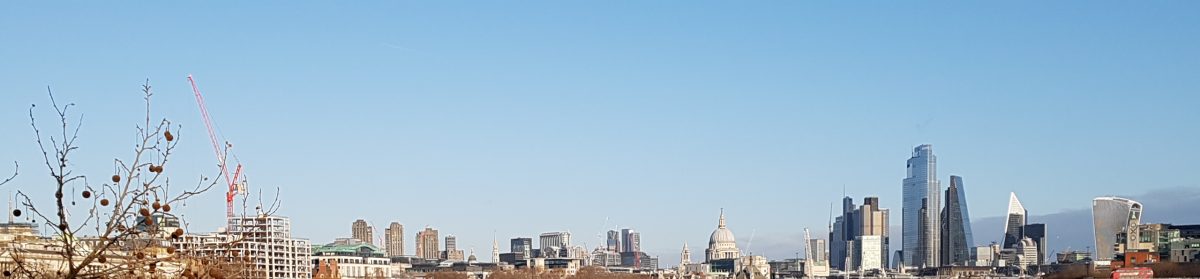
I have been to London several times over the last week or so, so I thought I’d share a few photos of places and nature. I took a couple walks, one of which was from Imperial Wharf to Wandsworth Bridge where I crossed the bridge, walked to Battersea Bridge, crossed back and wandered down Cheyne Walk before carrying on to Vauxhall. This will give you a flavour of my wanderings! Enjoy.
A busy Waterloo station the night a train had broken down and platforms 1-6 were unable to be used!Along the EmbankmentAutumn glow in the gardenArt installation on the SouthbankAmal at Trafalgar SquareHello snailRoseFull moonRiver Thames between Battersea and Wandsworth BridgeThamesSt Mary’s Church, BatterseaThomas Carlyle’s House, Chelsea (writer)Helicopter landing at Heliport near BatterseaPost boxes for houseboatsImperial WharfChelsea HarbourImperial Wharf Gardens (river to the right)No 16 Cheyne Walk, the former home of Gabriel Dante Rossetti (artist and keeper of Wombats!)Home of the Chelsea Pensioners and also grounds (now cleared) for the annual Chelsea Flower Show
Gate leading from Berwick Church which to me shouts an invitation!
Apologies for the delay in posting the final part of this trip. I have had a really busy week.
I left you as we departed Berwick Church, and headed to Bateman’s, the home of Rudyard Kipling.
Bateman’s from the garden
This was an added bonus for me because though it has nothing to do with The Bloomsbury Group, it did play into my other passion – The Pre-Raphaelites, who I have written about a few times before on my blog. Rudyard Kipling’s aunt Georgiana Burne-Jones, nee McDonald, was married to Edward Burne-Jones, great friend of William Morris. The Burne-Jones and Kiplings had houses in Rottingdean in Sussex for a time.
The dining room with leather wallpaper
However, Rudyard Kipling liked his privacy and wanted to escape his fame, and found Bateman’s which sits in grounds of its own away from the village and even further from a station. Even so, people did sometimes venture out to the house. There is a window where his wife could peep through to see who had knocked on the door. If it was some hopeful fan, the door wasn’t opened!
The downstairs rooms of the house are quite dark and there was no electricity when the Kiplings moved in. He was one of the earliest people to have electricity installed. It also made it easier for his servants. It seems he was quite a thoughtful employer. The dining room has original leather wallpaper which has been cleaned once, but they have to be careful now as it is so delicate. Like lino, it cracks.
Around the house are photos and plaques of Rudyard’s beloved India where he was born and later worked. However, he didn’t have a very happy childhood. He and his sister were sent back to England and looked after by a married couple. The lady did not take to Rudyard and preferred his sister. He had a miserable existence, due to neglect and cruelty, until his parents returned and removed them from the house.
Kipling’s study
Rudyard Kipling and his wife had three children. Josephine died aged 6, something that affected them deeply. Their son John died in the war. Their third daughter, Elsie, eventually married, but there were never any children.
I fell in love with Rudyard Kipling’s study where he wrote It is a large room with many book shelves, and a day bed where Rudyard would often mull over things when he got stuck with his writing. There is John’s old bedroom with his football boots and hockey sticks and photos of him in his army uniform
John’s bedroom
.
Music room
Outside there are lovely gardens, but due to lack of time we didn’t have quite enough time to visit them all. This would be worth a second visit – I shall have to persuade a friend with a car as local transport is still infrequent and there is a long walk. He really knew what he was doing, did Kipling.
Edward Burne-Jones’ painting of the three Kipling childrenWindowsill with items about May Morris, daughter of William MorrisThe Orange Tree embroidered by May Morris
The final day of our trip, we started off in Eastbourne and the Towner Art Gallery. Here we spent time in the gallery’s storage facilities. Metal frames on wheels were pulled out for us to view paintings that started their original collection. At that time, they were in a different building, which was part of a museum. I remember going there years ago. Now they have their own purpose built gallery almost on the seafront. We were shown paintings by Eric Ravilious, a particularly productive Sussex artist whose paintings I much enjoy, along with other artists of the same era, including Edward Bawden. The two of them worked together on murals for Morley Collage in London, but sadly they were destroyed by bombing in the war. Edward Bawden later painted some different murals for the college which can be seen in their refectory.
The main reason we were there was to see the preparation paintings for Berwick Church by Duncan Grant and Venessa and Quentin Bell. These were stored in a box with paper between the pictures. These were spread out for us on a table so we could look at them more closely.
Last time I said I had a story to tell about one of Duncan Grant’s paintings proposed for Berwick Church. The original painting was not acceptable to the Bishop due to (a) the rather serene looking face of Jesus and (b) Jesus was totally naked – no loin cloth. Now the model for this painting had to stand in the crucifixion pose for a very long time. He was plied with alcohol and tied to an easel. Even so, it was impossible for him to keep his arms straight for any length of time, which is why the arms sag. The serene face was due to all the alcohol consumed. It was possible he was totally out of it! However, the second painting (see below) was accepted.
The Victory of Calvary – Duncan Grant
I have to thank various people for these snippets which came via our gallery guide, other guides, and our leader on the tour. They know their stuff. Like the fact that the name Rudyard comes from the place he was conceived.
After time in the storage room, we went into one of the galleries and through to the library and Eric Ravilious’ room. This contains various paintings and ceramics. Well worth a second visit.
We had lunch close to the sea, under a tree to shelter from the spits and spots of rain. After lunch, we headed inland to visit our last house – Farleys House, which is between Eastbourne and Bexhill. I’d only heard about this house a few months earlier and wasn’t sure what to expect. I knew it was the home of Roland Penrose (Surrealist painter) and Lee Miller (photo journalist), but that was all. Well, I fell in love with house.
A murky looking Eastbourne
Sadly, no photography is allowed in the house, as it still belongs to the family, but the walls are brightly painted in yellow and light blue. In the dining room the fireplace has a beautiful wall painting by Roland of the sun and moon. The house had interesting visitors, one of whom was Picasso, and there is a tile painting of his by the Aga. Every space has something interesting to look at. Even in the hallway, paintings and sculptures fill corners and walls.
Farleys House
There is much I could say about the couple who lived in this house, but I would direct you to the website. When the couple moved here, Lee became interested in cooking. She sort of reinvented herself. Her past was shut away in attics which her son only found after she died. Her photography is still being collated and it is hoped that an exhibition of the photos she took after troops liberated the camps after the war will then go on show.
In the sculpture Garden
The garden is littered with sculptures of all kinds. Also on site is a warehouse/barn with some photographic exhibitions, Roland Penrose’ Jeep, as well as a second exhibition space, cafe and toilets.
Roland’s Jeep. He travelled around the world for several years in this
What do the Surrealists have to do with The Bloomsbury Group? Well, they came after them. It was perhaps a natural progression. Art always takes elements from a previous period and adds something new. Influences go a long way and you can often see aspects of another painter in the work of other artists. And then there are the rebellious ones!
The Giant – Sculpture GardenHello sheep
I came home with all these images and thoughts running through my head. This holiday had been cancelled twice due to Covid. Third time lucky. It was worth the wait.
Could the second day of our holiday be better than the first? Oh, yes it could! Our first stop was Charleston House where Vanessa Bell lived with her two children, Julian and Quentin, as well as Duncan Grant and his lover David Garnett. Vanessa was also in love with Duncan and later had a child by him, Angelica. The girl was brought up to think she was Clive Bell’s daughter and was only told she was Duncan’s when she was about eighteen. I told you relationships were rather complicated! It gets more so because when she was born (at the house), David Garnett said that he would marry her one day. He did! I’ve bought the book Angelica wrote about growing up at Charleston. I’m sure it will be mind blowing!
The kitchen sink
The house, when they first lived here, had no running water or electricity. It was rented, and as I said in my last post, the men were conscientious objectors and moved here so they were able to work on the land. Later, the house was used mainly as a holiday home. Gradually, the group put there own touch to it by painting walls, fireplaces, doors and furniture. A studio was built on and Vanessa moved her bedroom downstairs next door to the studio.
The dining tableDining room – walls decorated with paint and stencils
The house is beautiful. There is so much to take in. Everywhere you turn, every room, there is something to look at. To say I love this house is an understatement. Although I have been here before, it still astounds me. The last time I came people were not allowed to take photos. This time people could, so I went a little crazy, despite a rather rushed tour because everything has to be booked in advance (due to Covid restrictions) which mean a backlog and delayed tours if we lingered too long. But linger I so wanted to do!
Door panelBedroomBedroomGarden/sitting roomVanessa’s bedroom surrounded by paintings of her childrenThe studioCharleston House
We were at leisure afterwards to view the garden and the galleries. I think the galleries and cafe are new additions, as I don’t remember them (there is a cafe too). There were two art exhibitions, but the one everyone wanted to see was Duncan Grant from the 1920’s. If you are interested, there is another exhibition of Duncan’s in London at the Philip Mould Gallery, and I’m going along to that next month.
The gardensHouse and gardenThe pond
I have heard that Charleston House is fully booked for the next six months. I may be wrong, but it shows how popular this house is. Enjoy the photos.
From Charleston we got back in the coach for the ten minute drive to Berwick Church. I’ve longed to go here. It was shut for some months while work was carried out, and then there was Covid. It opened again in the spring this year. Here are the murals painted by Duncan Grant, Vanessa Bell and Quentin Bell. Bishop Bell (no relation to Duncan) wanted to revive the art of murals in churches, most being lost during the Reformation. Duncan was approached and he put forward preparation studies for the project.
Christ in Glory – Duncan GrantThe Nativity – Vanessa BellThe Pulpit – Duncan Grant. The original paintings by Vanessa Bell of the saints were vandalised back in the 1960’s and Duncan repainted them.
He used local people as models, as well as themselves. Angelica Bell was the model for Mary. The church was still in the harvest season with a few fruits and veg on windowsills . A lot of the stained glass windows were lost during war bombing and never replaced in case the same thing happened. The result is a lovely light church.
The Victory at Calvary – Duncan Grant (I have a story to tell you about this one next time!)
Earlier in the year I watched a Zoom performance from here. Words by Virginia Woolf (I think from her book Orlando) and music. While the music played the camera moved around the walls and I saw for the first time the beautiful murals. It was a very moving performance. Seeing the murals in the flesh was stunning. I’d love to return sometime.
Plain glass windows and some stained glassSupper at Emmaus – Quentin BellThe Sacraments – Quentin BellThe seasons – Duncan Grant
We had one more place to visit that day – Bateman’s, the home of Rudyard Kipling. Now what had he to do with the Bloomsbury Group? Nothing, other than he was accused by Virginia Woolf (I think it was) of being imperialistic and approved of war. The Bloomsbury Group were opposites to the Victorians, who they considered hypocrites. The Victorian carried on the same things as they did, but the Victorians hid it all!
The other reason for going to Bateman’s was that Monk’s House, the home of Virginia and Leonard Woolf is only open at the weekends, so we could not visit. I have been there before, and it is worth a visit (Virginia’s writing studio is in the garden). It is only a short drive from Charleston House.
Part 3 will be up shortly when I will talk about Bateman’s and the last day of our holiday when we visit another extraordinary house.


 My London+