The Bloomsbury Group and all that (Part 3)

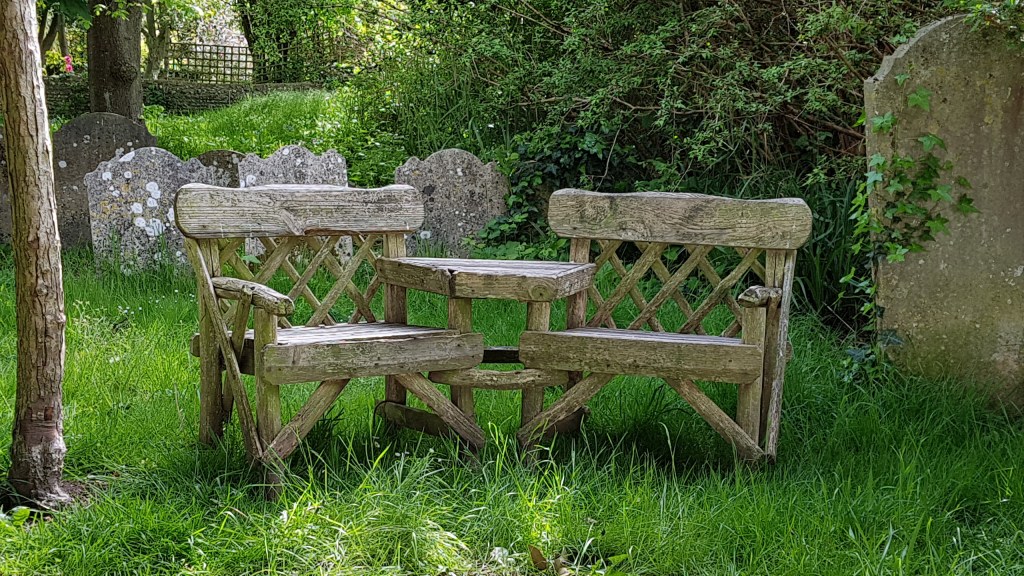
Gate leading from Berwick Church which to me shouts an invitation!

Apologies for the delay in posting the final part of this trip. I have had a really busy week.

I left you as we departed Berwick Church, and headed to Bateman’s, the home of Rudyard Kipling.

Bateman’s from the garden

This was an added bonus for me because though it has nothing to do with The Bloomsbury Group, it did play into my other passion – The Pre-Raphaelites, who I have written about a few times before on my blog. Rudyard Kipling’s aunt Georgiana Burne-Jones, nee McDonald, was married to Edward Burne-Jones, great friend of William Morris. The Burne-Jones and Kiplings had houses in Rottingdean in Sussex for a time.

The dining room with leather wallpaper

However, Rudyard Kipling liked his privacy and wanted to escape his fame, and found Bateman’s which sits in grounds of its own away from the village and even further from a station. Even so, people did sometimes venture out to the house. There is a window where his wife could peep through to see who had knocked on the door. If it was some hopeful fan, the door wasn’t opened!

The downstairs rooms of the house are quite dark and there was no electricity when the Kiplings moved in. He was one of the earliest people to have electricity installed. It also made it easier for his servants. It seems he was quite a thoughtful employer. The dining room has original leather wallpaper which has been cleaned once, but they have to be careful now as it is so delicate. Like lino, it cracks.

Around the house are photos and plaques of Rudyard’s beloved India where he was born and later worked. However, he didn’t have a very happy childhood. He and his sister were sent back to England and looked after by a married couple. The lady did not take to Rudyard and preferred his sister. He had a miserable existence, due to neglect and cruelty, until his parents returned and removed them from the house.

Kipling’s study

Rudyard Kipling and his wife had three children. Josephine died aged 6, something that affected them deeply. Their son John died in the war. Their third daughter, Elsie, eventually married, but there were never any children.

I fell in love with Rudyard Kipling’s study where he wrote It is a large room with many book shelves, and a day bed where Rudyard would often mull over things when he got stuck with his writing. There is John’s old bedroom with his football boots and hockey sticks and photos of him in his army uniform

John’s bedroom

.

Music room

Outside there are lovely gardens, but due to lack of time we didn’t have quite enough time to visit them all. This would be worth a second visit – I shall have to persuade a friend with a car as local transport is still infrequent and there is a long walk. He really knew what he was doing, did Kipling.

Edward Burne-Jones’ painting of the three Kipling children
Windowsill with items about May Morris, daughter of William Morris
The Orange Tree embroidered by May Morris

The final day of our trip, we started off in Eastbourne and the Towner Art Gallery. Here we spent time in the gallery’s storage facilities. Metal frames on wheels were pulled out for us to view paintings that started their original collection. At that time, they were in a different building, which was part of a museum. I remember going there years ago. Now they have their own purpose built gallery almost on the seafront. We were shown paintings by Eric Ravilious, a particularly productive Sussex artist whose paintings I much enjoy, along with other artists of the same era, including Edward Bawden. The two of them worked together on murals for Morley Collage in London, but sadly they were destroyed by bombing in the war. Edward Bawden later painted some different murals for the college which can be seen in their refectory.

The main reason we were there was to see the preparation paintings for Berwick Church by Duncan Grant and Venessa and Quentin Bell. These were stored in a box with paper between the pictures. These were spread out for us on a table so we could look at them more closely.

Last time I said I had a story to tell about one of Duncan Grant’s paintings proposed for Berwick Church. The original painting was not acceptable to the Bishop due to (a) the rather serene looking face of Jesus and (b) Jesus was totally naked – no loin cloth. Now the model for this painting had to stand in the crucifixion pose for a very long time. He was plied with alcohol and tied to an easel. Even so, it was impossible for him to keep his arms straight for any length of time, which is why the arms sag. The serene face was due to all the alcohol consumed. It was possible he was totally out of it! However, the second painting (see below) was accepted.

The Victory of Calvary – Duncan Grant

I have to thank various people for these snippets which came via our gallery guide, other guides, and our leader on the tour. They know their stuff. Like the fact that the name Rudyard comes from the place he was conceived.

After time in the storage room, we went into one of the galleries and through to the library and Eric Ravilious’ room. This contains various paintings and ceramics. Well worth a second visit.

We had lunch close to the sea, under a tree to shelter from the spits and spots of rain. After lunch, we headed inland to visit our last house – Farleys House, which is between Eastbourne and Bexhill. I’d only heard about this house a few months earlier and wasn’t sure what to expect. I knew it was the home of Roland Penrose (Surrealist painter) and Lee Miller (photo journalist), but that was all. Well, I fell in love with house.

A murky looking Eastbourne

Sadly, no photography is allowed in the house, as it still belongs to the family, but the walls are brightly painted in yellow and light blue. In the dining room the fireplace has a beautiful wall painting by Roland of the sun and moon. The house had interesting visitors, one of whom was Picasso, and there is a tile painting of his by the Aga. Every space has something interesting to look at. Even in the hallway, paintings and sculptures fill corners and walls.

Farleys House

There is much I could say about the couple who lived in this house, but I would direct you to the website. When the couple moved here, Lee became interested in cooking. She sort of reinvented herself. Her past was shut away in attics which her son only found after she died. Her photography is still being collated and it is hoped that an exhibition of the photos she took after troops liberated the camps after the war will then go on show.

In the sculpture Garden

The garden is littered with sculptures of all kinds. Also on site is a warehouse/barn with some photographic exhibitions, Roland Penrose’ Jeep, as well as a second exhibition space, cafe and toilets.

Roland’s Jeep. He travelled around the world for several years in this

What do the Surrealists have to do with The Bloomsbury Group? Well, they came after them. It was perhaps a natural progression. Art always takes elements from a previous period and adds something new. Influences go a long way and you can often see aspects of another painter in the work of other artists. And then there are the rebellious ones!

The Giant – Sculpture Garden
Hello sheep

I came home with all these images and thoughts running through my head. This holiday had been cancelled twice due to Covid. Third time lucky. It was worth the wait.

The Bloomsbury Group and all that (Part 2)

The kitchen Charleston House

Could the second day of our holiday be better than the first? Oh, yes it could! Our first stop was Charleston House where Vanessa Bell lived with her two children, Julian and Quentin, as well as Duncan Grant and his lover David Garnett. Vanessa was also in love with Duncan and later had a child by him, Angelica. The girl was brought up to think she was Clive Bell’s daughter and was only told she was Duncan’s when she was about eighteen. I told you relationships were rather complicated! It gets more so because when she was born (at the house), David Garnett said that he would marry her one day. He did! I’ve bought the book Angelica wrote about growing up at Charleston. I’m sure it will be mind blowing!

The kitchen sink

The house, when they first lived here, had no running water or electricity. It was rented, and as I said in my last post, the men were conscientious objectors and moved here so they were able to work on the land. Later, the house was used mainly as a holiday home. Gradually, the group put there own touch to it by painting walls, fireplaces, doors and furniture. A studio was built on and Vanessa moved her bedroom downstairs next door to the studio.

The dining table
Dining room – walls decorated with paint and stencils

The house is beautiful. There is so much to take in. Everywhere you turn, every room, there is something to look at. To say I love this house is an understatement. Although I have been here before, it still astounds me. The last time I came people were not allowed to take photos. This time people could, so I went a little crazy, despite a rather rushed tour because everything has to be booked in advance (due to Covid restrictions) which mean a backlog and delayed tours if we lingered too long. But linger I so wanted to do!

Door panel
Bedroom

Bedroom
Garden/sitting room
Vanessa’s bedroom surrounded by paintings of her children
The studio
Charleston House

We were at leisure afterwards to view the garden and the galleries. I think the galleries and cafe are new additions, as I don’t remember them (there is a cafe too). There were two art exhibitions, but the one everyone wanted to see was Duncan Grant from the 1920’s. If you are interested, there is another exhibition of Duncan’s in London at the Philip Mould Gallery, and I’m going along to that next month.

The gardens
House and garden
The pond

I have heard that Charleston House is fully booked for the next six months. I may be wrong, but it shows how popular this house is. Enjoy the photos.

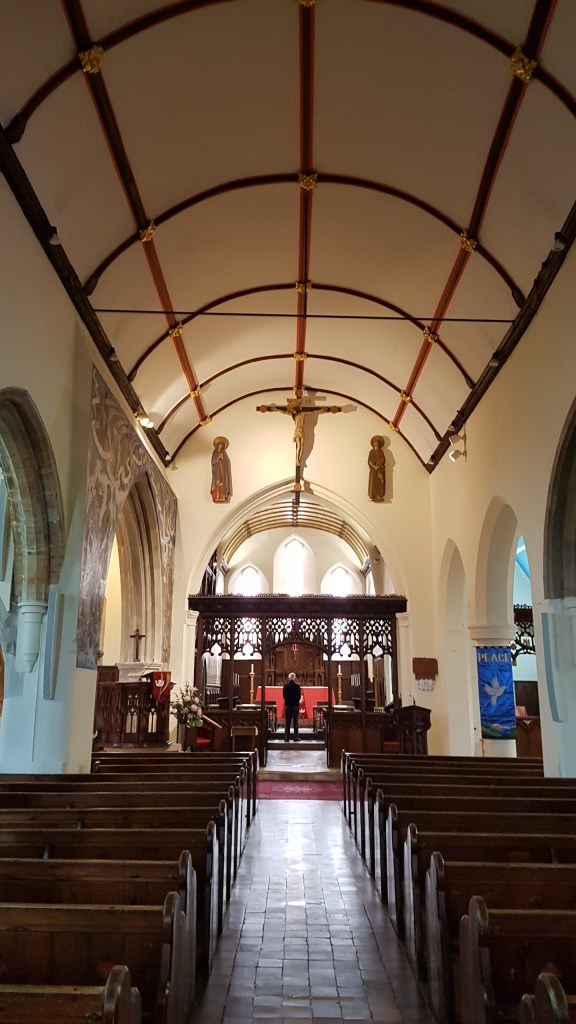
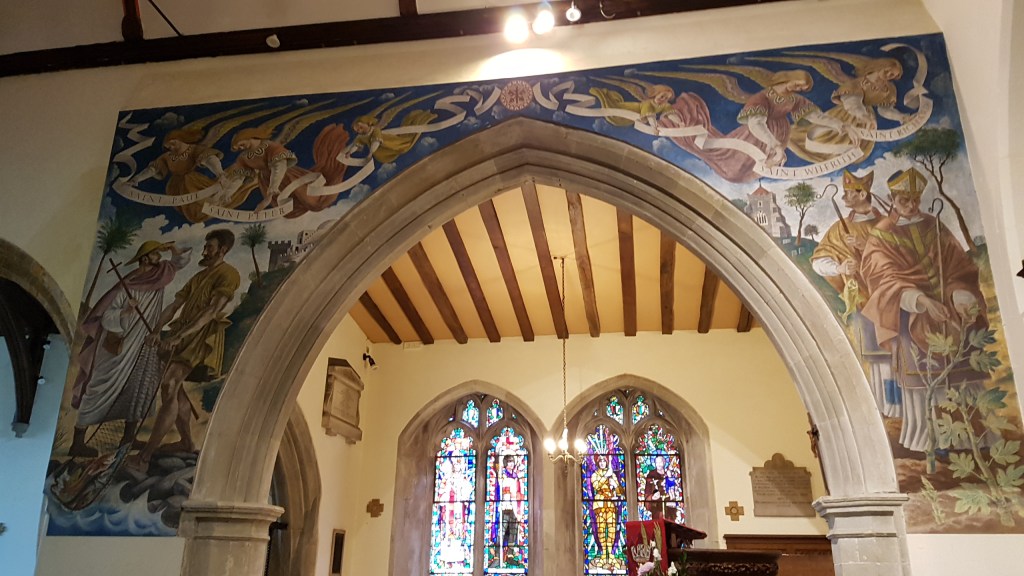
From Charleston we got back in the coach for the ten minute drive to Berwick Church. I’ve longed to go here. It was shut for some months while work was carried out, and then there was Covid. It opened again in the spring this year. Here are the murals painted by Duncan Grant, Vanessa Bell and Quentin Bell. Bishop Bell (no relation to Duncan) wanted to revive the art of murals in churches, most being lost during the Reformation. Duncan was approached and he put forward preparation studies for the project.

Christ in Glory – Duncan Grant
The Nativity – Vanessa Bell
The Pulpit – Duncan Grant. The original paintings by Vanessa Bell of the saints were vandalised back in the 1960’s and Duncan repainted them.

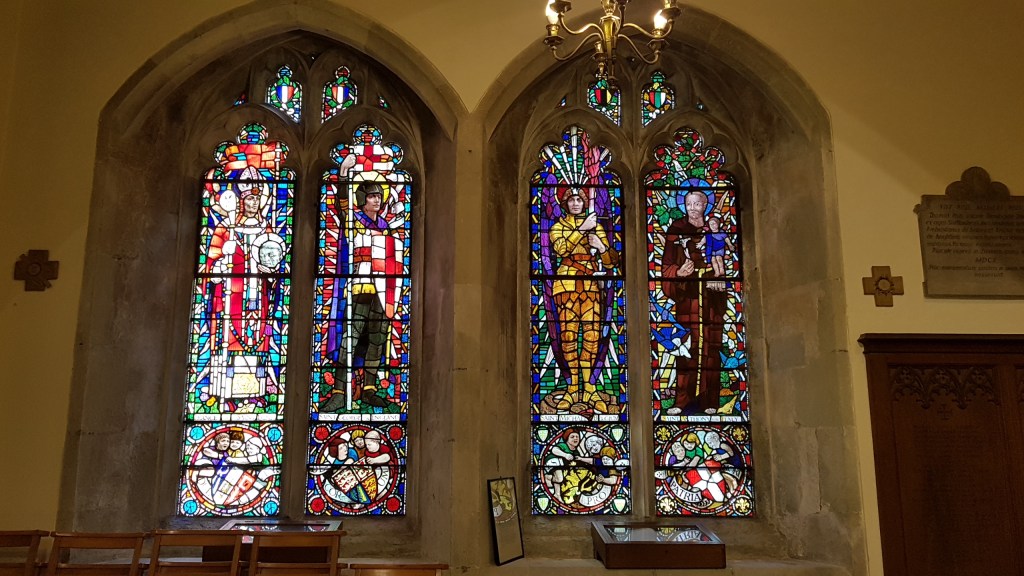
He used local people as models, as well as themselves. Angelica Bell was the model for Mary. The church was still in the harvest season with a few fruits and veg on windowsills . A lot of the stained glass windows were lost during war bombing and never replaced in case the same thing happened. The result is a lovely light church.

The Victory at Calvary – Duncan Grant (I have a story to tell you about this one next time!)

Earlier in the year I watched a Zoom performance from here. Words by Virginia Woolf (I think from her book Orlando) and music. While the music played the camera moved around the walls and I saw for the first time the beautiful murals. It was a very moving performance. Seeing the murals in the flesh was stunning. I’d love to return sometime.

Plain glass windows and some stained glass
Supper at Emmaus – Quentin Bell
The Sacraments – Quentin Bell
The seasons – Duncan Grant

We had one more place to visit that day – Bateman’s, the home of Rudyard Kipling. Now what had he to do with the Bloomsbury Group? Nothing, other than he was accused by Virginia Woolf (I think it was) of being imperialistic and approved of war. The Bloomsbury Group were opposites to the Victorians, who they considered hypocrites. The Victorian carried on the same things as they did, but the Victorians hid it all!

The other reason for going to Bateman’s was that Monk’s House, the home of Virginia and Leonard Woolf is only open at the weekends, so we could not visit. I have been there before, and it is worth a visit (Virginia’s writing studio is in the garden). It is only a short drive from Charleston House.

Part 3 will be up shortly when I will talk about Bateman’s and the last day of our holiday when we visit another extraordinary house.

St Michael & All Angels, Berwick

Tate Britain Exhibitions and autumn has arrived

The Dance – Paula Rego

Above is a photo of my favourite painting by Paula Rego. It is a rare happy painting, because the artist’s work is usually quite troubling, quite disturbing. Her art depicts war, the position of women in society, abortion, FGM, people trafficking and more. Born in Portugal during an oppressive regime, her work is her way of expressing herself about those times. Later, she moved to London and was a student at the Slade School of Fine Art.

The dark content and often wildly abstract paintings don’t inspire me to take many photos and these slightly more acceptable views here are the only ones I took. Paula Rego plays on the more disturbing aspect of children’s fairy stories and folk tales. Her work spans very different artist medium from oil, watercolour and ink, painting on aluminum, to collage and etchings. Her sketch books are stunning to view.

Her life is an interesting and often sad one, and I find learning the background to an artist’s life helps me understand their work. It certainly helped here. I had recently watched a TV programme about her life which brought things into perspective.

The Little Murderess
The Pillowman

There are eleven rooms in this latest exhibition, and is the first time I have seen her work in person. I studied a couple of her paintings for art history (The Dance was one of them), so I was thrilled to finally see the scale of her work.

Human Trafficking

I do wonder how she can work so much on dark subjects. I would find that very difficult. It can be the stuff of nightmares, for sure. They are works you don’t forget when you leave the gallery. The exhibition finishes in a couple of weeks time, should you want to see it for yourself.

The Bear & Red Monkey

Adjacent to Paula Rego’s exhibition was Heather Phillipson’s installations. I found them weirdly compelling. I wonder what you think of these photos! Sound effects accompany the exhibition, giving it an eerie atmosphere.

Heather Phillipson – multiple working TV screens
Rhinos drinking?

This is a moving installation

Autumn is arriving now, and on Saturday I woke to fog. I was out early and spotted the brilliant colours and spiders’ webs. I always have my mobile handy for taking photos, and I actually enjoy fog for picture taking – lots of liquid drops on leaves and so on.

Have a good week everyone.

With autumn comes fog dotted with colour
Spider’s web
Nature doing what nature does

The Mound at Mable Arch

First view of The Mound

The Mound has become a bit of a laughing stock. Only a temporary installation, The Mound (by Marble Arch tube station) opened in July, and shut two days later for a short time because it ‘wasn’t quite ready’! People joked about it. Having paid to visit, some said it was London’s worst attraction. When it finally re-opened it became free to visit, and beneath it was a light show, which most people visiting said was the best part of it. Finally, the whole project was way over budget. Was this the best way for the City of Westminster to spend its money? Well, when a friend and I were trying to decide where to go for our day out, I said, ‘how about The Mound?’ So, we went.
Looking out down the side of The Mound

Right off, I’ll say we had a lovely time. We walked through three parks – St James’s, Green and Hyde Park – to get there. Had we taken the tube we would have missed changing of the guard and a military band rehearsing. London always has something going on and constantly surprises me. When we were close to Hyde Park, two guys asked where The Mound was. I explained we had to get across the next big roadway, and the entrance to Hyde Park was ‘that big white arch over there.’ The Mound was on the other side of the park. We said we were going there and wished them luck. Later, when we stopped on the edge of Hyde Park/Marble Arch we sat down for lunch and found the guys had been following us so as not to get lost! We laughed about it and later saw them on the top of The Mound.

From the top – Marble Arch fountains with Cumberland Gate Lodge in the distance

Our first impression of The Mound was not great. It looked patchworked together. But it was free to enter and, having seen the light show on TV, I was looking forward to seeing that.

The views from the top were OK, but to be honest, it wasn’t spectacular. Nevertheless, we could make out some landmarks and information boards were plentiful and history facts were interesting.

Name that building!

Going down, again we saw the mass of scaffolding to make this installation. I was fascinated by this. To me this was the great work of art! It was also funny to see the trees in pots with their trunks going through the roof – the roof reminding me of our attic with its roofing felt!

Through the roof
The scaffolding

We then entered the light show. Wow! I’d seen one of these installations as part of an art walk last year. But this was spellbinding. Some of these changed colour and there were a few videos. Everything was mesmerising. It’s so dark down there you are almost bumping into people. Luckily, it wasn’t crowded. We both agreed that the light show was the best thing about this installation.

Part of the light show by Anthony James

The Mound is due to be dismantled in January 2022. We were both glad we’d been to see it, and the walk back was just as nice as before. Was it the best use of the Council’s money? No. But it was there and I am not one to refuse to see something once it’s been built. I still like to experience these things for myself.

Here are a few other impressions of London that day.

Buckingham Palace from St James’ Park

Hockney, a book launch & a walk by the Thames at night

Bridges across the Thames

Thursday was a busy day. I had tickets for myself and a friend to see David Hockney’s exhibition at the Royal Academy in the afternoon. I’ve always been a fan of his, and the work for this exhibition was done during lockdown in France using an iPad. What would it be like? This isn’t the first iPad pictures of his I’ve seen. There were a few in the last exhibition, A Bigger Picture in 2009, but this was wholly using an iPad (an App especially adapted for him). The Arrival of Spring is a collection of 116 works include trees, flowers, the house and barn, the pond and the tree house, all within the boundaries of where Hockney was living during lockdown in Normandy. He worked outside (en plein air) as did the French Impressionists before him, and the works were executed between February and June 2020. He worked almost daily, and on occasions he would produce two works in one day.

So, what are the pictures like? Well, photography is not allowed inside the exhibition, though if you Google the name of the exhibition or visit the website of The Royal Academy, you can see some pictures. Here is video preview to whet your appetite.

I loved the fact that I could see how Hockney put the pictures together. Great swathes of colour and then dots or lines. I’d say they are very vibrant, lots of bright green. I wondered about the restrictions of using a iPad to paint. Was this why they were so bright green? Then again, Hockney does like vibrant! His A Bigger Picture had lots of bright colours on canvas. I realised that this is the way he paints. His style is unique and recognisable. Did we like the pictures? I feel guilty in saying that we we spend just thirty minutes at the exhibition (we spent the same time in Hatchards Bookshop!). However, we agreed that it was good to see them. A few (well, particularly one) were what I’d call naive art, almost a first attempt. It looked rushed and childlike. The ones we particularly liked were those of rain on the pond. The pictures are very bright, and perhaps best seen from a distance, but then again you miss the technique. I have never tried art on an iPad, and I am a dabbler in art, so what do I know? Big named artists draw big crowds whatever they do, and David Hockney always draws a big crowd. I had difficulty getting tickets for the exhibition in the first place. They were going like hot-cakes.

Certainly it was worth a viewing, and certainly it was different. David Hockney can do no wrong in my eyes! It was a challenge and he took. He has always done things differently to others, and seems to relish new technology. I also love his attitude to life! Like many artists he used the same subjects time and again, on different days and different times marking how spring arrived. Monet did the same thing with buildings. It also remind me of how I watched spring arrive last year. I used to jog around a local park. In my case, I took photos every time I was there. I’d photograph the trees sprouting leaves from bare branches, and the flower beds went from nothing to a riot of colour. I took photos. Hockney painted with an iPad. We will all remember that spring differently. It was unique and beautiful, despite what else was going on.

A Field Guide to Larking

In the evening I went on to Southwark Cathedral for a book launch of A Field Guide to Larking by Lara Maiklem. I already have her fascinating first book, and this one I ordered at the time, so I could pick it up on the night. I was in the queue early so I could get a good seat! I collected my book and then sat down. Of course I flipped through the book while I was waiting. In fact I began reading it! The resident cat, Hodge, was strolling around and one time went up the steps past Lara as she was speaking!

The talk was interesting and informative. Lara gave advice and recounted instances of finds or funny things, items she found she thought weren’t that important only to find they were, and vice versa. At the end there was time for questions and answers.

Lara Maiklem

I was so chuffed to clutch my book. It is illustrated and has room to log your own finds. I can’t wait to read the whole book and get started. Just so you know, if you want to go mudlarking you do need a Licence!

Before and after the book launch, I took photos along the River Thames from London Bridge to Tower Bridge. I finally got to see the bridges with their illuminations. I had a nice stroll back to the station at Waterloo along the south bank after a very interesting arty day!

Tower Bridge
Shad Thames
The Anchor

Millennium Bridge
Hungerford Bridge

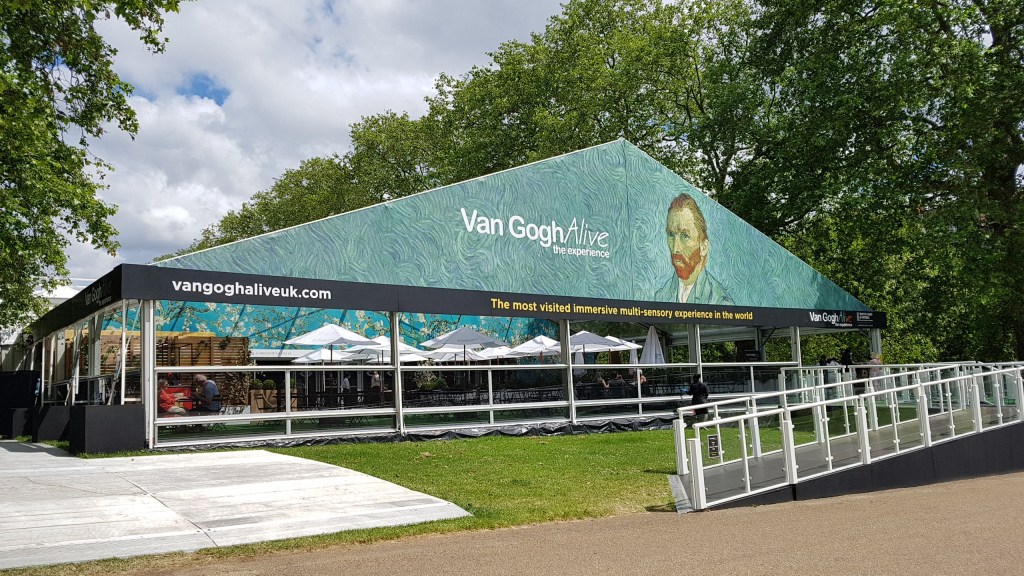
Van Gogh Alive Exhibition, Kensington Gardens, London

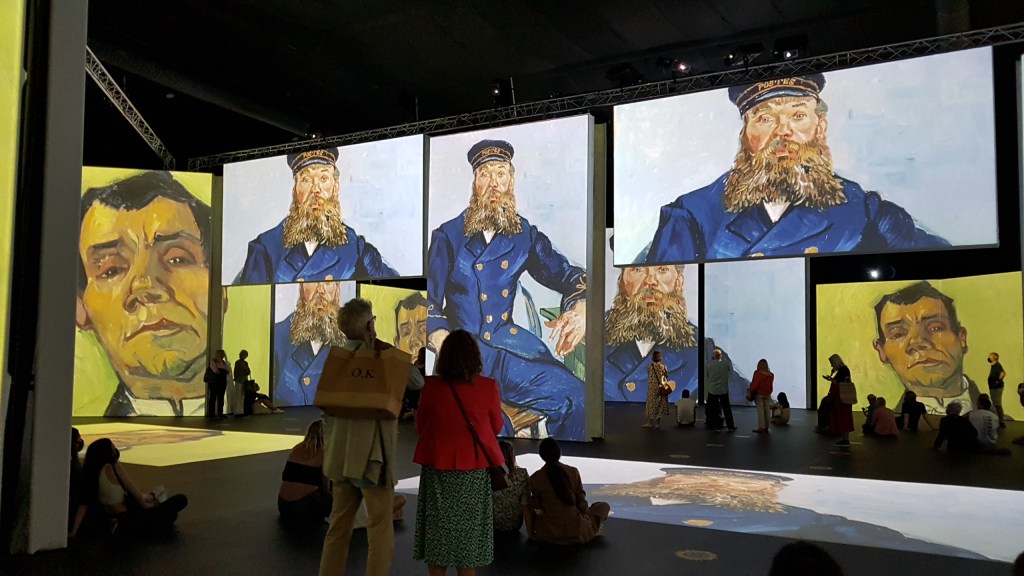
This exhibition has been around the world and to various parts of the UK. It is a totally different way of experiencing art.

It was a warm day the day we went to the exhibition, though it began cloudy. We walked from Victoria station, taking in the gardens of Hyde Park before reaching Kensington Gardens, where we ate lunch. The sun was out by then and it had become hot.

F

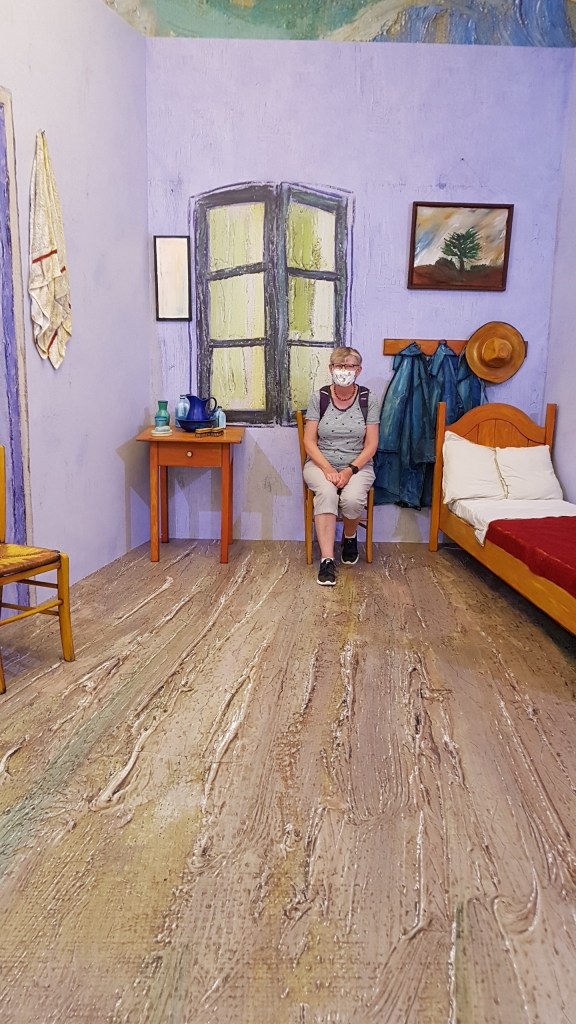
At 1pm we entered the temporary exhibition site close to the Albert Memorial. All the information about the experience, along with details about Van Gogh’s life, the paintings and how/when he came to paint them are on boards before you enter the experience itself. There is also a mock-up of Van Gogh’s bedroom where you can take photos. You are able to sit on the chair (the chair is wiped down each time to make it safe!).

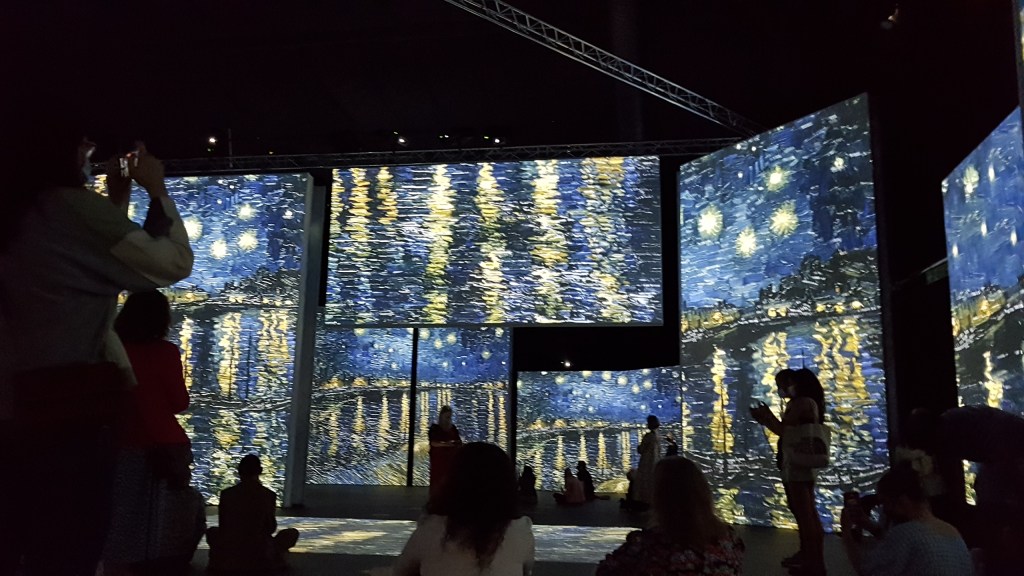
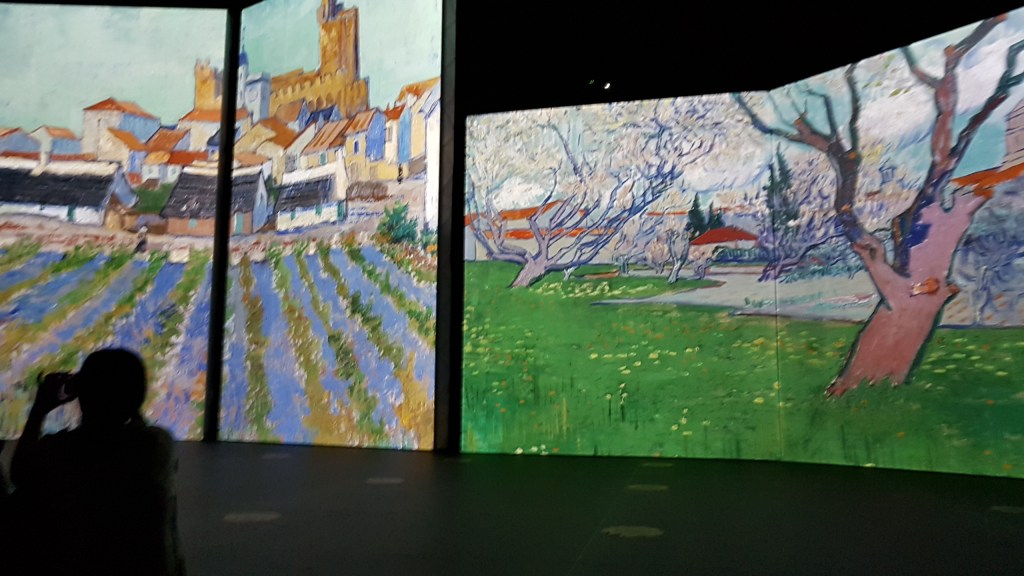
Entering the experience itself, you are greeted by music and huge screens with every changing paintings. There are the 2 metre roundels showing where you may stand or sit. Sitting is the best option as the experience lasts about one hour. When we entered, the film was about half way through. We sat in the first area, but later moved forward as people standing were blocking our view. All around you – to the front, sides and back, sometimes even on the floor, the paintings move and change. The film is nicely put together, going through Van Gogh’s life, and the music matches the mood of the painter. Van Gogh was a prolific letter writer (he often illustrated his letters with sketches), and some of his words are displayed alongside paintings.

Many of the images are 3D and cleverly done so that birds fly, trains move between paintings. We stayed to see the film from its beginning until almost the end again. The room is air conditioned. There are no seats, so you must be prepared to either stand or sit on the floor. We loved the experience so much we could have happily stayed there all day. A nice day bed would have been handy!

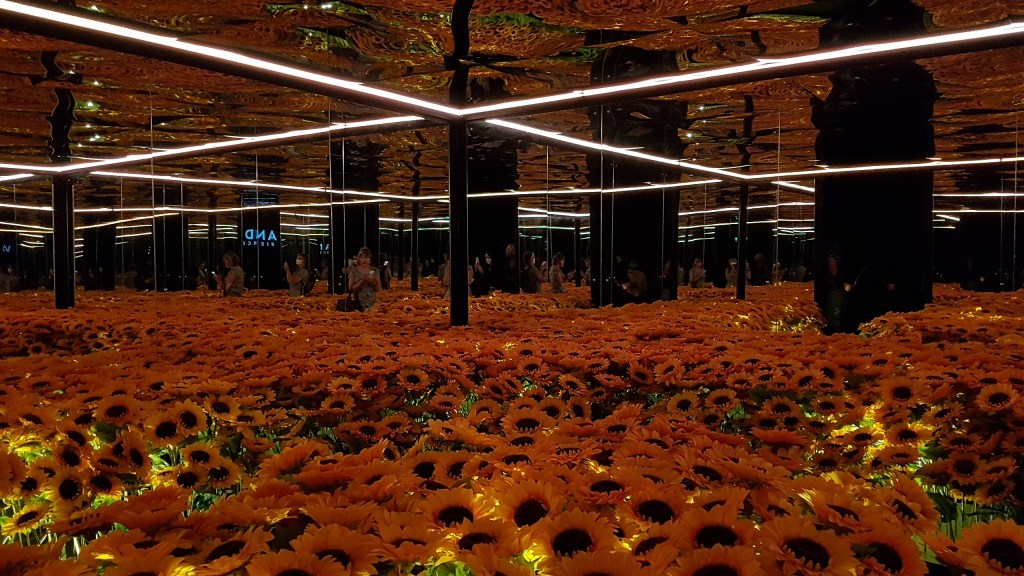
Coming out of the main room, you enter the sunflower room. This is small but with mirrored walls and ceiling, it appears far bigger. From there you exit into the shop. There are toilets, and a cafe. However, we found somewhere outside to have a drink, which was probably cheaper!

Would I recommend this? Yes! The friend I was with did not know much beyond the Sunflowers painting of Van Gogh’s, and she was amazed how many paintings he did. I always feel sad that artists such as Van Gogh, who struggled to make a living, never knew how famous he would be. He struggled too with his mental health (it was later thought that he was bipolar), and he was happiest when he was painting.

I have been to Van Gogh exhibitions in the past, but this was certainly different. I think it would appeal to all kinds of people. The way it is presented, you have to do nothing but watch. No squinting at plagues by paintings to read about it. No waiting behind people to get a glimpse of art works. It’s there, right in front of you. It bombards you, it is in your face art, and it is moving.

Old Bexhill, Eastbourne and John Nash Exhibition

Old Bexhill

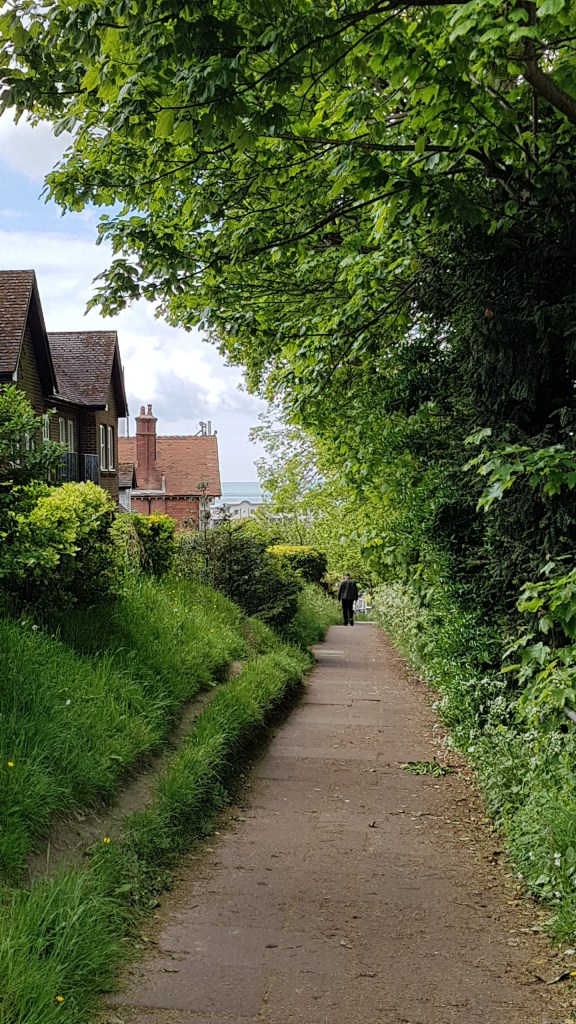
Wednesday 26th May: I had no idea there was an old part of Bexhill. I came across it on a map and as I had some free time before heading off into Eastbourne, I decided to take a look. Just a ten minute walk from where I was staying brought me here. Lovely old buildings, a manor house and a church made this the ideal place to spend some time.

The hill – looking back to Bexhill seafront

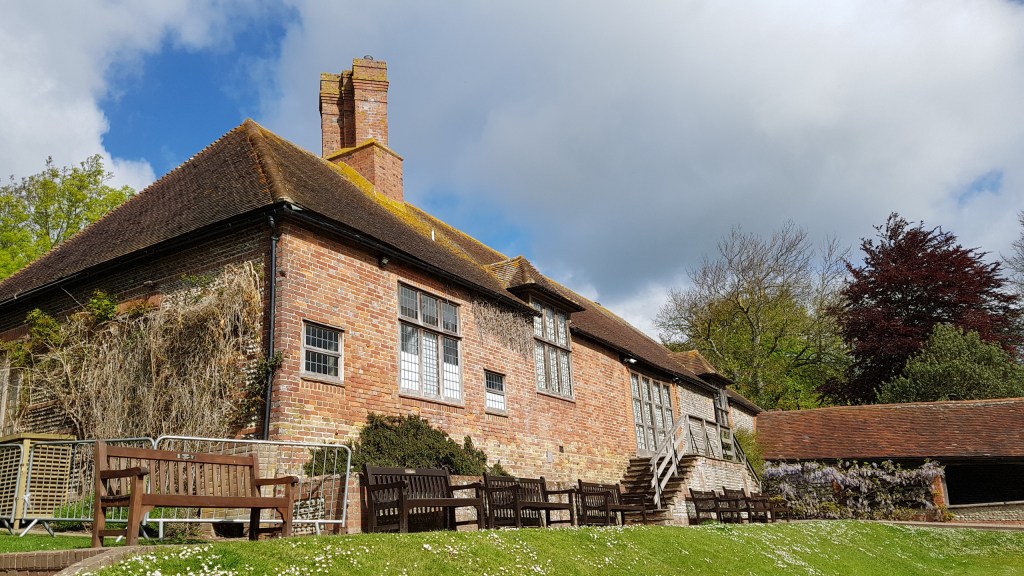
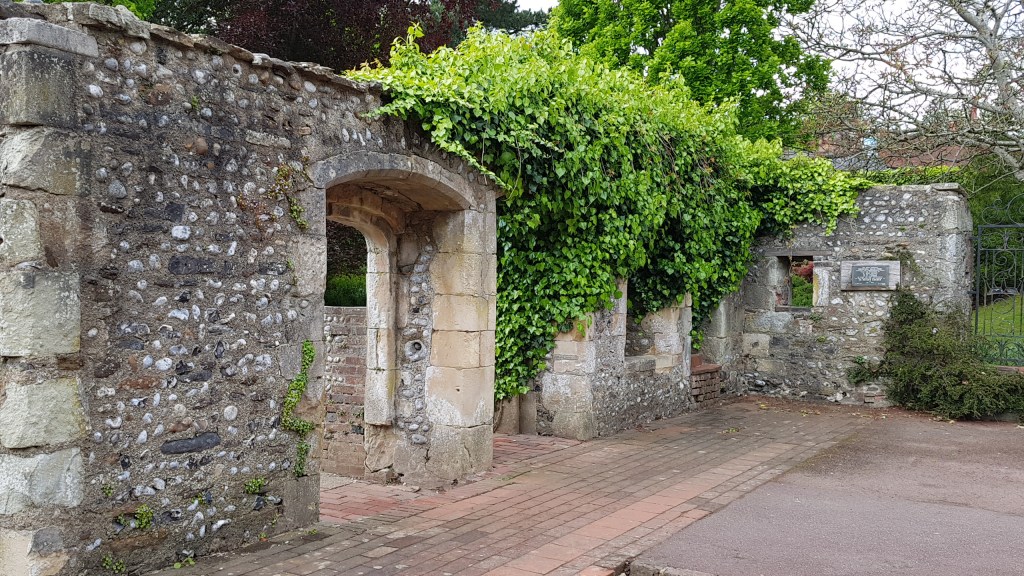
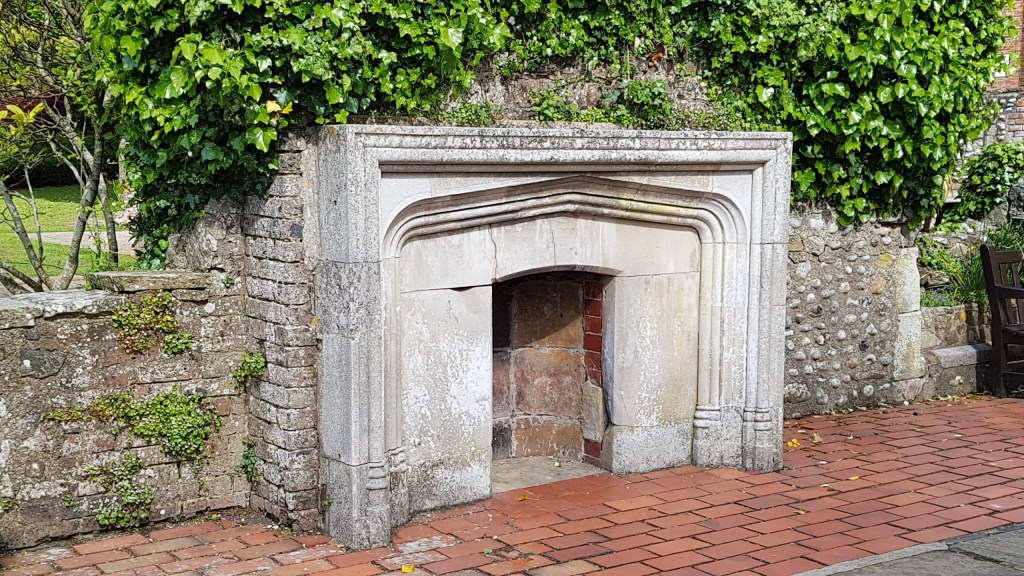
The walk up is a tree lined path, and looking back from the hill you can still glimpse the sea. The village is small – a few shops, a tea room/cafe (which I considered, but I’d not long had breakfast!), the church of St Peter’s and the Manor House. The Barn is the only building still standing, and is now a venue for weddings and other events. The ruins of the Manor House still show glimpses of rooms with fireplaces, arches and windows. The gardens are beautiful. There are many places to sit and the peace and quiet settles around you. There is so much history here. There has been a house on this site for 900 years and I can do no better than direct you to the website for the full history. Please do read about the Manor House here.

The Barn
Ruins of the Manor House
Fireplace
The gardens

Having sat and enjoyed the peace and warmth (the sun was out at last), I began to head back, but as I came to the church, a man was putting out a board and I asked if they were open and could I look round. He happily let me have a wander, putting on lights so I could see better. We had a chat, and he gave me one of their parish diaries. The embroidery circle was arriving for their morning get together, and I realised how much I’d missed being able to visit churches and the familiar goings-on of parish life. Since Covid 19, this was just the fourth time I’d set foot in a church.

Churchyard, St Peter’s Church
St Peter’s Church
Windows, St Peter’s
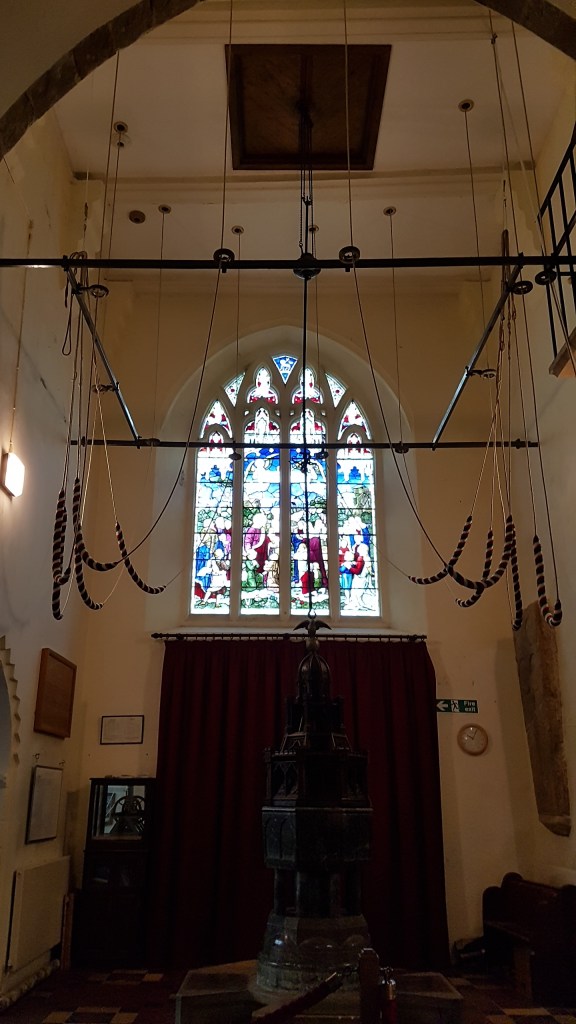
The bell ropes, St Peter’s
St Peter’s Church

Leaving the Old Town behind me, I knew I’d have to go back another time. I headed to the sea front and the De La Warr Pavilion. There was a free exhibition which I wandered through and I paid a visit to the shop (never can resist a shop with so many books!). There was also a guy there selling vinyl records, and I was tempted, but I knew I’d have to get them home safely if I bought any, and my suitcase had been pretty full from the start.

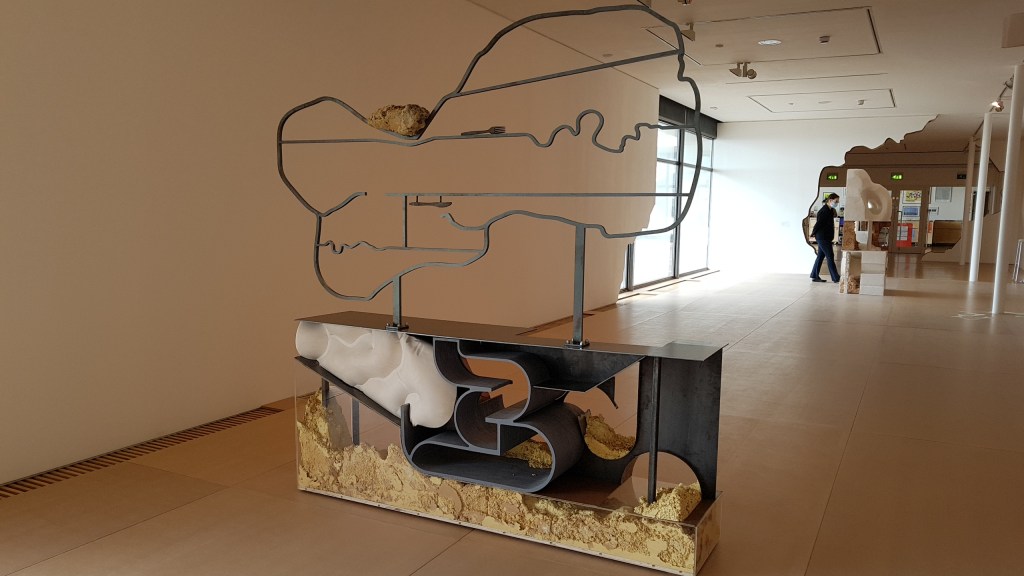
Holly Hendry – Digesting the conversation
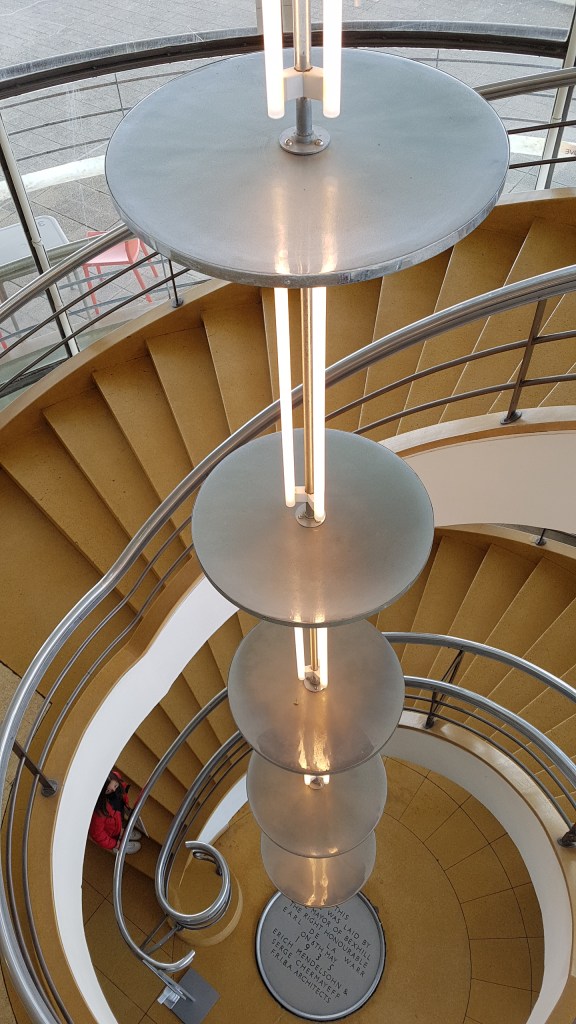
The staircase, De La Warr Pavilion

It was still a little early to go into Eastbourne. I was due to meet my brother there at 12.30pm. We’d not seen each other since the end of July last year. For a while I sat on the seafront where it became quite hot. Finally, I set off for the station. The journey only takes about fifteen minutes or so, and for a while follows the coast, and you have some great views of the sea. At Eastbourne station I met my brother, and we had lunch together before heading off to the Towner Gallery to view the John Nash Exhibition.

I’m a big fan of John and Paul Nash. Both were war artists, though their directions later were different. This link takes you to a page of the Nash brother’s war art. At the exhibition there was a whole range of John Nash’s art from his war paintings to his illustrations for book covers and books, from his early days to his last days. It was a fascinating exhibition, and featured art from artists he was friends with (Edward Bawden being one) and his brother Paul. There was much information about John Nash’s life, his mother’s mental health, his loves, and his little son who died tragically in an accident.

Here is another link to art works for sale. A lot of these are on view at the exhibition, and it shows the range of John Nash’s art.

Image Christies

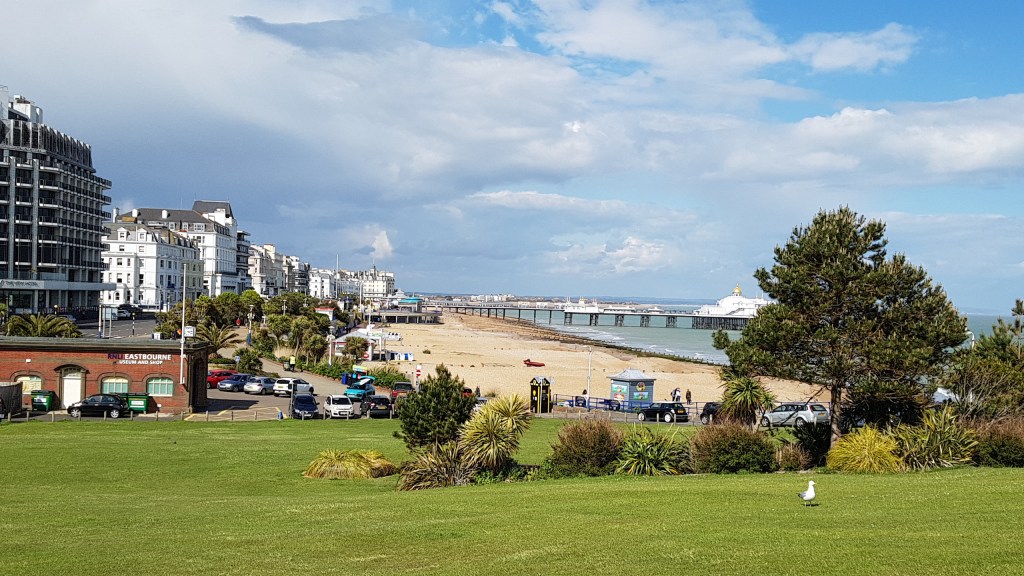
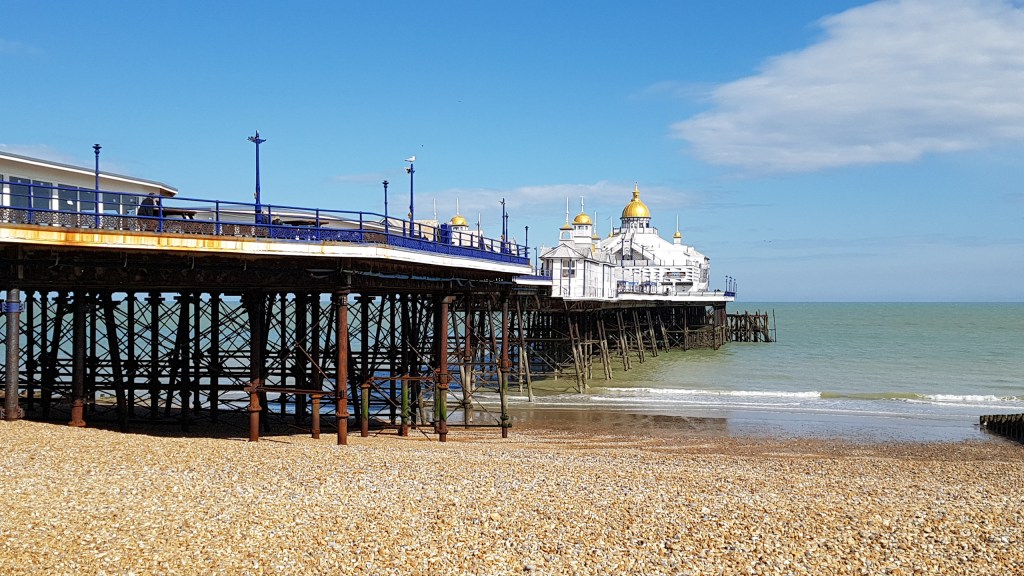
After the exhibition we had a walk along the seafront towards the pier before going back to the station. The weather had certainly improved. There had been more sun than cloud this day.

Eastbourne
Eastbourne Pier

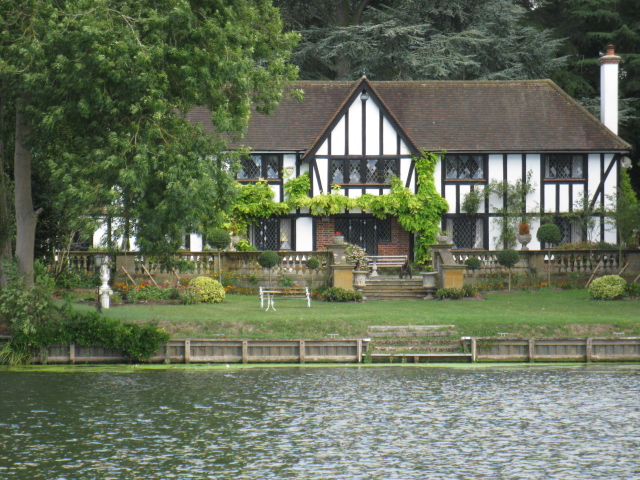
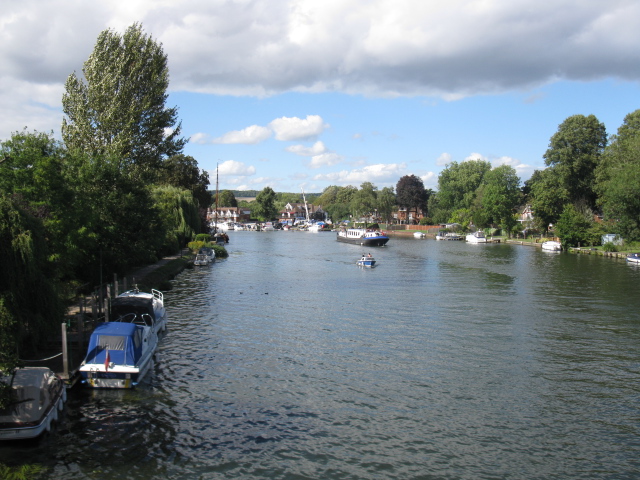
The River Thames – Cookham (NaBloPoMo – Day 11)

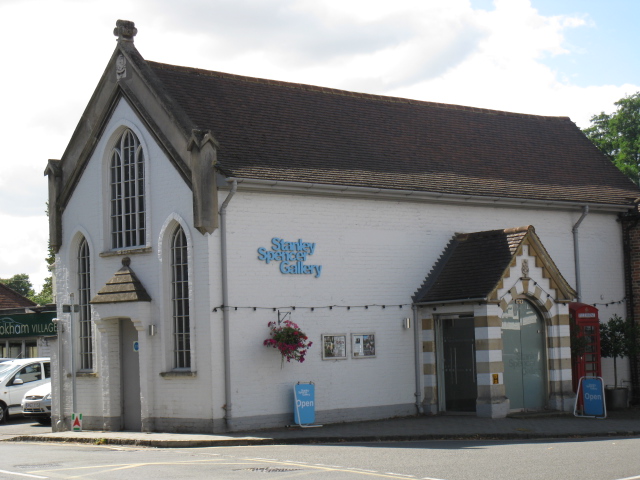
In 2015 I travelled to Cookham in Berkshire, primarily to visit the Stanley Spencer Gallery.

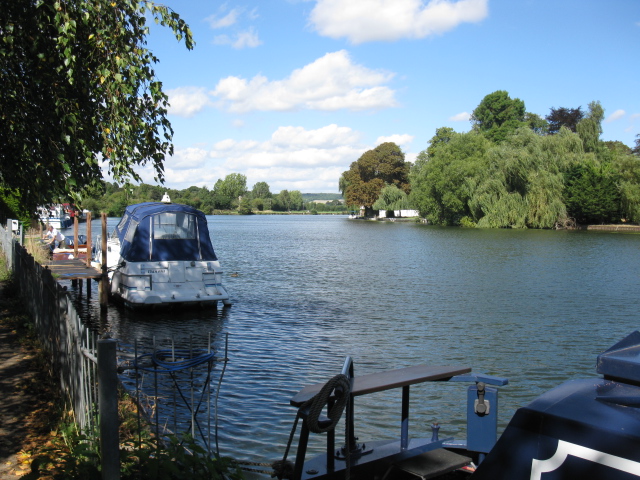
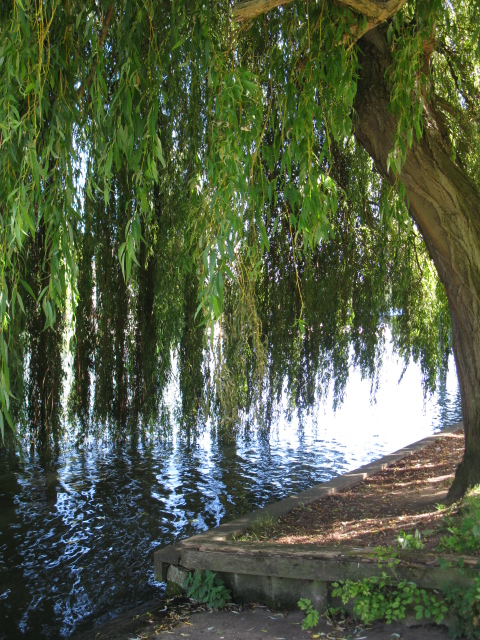
It just so happenes that the village is by the River Thames, part of the Thames Path. Did I need any more excuses to go?

It was a perfect day, hot and sunny. Getting there was fun though. There was some trouble on the railway and I had to get off the train at an earlier station. Staff normally lay on rail replacement buses which this happens. However, that day there were cars! I had to bundle in tha back of a car with two others and each of us was dropped at the station we going to. One of the strangeest experiences I have ever had. We also just missed being a crash, as a lorry shed its load! Thankfully, after that the day improved.

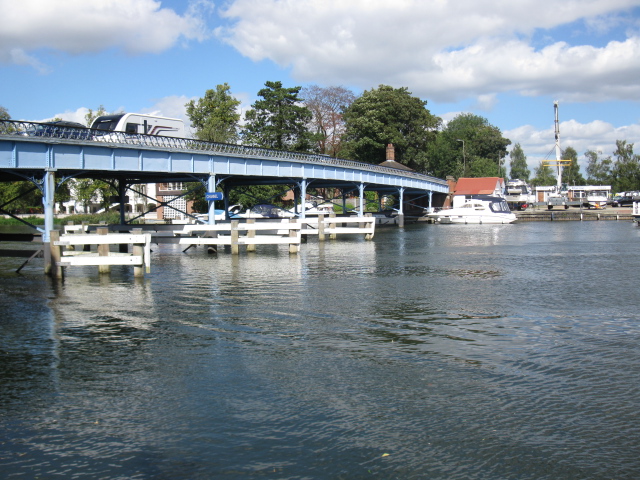
After visiting the Gallery (a long wished for visit that didn’t disappoint), I wandered along the Thames Path towards Bourne End. I didn’t quite get all the way, but I was within touching distance.

I recently found out that Stanley’s daughter Unity, died in 2017 and is buried at Holy Trinity Church, Cookham. Being the daughter of Stanley was difficult in her younger years. Like most artists (it seems) he wasn’t the easier man to live with. She led a distruptive life according to a book I read recently. However, according to her son John, Unity found being Stanley’s daughter later in life more of a pleasure. You can read more here.

Here are some pictures from that day.

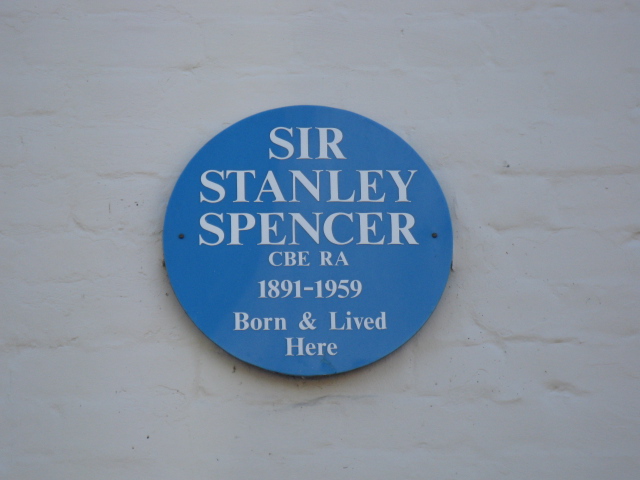
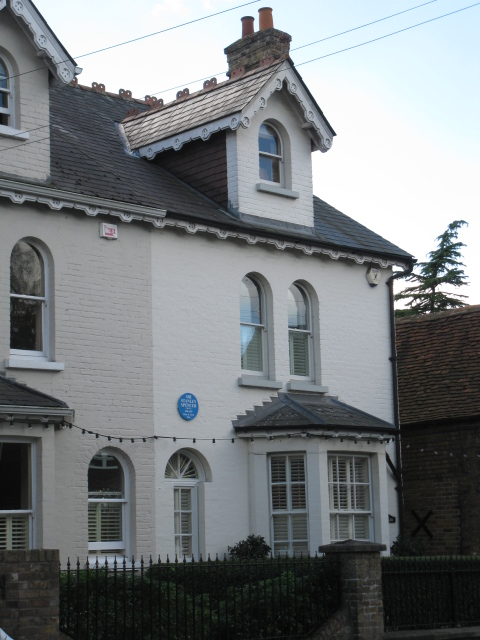
The house of Stanley Spencer
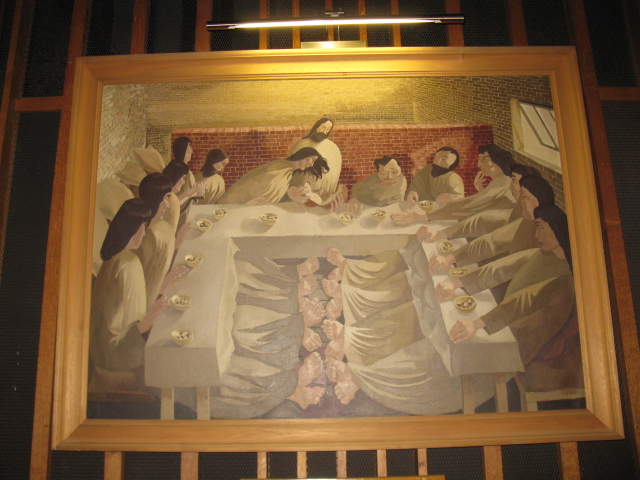
Stanley Spencer – The Last Supper (1920)
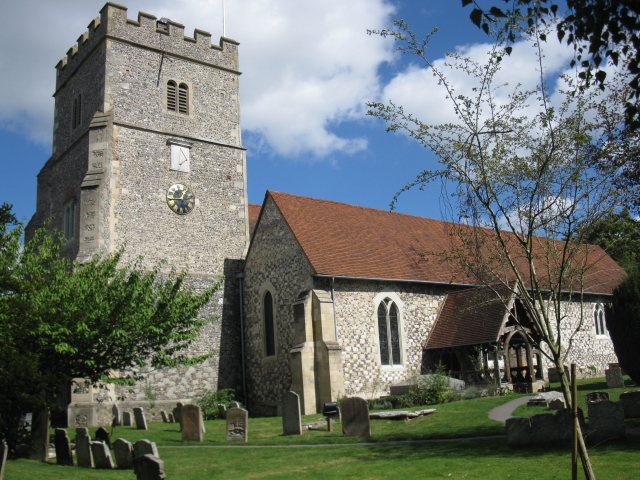
Holy Trinity Church

NaBloPoMo – Day One

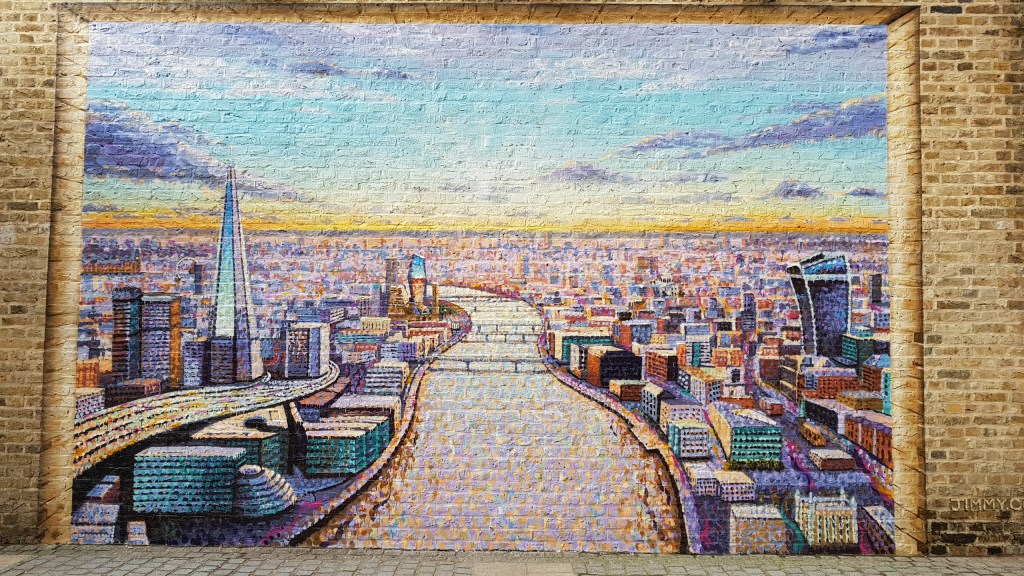
Jimmy C street art at Blackfriars Bridge, London. Jimmy C is an Australian artist inspired by coloured dots used in Aborginal art (thanks to Look Up London for these extra facts)

NaBloPoMo stands for National Blog Post Month. The aim is to write daily blog posts. I have taken part in this before with other blogs I write. This year I’m taking the challenge on here.

After the news last night, that England is going back into lockdown on Thursday 5th November until 2nd December, we all need positive images in our lives. It will still be possible to meet one other person not in your household outside, but with cafes, bars, restaurants and leisure facilities closed there is little to do except walk. Luckily, that is something I enjoy doing.

My usual posts will appear here, but in between I shall be posting other things – maybe just a photo or two. Who knows?

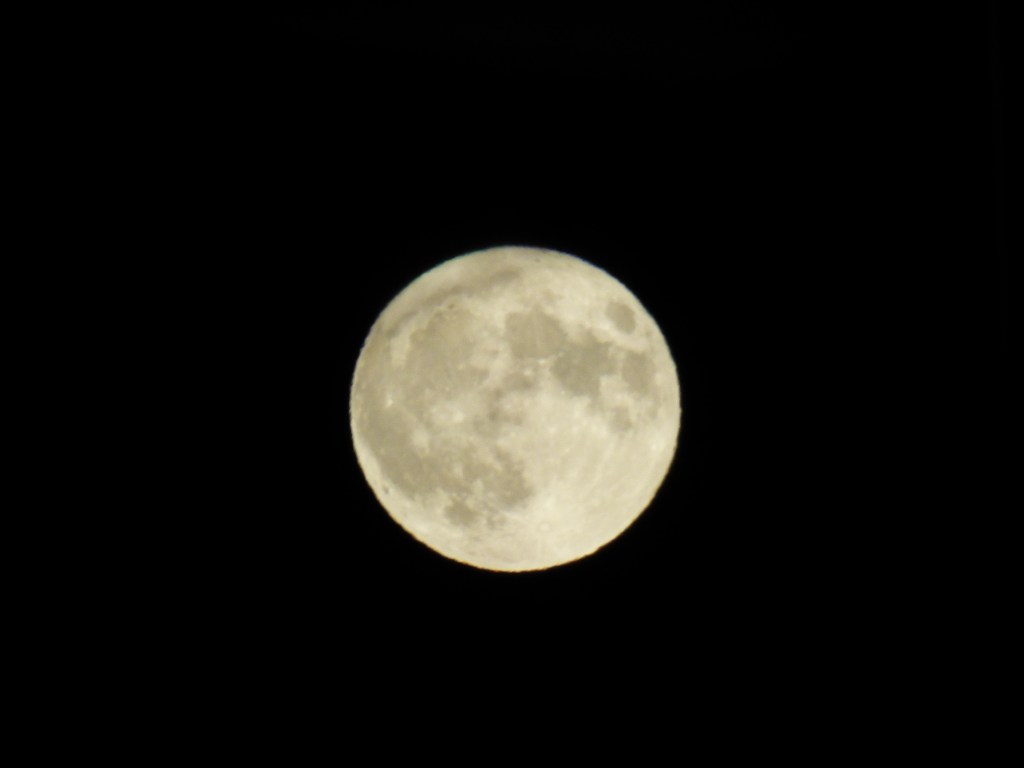
So here is the first one. It was full moon last night, the second one in the month, called a Blue Moon.

Royal Academy late Summer/Winter Exhibition

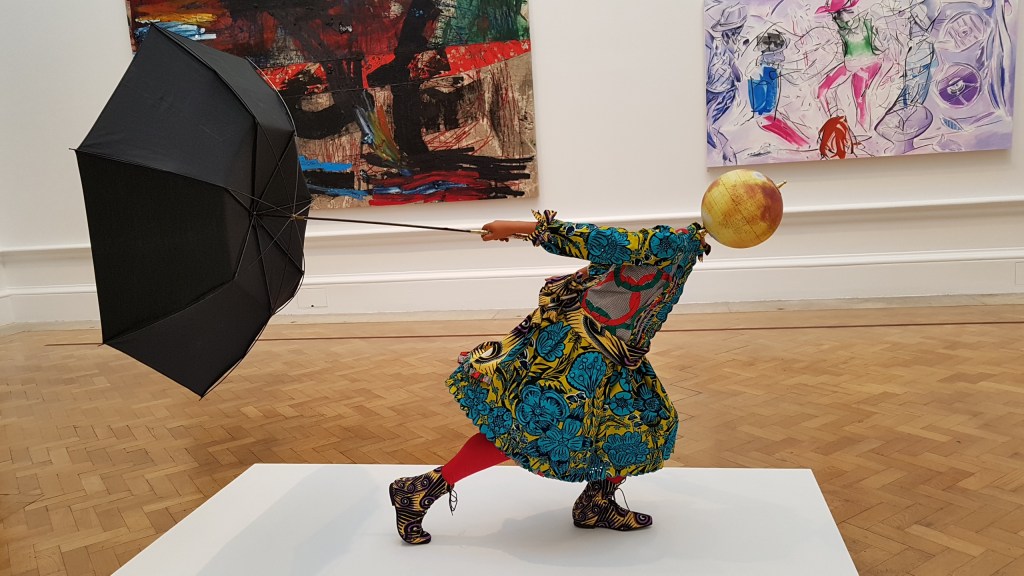
Air Kid (Girl) Yinka Shonibare

This was a visit where two people (friends) who were going to the exhibition together, had to enter apart to get in! With local restrictions (Covid 19) two households are not allowed to mix indoors, and this also means not visiting galleries together. The RA had not connacted me about this (I’d bought the tickets before these restrictions were in place). It was my friend who told me as she had seen it on their website. However, it’s not blazen across their website – I had to go looking for it. So, we worked out a stratergy. Luckily, the tickets (printable) were on separate sheets, so when we met I gave my friend her ticket. We bought lunch at the station and ate in Trafalgar Square.

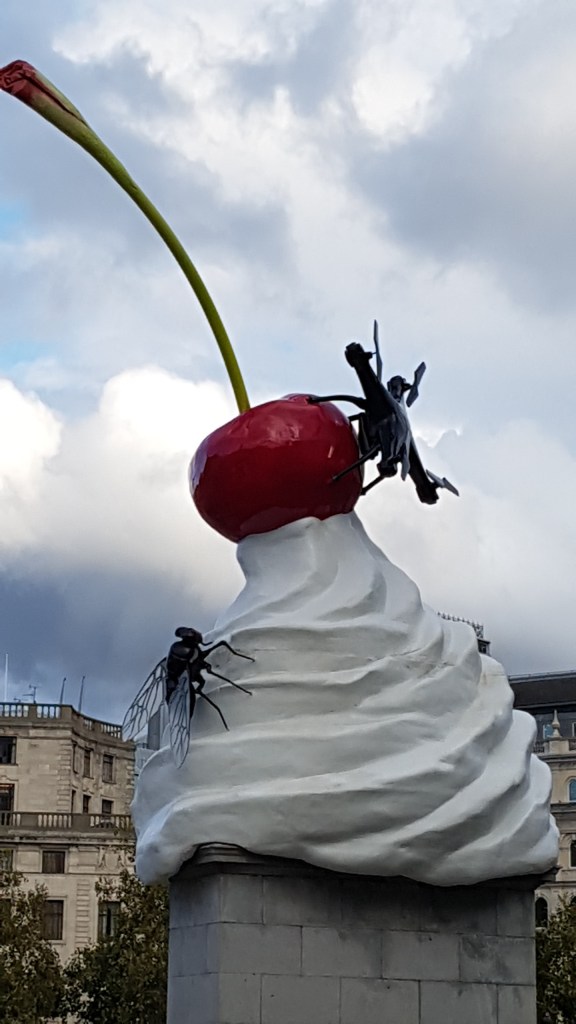
The Fourth Plinth, Trafalgar Square

On arrival at the RA I went in first and my friend followed a few minutes later. We went round the exhibition separately and met up in the last room before going around the shop together. Outside we had a cuppa and sat by the statue of Joshua Reynolds for a chat.

Bringing the Past to New Horizons – Anthena Anastasiou

I understand the policy of the RA, but everyone has to wear a mask, the numbers of people kept are low (the RA does really well, and I applaude them for that. I always feel safe there). But we were just two people, not a group. My friend was convinced we would get stopped. I was pretty certain we would be okay. Obvioulsy now, I would not book tickets for us while the restrictions are in place, but we did do it safely.

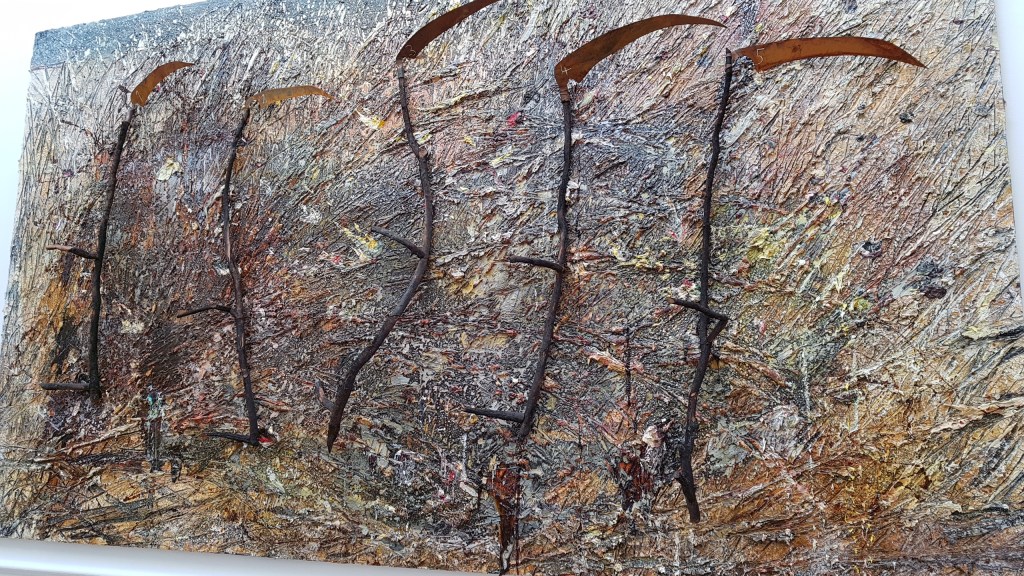
Vier Plus Eins – Anselm Kiefer

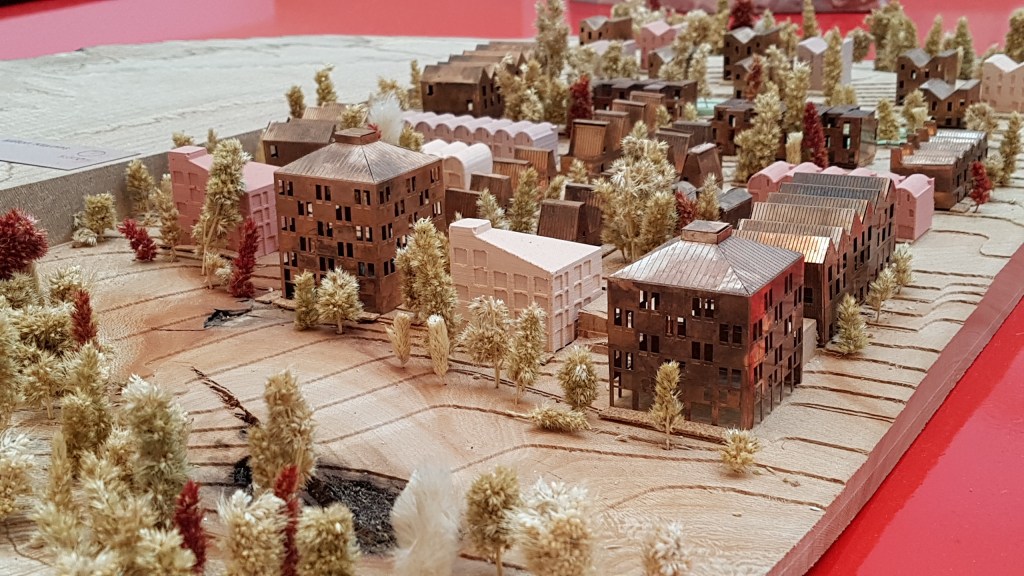
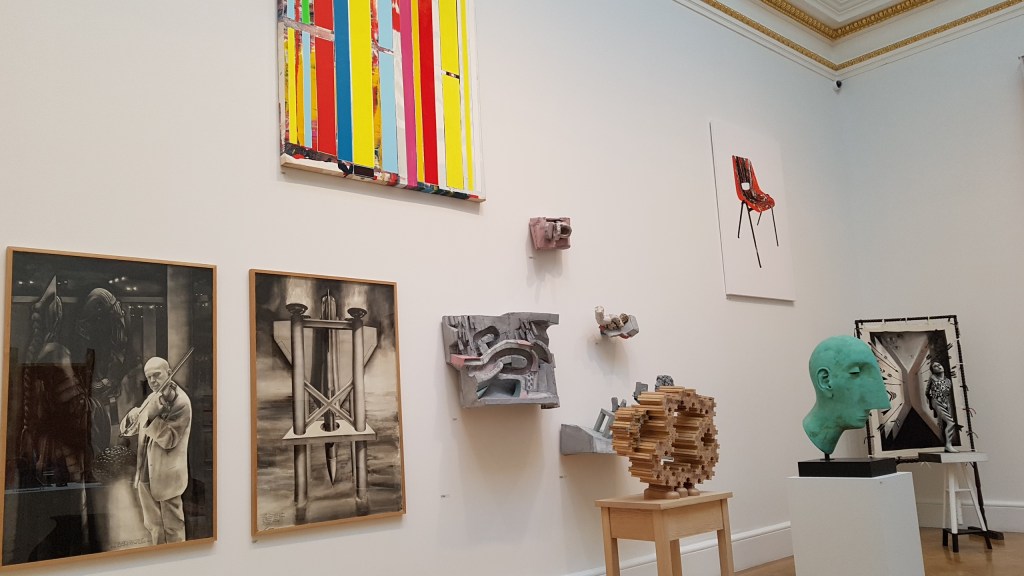
And so to the exhibition. There was a good mix of painting, sculpture and models. I always love the model room where mock-up buildings stand showing new buildings for industry, people and the idea of new worlds. Planners always have interesting ideas, and there is something very ‘dolls house’ about them that make me want to play with them!

Here the famous rub shoulders with other artists. Anyone can enter for a fee of £35. This year my sister-in-law entered a piece of sculpture. She got through the first round and was asked to take her work in for the second round, but unfortunately she was not picked. However, to get through the first stage is an achievement in itself.

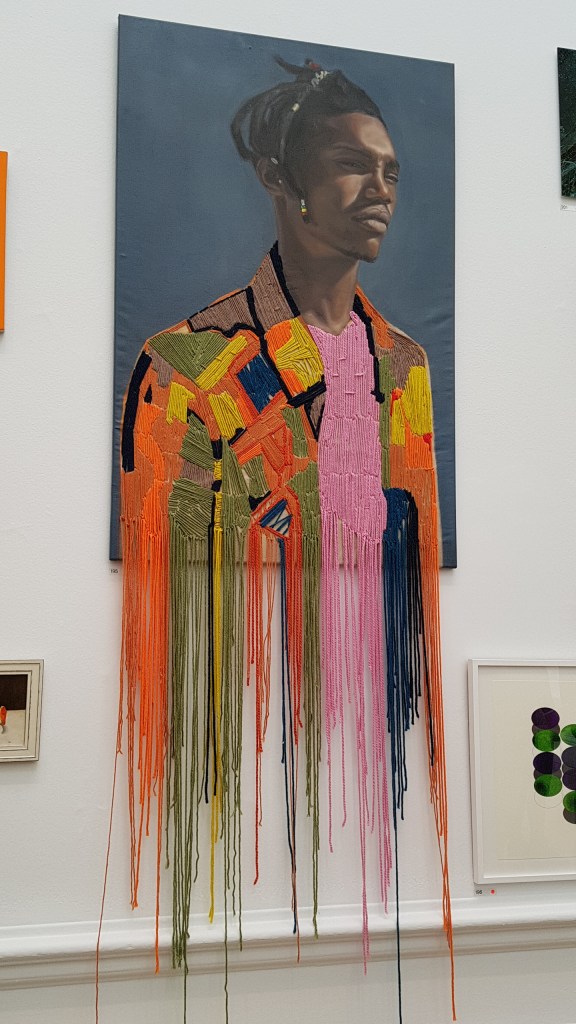
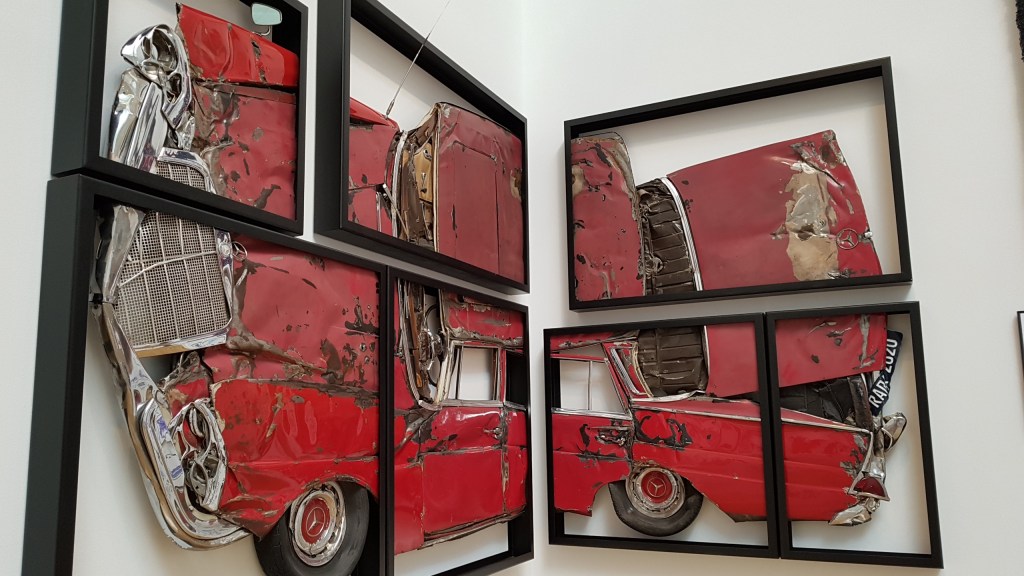
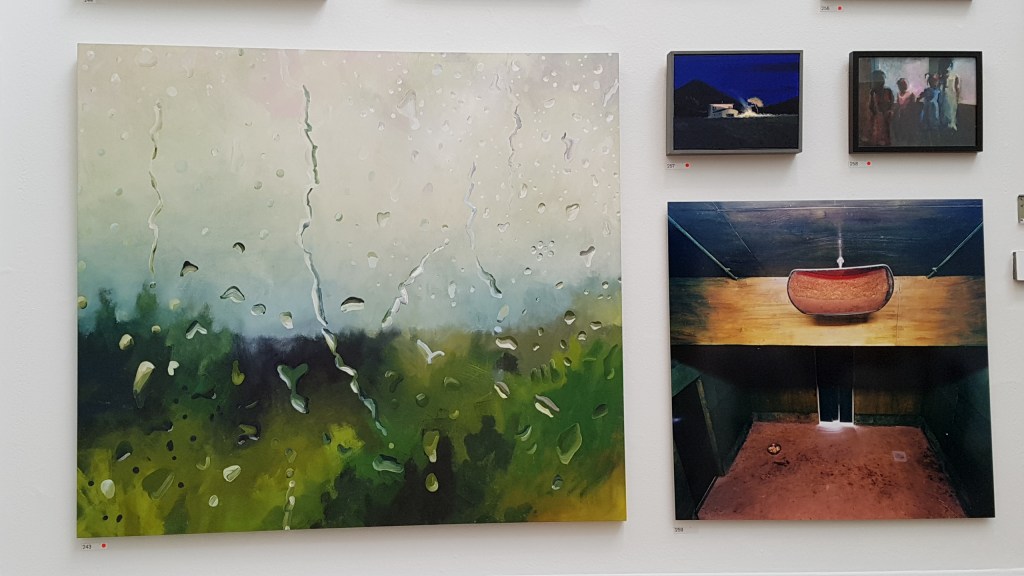
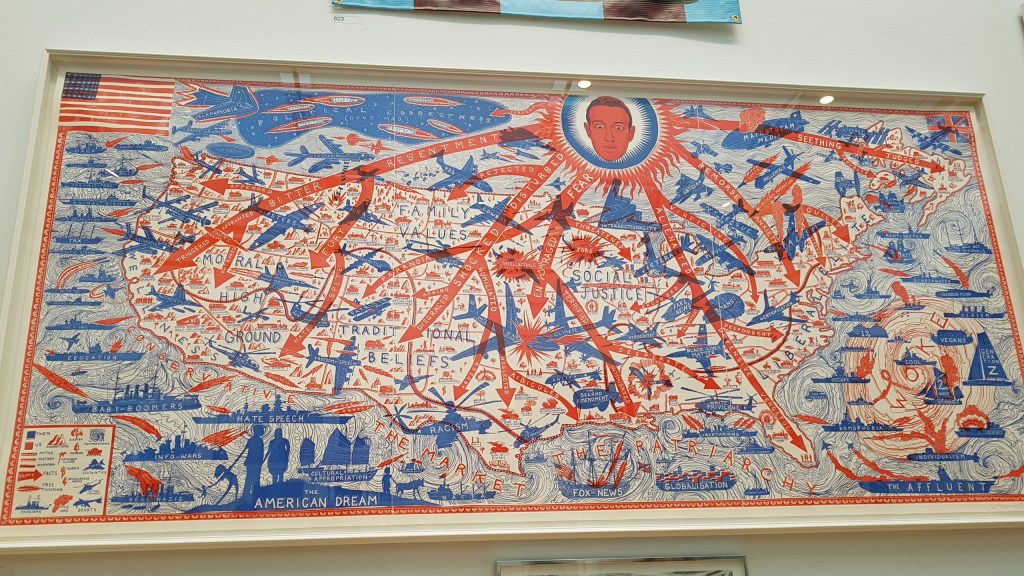
There is work here by two of my favourite artists – Anselm Kiefer and Grayson Perry. I took photos of things I liked or struck me as interesting. I also get ideas from these sorts of exhibitions. I am a dabbler in art. After years of not drawing or painting I have graduated back to ‘having a go’. Fired up by Grayson Perry’s Art Club on TV during the worst of lockdown, I produced something for each week, and I am currently taking part in a Twitter’s Inktober, producing ink drawings and ink wash in response to daily prompts. I still haven’t found my medium, but I do love working with ink. However, I want to try other things (I’m a hopeless watercolourist). I only share a few of my ink drawings on Twitter. Basically, everyone is so good, I was embarassed! I do share them on Facebook. Oh, my poor friends!

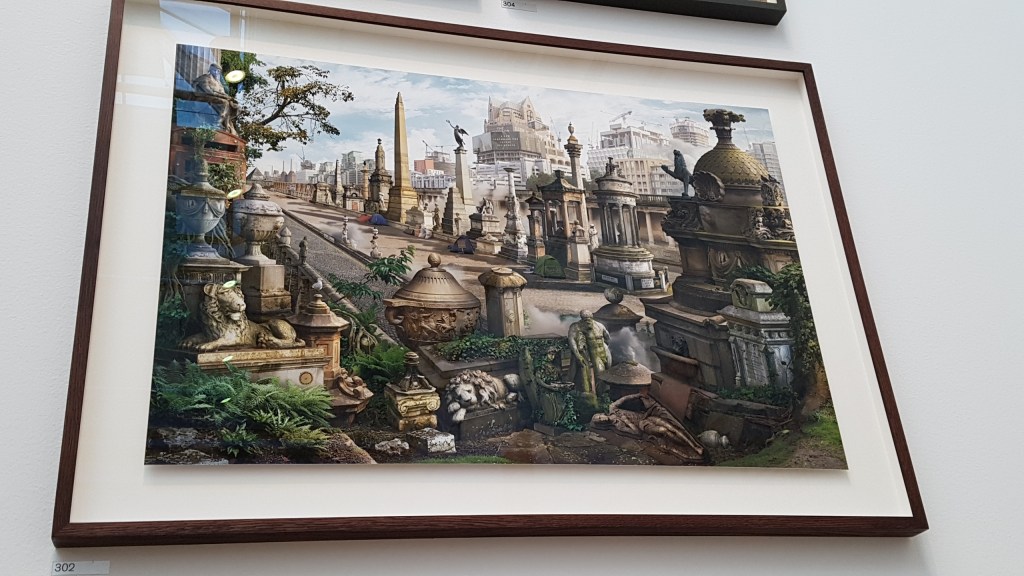
Ghost Towers (after Piranes) – Emily Allchurch

However, art is for everyone, and I find it relaxing. It’s been something to hang on to in these times, however bad my art is, and sometimes it is really bad. But back to exhibition. I think there is something here for everyone, whatever your taste – traditional and experimental. Hopefully, next year the exhibition will be back to its summer slot. But who knows where we will be in 2021.

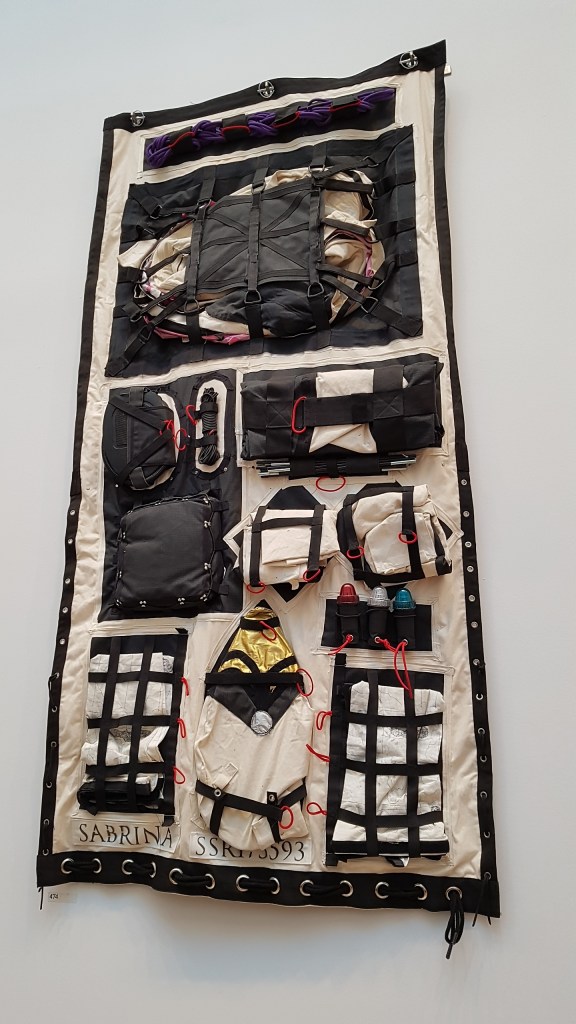
Sabrina – Michael Lisle-Taylor
American Dream – Grayson Perry
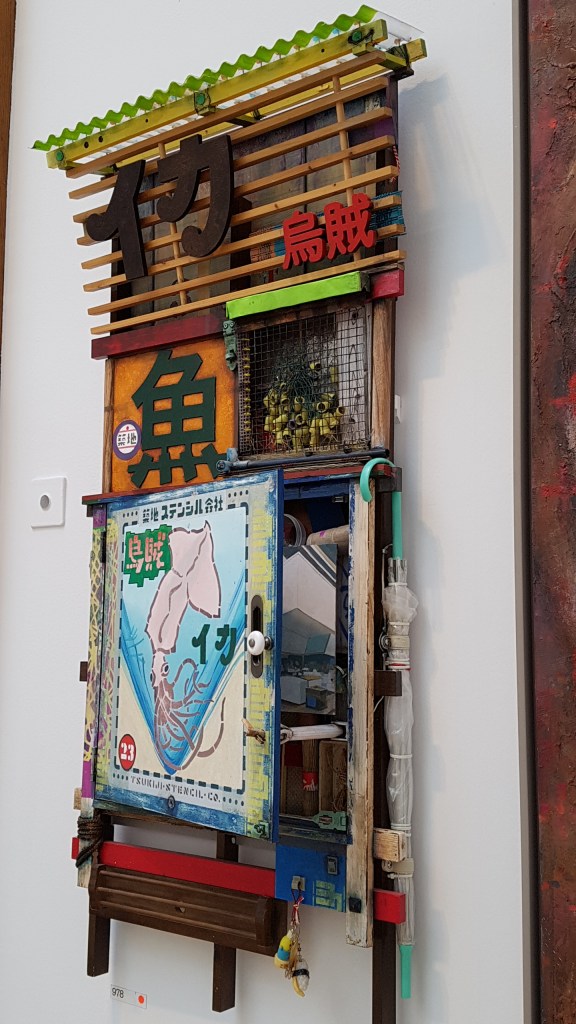
Tokyo Fish Market – Jake Tilson
Genral view
Design a site like this with WordPress.com
Get started