The above photo (design by Dali and Edward James) is from the exhibition Objects of Desire: Surrealism and Design which is currently on at the Design Museum, Kensington High Street. I’ve always rather enjoyed surrealist art, especially Salvador Dali, but this exhibition was more about design, though there were a few paintings.
There were a lot Dali’s designs. I didn’t know, for instance, that he designed fabrics nor that he worked with Disney. I particularly liked some of the tables, though the one made using bicycle wheels might have been tricky in a room. Where there brakes?!
This chair is by Gaudi. And I rather like that table behind!
Here is the cycle wheels table!
And for those all important cocktails!
Fashion – the black & white outfit is a design by Dali
Another Dail piece. If I used a compact, I’d love this.
Max Ernst painting
The Uncomfortable Chair – why? Because you can?
After leaving the museum, I followed part of walk I discovered coincided with where I was. I set off to find the former house of Ford Madox Ford, writer of around 80 books. He is the grandson of the Pre-Raphaelite artist, Ford Madox Brown, whose painting Work I admire. It features a street in Hampstead, where I’ve walked, which was quite exciting for me (not sure my friend understood my feelings!).
You can’t see much of the house at 80 Camphill Road in Kensington as it is walled and gated.
It was interesting walking along the back roads of Kensington. The Elephant & Castle Pub/Restaurant looked rather inviting.
And this row of shops down Kensington Church Walk was a nice find.
I love it when two things come together and I find places I’ve not been to before. Streets off the main highways quite often surprise. And I did enjoy the exhibition. Should you be in the area, Holland Park is just behind the Design Museum, with its Japanese Garden. That’s always worth a stroll around.
I didn’t know a great deal about Cornelia Parker‘s work other than the piece featured above, and Thirty Pieces of Silver, but I thought this might be my sort of thing. It very much was. It held for me the same wow factor as the exhibition by Antony Gormley I’d seen a few years ago.
What did I like about these works? Well, ultimately I love the way the artist thinks and how she re-purposes objects. I think you need to read the information to each piece to appreciate what she is doing. I certainly did. I also like the way the suspended art pieces create shadows on the walls.
The Kiss
The Kiss is in the main entrance hall (where you buy tickets). She rather likes string! I like the way the string wraps around the couple, binding them further together.
Thirty pieces of Silver (a quote borrowed from the BIble) is a work that took the artist around car-boot sales, markets and auctions collecting silver plate. Even friends and family donated items. All of them were steamrollered over before being assembled into thirty separate piles and suspended a few inches above the ground. They hover, twirling slightly as air moves around them.
Thirty Pieces of Silver
Cornelia takes items, breaks them, shoots them, uses remains and sets them under glass, like the sawn-off shotgun and residue in the photo below.
Shared Fate (Oliver)
The Oliver Twist doll in the above photo was cut in half by the guillotine used to behead Marie Antionette (guillotine is in the Chambers of Horrors). Cornelia was also able to visit Customs & Excise UK and persuaded them to give her certain objects for her to repurpose, including the incinerated remains of some cocaine in the next photo!
Exhaled CocaineCold Dark Matter: An Exploded View
I took many photos of Cold Dark Matter. It is possibly my favourite of the whole exhibition. This once garden shed was blown up using Semtex by the Army School of Ammunition. The artist pressed the plunger! The soldiers then helped her collect the pieces from the field. In one of the Art History classes I attended, we touched on pyrotechnic art, and I became rather fascinated with it. Although the artists we looked at used their explosions to destroy their art as part of the art, I much prefer Cornelia Parker’s idea of using the pieces afterwards. The shadow effect created in these displays fascinated me (I love photographing shadows).
Forgive me another view of Cold Dark Matter
As soon as I saw these framed items, I thought Turin Shroud. I read everything I could find about the Turin Shroud when I was younger. Indeed, I was right about this. The artist used paper and a hot poker (I think it was) to create the burn marks that are like the Turin Shroud, which was rescued from a fire, leaving similar marks on folds of the cloth.
Black Path
The artist worked in Bunhill Fields in London and took casts from the path where William Blake is buried for the above artwork.
Poison and Antidote (read the caption below)This is what remains when a vinyl record is made from making the grooves. As someone who has kept all my lovely vinyl records I love this!Perpetual Canon – another steamroller exhibit!Island
In Island, the glass is painted with white brushstrokes of cliff chalk. The artist says ‘(The structure)… becomes enclosed, inward looking, a vulnerable domain, a little England with a cliff-face veil.’ The greenhouse sits on worn encaustic tiles from the Houses of Parliament.
War RoomWar Room (detail)
I should say that in War Room every empty mould represents a life lost, but not everyone. It really makes you think.
Magna Carta
The artist printed off the Wikipedia page and then asked people to embroider the work! Wow!
Magna Carta (can’t get it all in on well on one photo shot)
As well as the installations and framed items, there are two video rooms. One of the films, War Machine shows Remembrance Day poppies being machine made. I wondered if this was in the Poppy Factory in Richmond, which I went to many years ago with a group from church, but it was a different factory. However, we did see poppies being made this way, as well as ex-veterans making them by hand. We also had the opportunity of making one of our own (which I still have), and to write on a wooden cross the name of a someone serving in the war who didn’t come back. I was able to do that for my uncle and his cross was later set out with others in Parliament Square.
The exhibition is on until 16th October. I hope I have inspired you to see it for yourself.
This is the third Titanic exhibition I have been to. The first two were in Liverpool and Belfast. I just couldn’t resist! All the exhibitions are slightly different. Here there was an audio guide I downloaded to my mobile (or you could borrow a headset for an extra £3). It takes you round the exhibition picture by picture and cabinet by cabinet, telling the stories of the people who travelled on the liner through photos and finds, postcards or telegrams sent and diaries kept. We have all probably heard about the orchestra who played as the ship went down. In the exhibition there is a picture of those men.
A lot of the stories are sad, heart-breaking, but there were stories of great gallantry and of people who survived, some by sheer luck. The tour takes about 90 minutes and it was well worth going. I took loads of photos, so here I will share just some.
A cutaway model of TitanicWhite Star Line
The ring in the above photo slipped off the finger of a lady as she drowned. Her husband managed to climb into the lifeboat, but there was no more room, or the boat would have capsized. Someone held onto the lady’s hand, but eventually she slipped from his grip. The ring came off her finger as she went under and landed in the lifeboat. The ring wasn’t discovered until some days later. Her husband died of hypothermia shortly after the lady drowned.
Third Class cabinSecond Class dining roomChair from Second Class Dining roomIt is possible this is the first discovery from TitanicMenuMock up of First Class corridorAs above – First Class Cabins corridorFirst Class bedroomAnd of course a suite!Shoes of a little girl who escaped with her familyThe ice wall. Here you can put your hand against the ice and see how long you can bear it. This is what it would have been like in the water for those overboard.The men of the orchestra who went down with the shipA model of Titanic on the sea bedThe last display is a list of all the passengers and crew who set off in Titanic
The piped music is the theme to Titanic, though not the Celine Dion version. The film characters were fictional, but the events were based on facts.
When I returned home, I thought about where Titanic sailed from, which was Southampton, and that got me thinking that there might be a Titanic exhibition there. I looked it up, and yes, there is one. Looks like a trip to Southampton sometime!
This exhibition finishes soon (later this week, I think). The nearest tube station is Canada Water.
I came to Surrealism through Salvador Dali’s work and realised that some other painters I admire had ventured into it, like Paul Nash, so I began to look more into this form of expression. Attending this exhibition at Tate Modern I realised knew very little about it!
This picture is devised using photo negatives and a special way of manipulating them.
I found artist used surrealism to express political views or events that happened to them or family. I guess you can say that all art is a form of that, but this is a subversive reality. The image below tells the story of the artist’s grandparents who were killed in the holocaust. I find this painting moving.
Not unexpectedly there were a lot of political/war works here, but also what I call the ‘dream’ art. Finding a meaning in some of this sometimes hard, and with me that doesn’t always matter. I’m not a big fan of Duhamp (he of The Urinal found art, or ‘readymade’. See here for more on that piece). However, this piece below did rather fascinate me. The way he uses readymade here – a metal cage, a piece of cuttlefish, wooden perches, and sugar cubes represent stone boulders – I rather like.
Duchamp
I never really know what I’m going to like in art, which means I am always surprised. I can admire the painterly fashion of old masters. Their technique is mind blowing, but do I like them? Not usually. All those portraits, dark backgrounds aren’t to my taste. My preference is for art from the Pre-Raphaelite’s onwards. The Victorian era holds a particular fascination for me. All the artists and writers I admire seem to converge there for me. If I could live in another era, though, it would be the 1920’s because of the fashion, dancing and music! I think watching Upstairs Downstairs on TV in the ’70’s has something to do with that!
Anyway, I digress. The next piece is by Roland Penrose, whose house I went to see in October last year. I adored that house. I wanted to go exploring in all the nooks and crannies. It was so interesting. So many quirky things, and to my delight Roland had painted on some of the walls. The house was light and airy, the sort of place I could easily live in.
Roland Penrose
Picasso is another artist I admire, and another I came to gradually. Sometimes attending an exhibition you are not sure about turns out to be enlightening, and that was what happened when I went along to a Picasso exhibition.
Picasso
Diorama art is another fascination for me. Putting 3D scenes into boxes. What is there not to like? I can remember making little underwater scenes using an old shoe box back when I was younger. So, I photographed this just because it is a diorama. See here for more about that.
Diorama
This will explain the above picture
This piece is by Ted Jonus and on every page is a drawing by a different artist. It is called Long Distance.
There were many paintings about people fleeing and the one below shows women fleeing.
I loved the art of Remedio Vara. There were three here together, I suppose you call them a triptych.
Remedios Varo
I’ll end with this one. It’s a bit scary. Entitled Central Park, NY, the little pictures around the edges are things that could be happening in various corners of the park!
Central Park, NY
Surrealism has the power to shock, to say WTF! and to surprise. It makes you think in a different way. It might be like Marmite – you either love it or hate it. That’s okay. That’s art for you. The images I have chosen are my choices, the art that said something to me. For everyone, that will be different. And that’s okay too!
The exhibition at The British Museum follows life before Stonehenge, Stonehenge at its height, and the waning of its popularity. It is a very detailed exhibition with much of interest.
The exhibition is also popular. It was busy and tickets for that day had sold out. I thought I knew a lot about Stonehenge, but I hadn’t realised it was the most important place in Europe or that so many people had been buried there (the more elite, of course!).
Stonehenge was built around 5,000 years ago in what is now Wiltshire, close to the city of Salisbury. These days you cannot touch the stones on visits. The whole site is cordoned off with rope. Only Druids are lucky enough to worship there at the Solstice these days. When I went years ago, the best view is coming down the road on the bus with the henge in front of you. Magnificent. But there were too many people to get a proper atmosphere. The nearest I got to one of those was at Avebury standing stones. My ideal would be to wander the stones alone, but there is no chance of that at Stonehenge. To learn more about Stonehenge read here.
Axe
On view were many axe heads. Some were so smooth. Flints, masses of those too, so well knapped and sharp. I find it fascinating how our ancestors tried to make sense of the world they lived in (much as we do today, really). They worked out moon phases and sunrises and sunsets, and of course, the seasons.
Cattle were important to them. They were valuable, so sacrificing them was never taken lightly, but in the photo below two have been sacrificed, possibly for fertility. The image shows what they would have done in life, pulling a cart.
I joked about this set of wooden walkways. I called them Black & Decker workbenches! They built these walkways over boggy places so they could get from one place to another.
No, not Black & Decker workbenches, but a walkway
Stonehenge is just one of many henges. Seahenge in Norfolk is another. I read a lot of books by author Elly Griffiths. She writes crime. Her books are set in Norfolk and the main character, Dr Ruth Galloway, is an archeologist who works with police when old bones are found. Seahenge appears in one of her early books. I find the world she writes about fascinating, so I was thrilled to see Seahenge here in the exhibition.
Seahenge, Norfolk
Grave goods feature in lots of prehistoric finds. Here we find some gorgeous trinkets, finely carved. The eye is important here – possibly to see in the afterlife?
Grave goods
Art and music was also important to these people. They carved what they saw and what was important to them. Spirals feature highly, as do images of the sun.
No one really knows what these are, but they beautifulSpiralsHere you can clearly see arrow heads and the sunThese objects are related to the Divine Twins often depicted as horses or related to celestial Castor & Pollux in Greek mythologyGold – so much gold! This must have been heavy to wear.Ear piercings. Sometimes you see people today with sort of piercing.Mapping the sky, moon and stars – Nebra Sky DiscBurials and grave goods. Tbe woman on the left was buried clutching a baby wrapped in clothArrow headsThese had removable phalluses!General view of exhibition
Men and war. I cannot comprehend that in those days 20,000 men died in battle and their remains scattered like this image below. We never learn!
Weapons were sacrificed into the water. In the photo below, these items of war were discovered in the River Thames at Battersea.
Sacrificed weapons, possible as part of a funeral Another Thames find – you could make a large stew in there!
This was a really interesting exhibition, and I’m afraid I got carried away in the shop afterwards. I bought a replica of the Sky Disc, a t.shirt, notebook and a book on Druids! The exhibition runs until 21st July, so there is still plenty of time to see it.
John Constable was born in Suffolk in 1776, and was admitted as a student to the RA in 1799. He exhibited at the Royal Academy, especially the Annual Exhibition, for a number of years before he gained full membership to the establishment. Constable became an associate member in 1819, but it was not until 1829 that full membership was his, and even then it was a close run thing. He won by just a single vote.
Brighton
Constable married Maria Bicknell in 1816 and in 1819 he moved his family to Hampstead, due to the ill health of his wife. The most famous of his paintings, The Hey Wain (1824) was not on show in the exhibition. It received a gold award from the Paris Salon.
Constable frequently moved his family to Brighton, again due to Maria’s ill health. The last of these visits came in 1828, an extended stay. In late November Maria died of TB. It is said Constable wore mourning clothes for the rest of his life.
Stonehenge
In 1831 Constable taught at the RA, and in 1832 there was the famous stand-off at the Annual Exhibition with Turner, who reportedly upstaged Constable’s The Opening of Waterloo Bridge (on show at the exhibition) by adding a blob of red paint to his own Helvoetsluys.
Constable taught Life Class in the Painting School at the RA in March 1837, but unexpectedly died on 1st April. He was buried alongside Maria at St John-at-Hampstead. Arundel Mill and Castle which Constable had been working on was posthumously exhibited at the Royal Academy that year. Although not quite finished, I could not tell. It looks complete to me!
Arundel Mill and Castle
It was interesting to see Constable’s preparatory sketches, both pencil and oil alongside the finished painting. He worked mainly in oil, but later also watercolour.
This was a very enjoyable exhibition. I believe I have seen the house he lived in when in Hampstead. Somewhere in my archive of photos, I have a shot of the blue plaque outside it.
This exhibition is currently on show at The British Museum until 30th January 2022. The drawings (103 recently acquired) were drawn between 1820-1840 were meant for an encyclopedia entitled The Great Picture Book of Everything. However, the book was never published. The pictures depict creation stories, myths, religion and Japanese subjects. Many of the drawings feature flowers, medicinal herbs, animals and birds and people wearing traditional clothing from countries such as China, Mongolia and Vietnam.
The invention of paper making
There are also cabinets where are there are open books to view and another with ‘tools of the trade’ of printing pictures from wood blocks, including a video demonstration.
Tools of the trade for block printing
Of course, Hokusai is best known for his painting Under the Wave, more commonly known as just The Wave. There were many versions of this, and a video tells the story of how so many came to be produced. There are two versions on the wall with a ‘spot the difference’ instruction.
The Wave – Spot the difference
The drawings in the exhibition are small and you need to get up close to see all the detail. If might be worth taking a magnifying glass with you! How Hokusai managed to get so much detail into such small drawings I do not know. The majority of the drawings are black and white, but as you come out of the exhibition you enter the Japan Room and there are some coloured paintings of Hokusai’s there, along with various paintings by other Japanese artists. The room has many other exhibits, such as swords, costumes, ceramics and a portable shrine.
Hokusai – Japan RoomPortable Shrine – Japan RoomJapanese Tea Room
After the exhibition, I headed down Charing Cross Road and had lunch in Foyles cafe before exploring all five floors of the book shop! I don’t know how I came out of there without buying a book.
Foyles Book Shop
From there, I walked to the River Thames, crossing to the other side, and walked along the embankment to Vauxhall, stopping for a cup of tea at the flat of my son and his girlfriend. It was a chance to take a few more photos of London – do I need an excuse?
China TownChristmas is coming – Charing Cross, towards Embankment Tube stationRiver ThamesLambeth BridgeOutside the International Maritime Organisation, LambethFormer Royal Doulton Factory buildingDecoration – Former Royal Doulton Factory
Thursday was a busy day. I had tickets for myself and a friend to see David Hockney’s exhibition at the Royal Academy in the afternoon. I’ve always been a fan of his, and the work for this exhibition was done during lockdown in France using an iPad. What would it be like? This isn’t the first iPad pictures of his I’ve seen. There were a few in the last exhibition, A Bigger Picture in 2009, but this was wholly using an iPad (an App especially adapted for him). The Arrival of Spring is a collection of 116 works include trees, flowers, the house and barn, the pond and the tree house, all within the boundaries of where Hockney was living during lockdown in Normandy. He worked outside (en plein air) as did the French Impressionists before him, and the works were executed between February and June 2020. He worked almost daily, and on occasions he would produce two works in one day.
So, what are the pictures like? Well, photography is not allowed inside the exhibition, though if you Google the name of the exhibition or visit the website of The Royal Academy, you can see some pictures. Here is video preview to whet your appetite.
I loved the fact that I could see how Hockney put the pictures together. Great swathes of colour and then dots or lines. I’d say they are very vibrant, lots of bright green. I wondered about the restrictions of using a iPad to paint. Was this why they were so bright green? Then again, Hockney does like vibrant! His A Bigger Picture had lots of bright colours on canvas. I realised that this is the way he paints. His style is unique and recognisable. Did we like the pictures? I feel guilty in saying that we we spend just thirty minutes at the exhibition (we spent the same time in Hatchards Bookshop!). However, we agreed that it was good to see them. A few (well, particularly one) were what I’d call naive art, almost a first attempt. It looked rushed and childlike. The ones we particularly liked were those of rain on the pond. The pictures are very bright, and perhaps best seen from a distance, but then again you miss the technique. I have never tried art on an iPad, and I am a dabbler in art, so what do I know? Big named artists draw big crowds whatever they do, and David Hockney always draws a big crowd. I had difficulty getting tickets for the exhibition in the first place. They were going like hot-cakes.
Certainly it was worth a viewing, and certainly it was different. David Hockney can do no wrong in my eyes! It was a challenge and he took. He has always done things differently to others, and seems to relish new technology. I also love his attitude to life! Like many artists he used the same subjects time and again, on different days and different times marking how spring arrived. Monet did the same thing with buildings. It also remind me of how I watched spring arrive last year. I used to jog around a local park. In my case, I took photos every time I was there. I’d photograph the trees sprouting leaves from bare branches, and the flower beds went from nothing to a riot of colour. I took photos. Hockney painted with an iPad. We will all remember that spring differently. It was unique and beautiful, despite what else was going on.
A Field Guide to Larking
In the evening I went on to Southwark Cathedral for a book launch of A Field Guide to Larking by Lara Maiklem. I already have her fascinating first book, and this one I ordered at the time, so I could pick it up on the night. I was in the queue early so I could get a good seat! I collected my book and then sat down. Of course I flipped through the book while I was waiting. In fact I began reading it! The resident cat, Hodge, was strolling around and one time went up the steps past Lara as she was speaking!
The talk was interesting and informative. Lara gave advice and recounted instances of finds or funny things, items she found she thought weren’t that important only to find they were, and vice versa. At the end there was time for questions and answers.
Lara Maiklem
I was so chuffed to clutch my book. It is illustrated and has room to log your own finds. I can’t wait to read the whole book and get started. Just so you know, if you want to go mudlarking you do need a Licence!
Before and after the book launch, I took photos along the River Thames from London Bridge to Tower Bridge. I finally got to see the bridges with their illuminations. I had a nice stroll back to the station at Waterloo along the south bank after a very interesting arty day!
Christmas always means ‘The Snowman’ or ‘Father Christmas’. Then came ‘Ethel & Ernest’ about Raymond Briggs’ parents and his own growing up. Finally, there was ‘The Snowman and the Snowdog’. These are the animated films I loved watching year on year. Of course, they began as books, and books begin as storyboards or large scale artworks. These are what are on show in the exhibition at the Discovery Centre in Winchester. As soon as I knew about the exhibition, I had to go! So I booked tickets for myself and a friend.
This didn’t exhibition disappoint. I had forgotten some of the works Raymond Briggs had done over the years. A man who says he doesn’t like children (he none of his own, but is step-dad to his partner’s children) and who wrote what he wanted to write – again he did not write specifically for children – yet he has entertained children for years. Kids love stuff like ‘Fungus the Bogeyman’, or Father Christmas sitting on the loo! And all the art work for these books is there in gorgeous technicolour.
I’d had forgotten some of the books he’d written, like ‘When the Wind Blows’ and there was the very controversial ‘The Tin-Pot General and the Old Iron Woman’. I’m amazed he got away with that one! For a list of his books see here. And for an interesting article (he doesn’t like Christmas!) see here. Even before these books Raymond Briggs was illustrating books of nursery rhymes. His early days are here too. What a wealth of art, what a range of pictures.
After a wonderful hour in the exhibition, it was time to enjoy Winchester again. It has been nearly a year since I was last here, and apart from my favourite cafe having been turned into a fish and chip restaurant (sad, sad) and the big Debenhams store now being closed, much else is the same. The day was sunny and warm. So, lunch in the cathedral refectory, a long browse in the secondhand book shop behind the cathedral (yes, I did buy books), and a wander to the ruins of Wolvesey Castle followed by a walk along the water meadows, all in good company, completed a beautiful day. Not so many photos this time as I have taken masses over the years.
The exhibition is on until 18th August. It’s a lovely way to spend an hour and be a child again.
St Lawrence Church, WinchesterSt Swithun’s Church, WinchesterWindow, St Swithun’sNear The Great HallOld castle passageways, Winchester
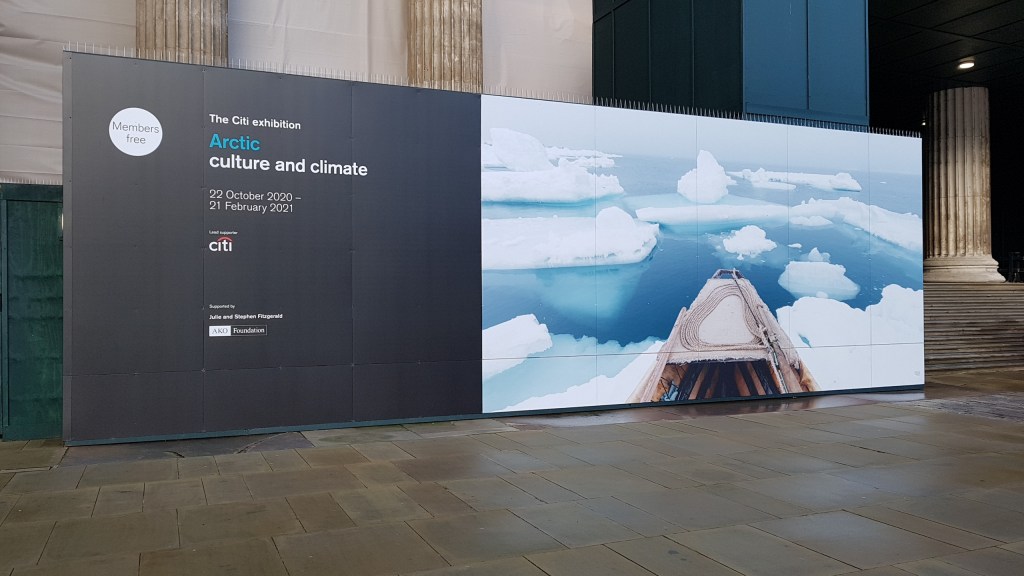
On Monday, just before London moved into Tier 3 and tourist attractions (as well as cafes and restaurants) closed down again, I made it to the British Museum for this very interesting exhibition.
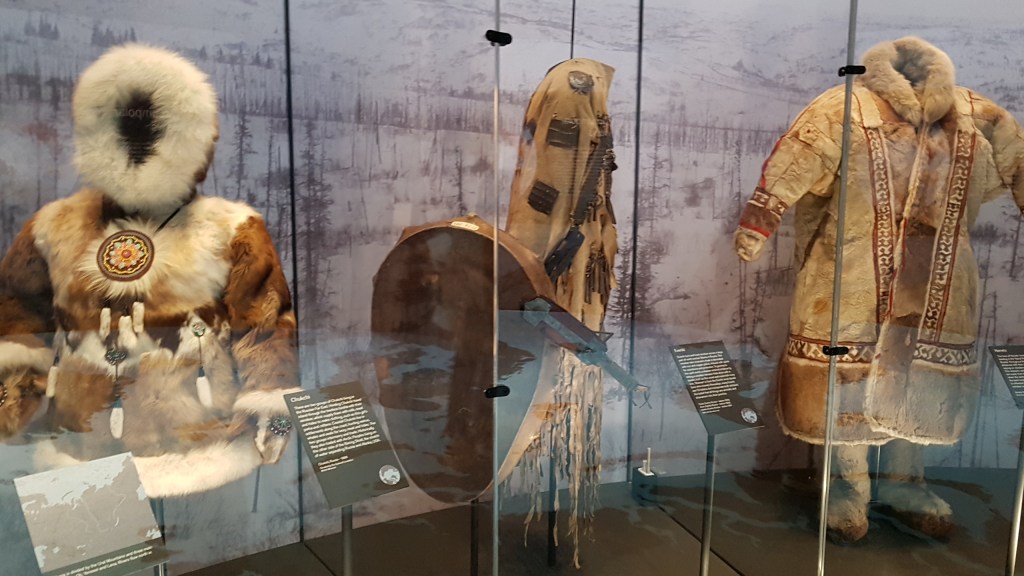
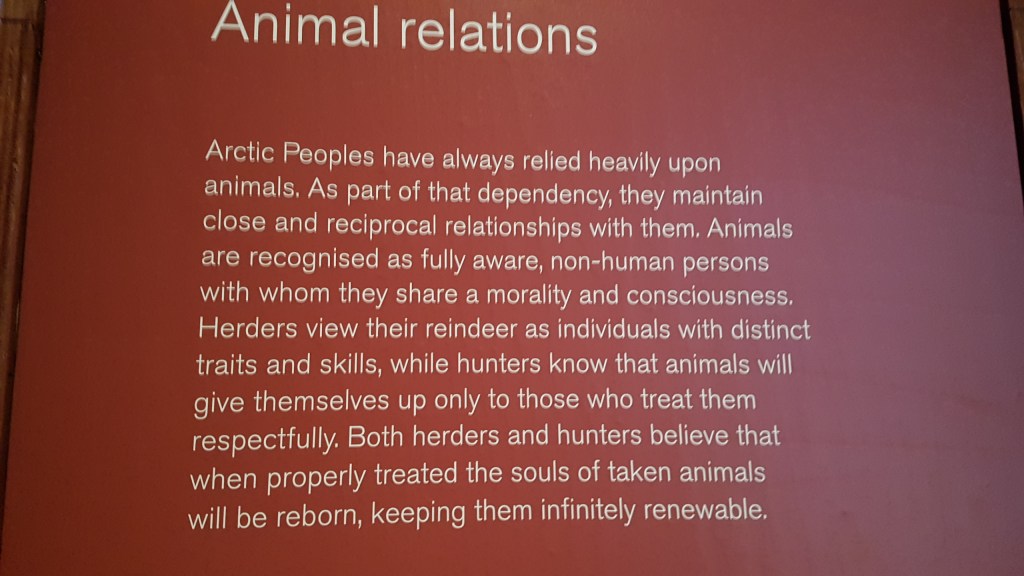
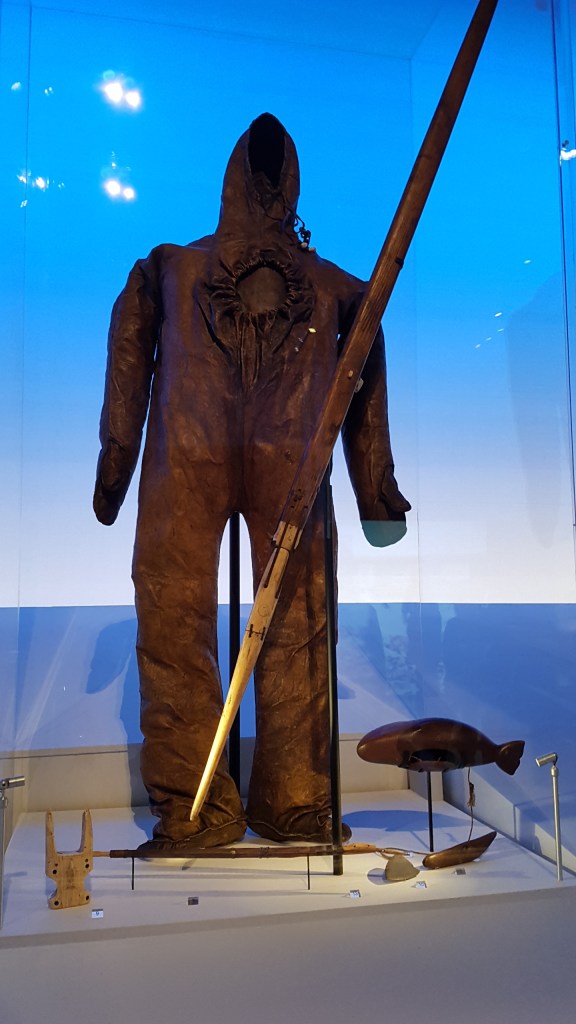
What struck me most was how spiritual the people living in the arctic are. They are resourceful, and when they kill, they pray and give thanks for the animal giving up its life for them. They believe animals have souls and their ceremony releases that soul. They do not kill needlessly, but use every part of the animal for food, clothing, hunting gear, and many other things.
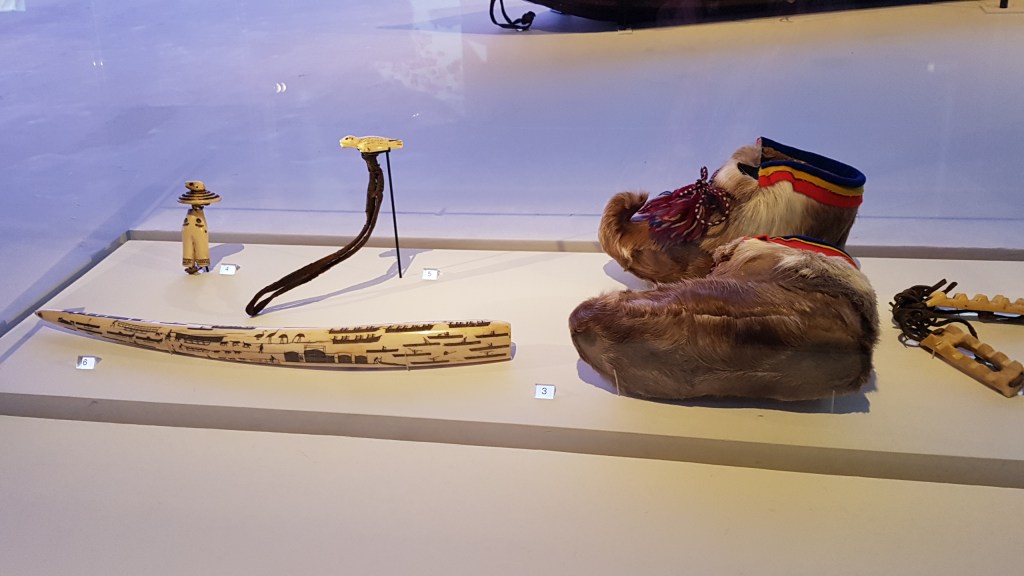
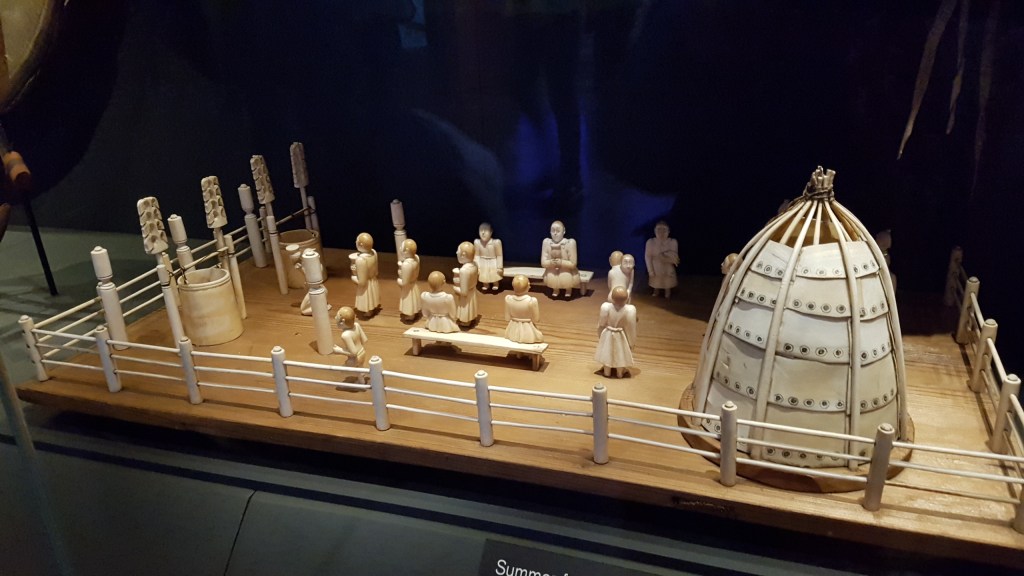
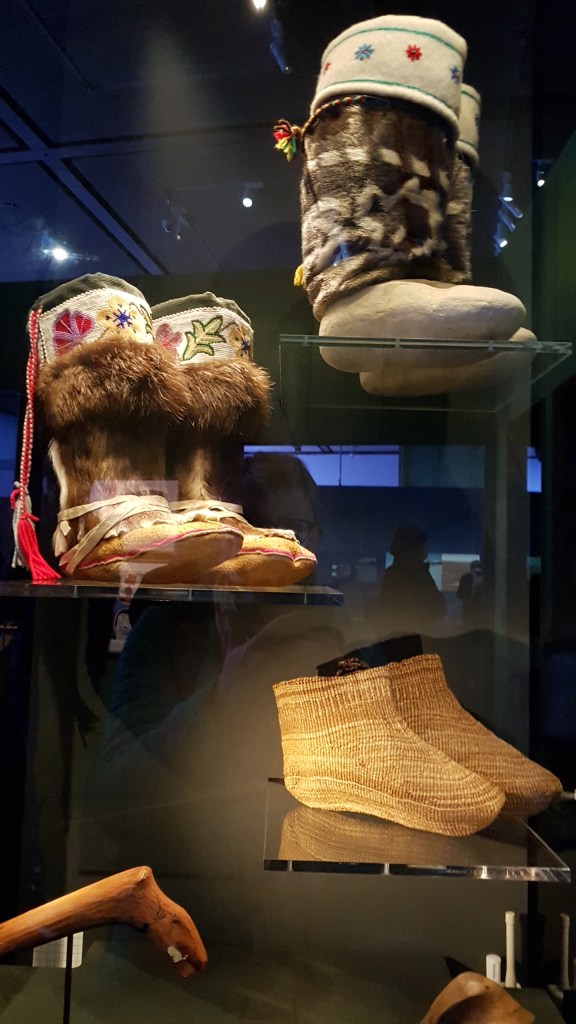
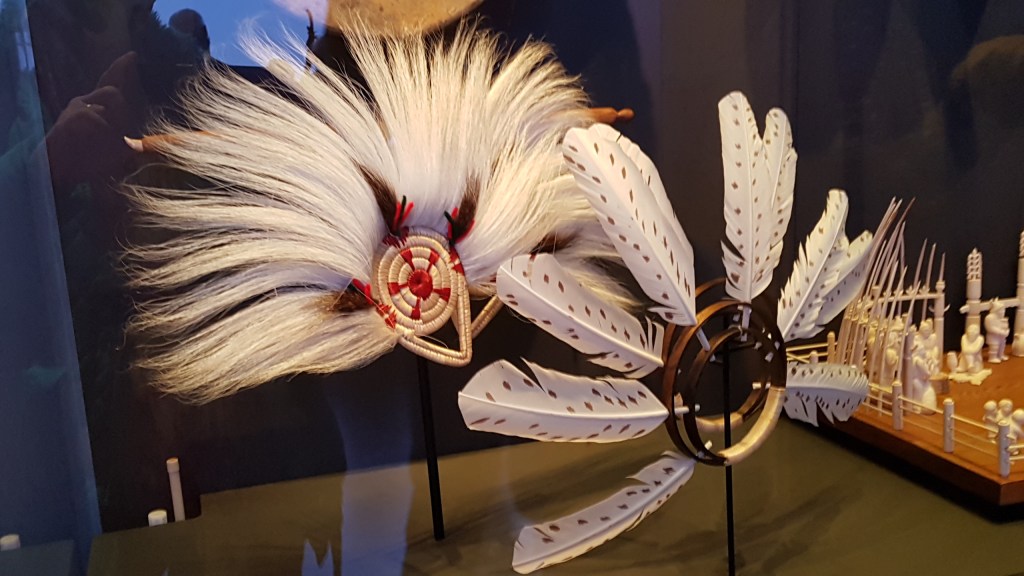
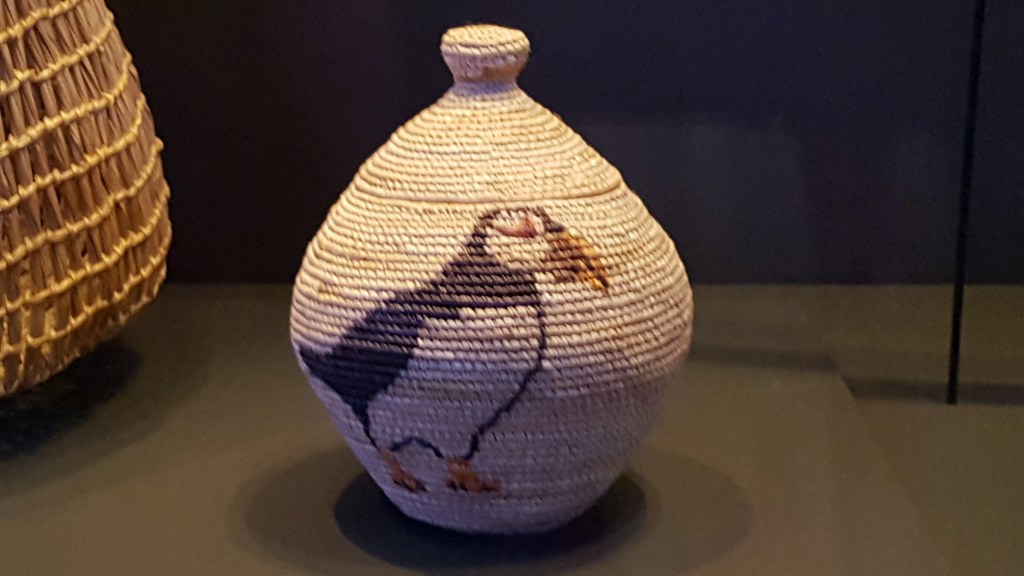
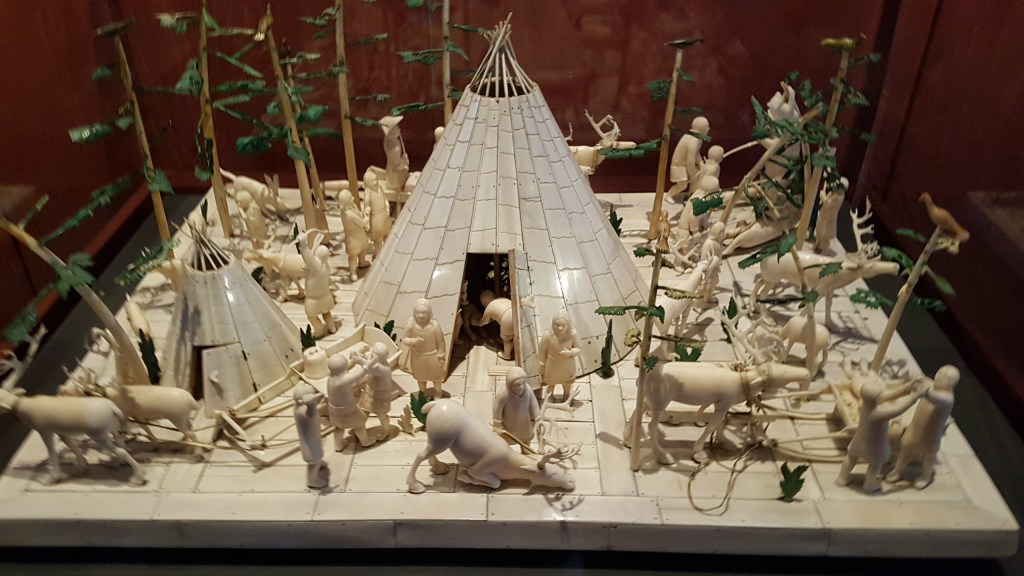
On display are coats, boots, both adult and childrens’ wear, ceremonial costumes, hunting harpoons, scrapers, boats, baskets and musical instruments, mainly drums. There is a Shaman’s outfit, headdresses, and models of their summer festival, the yhyakh, which I found so fascinating that I had to buy a book about it.
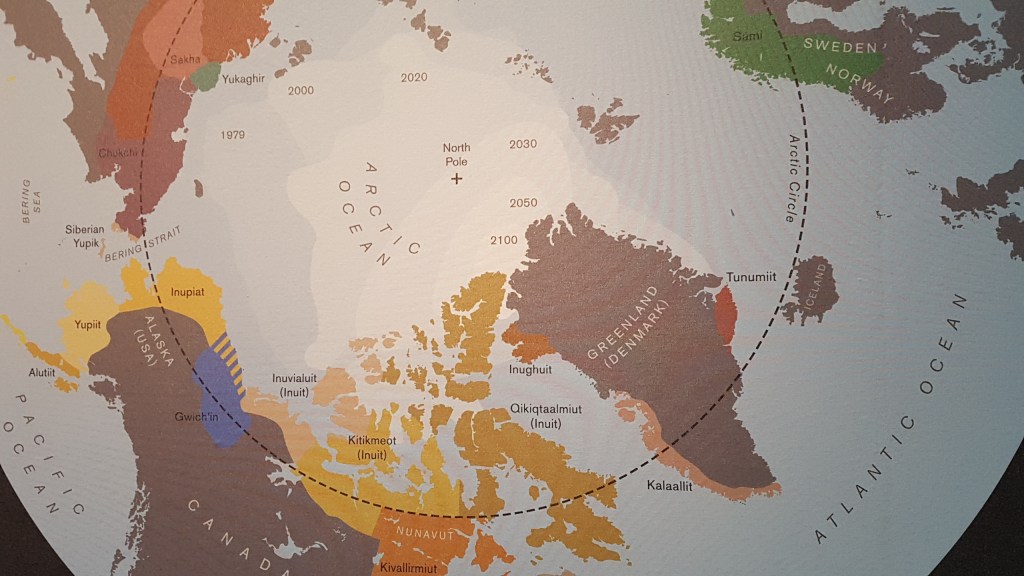
How the ice is melting over the years
There are several videos, including making of boots from raw materials, cooking and the summer festival.
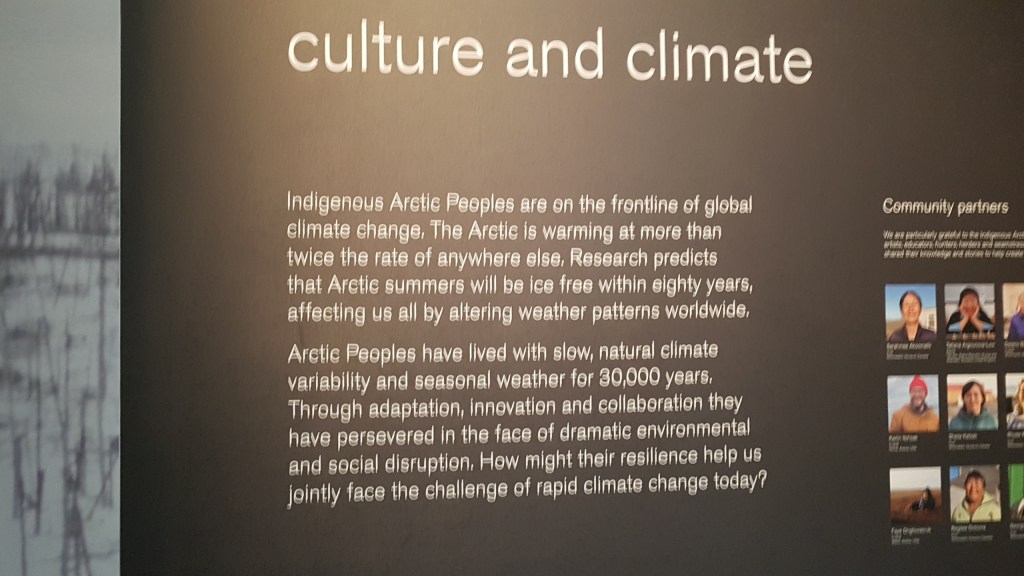
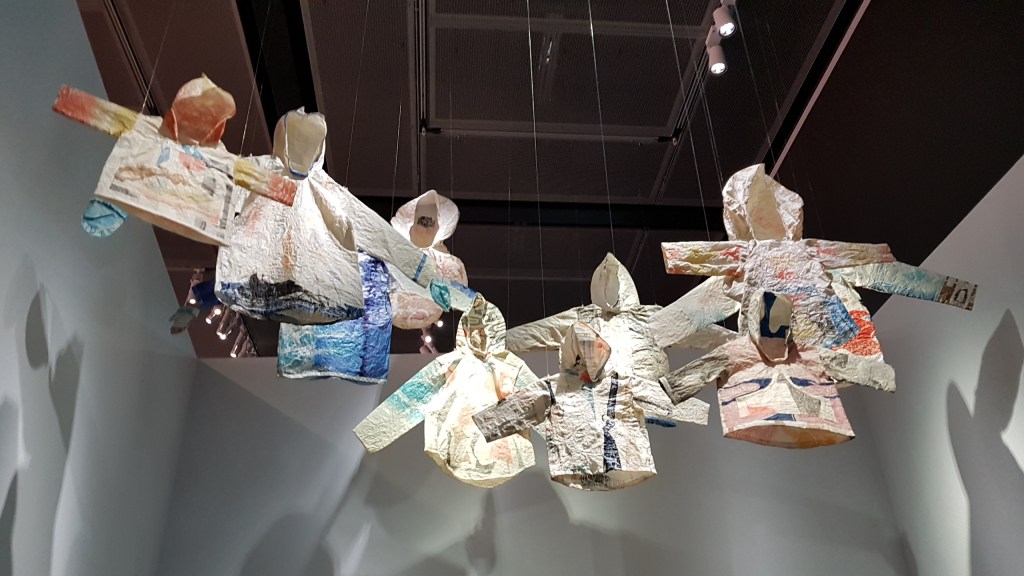
Climate change is having a devastating effect on the people. They have, of course, experienced climate change before but over a much slower rate and longer period of time. Now everything is happening fast as we humans make our mark on the world, not in a good way. Even here plastic can be found. I read recently of how depressed some communities are as they watch their ice melting in front of their eyes. Their whole way of life is being changed and there is nothing they can do about it.
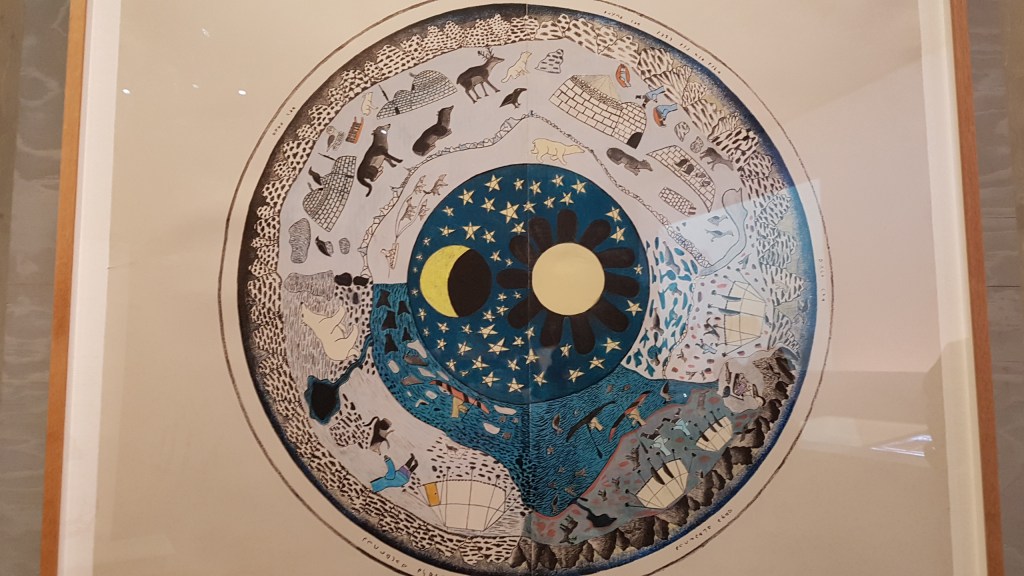
Arctic seasons
And here there a reminders of this change – maps showing how much ice has been lost, and what is predicted for the future, and that in eighty years from now there will be no more ice. This is a frightening thought because this will also have an impact on everyone, maybe not for us, but maybe for our children and certainly our grandchildren.
A model of the summer festival
A very worthwhile exhibition. Hopefully, this exhibition will reopen again soon, but you may be able to catch part of it through the British Museum website.
The last remaining complete whale suit – waterproof
Boots
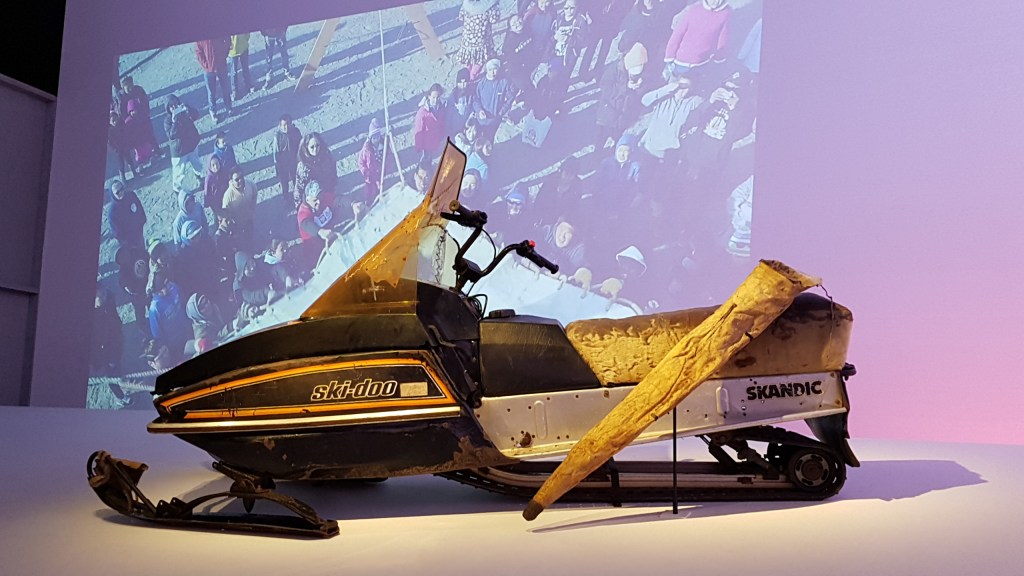
Modern mode of transportHeaddressesDecorated basketSummer festival model


 My London+