This is the last part of my trip away to Limehouse. Coming home on the Friday I decided to fit in another short walk. Having looked at a map of what’s nearby on my journey home, I found two gardens near Aldgate East tube station that might be worth a look. Unfortunately, one of the gardens (Four Seasons) was closed as the trees were being lopped. I had a look through the railings and it did look good, but that will have to be a visit another time.
Whitechapel and Aldgate were known as the silk quarter of London. Sadly, when you Google ‘silk quarter’ now you get a lot of companies advertising their new developments. The whole area is a mass of new high-rise apartments and squares. Finding historical facts was low down on the list for searches. However, I did find a survey you might be interested in reading. It’s quite long, but informative. I also found directions for a walk in the area.
Chaucer Gardens are off Alie Street and is a quiet oasis in the bustle of London, though surrounded by tall buildings.
Chaucer Gardens
There is so much more to see, I feel. If I’d I had more time, I’d have got off the tube at Whitechapel and walked from there. Next time! The back roads were interesting with old buildings, a hint of what used to be there. I found a wonderful cafe cum shop off one of the main roads for a hot chocolate and comfort break. Maybe next time the Four Seasons gardens will be open too.
In Running Horse Square
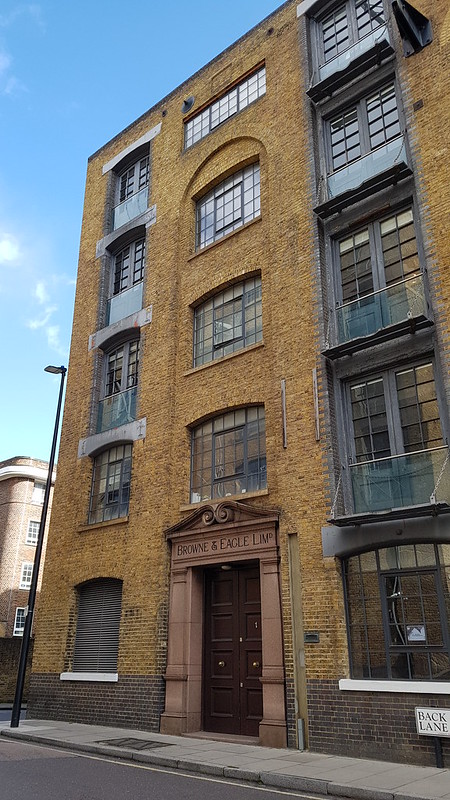
Have a read of this article about Browne & Eagle Ltd.
It wasn’t the nicest day for a walk, but sometimes my free days don’t coincide with one! I did know that due to the mist, I’d have to take my bridge camera to cope with a view from Primrose Hill. I’d failed to recharge the battery and only one line remained, but hey, sometimes you have to take chances. In the end, I got four or five photos out of it, and the ones I wanted. Phew!
I’d borrowed a book from the library entitled Walking London: 30 Original Walks in and Around London by Andrew Duncan. I used it for part of the walk I took in Kensington last week. The walks are easy to follow (even for me!) and take you off the beaten track to the back streets where there are some interesting finds, things I would probably not find on my own.
The walk is three and half miles long (walking time about one and a half hours) and begins at Chalk Farm underground station (Northern Line). Coming out of the station, I crossed the road and headed up Bridge Approach. Here I crossed the bridge over the underground. I crossed the road at the end and walked up Regent’s Park Road, where there are some rather nice shops. I nearly got distracted by a book shop (as ever!). The road leads to Primrose Hill, and I followed the path to the top where the above photo was taken.
The bridge over the underground
The shops in Regen’s Park Road
A man of interest
Walking up Primrose Hill
Another view from the top of Primrose Hill
I retraced my steps a little and then took the first path right and walked to the end of the park (there are toilets here) and crossed the road and took a right over the bridge. Looking down, there was Regent’s Canal.
Regent’s Canal
Another view from the bridge
I realised that I have only walked through Regent’s Park when visiting London Zoo. There is so much else to see.
Into Regent’s Park
I remember this drinking fountain. After that it was all new.
Don’t these trees look gorgeous even on a damp, misty day?
Following the path around the playing fields, I finally came to the lake full of birds of all descriptions.
Canada geese
I love this view. See those buildings? They are described as pepperpots. They are in Sussex Place.
I love all the little bridges in the park. This one eventually leads to the children’s boating lake.
Majestic Heron!
Nothing like a splash of autumn colour
London Central Mosque
I found this lovely cafe overlooking the lake and decorated in the style of Queen Mary’s Gardens (part of Regent’s Park and yet to visit on this walk). The stop was most welcome. A chance for a hot drink and a warm up.
Through the window
The work of John Nash, whose buildings can be seen also close to Trafalgar Square.
Holme Green Bandstand. On 20th July 1982, the bandstand was the target of a terrorist attack by the IRA. Seven bandsmen were killed and a further 24 injured during a concert by the band of the Royal Green Jackets. Eight members of the public, who were watching the performance, were also taken to hospital with injuries sustained in the bombing.
Nice to see some colour still
The Sunken Garden, Queen Mary’s Gardens
Walking past the Open Air Theatre, you come to these gardens.
The fountain
Queen Mary’s Gardens
Queen Mary’s Rose Gardens
Now out of the gates I was heading towards some of the back streets of Regent’s Park, and what a surprise I got!
The terraces come with their own private gardens (right)
Just stunning
Walking between one stunning terrace to another, yet still opposite Regent’s Park
I’m almost at the end of the walk now.
Down an alleyway of Peto Place where you can see the Royal College of Physicians in the background.
The BT Tower shrouded in mist
The walk in the book ends at Regent’s Park station, but as I was opposite Great Portland Street, I decided to travel back from here. This was a most interesting and lovely walk, but it was nice to get warm again as the cold had seemed to get right into me by then. I hope you have enjoyed this walk too.
Getting around Britain is becoming rather difficult right now as last week there was a national rail strike (three days and disruptions on other days). One of those days coincided with a London tube strike. I could see my trips being curtailed. However, I had enough of not being able to go anywhere during lockdown, and I was not to be beaten. I began looking at options that I could get to by bus.
Although I have been to Fulham Palace before, and the gardens a few times, I had not been inside the house for a good number of years. The day was hot and sunny, and the bus got caught up in a traffic jam just outside Putney, though I never did find out what the problem was. Still, I got there. I exited the bus at Putney Pier and walked over the bridge. From the bridge there is a nice view of All Saints Church, Fulham which stands next to the Palace. When I reached the church I found the door open. I don’t believe I’ve ever been inside before, so I went to take a look.
All Saints Church, from Putney BridgeAll Saints Church, FulhamFontOrganNaveAll Saints
On to the main event! Fulham Palace was acquired in AD 704 as a residence for the Bishops of London. The last Bishop to live there was Robert Stopford who retired in 1973. The building has 70 rooms and was lived in by the Bishop, his family and servants. The Bishop would run the Diocese of London from there, entertain dignitaries and receive candidates for ordination. In 1975 the Palace and garden was leased by the Church Commissioners to Hammersmith & Fulham Council for 100 years. Since 2011 it has been run by a charitable trust(Fulham Palace Trust) who run the site and carry out restoration.
On entering the palace you cross over the former moat. To left is the porter’s lodge (back to its original pink!) and to the right is the coachhouse. At one time the River Thames had inlets right up to the garden walls.
The moat with the coachhouse nearest and the porter’s lodge behindPorter’s lodge
The palace and gardens are free to enter. There is a small shop, the all important toilets and a cafe overlooking the gardens. The museum part of the house has been updated since my first visit and has lots of interesting facts and displays about the history, archaeological finds on the site and details about the former Bishops. There is a short video at the beginning of the tour, and another at the end.
Approaching the palace. Through the arch is the courtyard
Not all the rooms are open to the public. Some are obviously offices. The rooms available to view are all on the ground floor. You need a plan as there are a few coridoors and it took me a while to find the chapel (even with a plan!).
House and gardensBishop Compton was particularly interested in plant collecting and brought in many specimens to the palace gardens (Museum)Collect your own – I need no persuading!Tools of the tradeIn the museumThe drawing roomThe Great Hall – the oldest room in the building. Queen Elizabeth dined here in 1588 and 1600.The Chaplain’s Study
The rooms are mainly empty. The above photo shows the only things in this room. The photos in the guide show what these rooms would have looked like, but sadly they do look rather stark now.
And so into the gardens. The photo below is my favourite. Walking through a gate you enter the walled garden and the first thing you see are these greenhouses, some of which are accessible.
The walled gardenThe walled gardenThe market garden stall. Buy plants and veg from the gardensSweet PeasThe Bisghop’s Seat! Children love this (as do childlike adults!)The CourtyardThe courtyard. The chapel is to the right (out of the picture)
The cafe overlooks the gardens and has long windows so you can admire the view. The tables outside were busy today, but as all the tables with shade had already been taken, I decided to park myself inside, though I did have to suffer jazz music! The food is very good though.
Very civilised
I had just finished lunch and was on my way to view the chapel when the fire alarm went off. Gosh it was loud! People headed out into the courtyard. As we walked across I looked up and saw smoke coming out of one open window and what smelled like burnt toast. The brigade arrived and we waited for the all clear. It came very soon (yes, I think it was a toaster!)
Fire brigade leavingThe courtyard with fountain
I then went in search of the chapel. I realised I had seen this before (I’d convinced myself we’d not found it before). It has stunning painted walls, a beautiful mosaic and stained glass windows.
MosaicAltarChapel
It’s a shame there aren’t more rooms open as the upstairs looks interesting (the guide book has some photos), but the house and gardens are lovely. There are plenty of benches in the gardens to sit and just enjoy the peace.
The coridoor and stairs to officesOutside
I’m sure I shall return again soon, to sit in the gardens if nothing else.
The Aga Khan building was designed by Pritzker prize winning architect Fumihiko Maki and opened on 26th June 2018 by His Highness the Aga Khan and His Highness Prince of Wales. The building is set in the education quarter, and is a centre of education, knowledge, cultural exchange with an insight into Muslim civilisations. Clad in light limestone, the building is inspired by Portland Stone and the layout reflects traditional courtyards of Morocco and Egypt.
I have wanted to explore this building for a long time. A few years ago, when on a walk in the King’s Cross area with a group, we went into the reception area of the building. The sculpture which rises through all nine floors impressed me. When I arrived home, I tried to book a tour on their website. However, tickets go quickly and they were all sold out. I then put it to the back of my mind. Recently, I heard the Aga Khan building was re-opening for tours after the pandemic, so straightaway I went online and this time I was lucky and secured tickets for myself and a friend.
Tours run on Thursday afternoons (5pm) and Saturday mornings. The tour takes about an hour. Last Thursday, eleven of us set off with our volunteer to explore the library (over several floors), The Crown Room, the terraces and gardens.
We began at the entrance where a bronze art work stands. The bronze depicts the names of God and Allah.
Bronze with the names of God and Allah. Note the eight-pointed star pattern on the windows. This runs throughout the building.Looking up: Rasheed Araeen’s artwork; ‘Rhapsody in Four Colours’ which reinterprets classical Islamic geometric forms into a three-dimensional sculpture that rises nine-storeys high.
The building has nine floors and a basement. Lifts stop at all floors except the most precious floor of the library where rare books live, some behind locked temperature controlled cases. These have to be specifically asked for. The library feels calm and has a few individual rooms for silent study. We noted that as well as books there were DVD’s.
The first terrace we visited was The Terrace of Learning, which is accessible through the library, giving students a chance to relax during a break from studies. This terrace is planted with rosemary, myrtle and other greenery. Note the tiled floor. There is no grouting between them to allowed the water to seep through. The water is then recycled. The Aga Khan building, when built, was the most eco-friendly building in London. It is also a working building, which is why tours are only offered twice a week.
The views across London from all the terraces and gardens are stunning. You can see Coal Drop’s Yard, Gasholders and King’s Cross in one direction, and Canary Wharf and St Paul’s Cathedral in the other direction.
Terrace of LearningView from the Terrace of Learning – note old GPO Tower
Next we entered the Crown Room where meetings are held. The windows here, like in the library, are anti-glare, keeping the areas bright yet not a strain on the eyes. The walls of this room are of sycamore. I can tell you it has a lovely smooth feel to the touch, and I liked the patterning.
The Crown RoomTerrace of Discovery (spot St Paul’s).
The terrace off The Crown Room has beautiful patterning on the rail – the eight-pointed star again – reflecting the carpet in The Crown Room. This is one of my favourite terraces.
A better view too. The gasholders have been turned into apartments and it has a roof garden!And in the other direction……
From the ninth floor, if you have a head for heights, you can follow the artwork all the way down to first floor.
Made of metal, this is impressive
The next garden we visited was The Garden of Light. Around the walls is Arabic inscription, some of which is scripture. It has a small fountain, and the garden is lit at night.
The Garden of Light
The Garden of Life is beautiful. Water runs from a small waterfall along a channel, and the planting is colourful.
The Garden of LifeSome of the planting attracting beesThe bees seemed active hereView from the other direction
Back on the first floor, we entered The Garden of Tranquility, which overlooks Jellico Gardens.
The Garden of TranquilityJellico Gardens
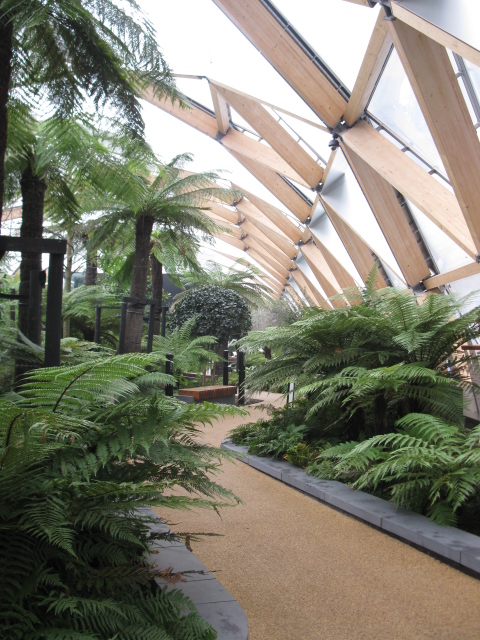
Our tour was at an end. What an interesting place. I couldn’t resist one more photo. This time I looked up through the floors to the glass roof. The roof here and in other parts of the building reminds me of the roof in the gardens at the Crossrail building at Canary Wharf.
Going through the floors (lifts to the right)
King’s Cross has been rejuvenated over the years. Building work is still marching on with more apartments and the new Google building.
Entering Coal Drops YardRegent’s Canal, King’s CrossStill building
I’d urge you to look at the Aga Khan Building website for more information on the structure, terraces and gardens. The tours are free, but must be booked in advance. At the time of writing, there are still spaces available until the end of June.
Now, I must admit, I have never been a big fan of Churchill. I’ve never forgiven him for ruining a whole day due to his state funeral. I was coming up to ten years old, and all I remember of that day is sombre music on the radio, and there was nothing, I mean nothing else to do. So depressing! The world stopped, and I thought, who is this man that can do this?
View across the lake
Okay, I’ve got that out of my system, but as a nearly ten year old, I didn’t really understand (or want to know) who this man was, but that day haunted me, and I’ve obviously never got over it! Second thing – I only associated Churchill with war, which seemed to obsess my parents’ generation. I realise now, of course, how much it affected them. There was still rationing when my brother was born. When the air-raid siren on top of the local police station was tested (which I remember as a child), how my mum hated it. Thirdly, I have been to Chartwell before with my mum and dad, many years ago, but I barely remember it, and I wonder if that too has been blotted out of my mind due to my prejudice against him! I remember standing in the garden, and that’s all. So, why, you might ask, did I recently visit? Well, a friend was keen, and I never refuse a day out!
There is actually a well – the Chart Well!
Has my opinion changed? I have become more sympathetic, and I love the fact that he was such a family man. I’m never going to be his biggest fan, but I can live with it! Maybe I have laid the ghost to rest.
The front of the house isn’t as impressive as the side or back.
Chartwell had been owned by the Churchill family since 1922. It was only in 1964, a year before he died, that he moved to his flat in London, due to ill health. You can read more about Churchill here. Of course, there is more to Churchill than just war. He was Prime Minister. I learned that he switched political parties, he suffered from depression and the only thing to help with that was painting. And he was a family man. In the gardens is a cute brick built playhouse he had built for his children.
The brick built playhouse in the gardensPlanting is still not complete. During lockdown, The National Trust lost money and could not afford plants, so there are still bare beds in some places.Another view of the houseView from the Pink Terrace (house)
The house has beautiful rooms, and the views are spectacular. Who ever said Kent is flat? There are some very hilly parts to Kent. I expected very masculine rooms where Churchill worked and plotted the way war was going, but I was surprised by how homely it all felt. It wasn’t all leather and wood! I also marvelled at how industrious Churchill was – how many books he wrote and how many pictures he painted. How did he have time?
Lady Churchill’s sitting roomHall and stairsDrawing roomLibraryAnother library viewSecretaries Office (I think)Dining RoomKitchenKitchen
There is a museum with a lot about Churchill’s life, especially his the military life and all the organisations he was a member of. There is a whole case of uniforms and, of course, his cigars.
The famous cigars
Outside the gardens is Churchill’s studio. At first he had only a small studio, part of the workmen’s cottages. He put windows on the roof to add more light. Now this is the exhibition space for his many paintings. Churchill did not start to paint until he was 41. Encouraged by his sister-in-law, it became a lifelong hobby, and he took his box of paints and canvasses with him when abroad. Some of the paintings are unfinished, like professional artist’s sketches, and sometimes he went back and started again. Here you can compare the unfinished with the finished. They are remarkable paintings. Churchill never painted for profit or to display. This was something he did for himself. Around the garden and grounds there are seats placed where Churchill would sit to paint. And what views there are to paint at Chartwell.
The studio – everything here is Churchill’s
The National Trust acquired Chartwell eighteen years after Churchill’s death. These days there is a super cafe, National Trust Shop, secondhand bookshop and the all important toilets. There are lovely walks you can take into the woodlands. My friend and I took one of these paths and came across swathes of bluebells. Looking back at the house from there, you can see why Churchill loved this place so much.
A view of the house from across the lakeBluebell heavenOne of Churchill’s chairs
I loved the house and studio, and the surrounding gardens and countryside are beautiful. The house has a lovely feel about it, a good atmosphere, homely. This must have been a place to relax in away from London and all politics and war for Churchill. A place of family, and his beloved painting. We heard a talk in the studio about Churchill’s art, and he was friends with Sir William Nicholson (father of Ben Nicholson who worked with and married Barbara Hepworth). In fact, Sir William was Churchill’s mentor, but when Nicholson suggested using a more muted palette, Churchill decided to stick with what he liked. I admire him for that. You can see both artists’ pictures of the view of the swimming pool – I much prefer Churchill’s! It made me smile because Sir William’s son, Ben did the same with ‘primitive’ artist Alfred Wallis, but Wallis also went his own way!
Gate leading from Berwick Church which to me shouts an invitation!
Apologies for the delay in posting the final part of this trip. I have had a really busy week.
I left you as we departed Berwick Church, and headed to Bateman’s, the home of Rudyard Kipling.
Bateman’s from the garden
This was an added bonus for me because though it has nothing to do with The Bloomsbury Group, it did play into my other passion – The Pre-Raphaelites, who I have written about a few times before on my blog. Rudyard Kipling’s aunt Georgiana Burne-Jones, nee McDonald, was married to Edward Burne-Jones, great friend of William Morris. The Burne-Jones and Kiplings had houses in Rottingdean in Sussex for a time.
The dining room with leather wallpaper
However, Rudyard Kipling liked his privacy and wanted to escape his fame, and found Bateman’s which sits in grounds of its own away from the village and even further from a station. Even so, people did sometimes venture out to the house. There is a window where his wife could peep through to see who had knocked on the door. If it was some hopeful fan, the door wasn’t opened!
The downstairs rooms of the house are quite dark and there was no electricity when the Kiplings moved in. He was one of the earliest people to have electricity installed. It also made it easier for his servants. It seems he was quite a thoughtful employer. The dining room has original leather wallpaper which has been cleaned once, but they have to be careful now as it is so delicate. Like lino, it cracks.
Around the house are photos and plaques of Rudyard’s beloved India where he was born and later worked. However, he didn’t have a very happy childhood. He and his sister were sent back to England and looked after by a married couple. The lady did not take to Rudyard and preferred his sister. He had a miserable existence, due to neglect and cruelty, until his parents returned and removed them from the house.
Kipling’s study
Rudyard Kipling and his wife had three children. Josephine died aged 6, something that affected them deeply. Their son John died in the war. Their third daughter, Elsie, eventually married, but there were never any children.
I fell in love with Rudyard Kipling’s study where he wrote It is a large room with many book shelves, and a day bed where Rudyard would often mull over things when he got stuck with his writing. There is John’s old bedroom with his football boots and hockey sticks and photos of him in his army uniform
John’s bedroom
.
Music room
Outside there are lovely gardens, but due to lack of time we didn’t have quite enough time to visit them all. This would be worth a second visit – I shall have to persuade a friend with a car as local transport is still infrequent and there is a long walk. He really knew what he was doing, did Kipling.
Edward Burne-Jones’ painting of the three Kipling childrenWindowsill with items about May Morris, daughter of William MorrisThe Orange Tree embroidered by May Morris
The final day of our trip, we started off in Eastbourne and the Towner Art Gallery. Here we spent time in the gallery’s storage facilities. Metal frames on wheels were pulled out for us to view paintings that started their original collection. At that time, they were in a different building, which was part of a museum. I remember going there years ago. Now they have their own purpose built gallery almost on the seafront. We were shown paintings by Eric Ravilious, a particularly productive Sussex artist whose paintings I much enjoy, along with other artists of the same era, including Edward Bawden. The two of them worked together on murals for Morley Collage in London, but sadly they were destroyed by bombing in the war. Edward Bawden later painted some different murals for the college which can be seen in their refectory.
The main reason we were there was to see the preparation paintings for Berwick Church by Duncan Grant and Venessa and Quentin Bell. These were stored in a box with paper between the pictures. These were spread out for us on a table so we could look at them more closely.
Last time I said I had a story to tell about one of Duncan Grant’s paintings proposed for Berwick Church. The original painting was not acceptable to the Bishop due to (a) the rather serene looking face of Jesus and (b) Jesus was totally naked – no loin cloth. Now the model for this painting had to stand in the crucifixion pose for a very long time. He was plied with alcohol and tied to an easel. Even so, it was impossible for him to keep his arms straight for any length of time, which is why the arms sag. The serene face was due to all the alcohol consumed. It was possible he was totally out of it! However, the second painting (see below) was accepted.
The Victory of Calvary – Duncan Grant
I have to thank various people for these snippets which came via our gallery guide, other guides, and our leader on the tour. They know their stuff. Like the fact that the name Rudyard comes from the place he was conceived.
After time in the storage room, we went into one of the galleries and through to the library and Eric Ravilious’ room. This contains various paintings and ceramics. Well worth a second visit.
We had lunch close to the sea, under a tree to shelter from the spits and spots of rain. After lunch, we headed inland to visit our last house – Farleys House, which is between Eastbourne and Bexhill. I’d only heard about this house a few months earlier and wasn’t sure what to expect. I knew it was the home of Roland Penrose (Surrealist painter) and Lee Miller (photo journalist), but that was all. Well, I fell in love with house.
A murky looking Eastbourne
Sadly, no photography is allowed in the house, as it still belongs to the family, but the walls are brightly painted in yellow and light blue. In the dining room the fireplace has a beautiful wall painting by Roland of the sun and moon. The house had interesting visitors, one of whom was Picasso, and there is a tile painting of his by the Aga. Every space has something interesting to look at. Even in the hallway, paintings and sculptures fill corners and walls.
Farleys House
There is much I could say about the couple who lived in this house, but I would direct you to the website. When the couple moved here, Lee became interested in cooking. She sort of reinvented herself. Her past was shut away in attics which her son only found after she died. Her photography is still being collated and it is hoped that an exhibition of the photos she took after troops liberated the camps after the war will then go on show.
In the sculpture Garden
The garden is littered with sculptures of all kinds. Also on site is a warehouse/barn with some photographic exhibitions, Roland Penrose’ Jeep, as well as a second exhibition space, cafe and toilets.
Roland’s Jeep. He travelled around the world for several years in this
What do the Surrealists have to do with The Bloomsbury Group? Well, they came after them. It was perhaps a natural progression. Art always takes elements from a previous period and adds something new. Influences go a long way and you can often see aspects of another painter in the work of other artists. And then there are the rebellious ones!
The Giant – Sculpture GardenHello sheep
I came home with all these images and thoughts running through my head. This holiday had been cancelled twice due to Covid. Third time lucky. It was worth the wait.
Over the years, I’ve taken hundreds of photos in London and been to many places. Today I’d like to share with you just a few photos randomly picked out of my photo folders. I hope you enjoy them.
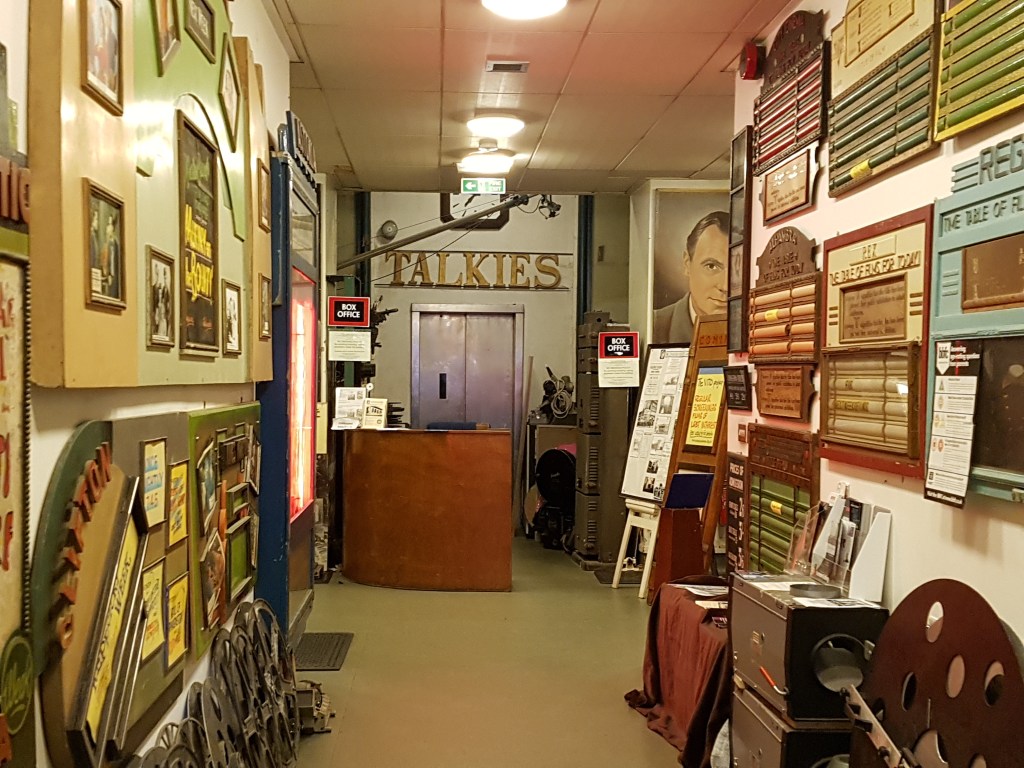
Cinema Museum, Kennington.
The Cinema Museum is a private collection of memorabilia. It is housed in the former workhouse where Charlie Chaplin lived as a child. They offer talks and show films. There is a small shop and refreshments are offered.
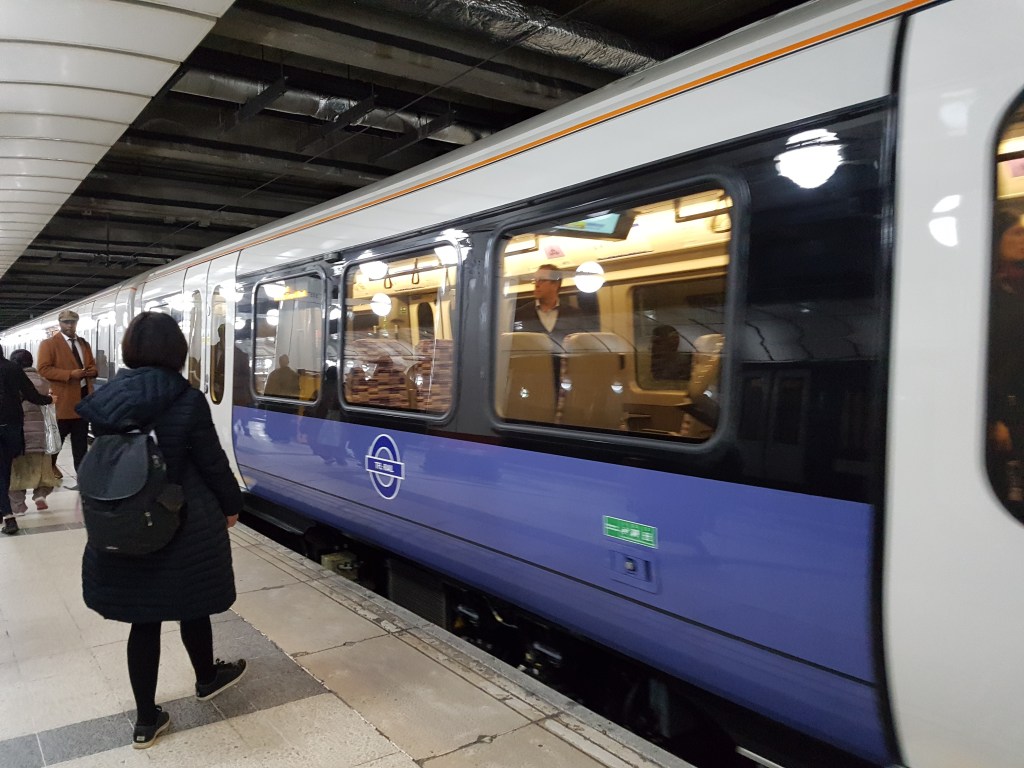
Elizabeth Line train, Liverpool Street
One day my husband and I took the train from Liverpool Street station out to Harold Wood. This is as far as we could go using our 60+ Oyster card (this card gives us free travel on buses, trains and tubes in the London area – a perk of being over 60 years olds!) The Elizabeth Line is the new kid on the block. Formerly called CrossRail, when completed (it is years overdue and way over budget), the line will run from Reading in Berkshire through London to Shenfield in Essex, with branches to Abbey Wood and London Heathrow Airport.
This was our first experience of travelling in one of the new trains and it was quite exciting. I’d become obsessed with the line after watching several documentaries about the tunnelling, and what was found in the various soil layers (I’ve attended several exhibitions too!), and took a course on it! Bits of the line are now open, but I am still waiting for the whole line to be completed.
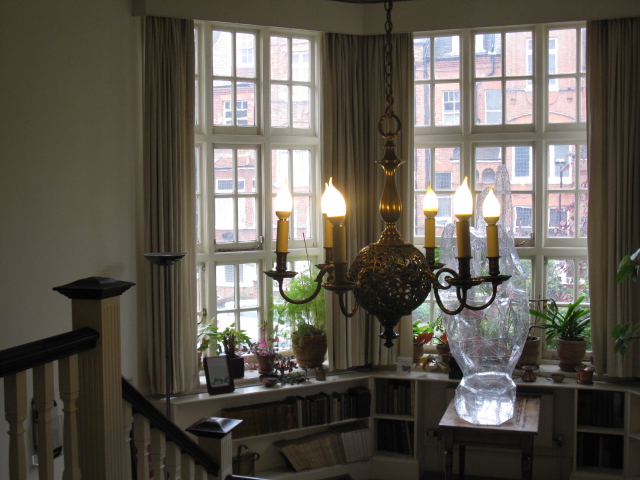
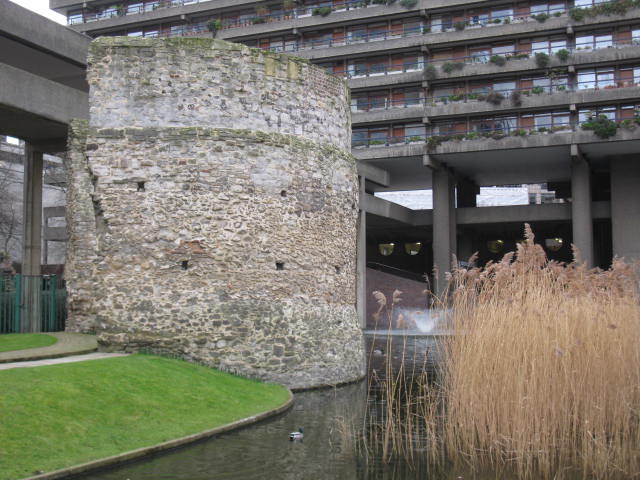
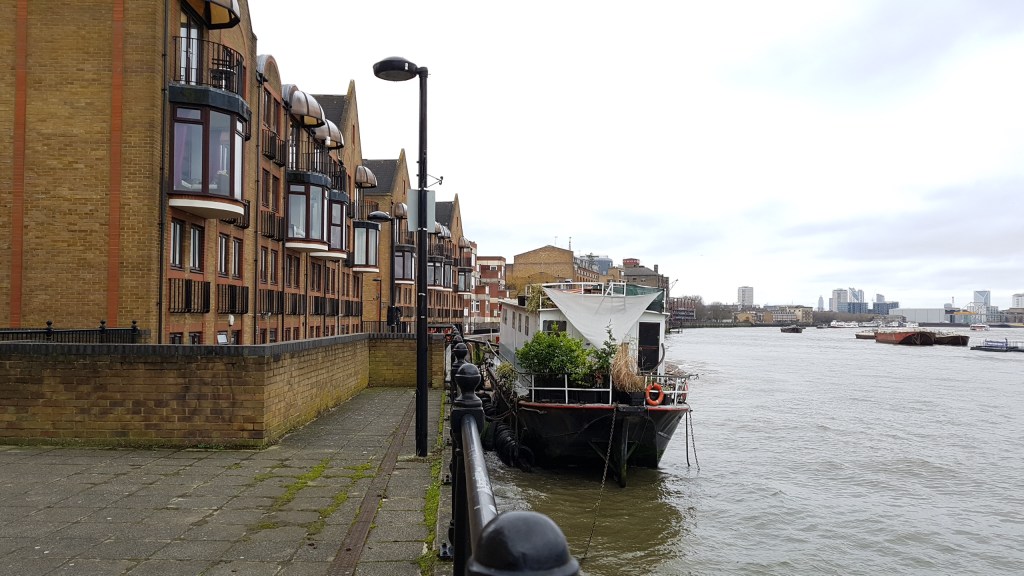
Harold Wood – part of the London Loop walksThe staircase, Sigmund Freud’s house, HampsteadPart of the old Roman Wall, BarbicanOsterley Park and house in Isleworth dates back to the 1570’s and is owned by The National TrustRotherhithe
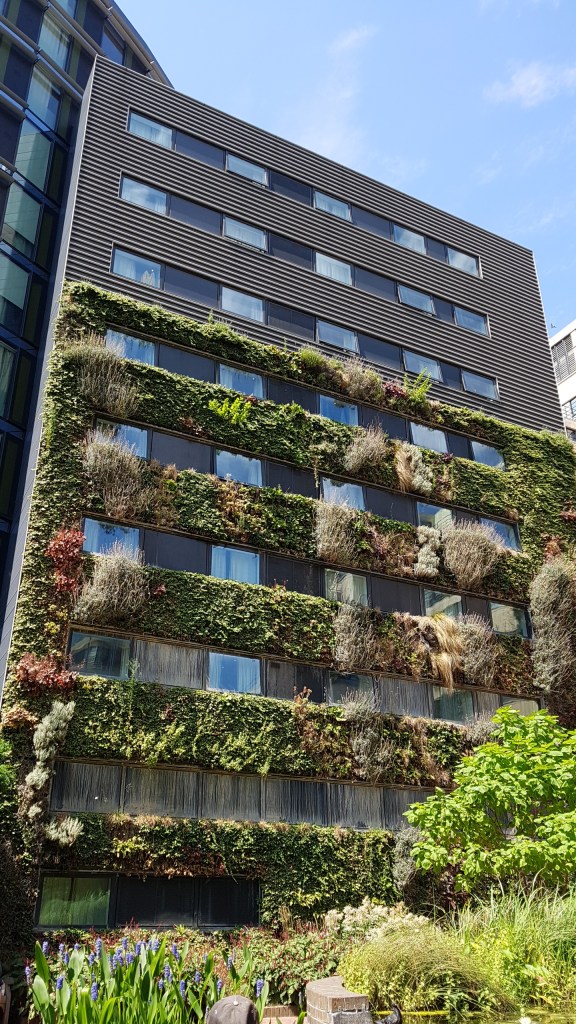
Living Wall and Pocket Garden near Tower Hill station
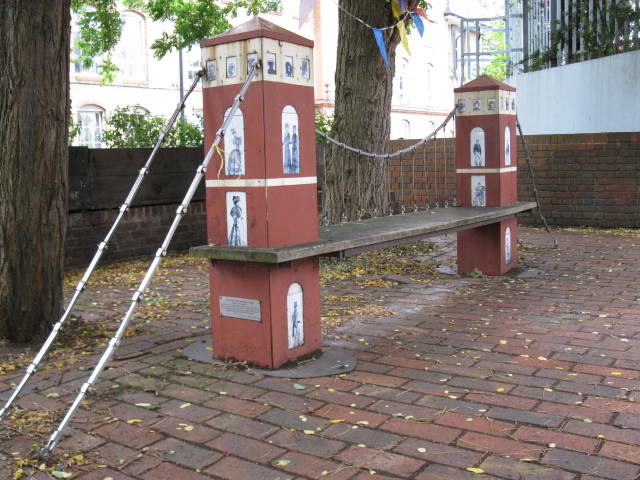
Some unusual seating at the Brunel Museum, Rotherhithe
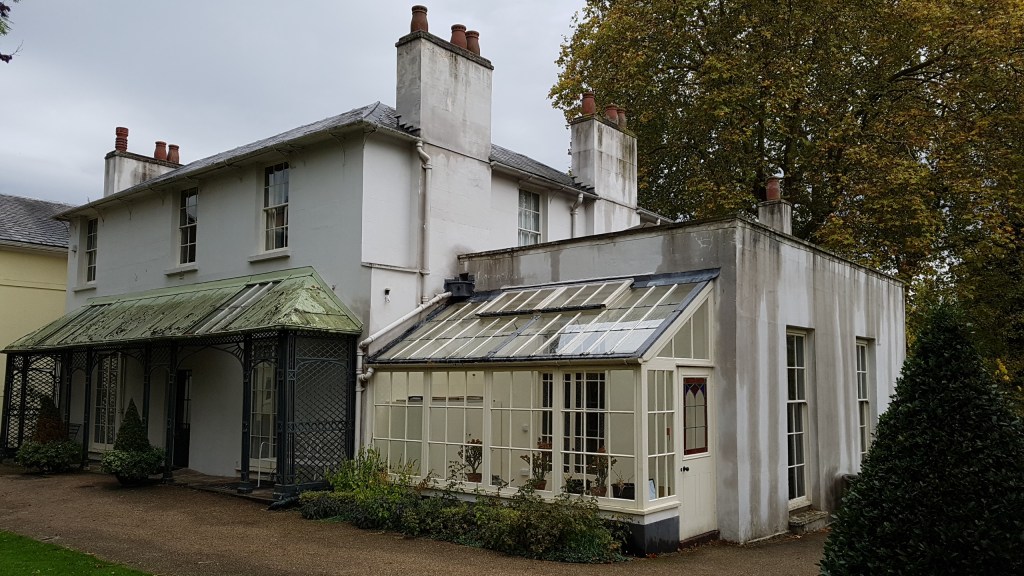
The poet John Keats came to live at this house in 1818. The house was originally two dwellings and Keats lived in the smaller half with Charles Brown. Keats stayed for seventeen months before travelling to Italy where he died.
When I have Fears That I May Cease to Be
When I have fears that I may cease to be Before my pen has gleaned my teeming brain, Before high-pilèd books, in charactery, Hold like rich garners the full ripened grain; When I behold, upon the night’s starred face, Huge cloudy symbols of a high romance, And think that I may never live to trace Their shadows with the magic hand of chance; And when I feel, fair creature of an hour, That I shall never look upon thee more, Never have relish in the faery power Of unreflecting love—then on the shore Of the wide world I stand alone, and think Till love and fame to nothingness do sink.
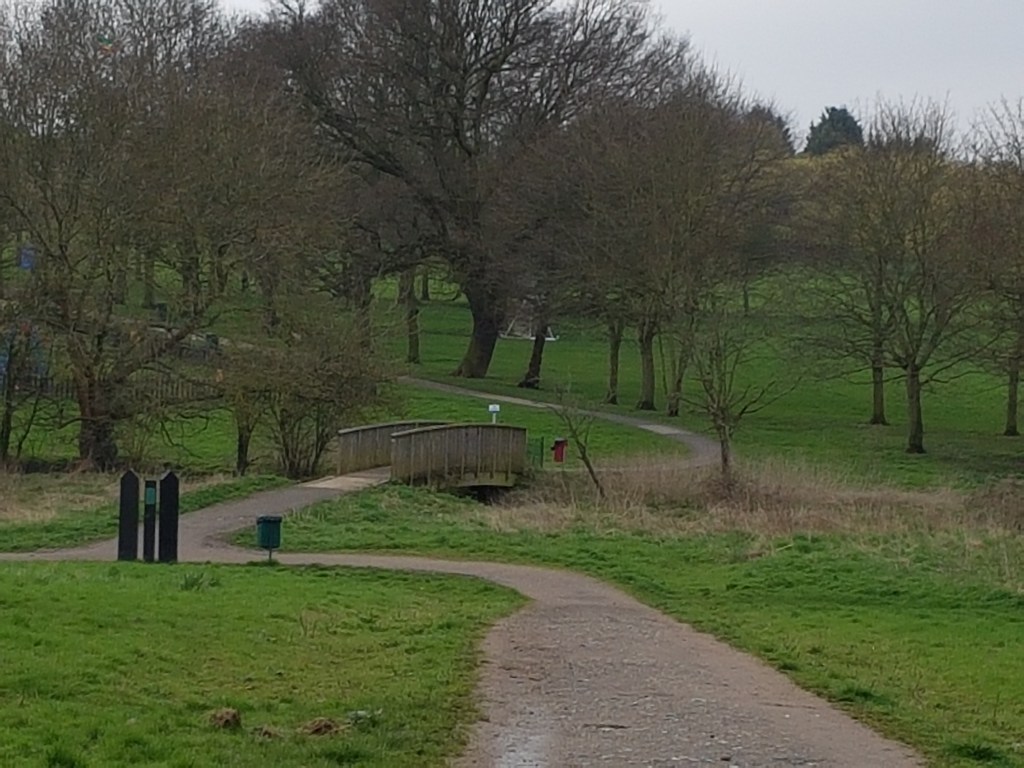
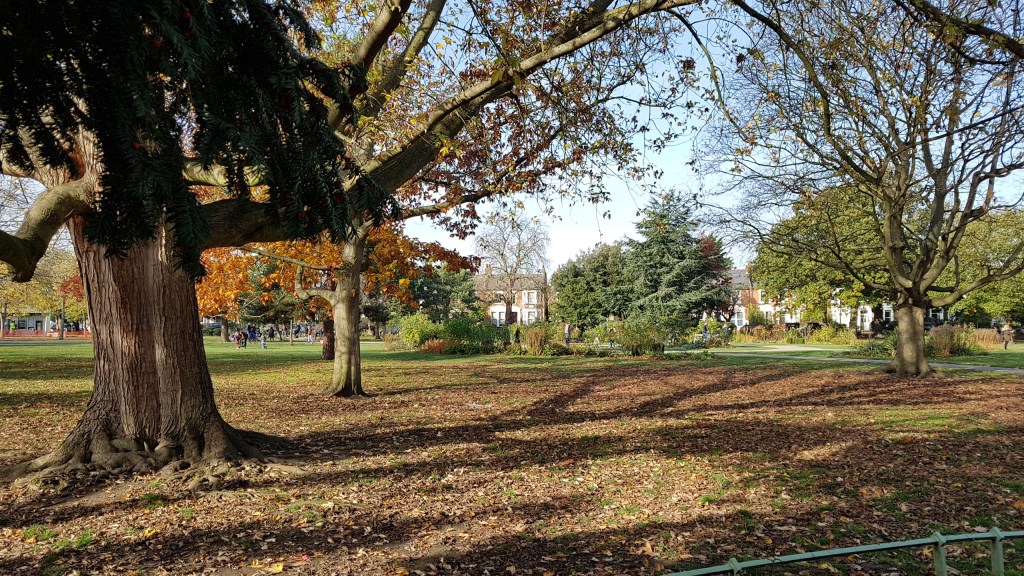
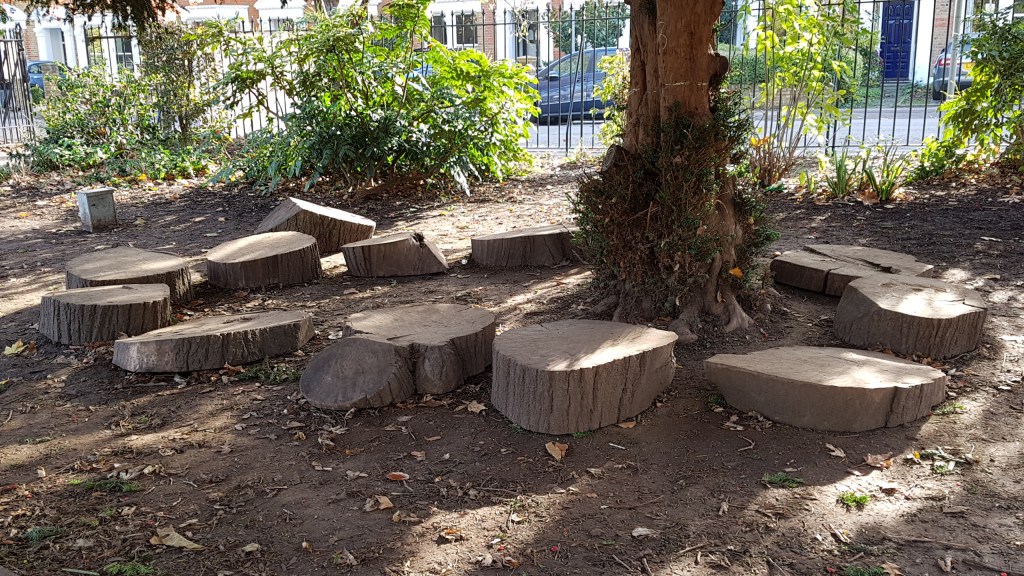
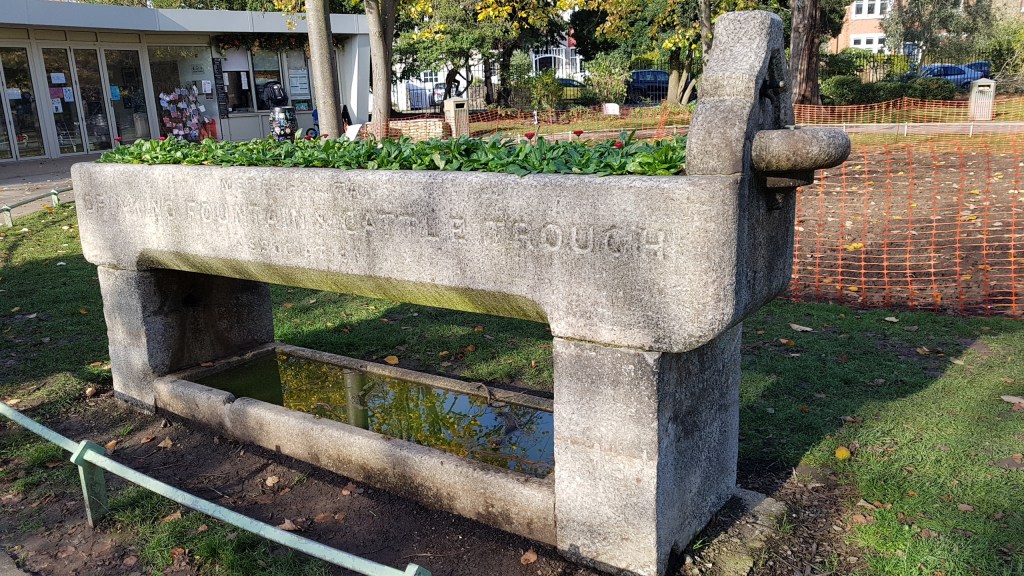
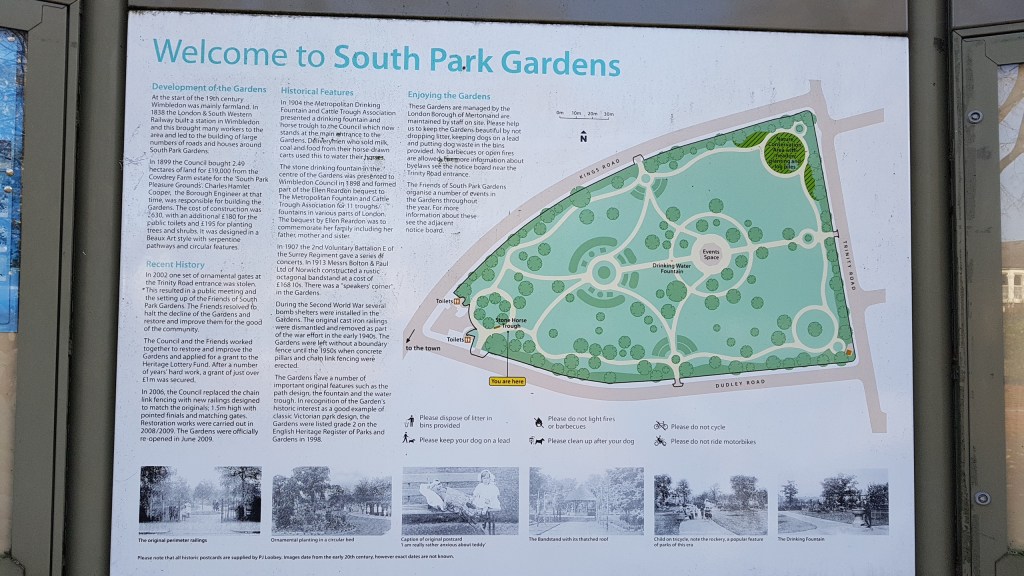
I love it when I find somewhere new and this was rather a lovely find. I had to go and pick up a book I ordered and decided to make more of the journey than just there and back, especially as I had to use the bus. So I looked at the map and found this park close to the main road.
This is a place to return to midweek when the children are in school! It was very busy with families making the most of a rare warm sunny day in November, and who could blame them? The park has a cafe (takeaway for the moment) and the all important toilets.
I wasn’t here long, just long enough to drink my takeaway hot chocolate and wander around taking photos, but I shall certain return.
I suppose it was the 1980’s when I first realised that a lot of music I was listening to had electronic overtones – OMD, Flock of Seagulls, Gary Numan – but really it was when I came across Trance in mid 2000 that I became hooked. I heard a version of William Orbit’s Adagio for Strings (Samuel Barber) in a Trance mix by Ferry Corsten. That’s when I bought my first Trance CD (‘Pure’ Euphoria Vol 4 mixed by Matt Darley) The rest is history.
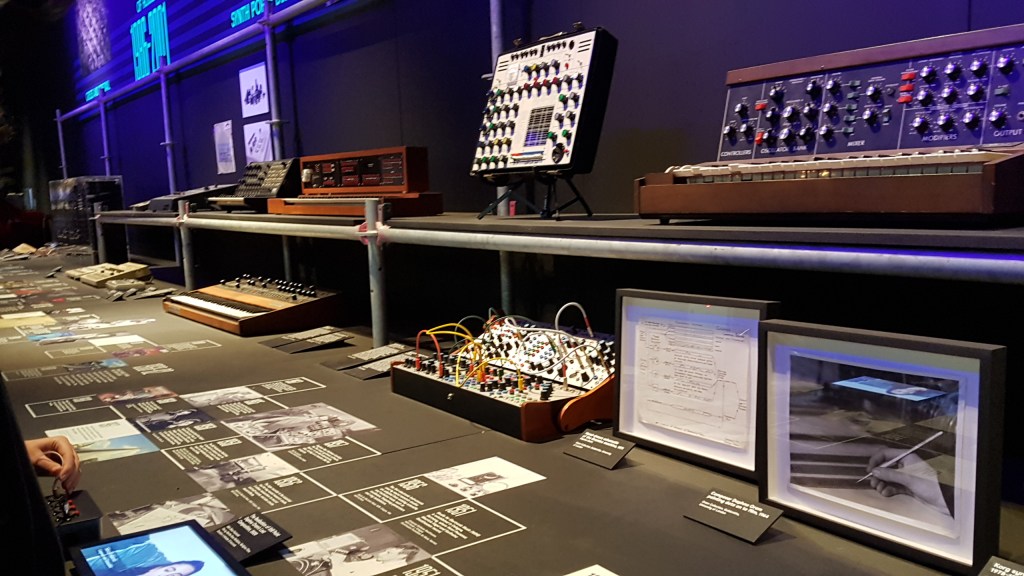
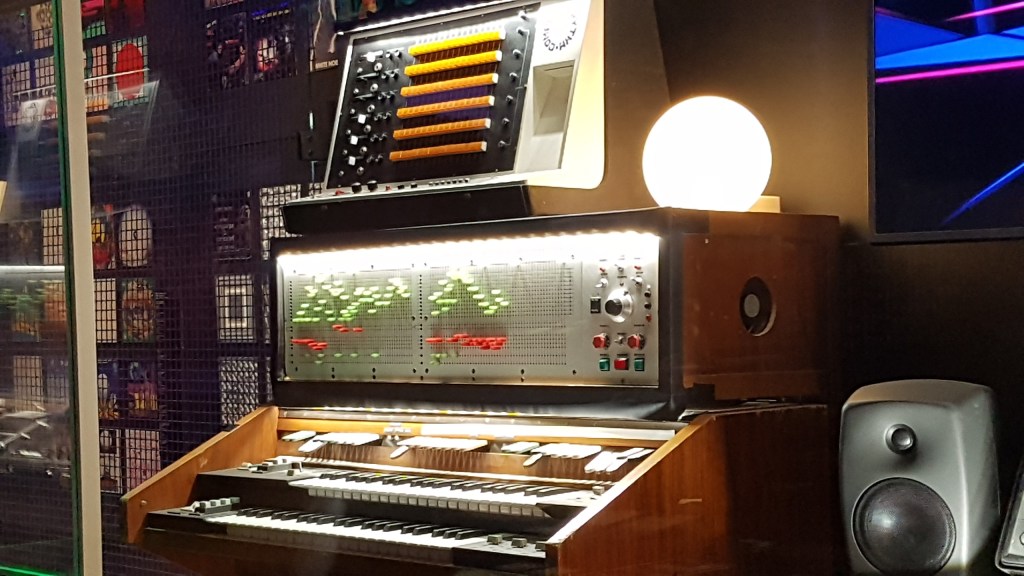
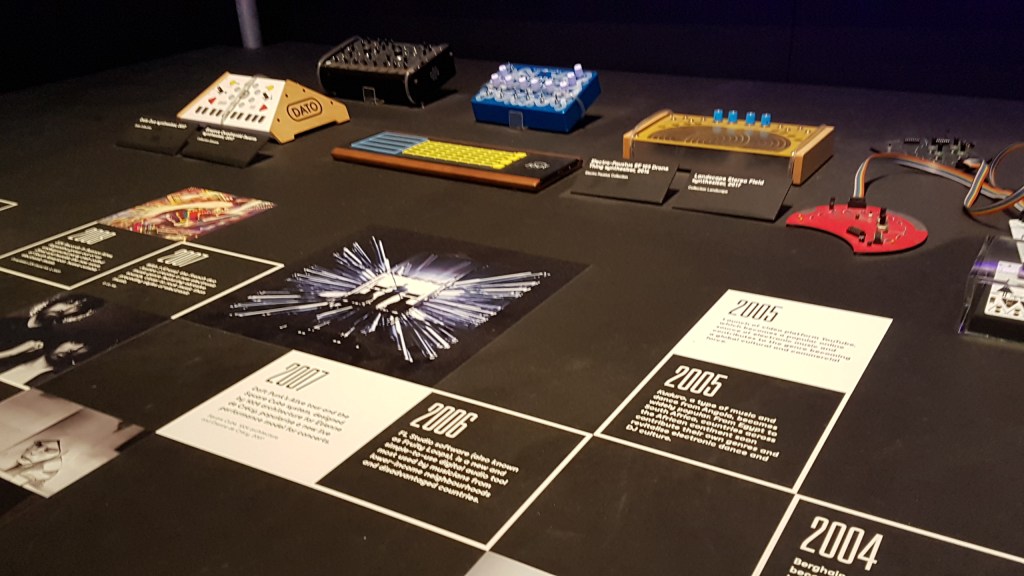
I am fascinated by all the knobs
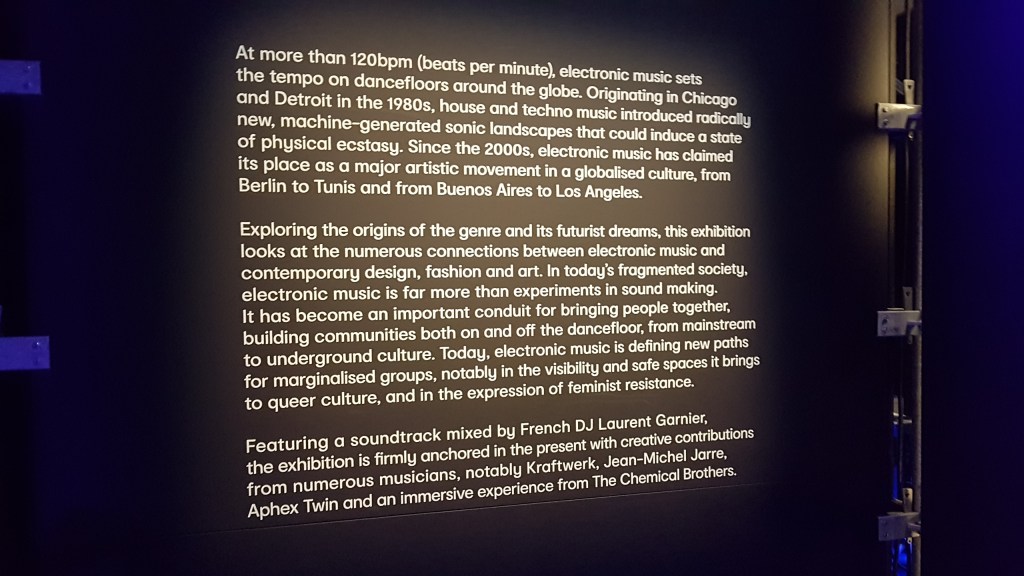
So, when I saw the Design Museum advertising their Kraftwerk to The Chemical Brothers exhibition, I just had to go along. What I loved was seeing the electronic equipment, but I hadn’t realised the origins of electronic music, how many decades it spanned, and the range. Going through the exhibition there was a chance to listen to sounds from across the years. Here you could plug in your own earphones or headphones (you need to take your own due to Covid 19 restrictions) and listen to the first attempt to record electronic sounds right through to club music of today. There are lots of screens and music pumping out generally across the exhibition.
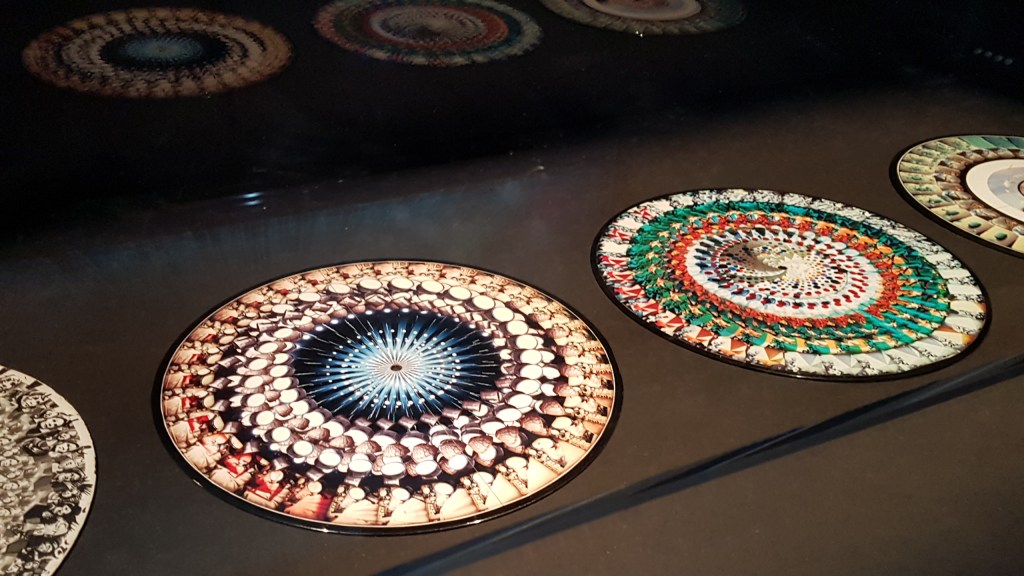
Vinyl records that create spinning pictures when played
My favourite place was the light display, a room with strips of changing lights moving to the rhythm of the music. In the final room you can have the whole experience with The Chemical Brothers song Gotta Keep on Makin’ Me High. There is a warning here due to the flashing lights/strobe lighting, and you can miss this out should this not be something you want to/should not experience for health reasons. Wow! Even I had to close my eyes near the end as the white light was so bright, but what an experience.
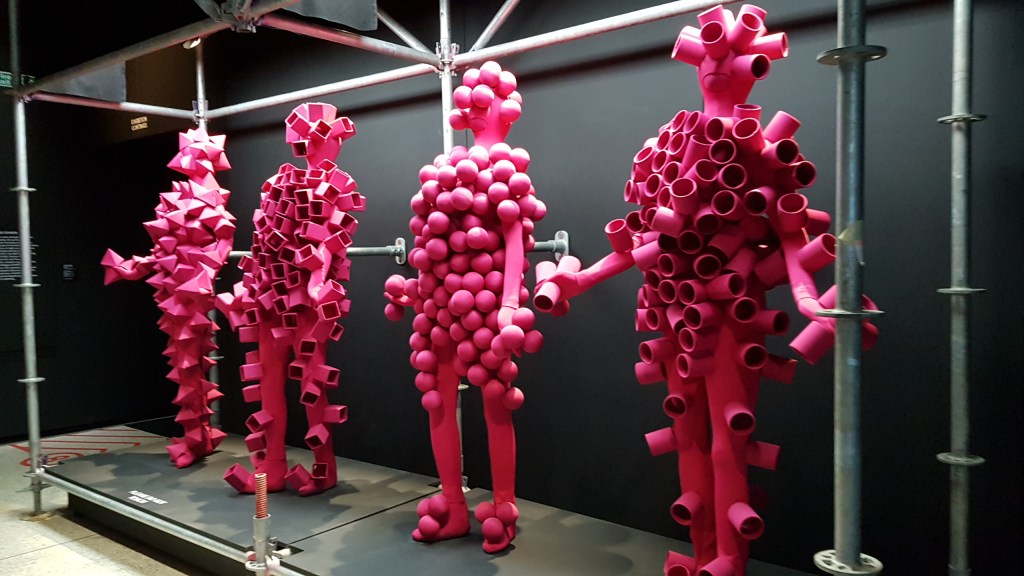
Costumes from The Chemical Brothers show
I don’t profess to like all electronica, but I love Trance especially the chill-out, classic, uplifting and some progressive. I am addicted to music in general and my taste is very eclectic. I listen to anything from the 1960’s to the present day, including classical, but if I had to pick an era, it would be the 1980’s.
If you like electronic music, then this exhibition is for you. If you are bored rigid now then maybe a quiet time in Holland Park is more to your liking. Do read on!
In Holland Park
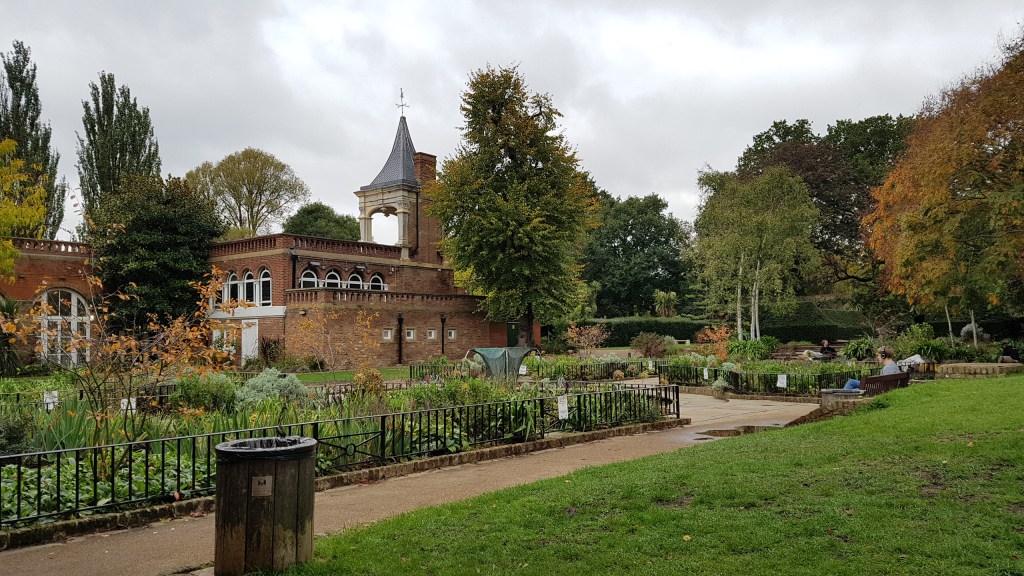
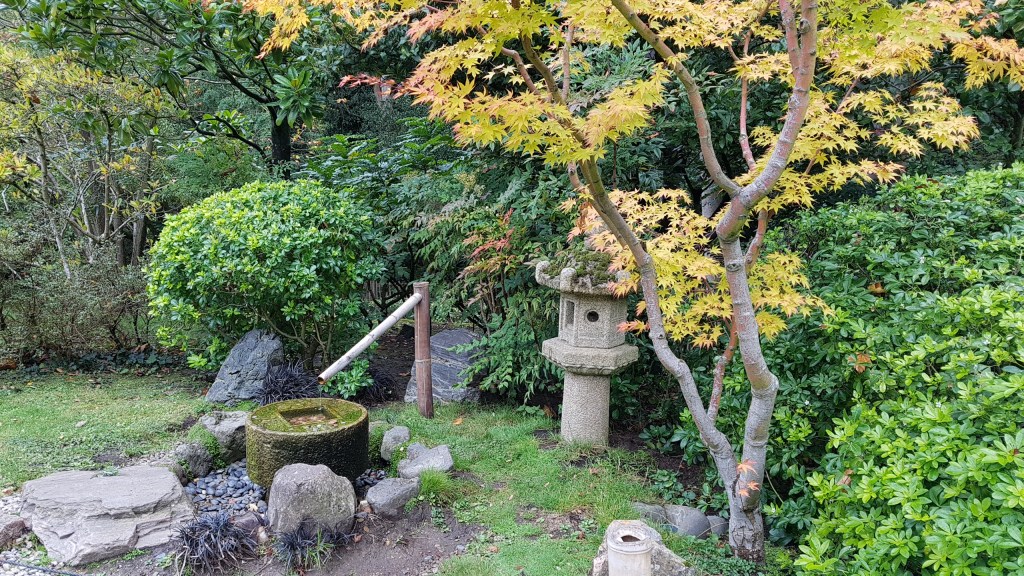
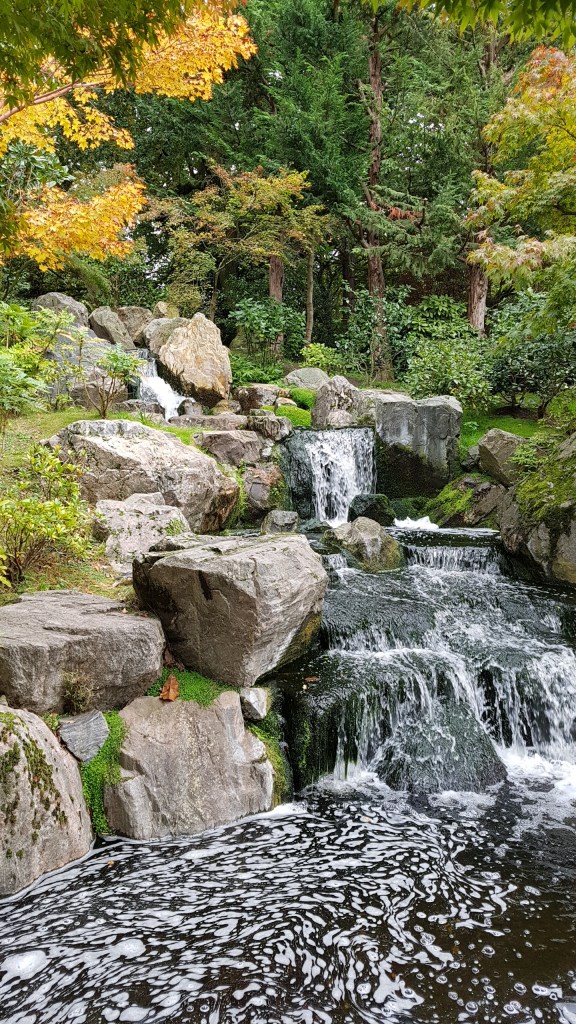
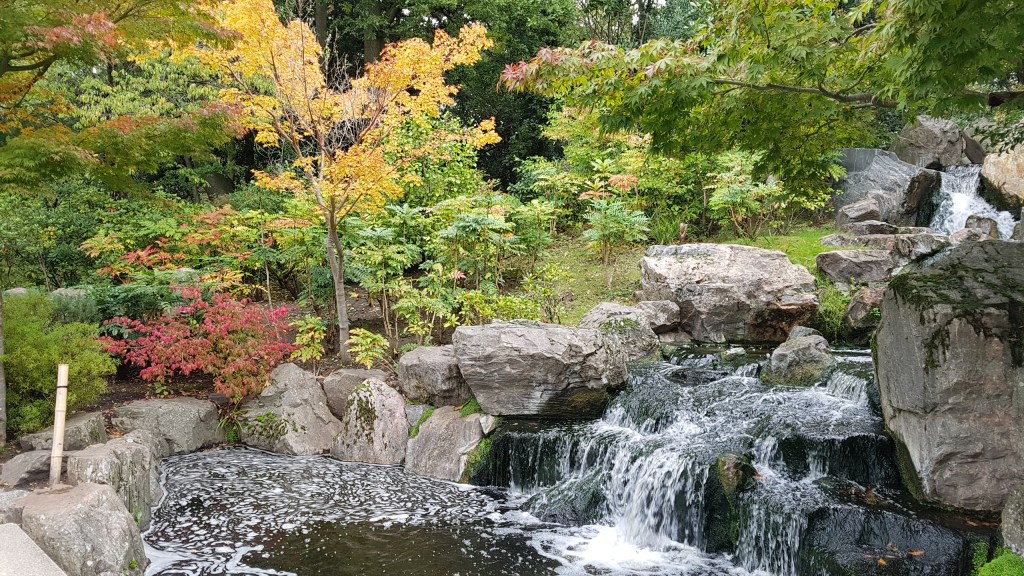
Holland Park is lovely any time of year, but with the trees turning colour I couldn’t resist popping in. Conveniently there is an entrance right alongside the Design Museum. Being midweek it was quiet. The Kyoto Gardens were beautiful and peaceful, a complete contrast to the thumping beats of techno. It was a chance to unwind and be with nature.
Kyoto Garden
While the large cafe was shut, the kiosk by it was open and I was able to grab a hot chocolate and sticky peach tart. I sat under cover just in time because the heavens opened. It was rather soothing watching the rain fall. Luckily, the worst had cleared by the time I was ready to leave.
I only found out about The Rookery recently through an article I found on Facebook. It was time to check it out in person.
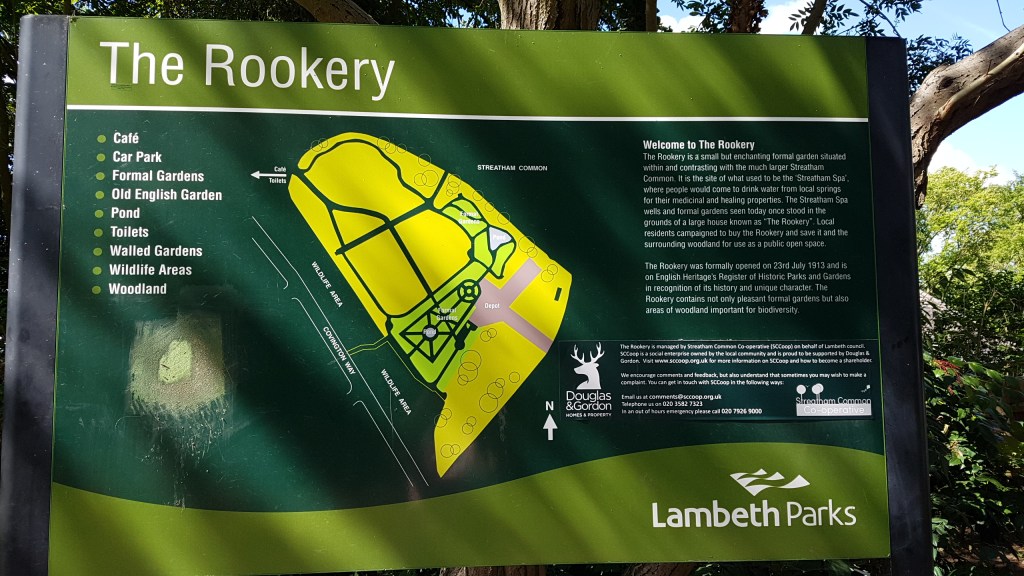
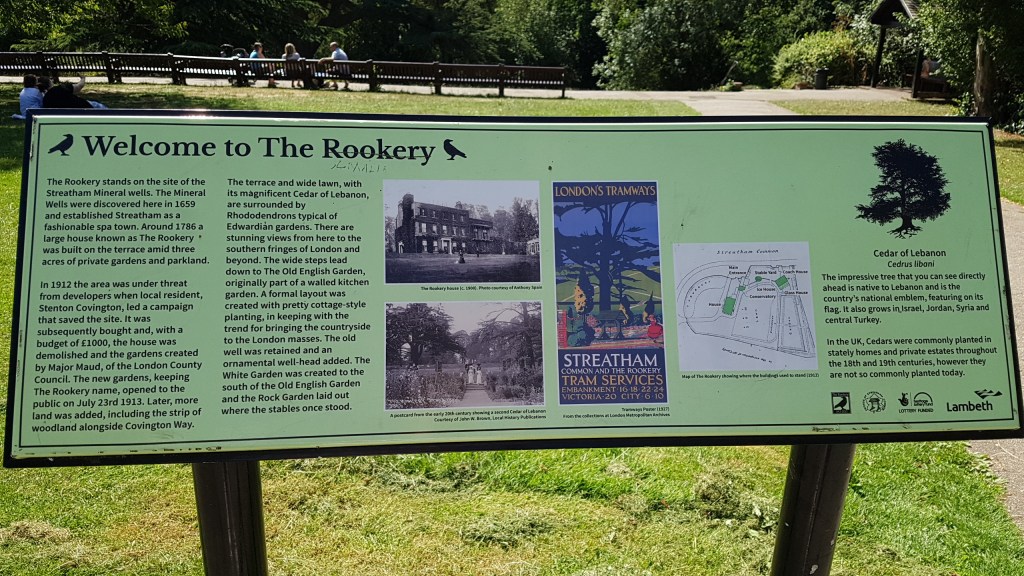
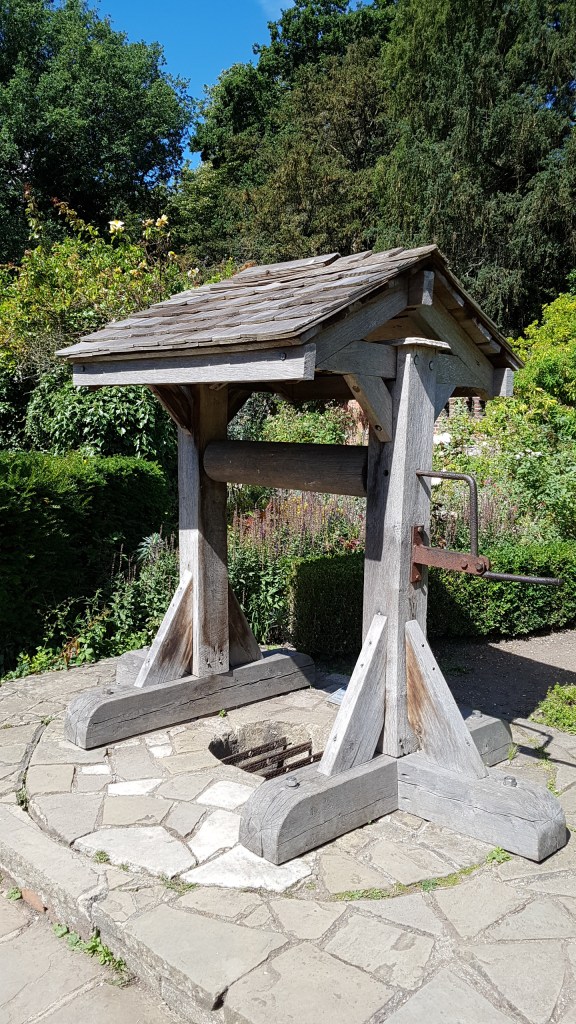
Nestled to the back and to the side of Streatham Common, The Rookery is a maze of gardens and new delights. Originally built as a Spa, there is a modern well to mark the spot. Created in 1659, the house and gardens were laid out on a site orignally known as Well House. Unfortunately, the spa waters were found not to be beneficial due to the clay soil.
Site of the Spa well
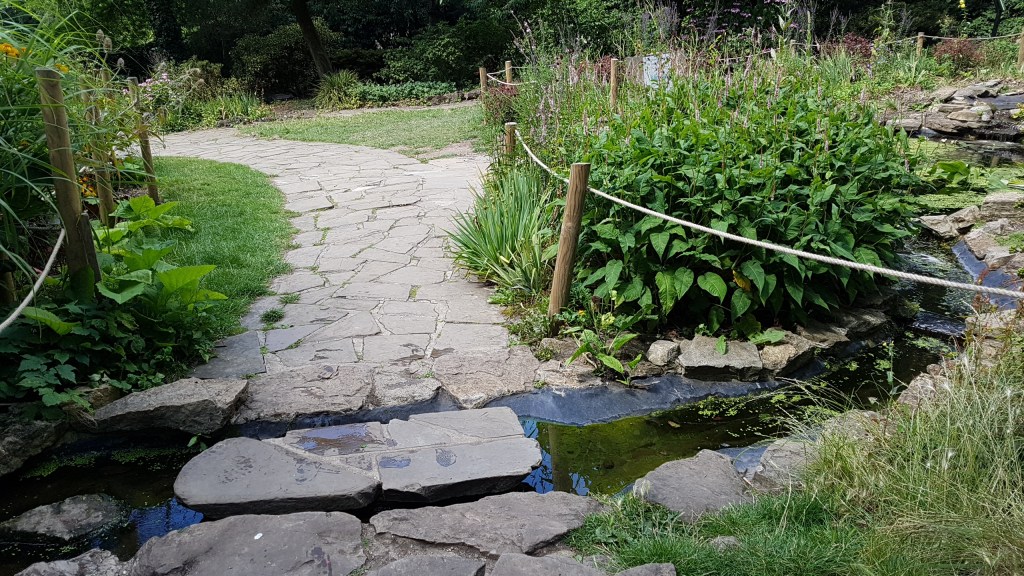
Stepping stones
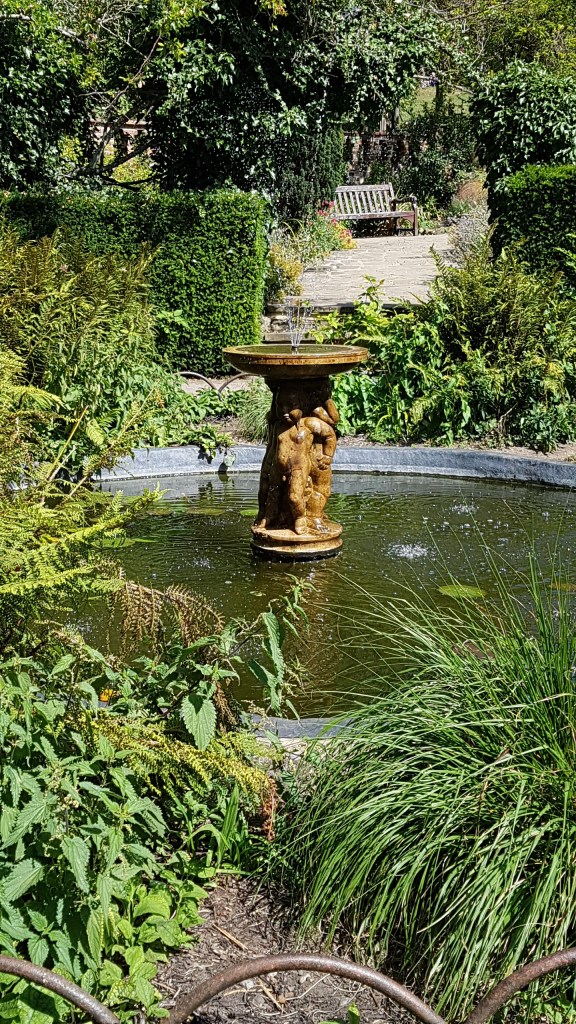
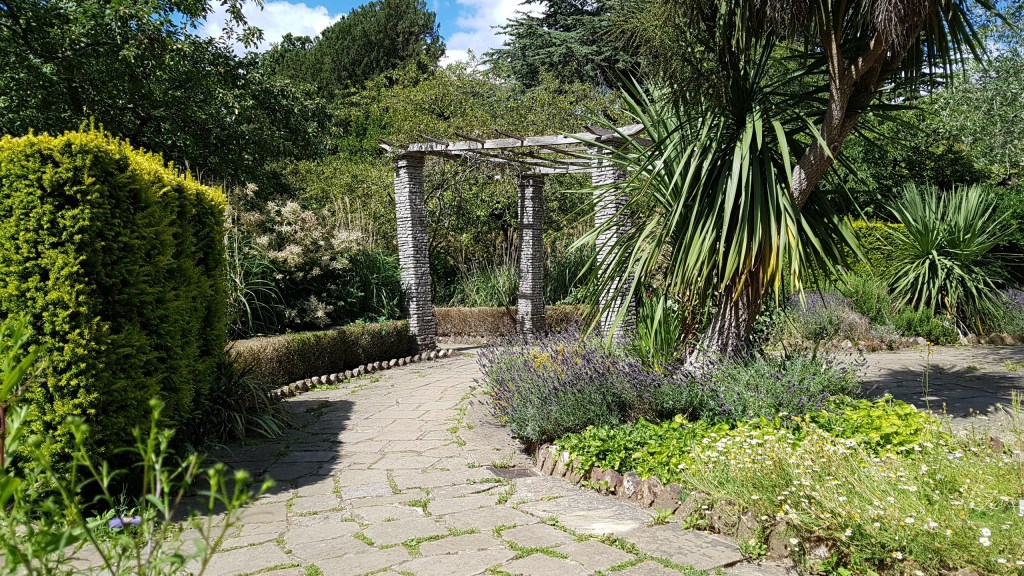
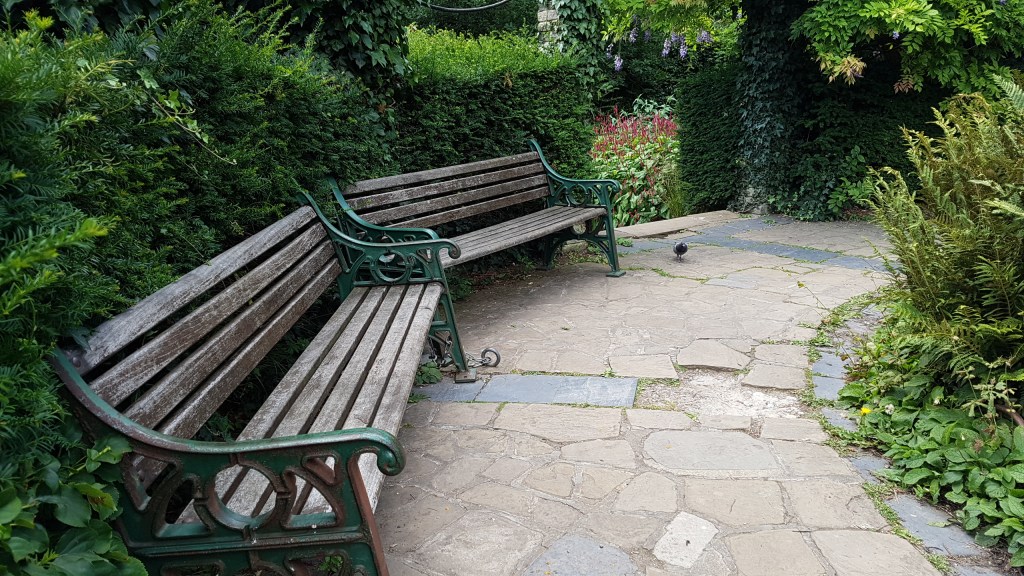
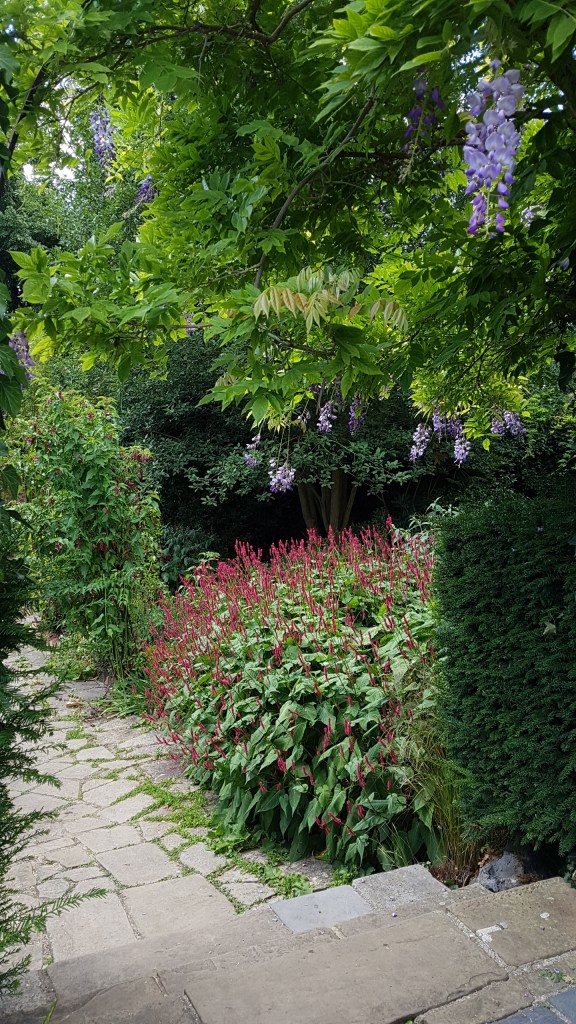
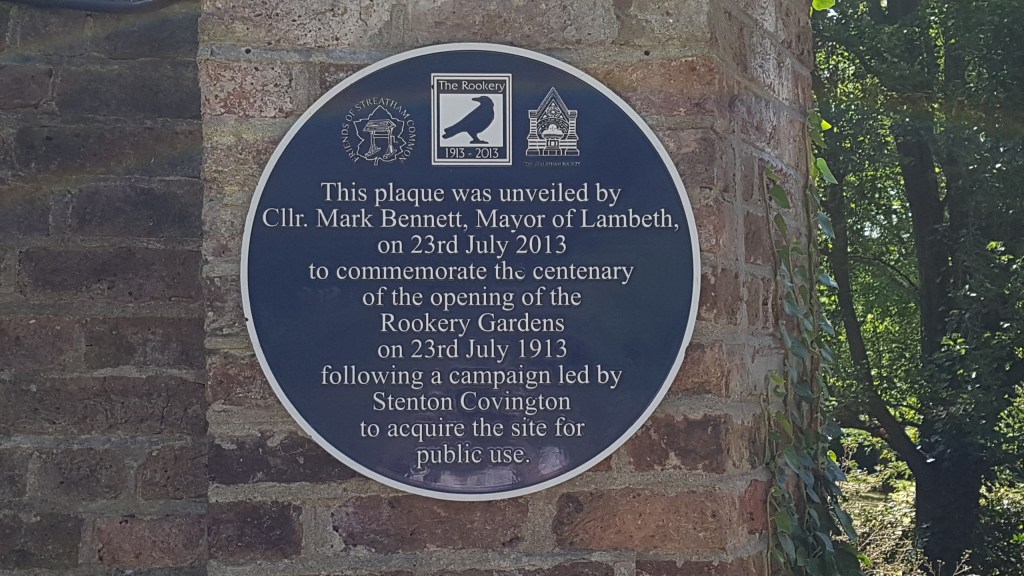
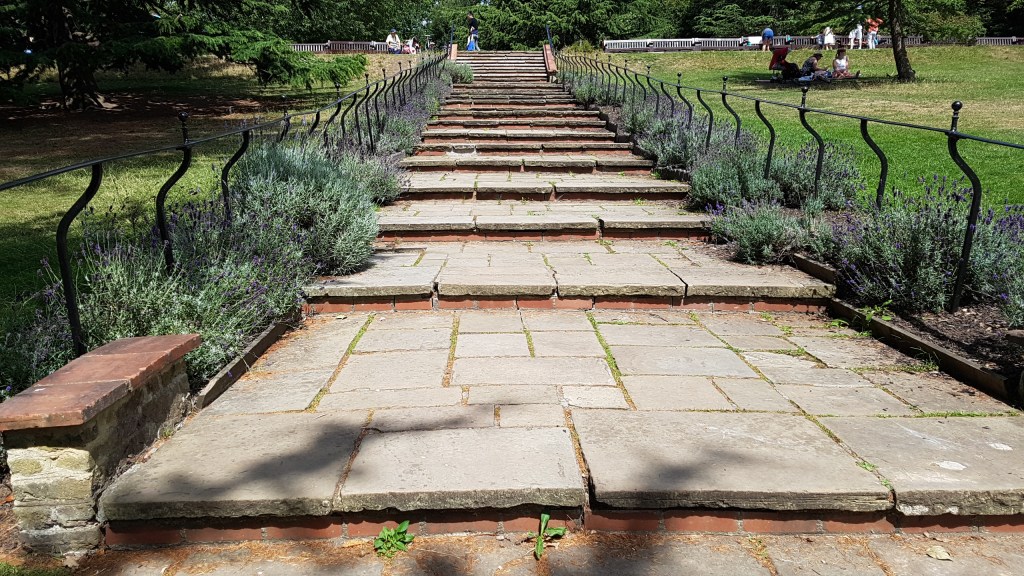
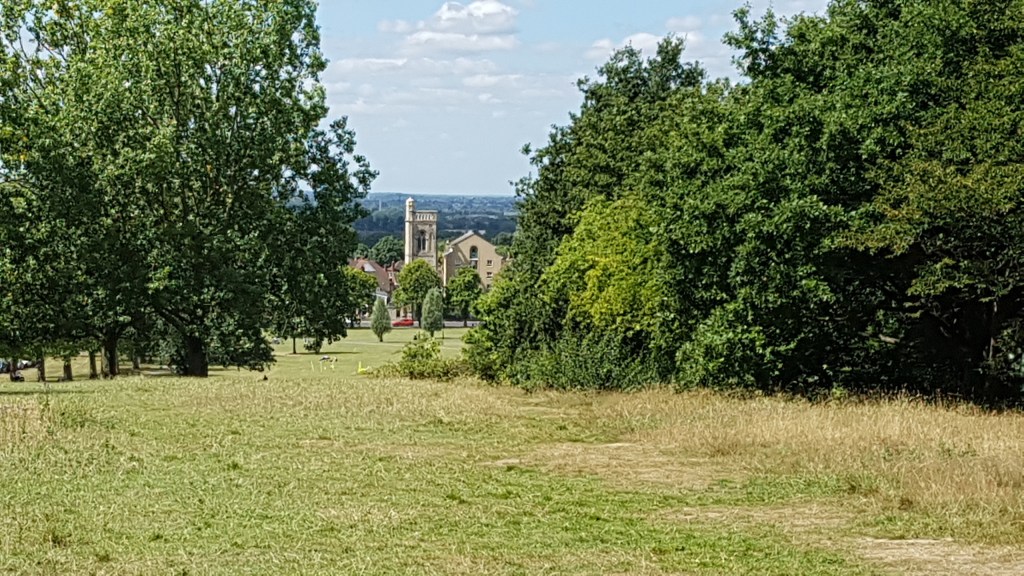
The present gardens were opened to the public in 1913 and haven’t changed much in all that time. Arbours and paths lead to different parts of the garden, gardens within gardens, so to speak. There are plenty of places to sit and this seems to be a favourite haunt of young families. You will find the well of Streatham Spa, a fountain, streams, and just outside there is wooded area which is part of Streatham Common.
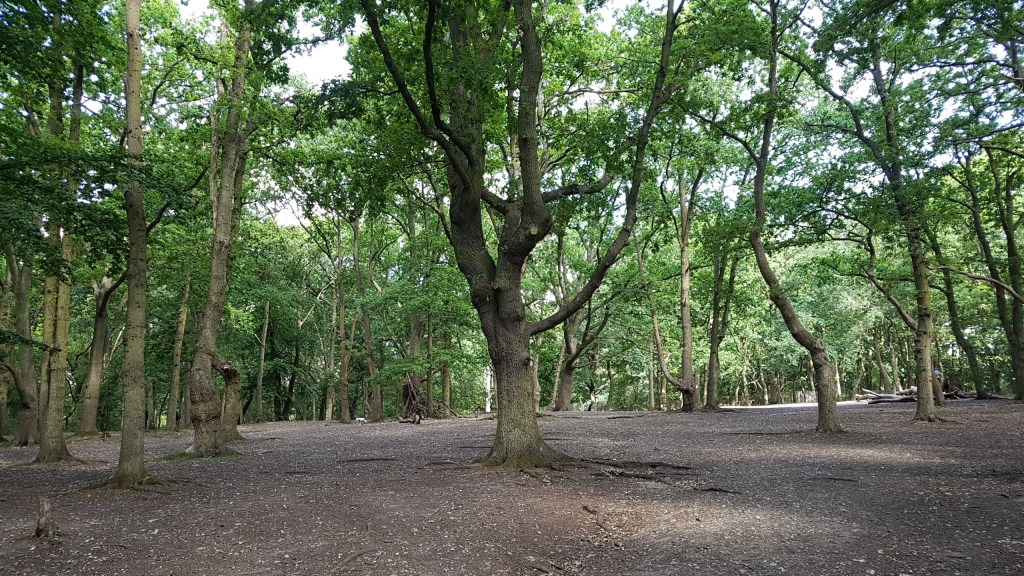
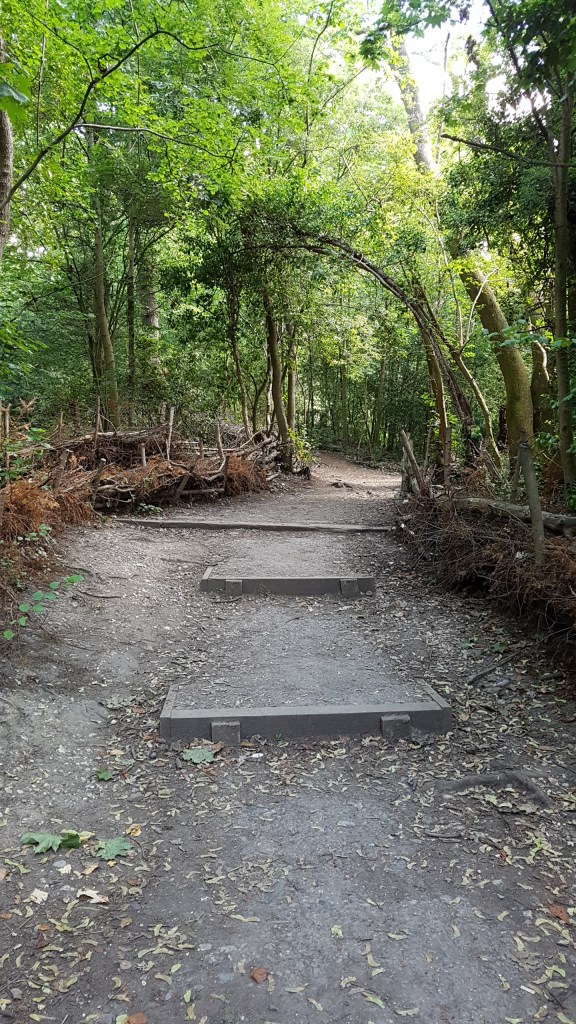
The woods
The Rookery Cafe sits on the edge of the gardens. It was open when I was there but to order food and drink you had to download an app first.
I can do no more than to share some photos with you. Nearest station is Streatham Common running from either Victoria or Cannon Street stations. From there it is a short walk. The gardens are free to visit and there are toilets!








 My London+