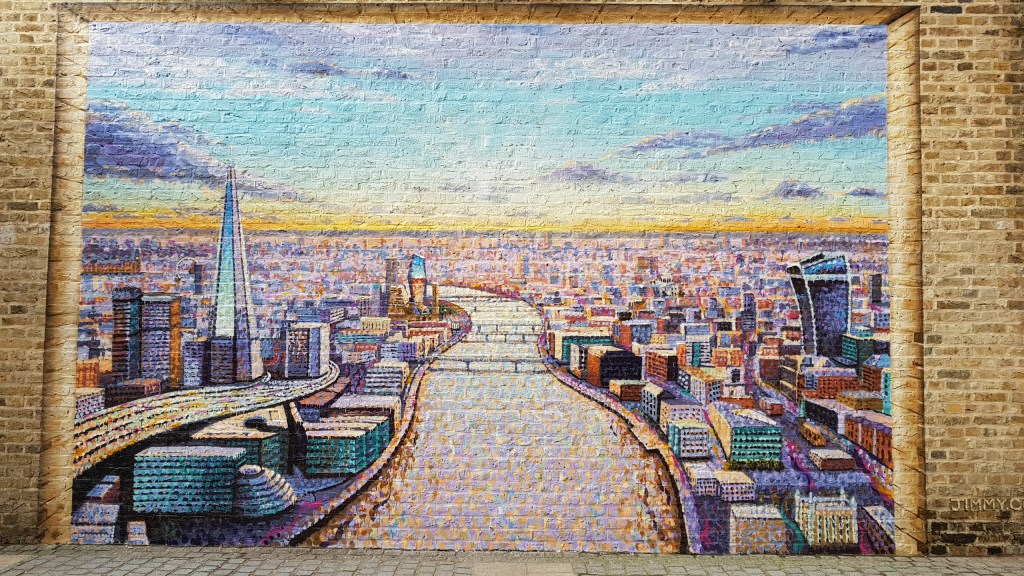
Jimmy C street art at Blackfriars Bridge, London. Jimmy C is an Australian artist inspired by coloured dots used in Aborginal art (thanks to Look Up London for these extra facts)
NaBloPoMo stands for National Blog Post Month. The aim is to write daily blog posts. I have taken part in this before with other blogs I write. This year I’m taking the challenge on here.
After the news last night, that England is going back into lockdown on Thursday 5th November until 2nd December, we all need positive images in our lives. It will still be possible to meet one other person not in your household outside, but with cafes, bars, restaurants and leisure facilities closed there is little to do except walk. Luckily, that is something I enjoy doing.
My usual posts will appear here, but in between I shall be posting other things – maybe just a photo or two. Who knows?
So here is the first one. It was full moon last night, the second one in the month, called a Blue Moon.
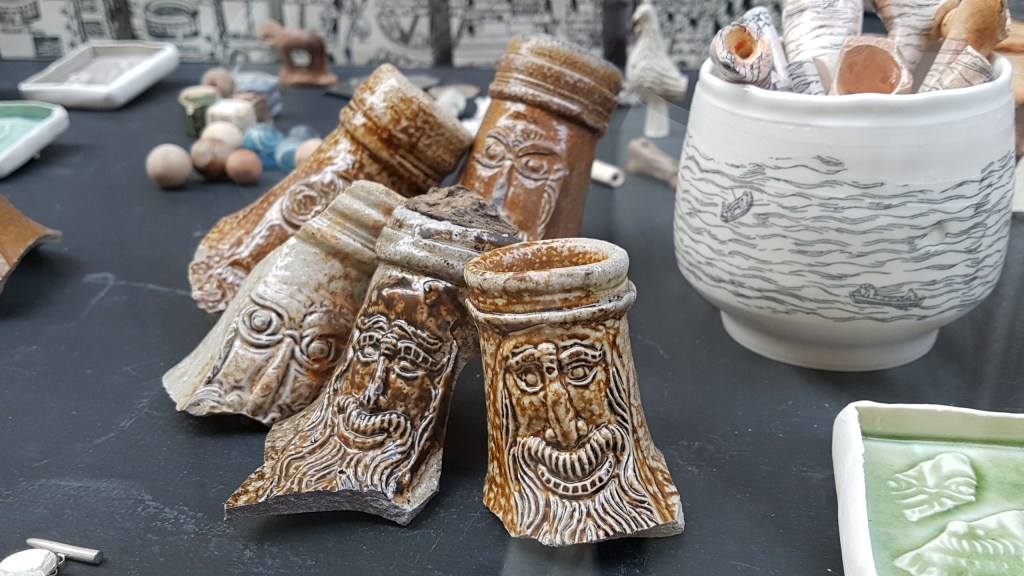
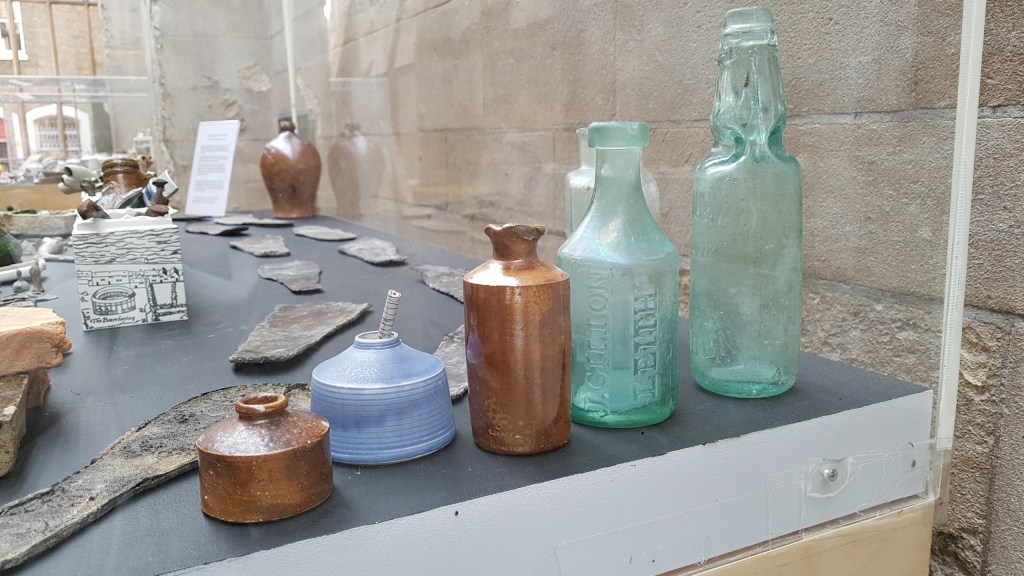
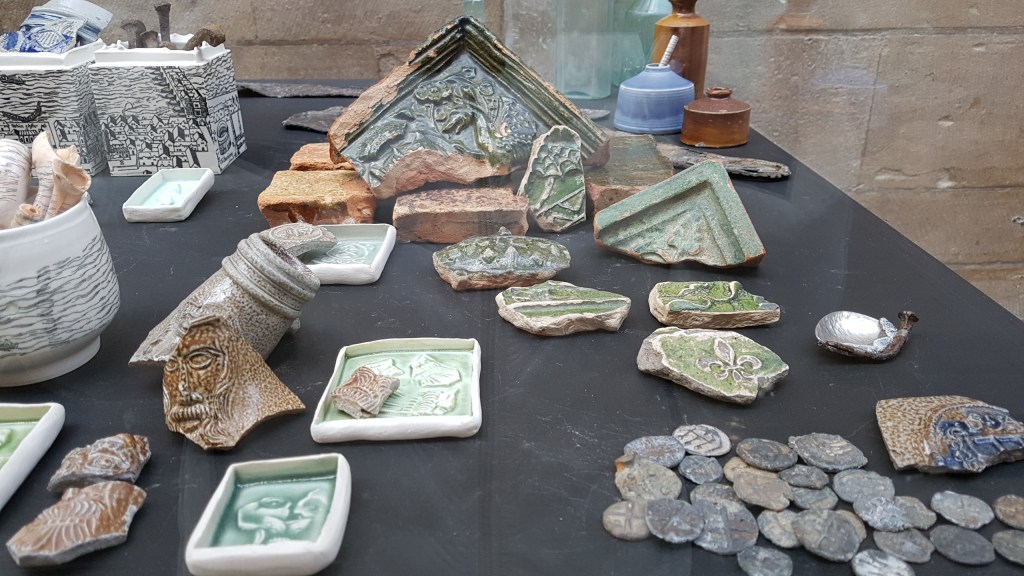
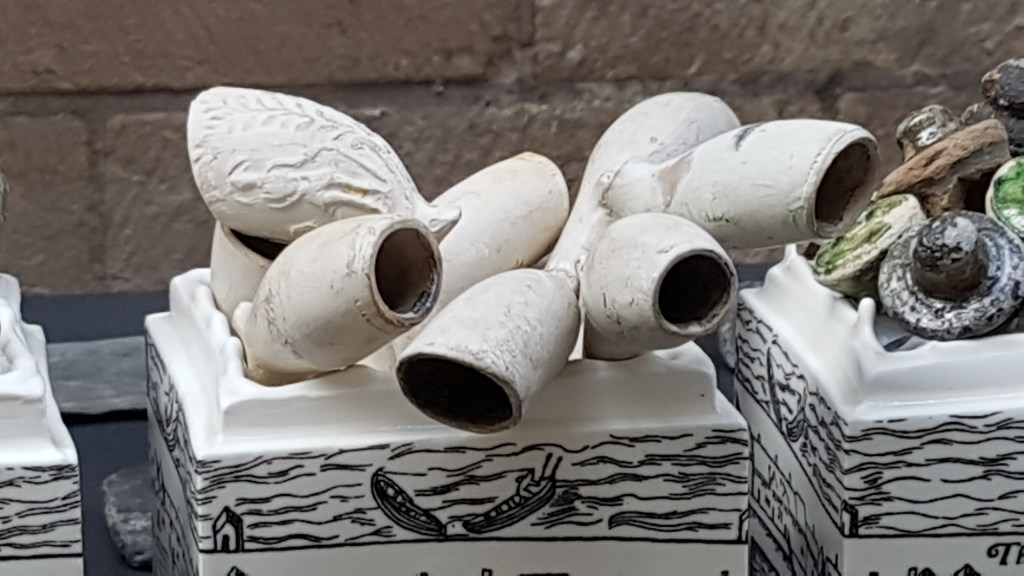
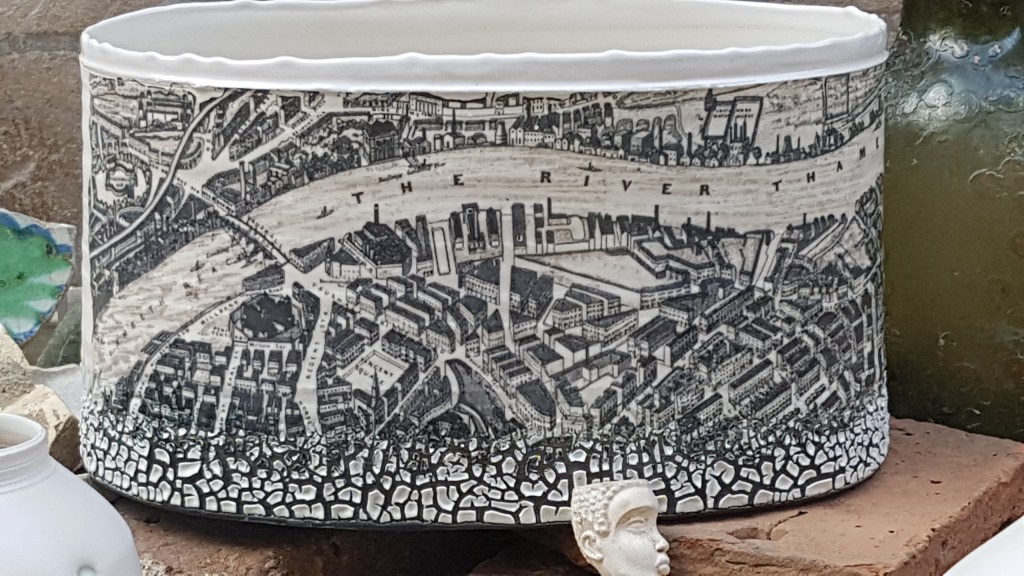
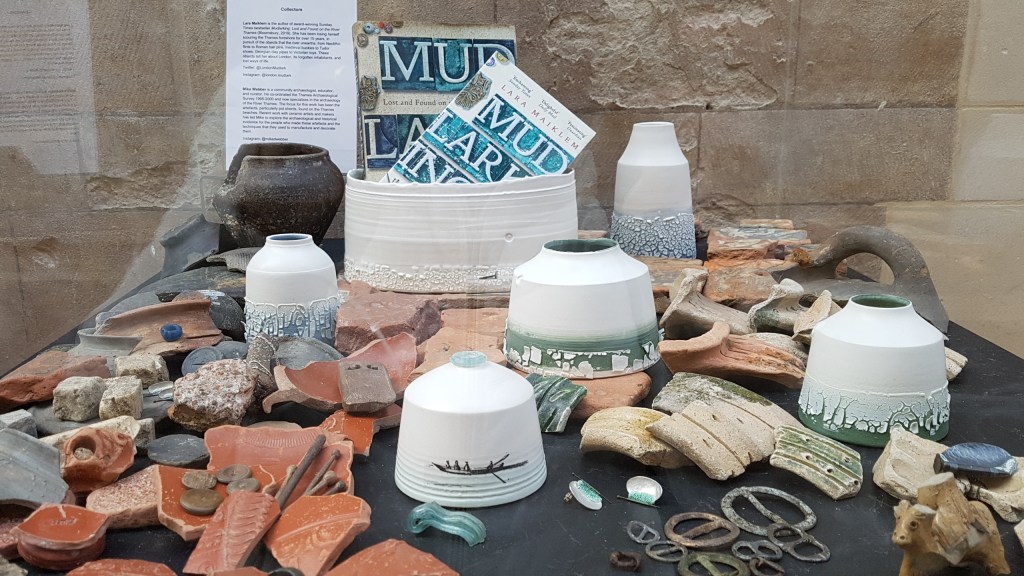
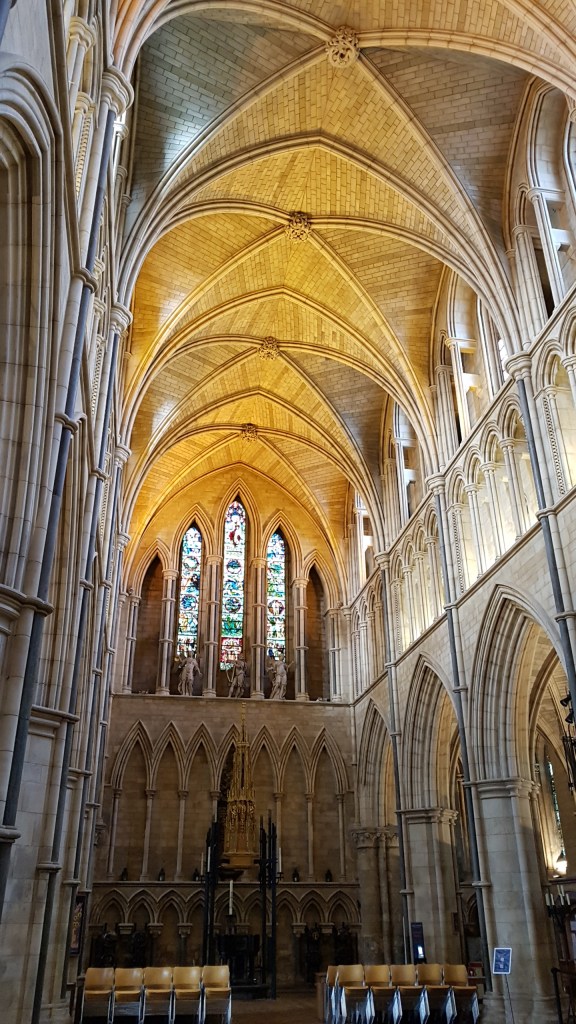
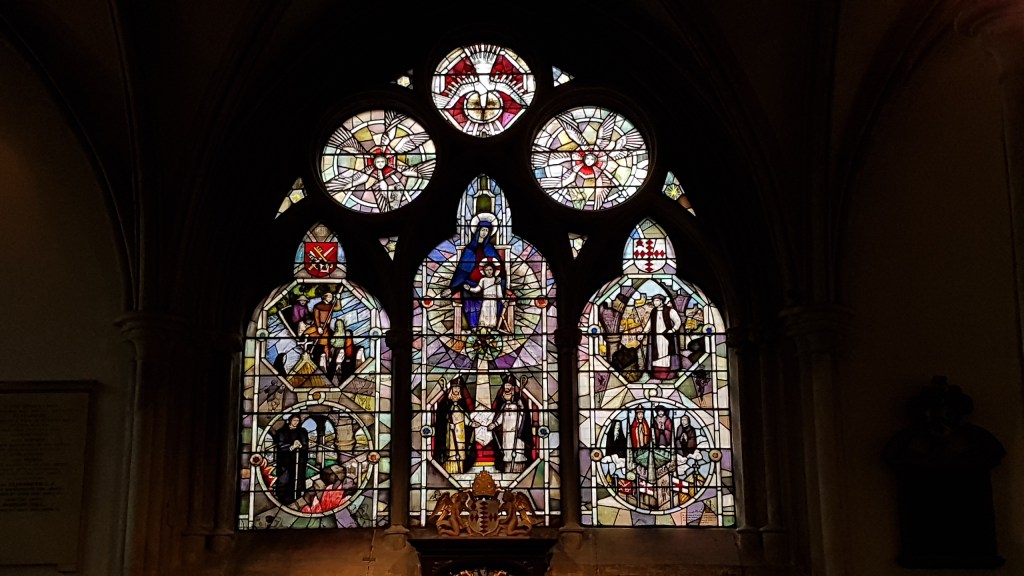
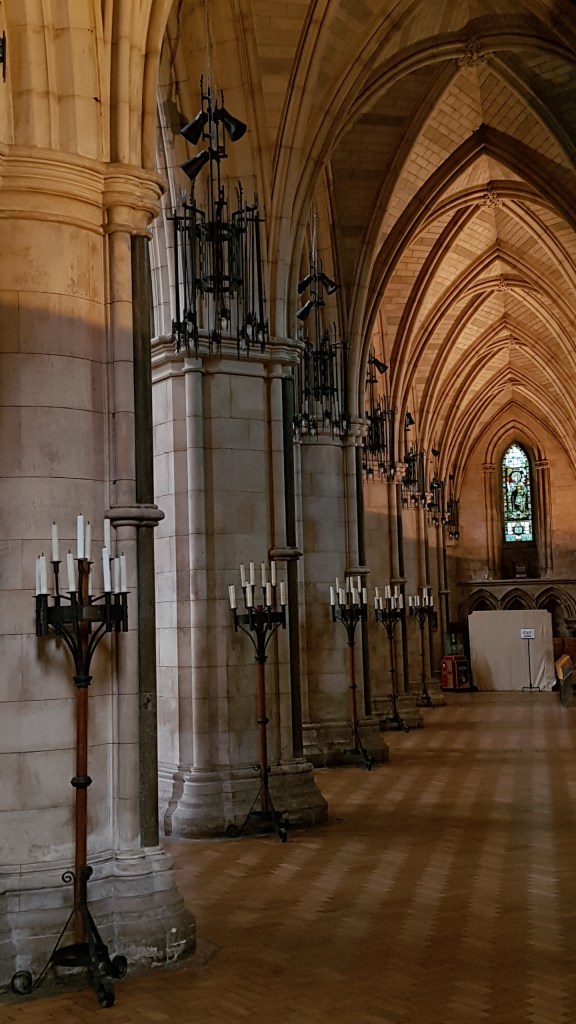
There aren’t many places one can go without booking in advance these days, but Southwark Cathedral is one of them. I went along mainly to see the small exhibition called Treasures of the Thames that is situated in the corridor between the catheral and the shop (closed) and the Refectory (open). There are only three cases showing finds from the Thames shoreline, but all the objects are interesting.
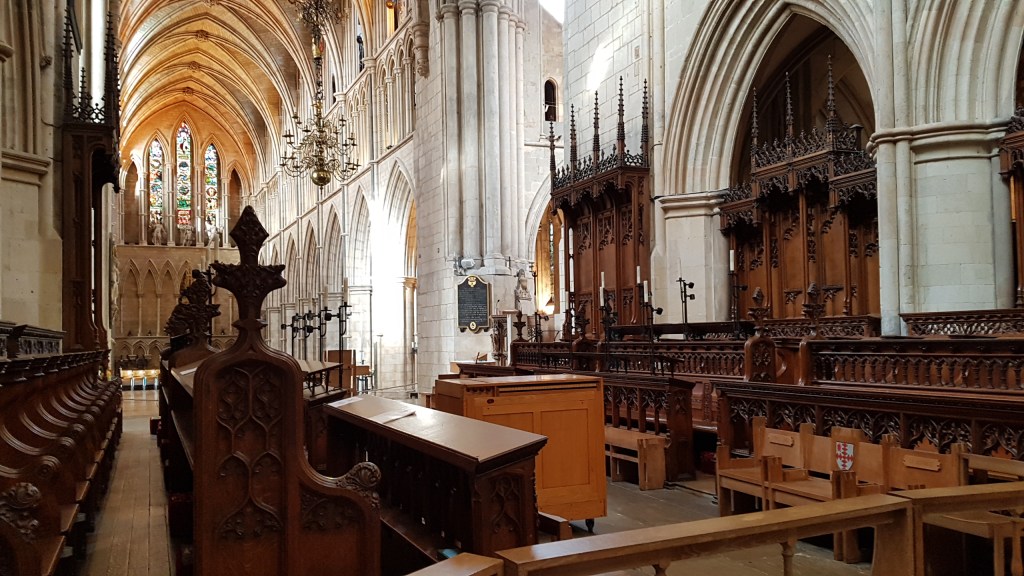
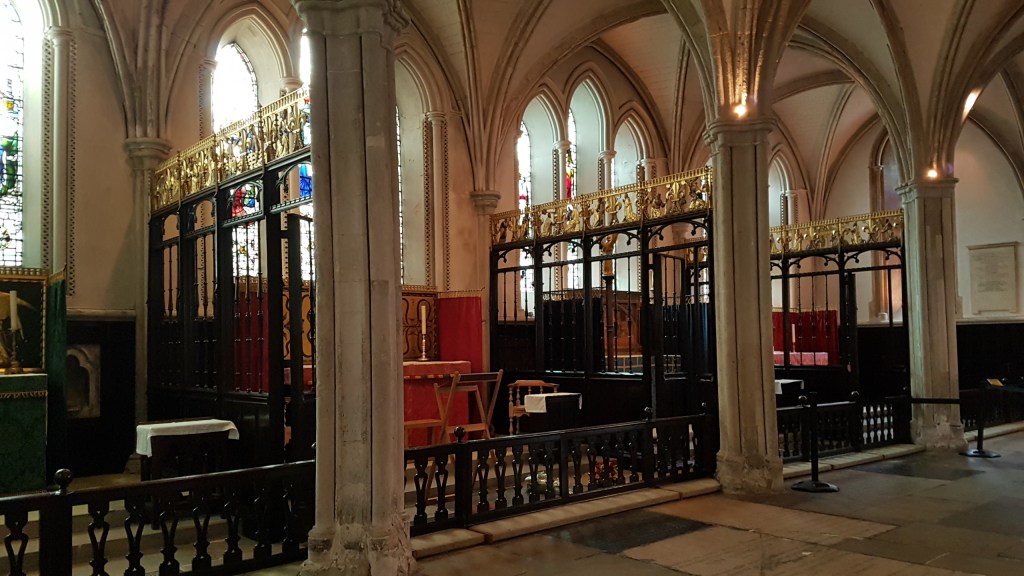
I was alone the cathedral for much of the time. That’s never happened before. It’s usually buzzing with activity. A small service was taking place in the Harvard Chapel (socially distanced and closed to the public). In some ways it was nice to wander in such a place alone, yet a shame to see all the seating removed and this magnificent building so little used at the moment.
From the Choir stallsThe chapels
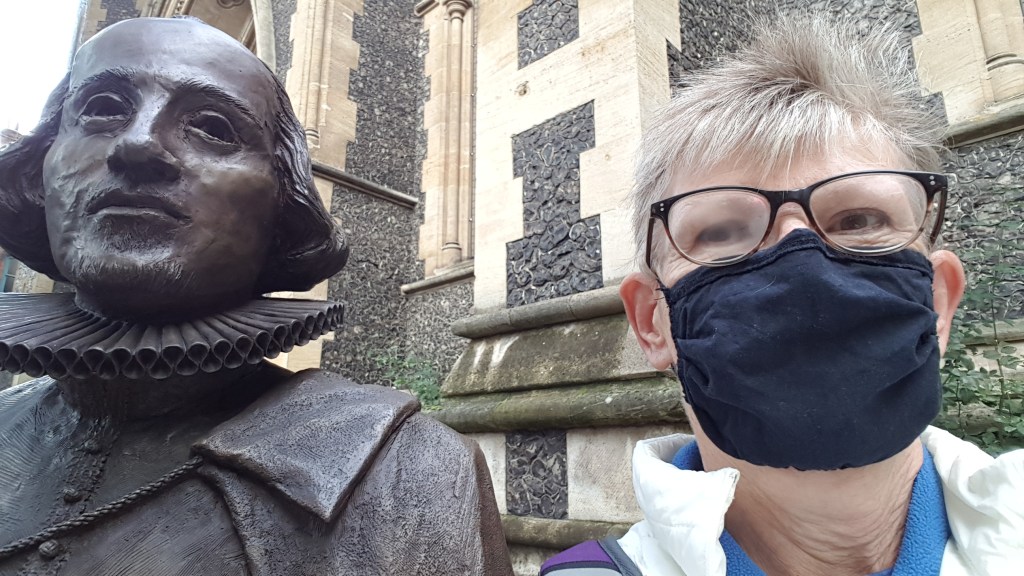
Me and Will Shakespeare in the Cathedral gardens
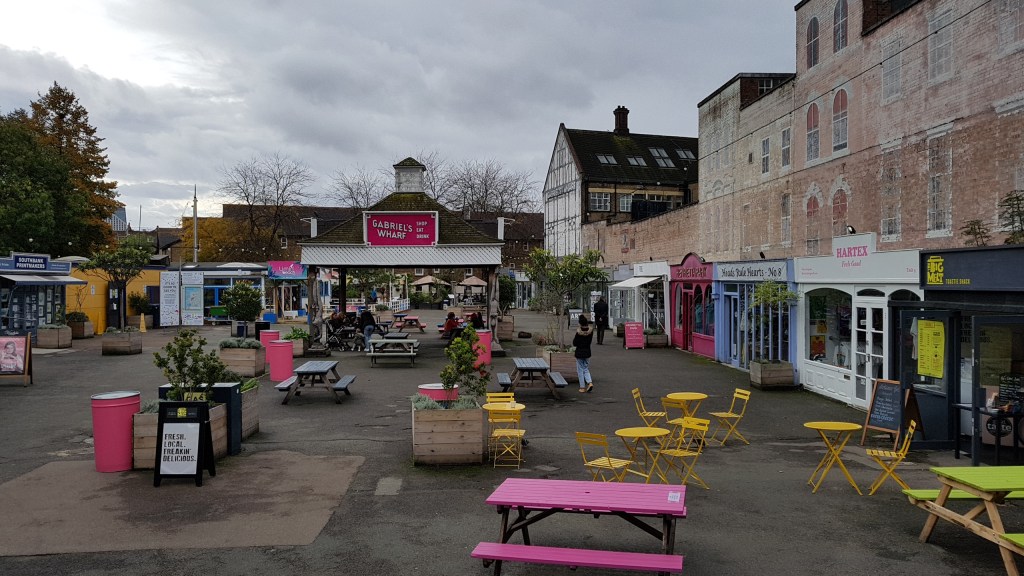
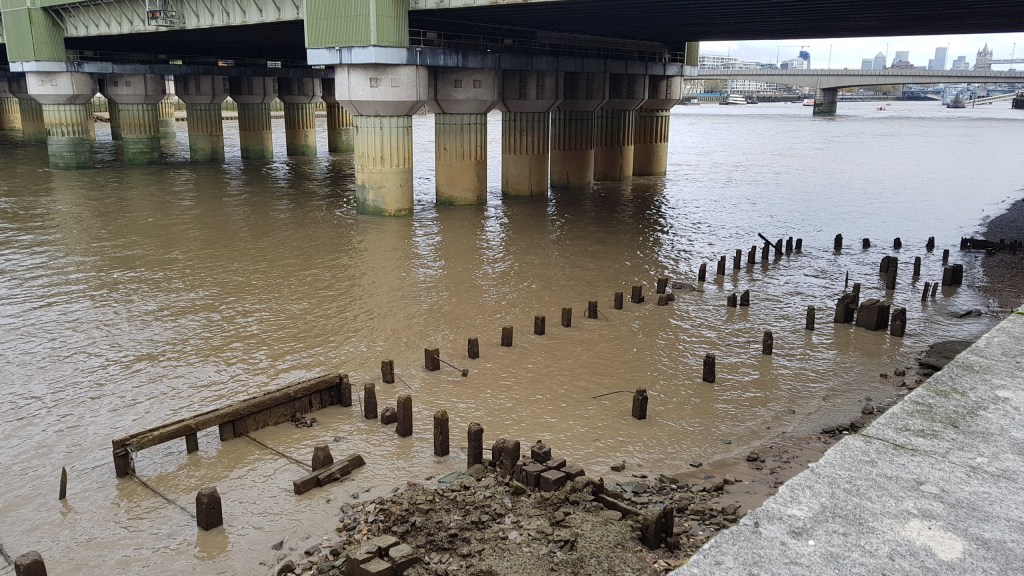
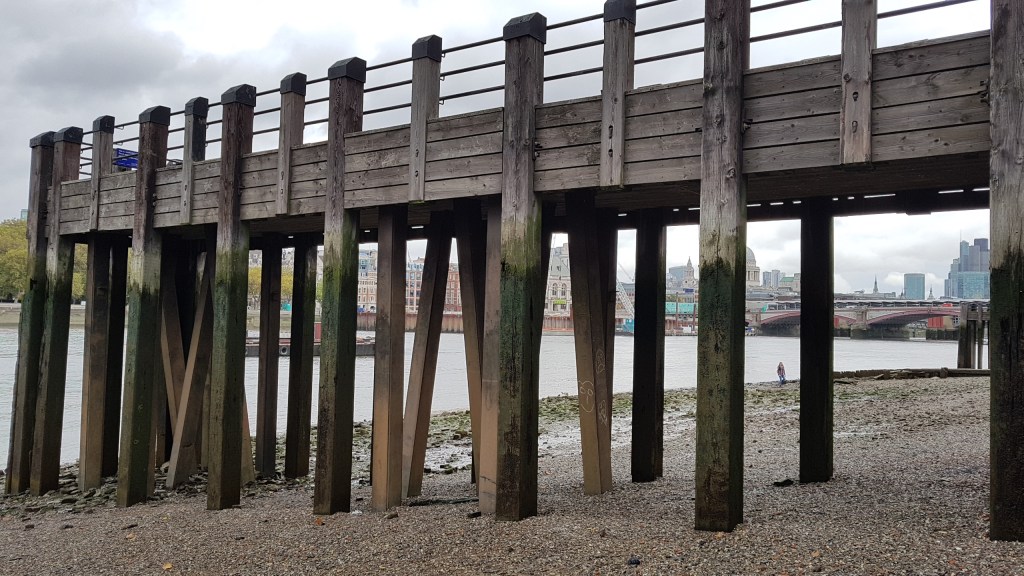
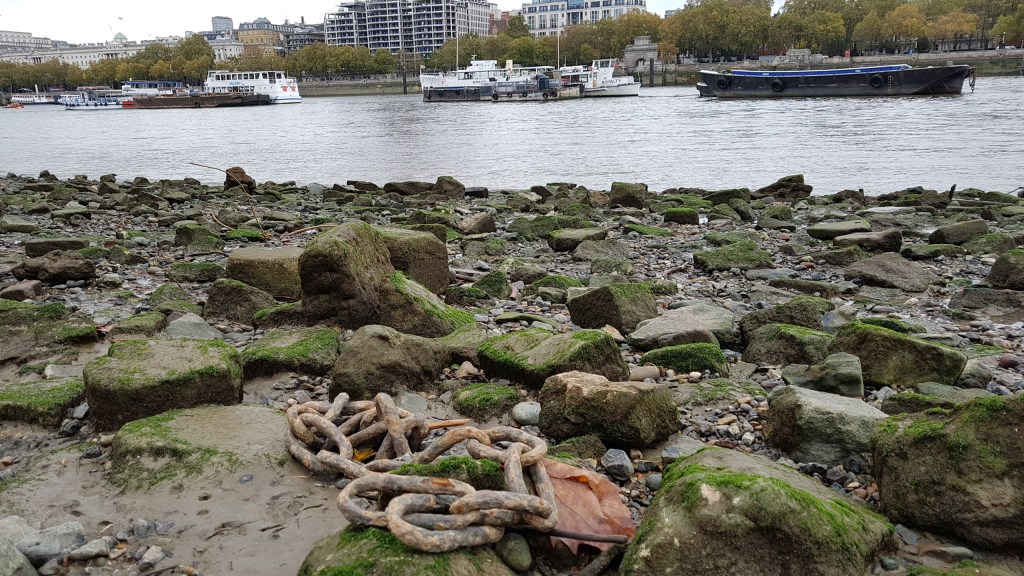
I did venture into the Refectory (again, just three people sitting together at a table). I bought a hot drink and sat inside this normally bustling cafe. Afterwards I walked back to the station along the south bank. The weather had been sunny when I’d ventured out that morning, but clouds were gathering. It was only a matter of time before rain would start. However, I took the opportunity to go down to the shoreline myself. There is a gate not far from Gabriel’s Wharf that is often open. It is here you usually find a sand scuplturer and kids playing on this sandy section. It’s very beach-like.
An empty Gabriel’s WharfLow tide
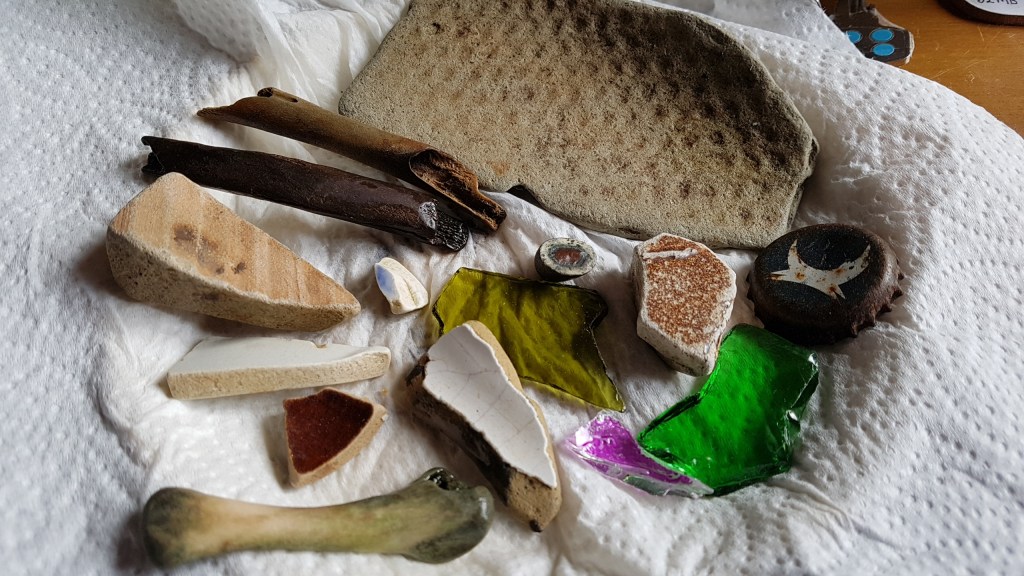
I began searching, prodding with my foot, looking for something to take home. One is supposed to have a Licence to Mudlark (as it is called), but I didn’t think I would find anything anyway. What I did bring home were pieces of coloured glass, bits of pottery a bone (everyone has had a laugh about that one, telling me it’s a chicken bone – it probably is) and some pieces that could be pipe stems. Once you get your eye in, you can find all sorts of things. Some of it is modern, like the bottle cap I found, but you never know what might be there.
By the time I left rain was spitting. I’d had the best of the day, and one day, I promised myself, I would book a session with the expert Mudlarkers and get some knowledge!
My treasures! Possible pipe stems (?) left, near the top, very brown!
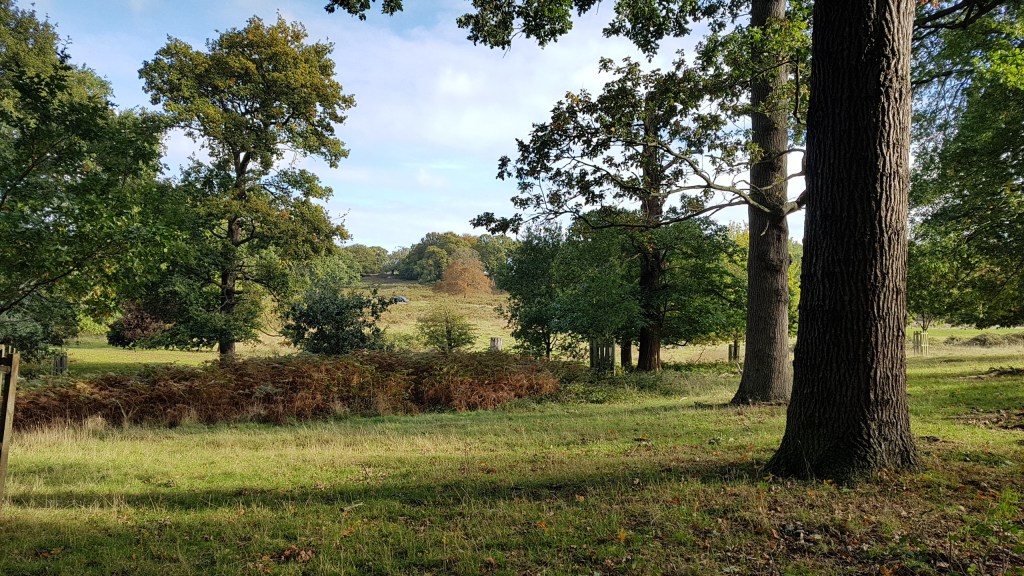
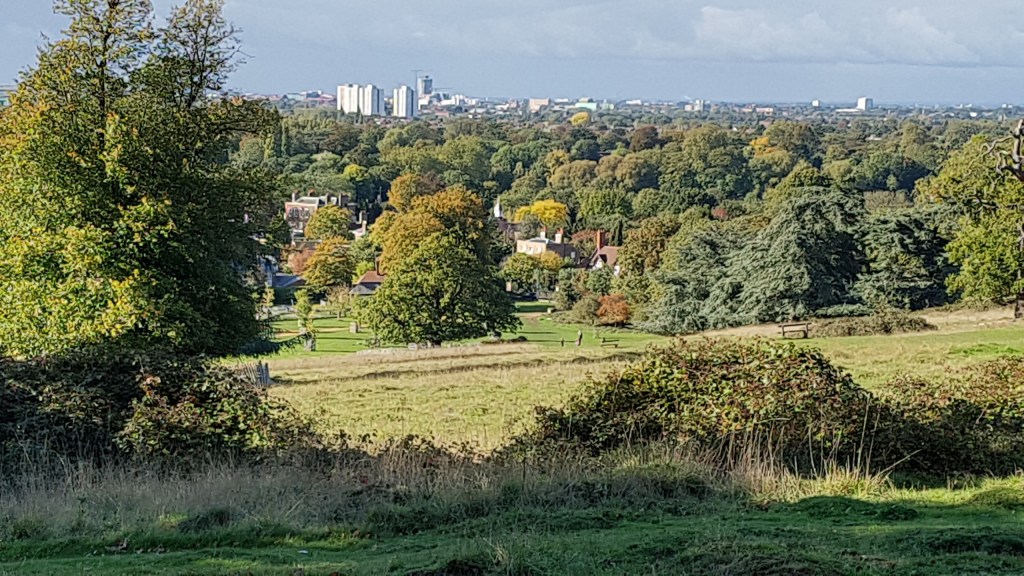
My friend and I were on a walk through Richmond Park when we heard that our part of the UK had moved into Tier Two of the governments three tier system of Covid 19 measures. This means households are no longer allowed to mix indoor, whether that is in homes or in pubs, restaurants or cafes.
Straightaway that meant some of the things we do we can no longer take part in. I cannot play play badminton with my friends, or meet my writing friend in the cafe where we sit and write for a couple of hours a week. These things only resumed about a month ago, and now that’s it, for however long.
It is even more important for me to get outside and walk whenever the weather permits, and unless complete lockdown happens again, that’s what I intend to do.
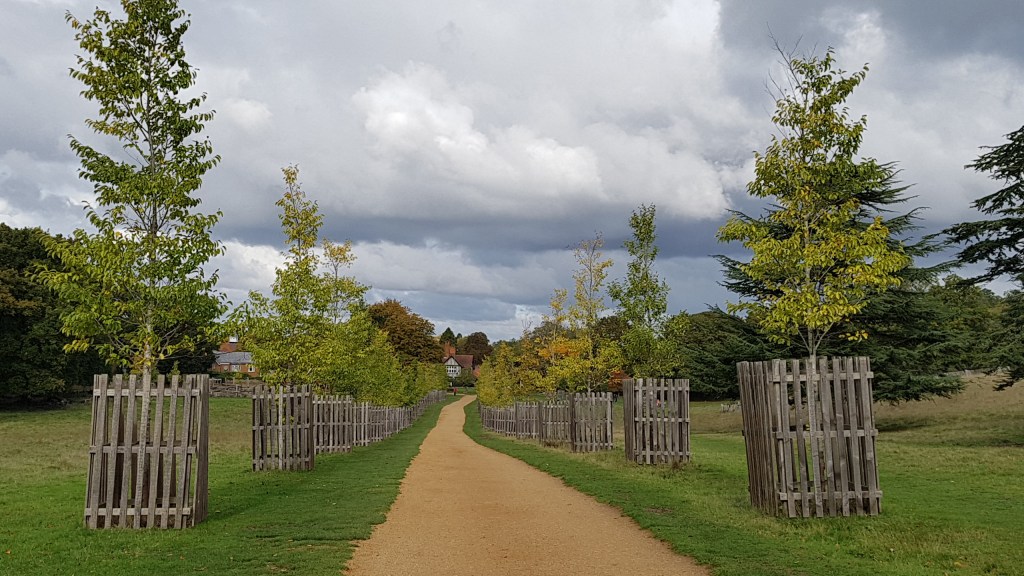
The Lime Path
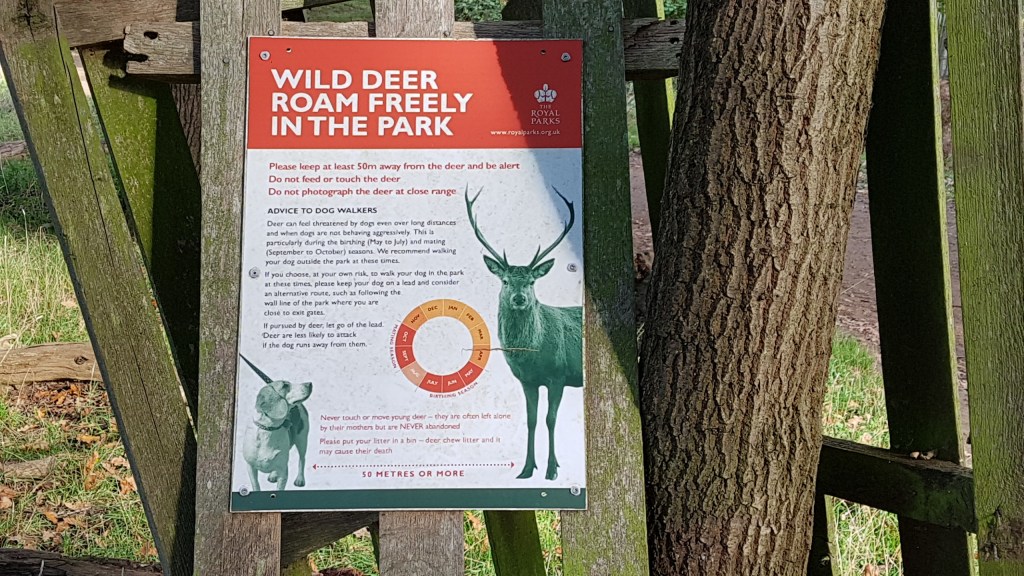
This walk was put off from the week before due to bad weather, but this day we were lucky. There were showers, but we managed to dodge them, and the sun came out frequently. There was a warning about the deer in Richmond Park – it is the rutting season – but we didn’t see one deer!
We began the walk at the Kingston Gate. My friend has walked the park many times so I was totally in her hands. We headed across towards Pertersham Nurseries, near Richmond. When we arrived it was busy. The place is much smaller than I expected, and there were queues for the shop. To eat there you had to book in advance. However, I had seen the price for the cafe online – £10 or so for a sandwich! We sheltered from a brief shower under an awning and then headed straight out again! We walked down to the River Thames at Richmond and had lunch at the veggie/vegan cafe caled The Hollyhocks, which sits on The Terraces, high up, with wonderful views across the river.
River Thames at Richmond
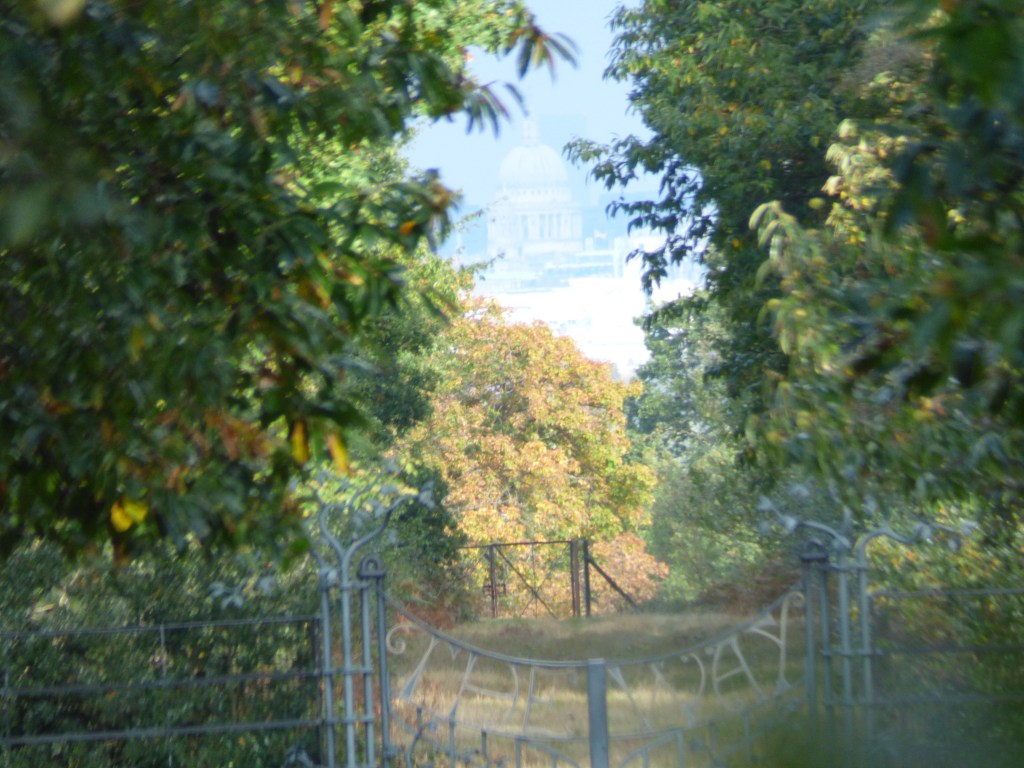
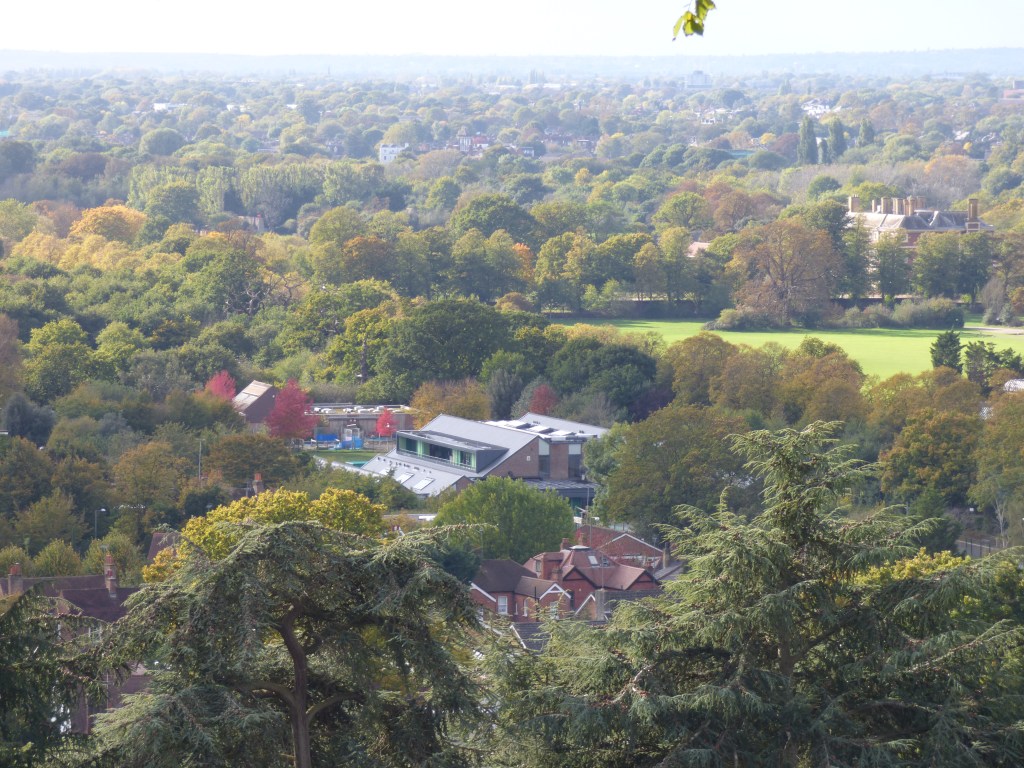
We lingered a while before heading back the same way. The changeable weather made for some dramatic skies and the autum coklours were wonderful. This time we headed uphill towards King Henry’s Mound where there is a viewing point into London. On a good day you can see St Paul’s Cathedral, 13 miles away. There is a law that this view must not be obscured, though planners have tried. I took a photo, not thinking I had captured anything as I couldn’t see the cathedral with my naked eye, yet my camera captured a ghostly white image of the cathedral with my lens on full zoom. Amazing.
We sat on a bench here and read ‘lockdown poems’ we’d written. What a view!From King Henry’s Mound you can see St Paul’s Cathedral 13 miles away (just)
In the other direction you can see right across to Windsor apparently (though I couldn’t). There is a telescope you can use to pin point things. Afterwards we wandered around some gardens before heading back to the Kingston Gate.
It was a lovely day, even though my legs were aching like hell! Enjoy the photos.
I suppose it was the 1980’s when I first realised that a lot of music I was listening to had electronic overtones – OMD, Flock of Seagulls, Gary Numan – but really it was when I came across Trance in mid 2000 that I became hooked. I heard a version of William Orbit’s Adagio for Strings (Samuel Barber) in a Trance mix by Ferry Corsten. That’s when I bought my first Trance CD (‘Pure’ Euphoria Vol 4 mixed by Matt Darley) The rest is history.
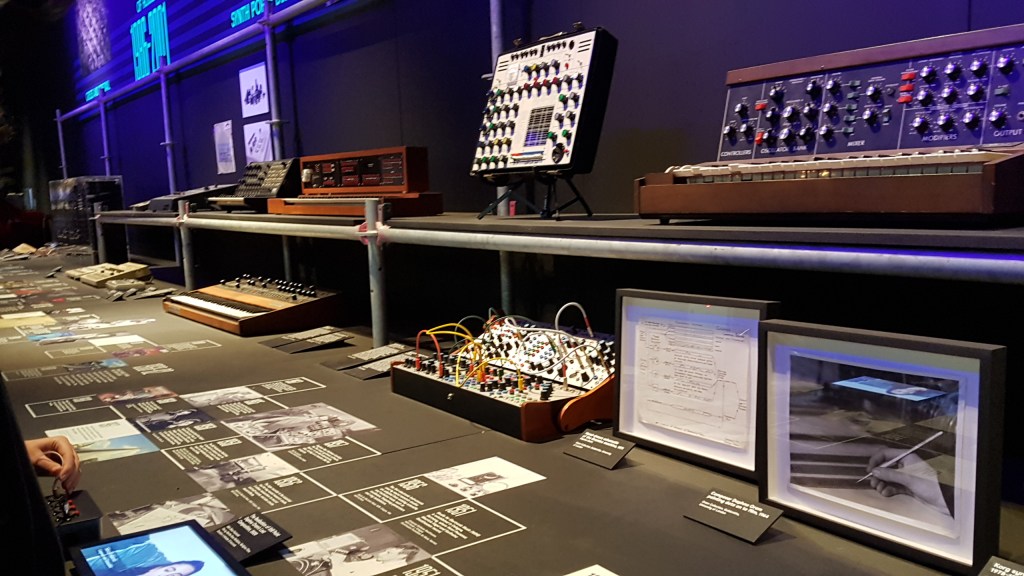
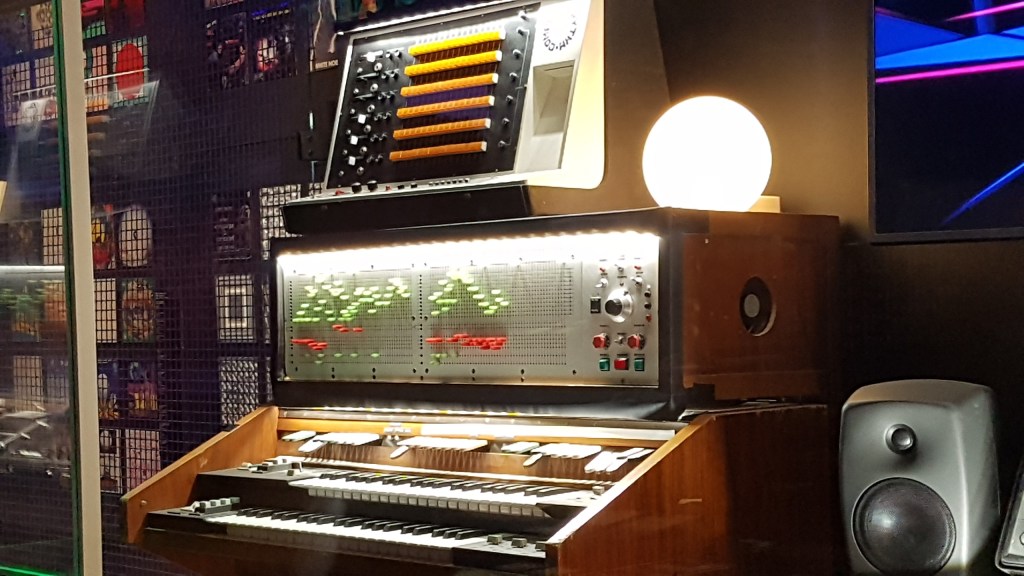
I am fascinated by all the knobs
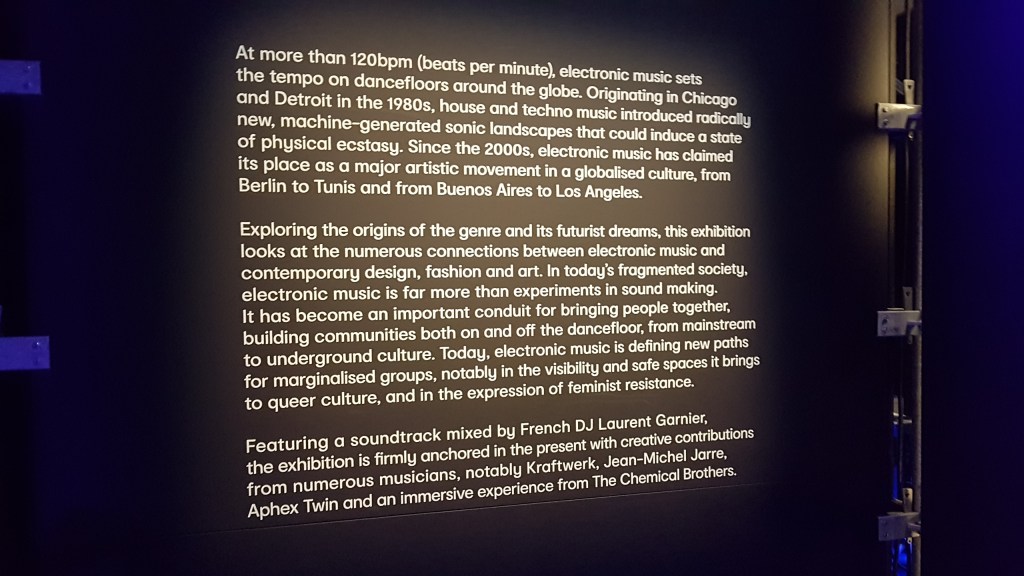
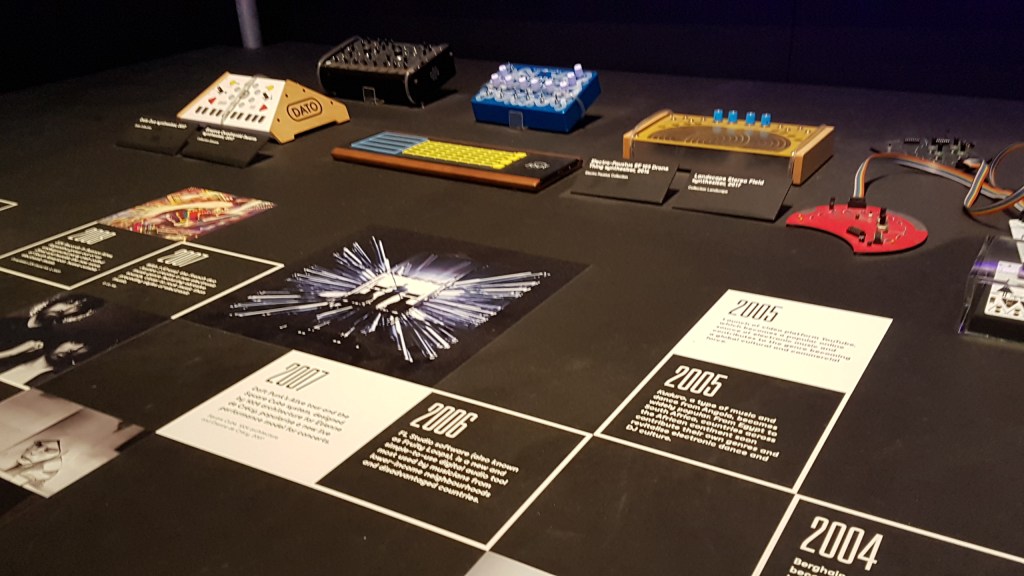
So, when I saw the Design Museum advertising their Kraftwerk to The Chemical Brothers exhibition, I just had to go along. What I loved was seeing the electronic equipment, but I hadn’t realised the origins of electronic music, how many decades it spanned, and the range. Going through the exhibition there was a chance to listen to sounds from across the years. Here you could plug in your own earphones or headphones (you need to take your own due to Covid 19 restrictions) and listen to the first attempt to record electronic sounds right through to club music of today. There are lots of screens and music pumping out generally across the exhibition.
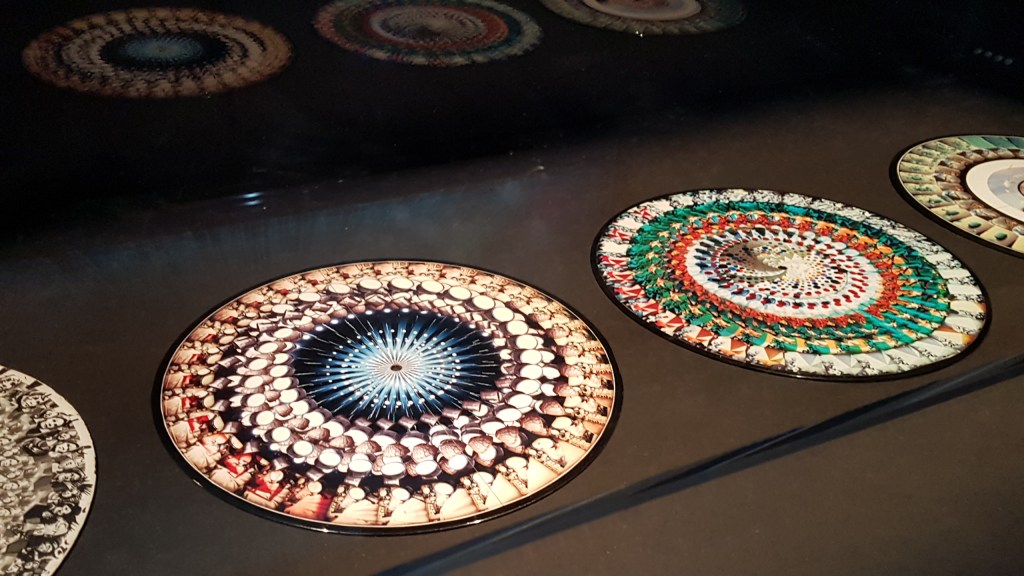
Vinyl records that create spinning pictures when played
My favourite place was the light display, a room with strips of changing lights moving to the rhythm of the music. In the final room you can have the whole experience with The Chemical Brothers song Gotta Keep on Makin’ Me High. There is a warning here due to the flashing lights/strobe lighting, and you can miss this out should this not be something you want to/should not experience for health reasons. Wow! Even I had to close my eyes near the end as the white light was so bright, but what an experience.
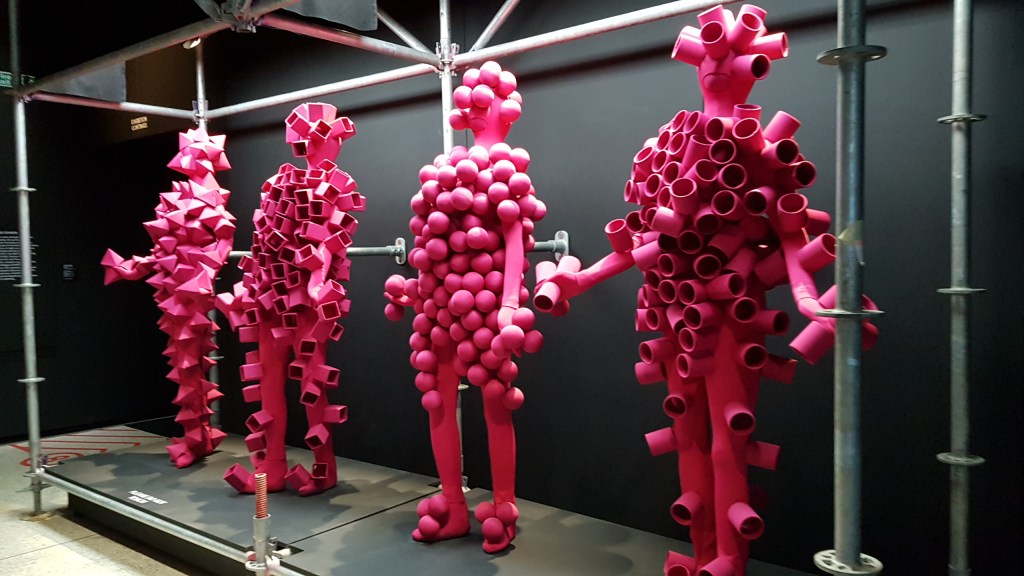
Costumes from The Chemical Brothers show
I don’t profess to like all electronica, but I love Trance especially the chill-out, classic, uplifting and some progressive. I am addicted to music in general and my taste is very eclectic. I listen to anything from the 1960’s to the present day, including classical, but if I had to pick an era, it would be the 1980’s.
If you like electronic music, then this exhibition is for you. If you are bored rigid now then maybe a quiet time in Holland Park is more to your liking. Do read on!
In Holland Park
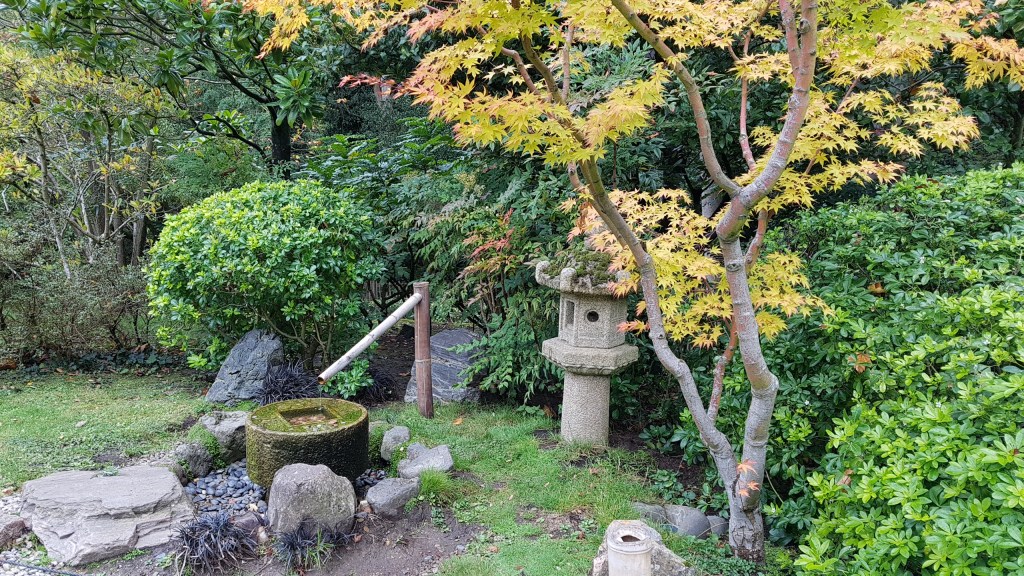
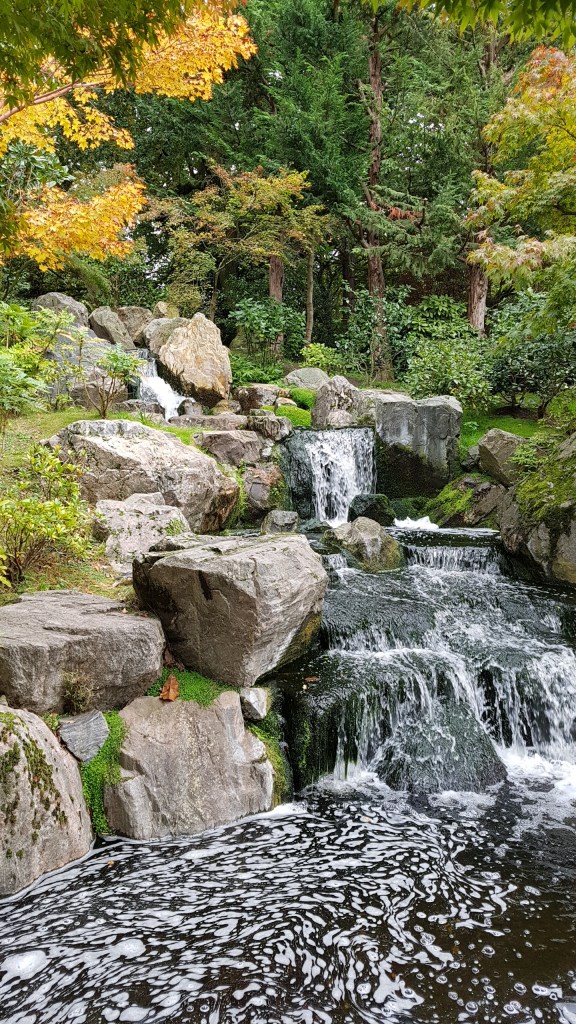
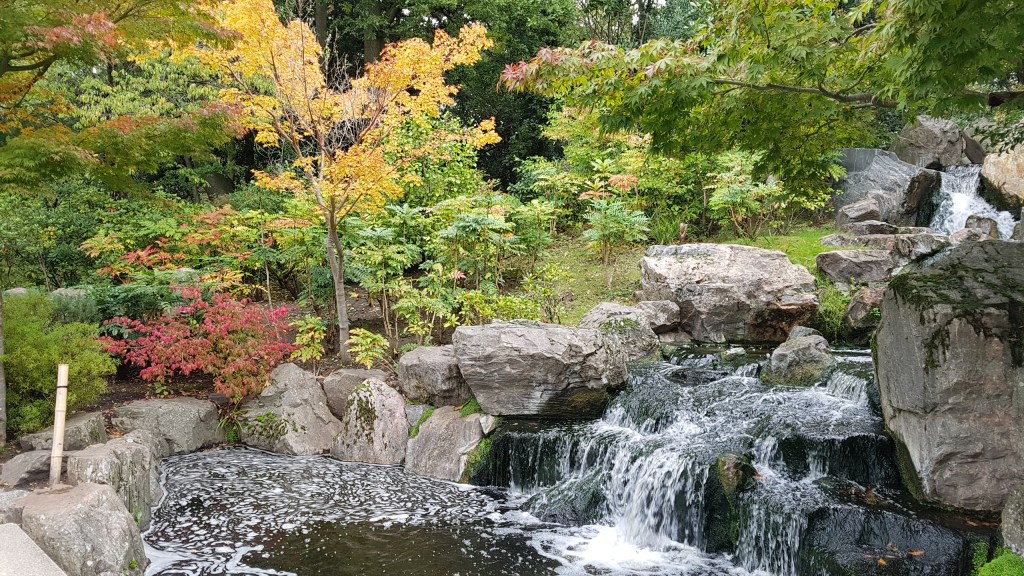
Holland Park is lovely any time of year, but with the trees turning colour I couldn’t resist popping in. Conveniently there is an entrance right alongside the Design Museum. Being midweek it was quiet. The Kyoto Gardens were beautiful and peaceful, a complete contrast to the thumping beats of techno. It was a chance to unwind and be with nature.
Kyoto Garden
While the large cafe was shut, the kiosk by it was open and I was able to grab a hot chocolate and sticky peach tart. I sat under cover just in time because the heavens opened. It was rather soothing watching the rain fall. Luckily, the worst had cleared by the time I was ready to leave.
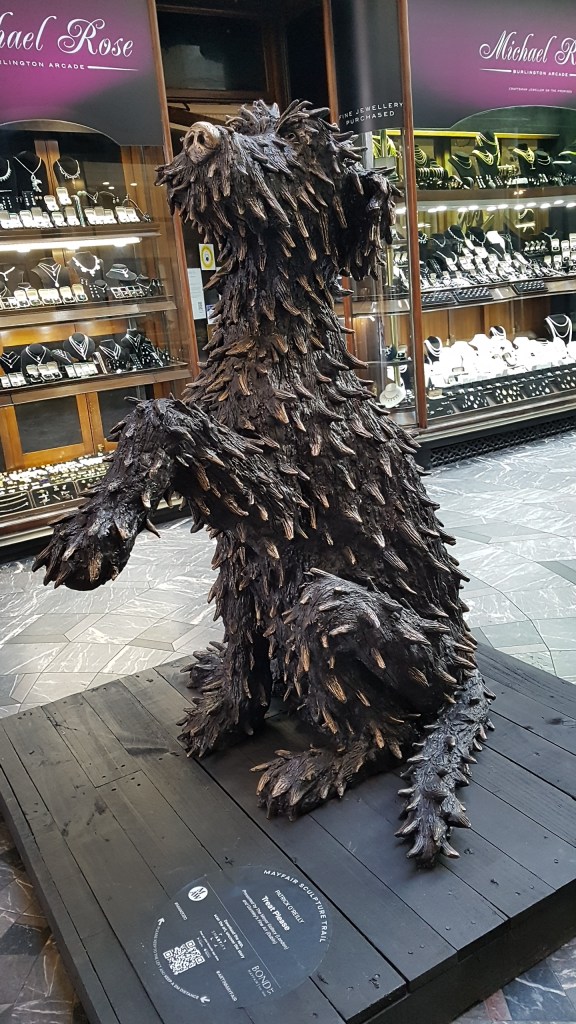
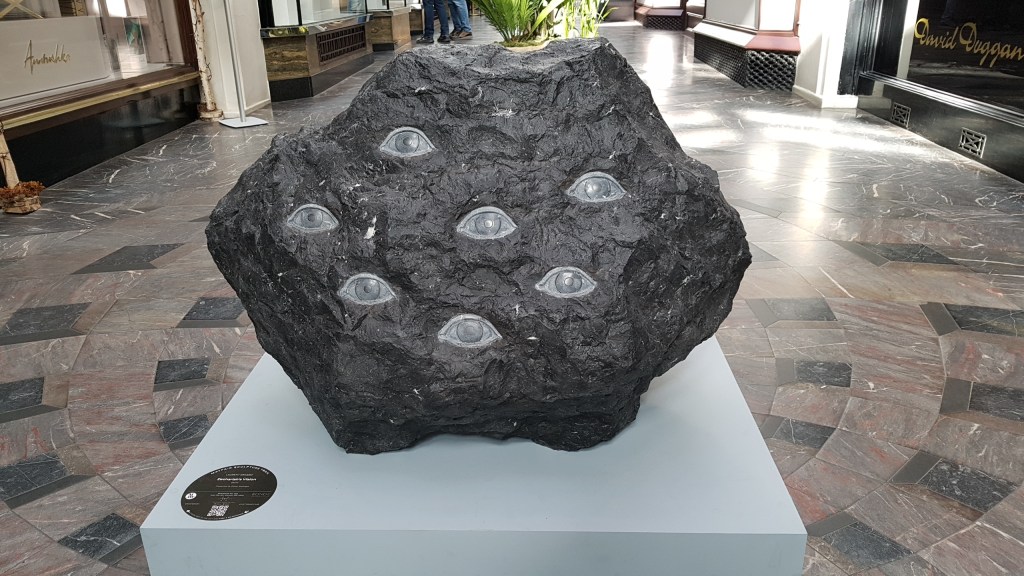
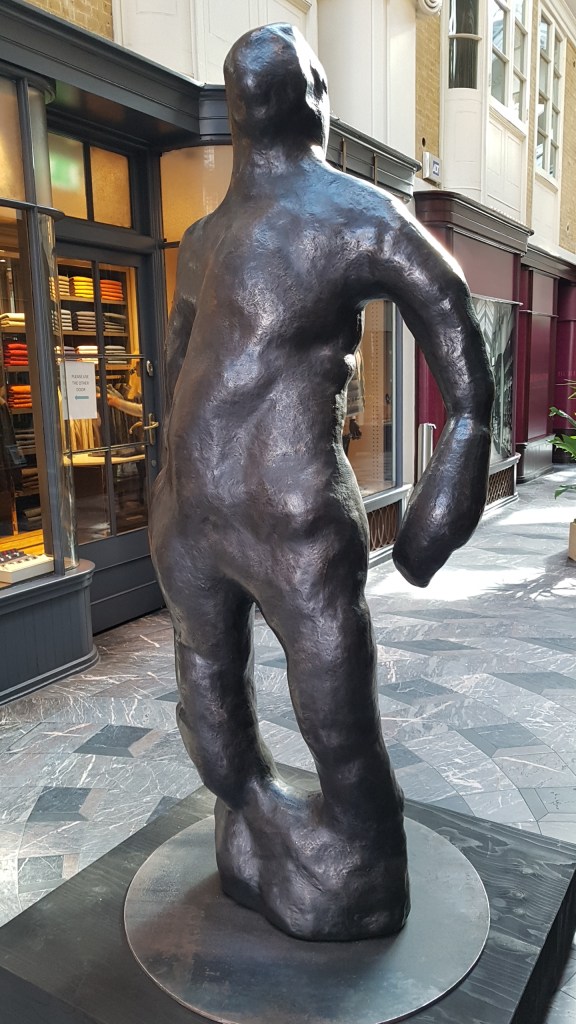
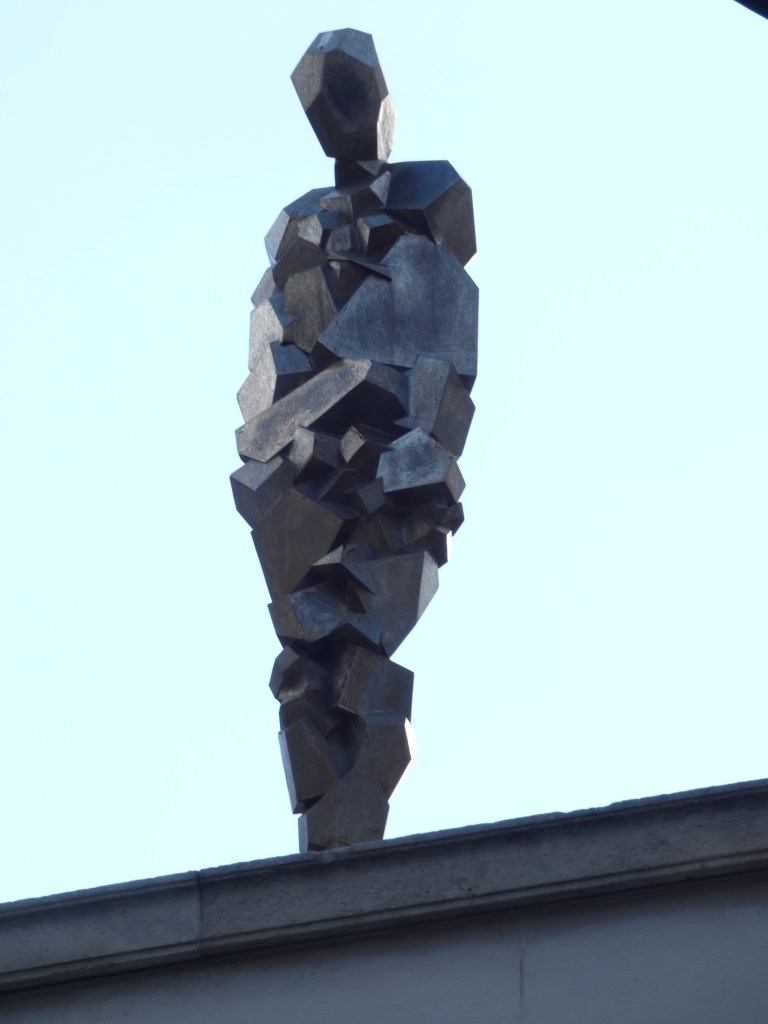
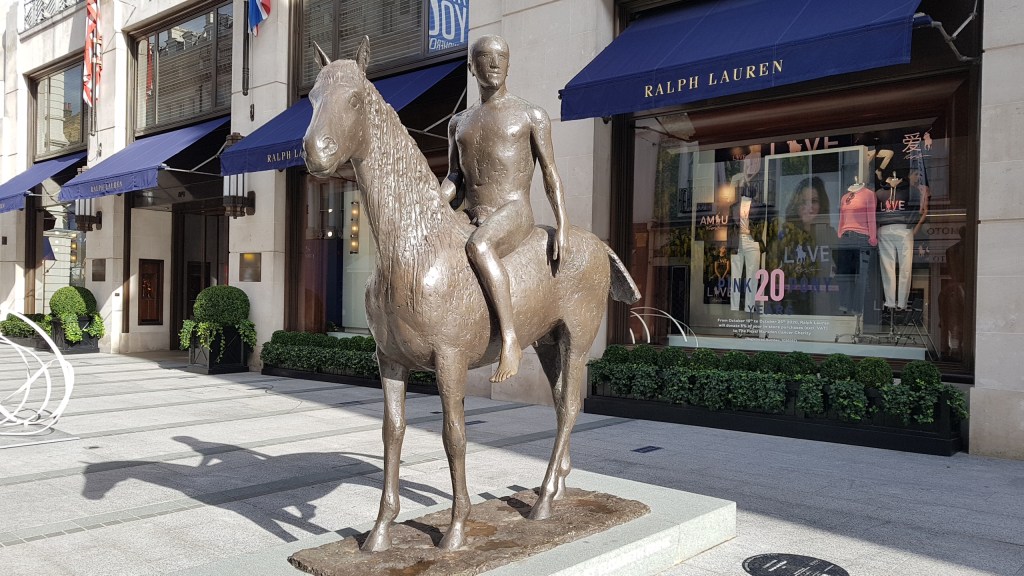
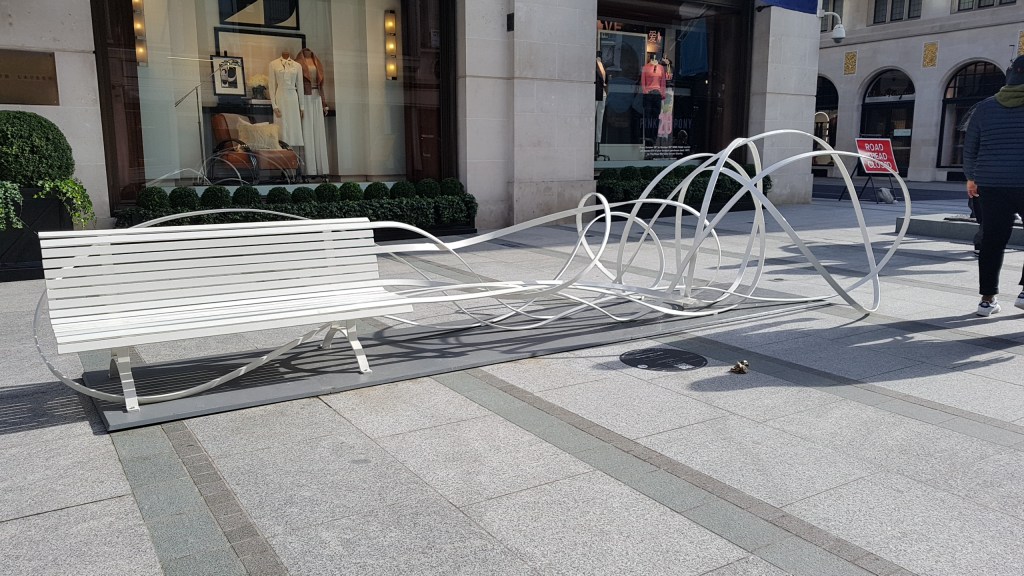
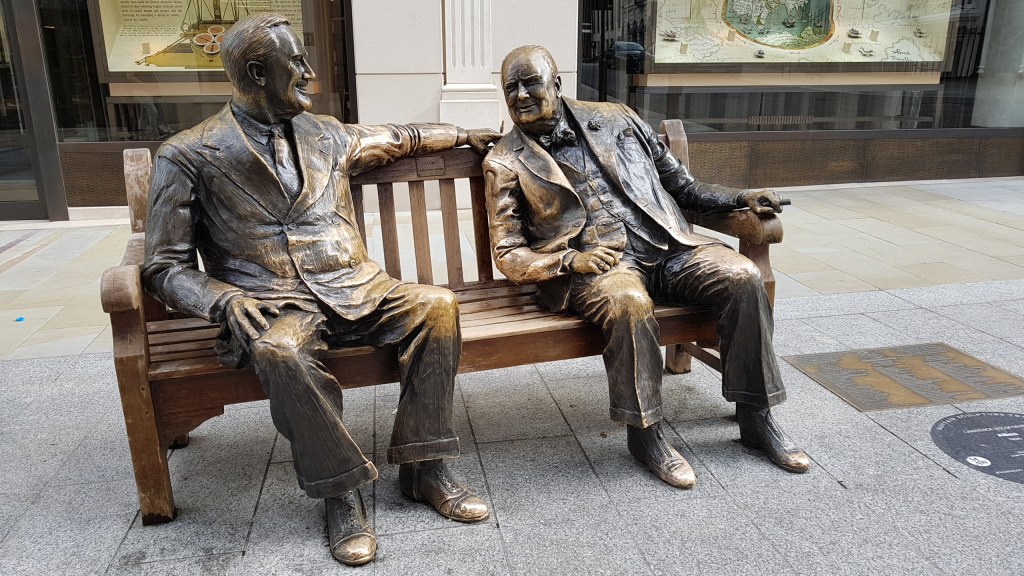
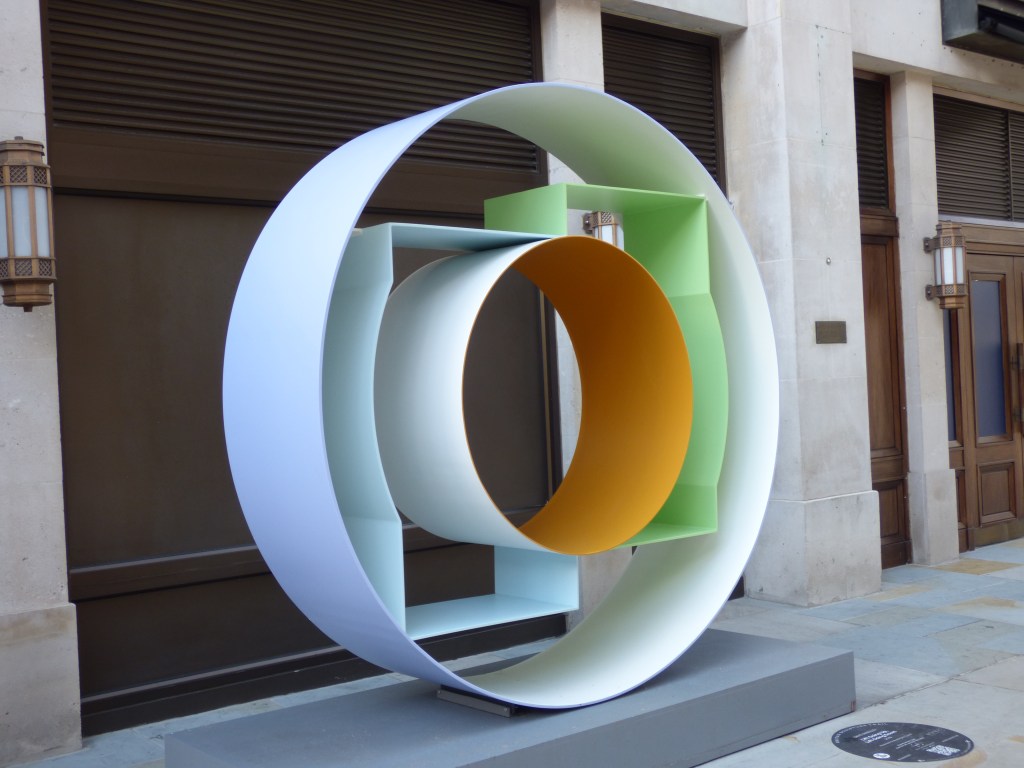
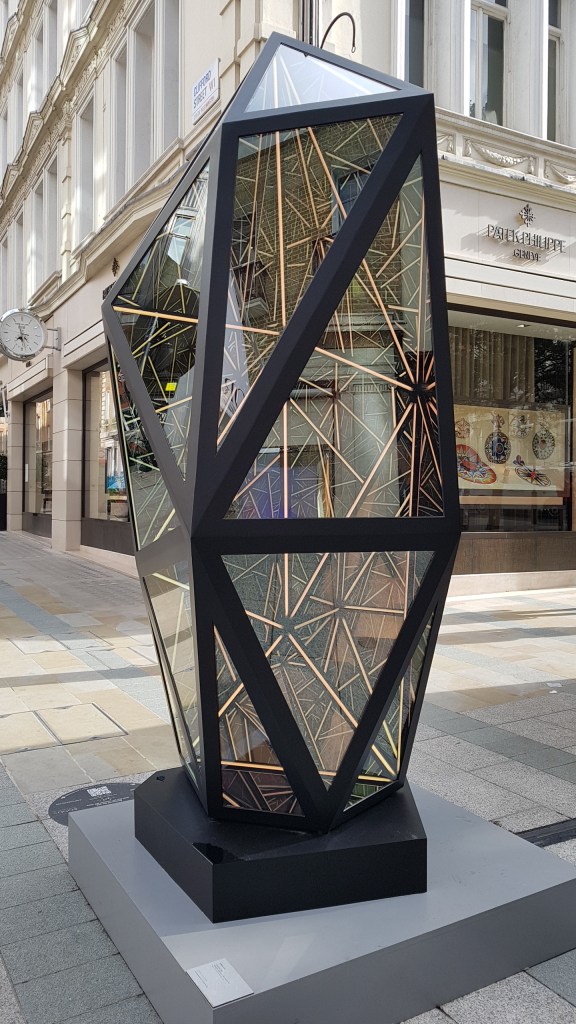
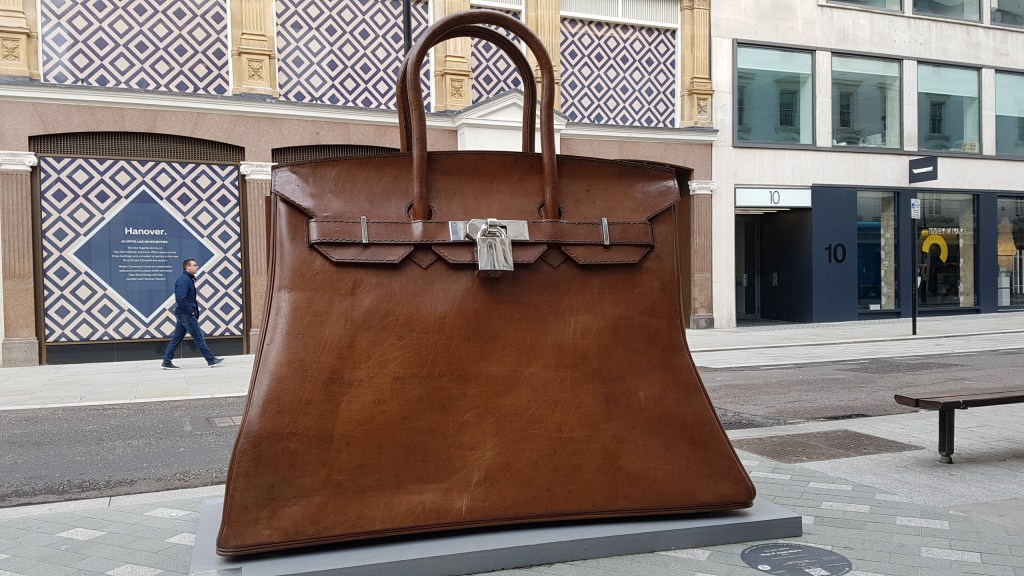
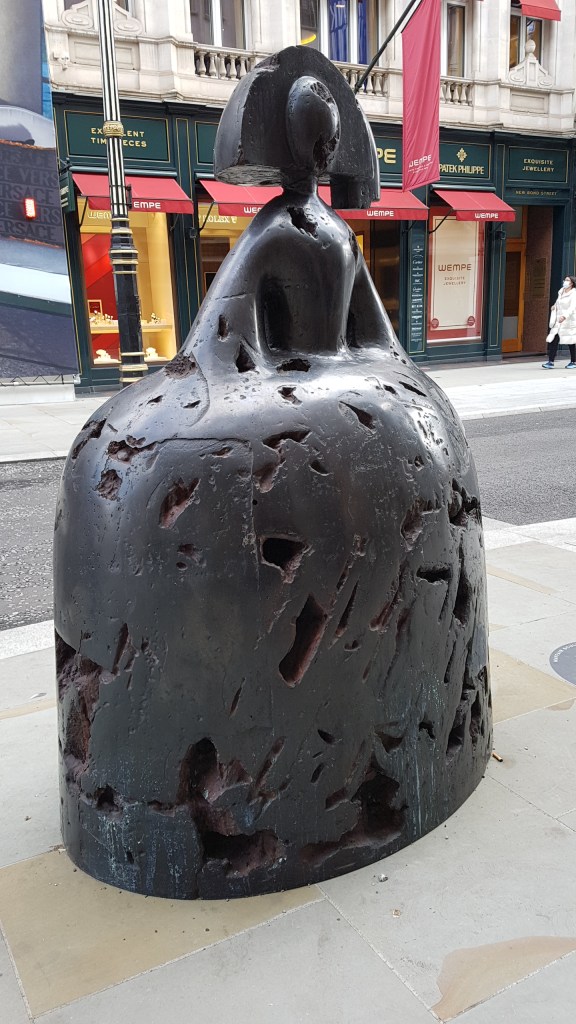
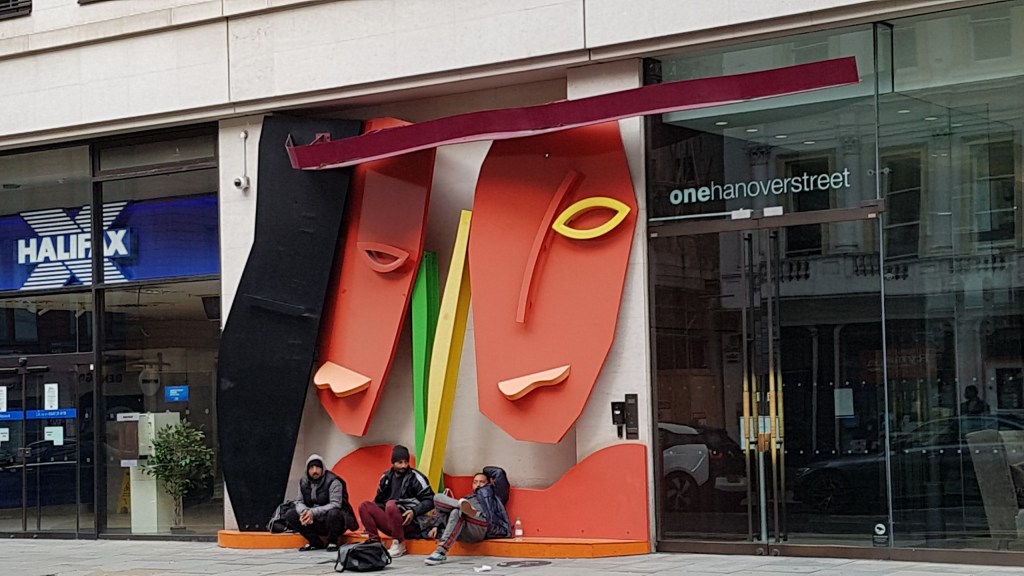
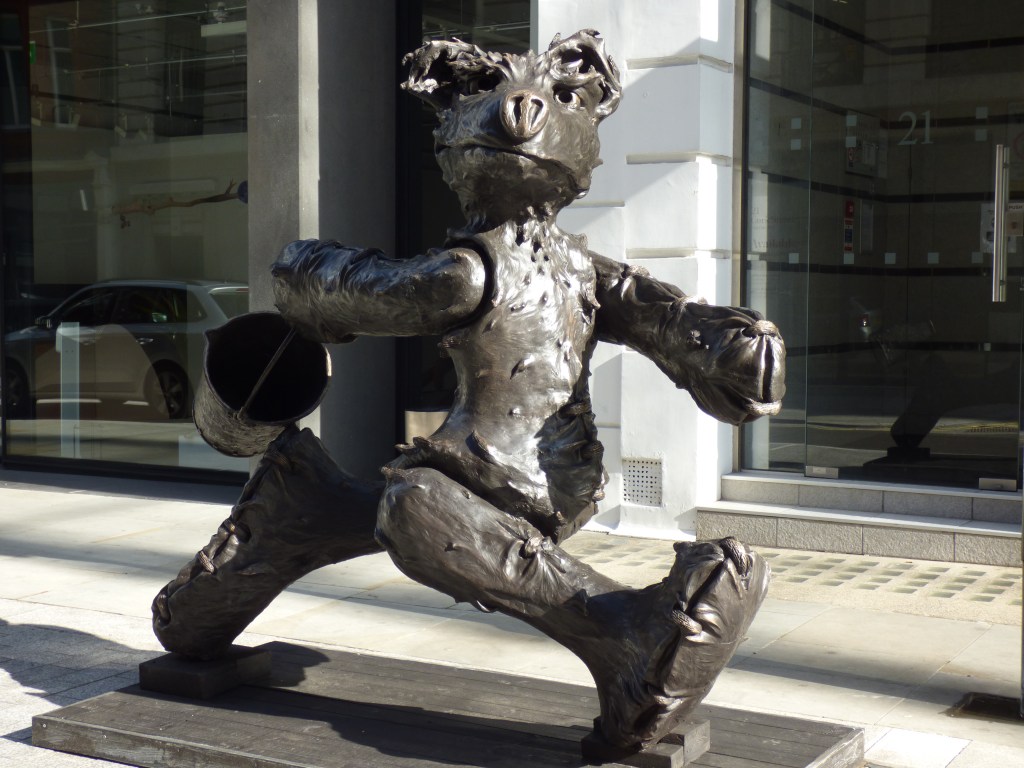
During October you can follow a sculture trail around London’s Mayfair district. The best place to start is Burlington Arcade, then follow the trail into New Bond Street, Cork Street. Maddox Street, One Hanover Street and Grosvenor Square. Two or three of these are permanent installations, such as Allies by Lawrence Holofener. It took me a morning to find them, though there were two I just couldn’t find. For more information about where to find the scupltures, the artists and materials see here
Here they are:
Zechariah’s Vision – Laurent Grasso
Shaggy Wolfhound – Patrick O’Reilly
Docker – Atelier van Lieshout
Cinch – Antony Gormley
Horse & Rider – Elisabeth Frink (there is replica of this in Winchester)
Simple Talk – Pablo Reinoso
Allies – Laurence Holofcener
Life Going Up, Lift Going down – David Annesley
Crystal 001 – Anthony James
Bag of Aspirations – Kalliopi Lemos
Manolo Valdes – Reina Mariana
Handbag Heads – Bruce McLean
Bear with Bucket – Barry Flanagan
Time/Life Screen – Henry Moore
Spectral Stream – Antoni Malinowski
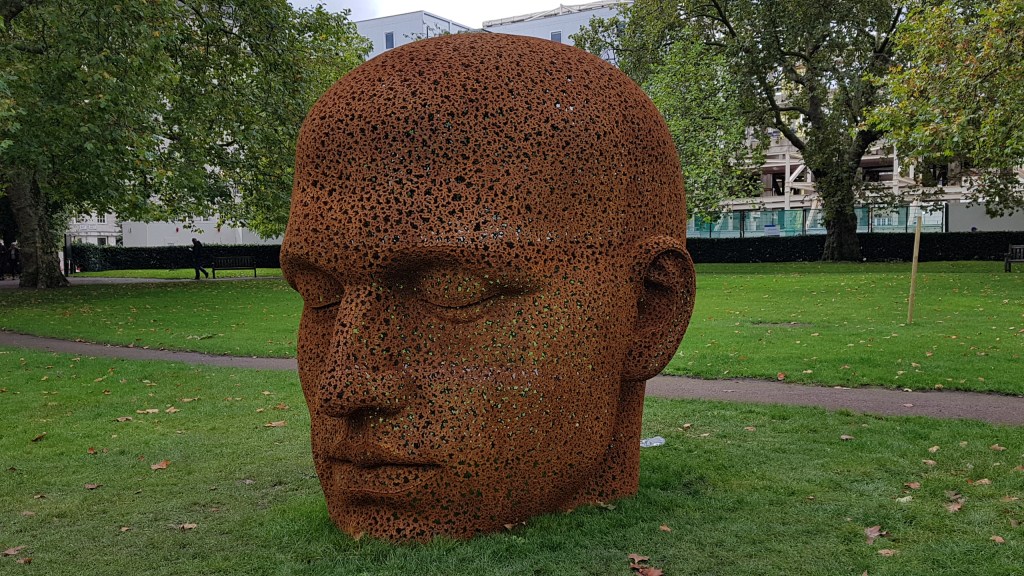
Mediatation – Seo Young-Deok
While I was in London I found Brown Hart Gardens totally by accident. How lovely and peaceful they look laid out above a former electrical sub-station. There is a cafe at one end too.
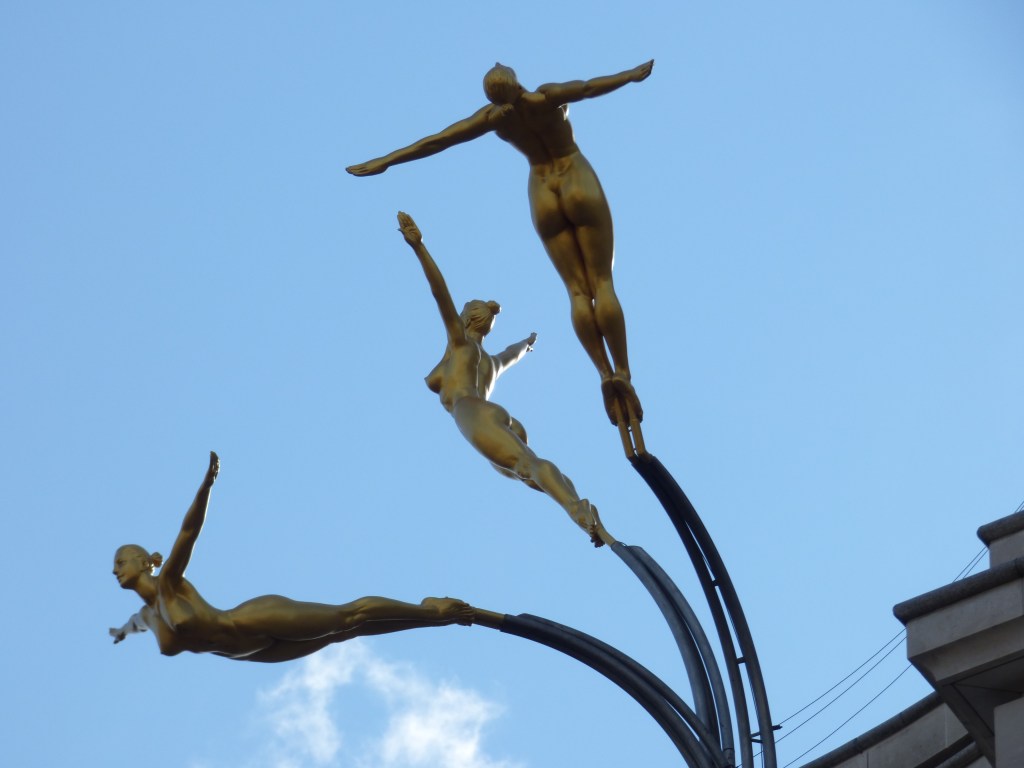
To finish off my morning I found these too (not part of the sculpture trail).
Near The Hard Rock Cafe
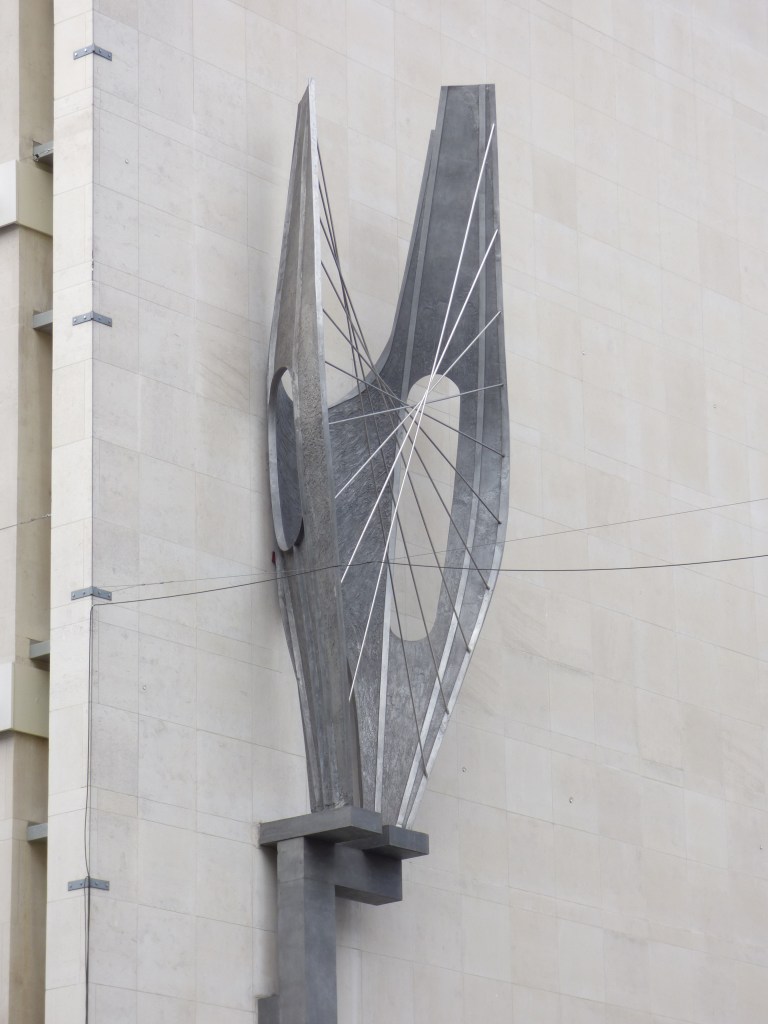
On the side of John Lewis Department Store – by Barbara Hepworth
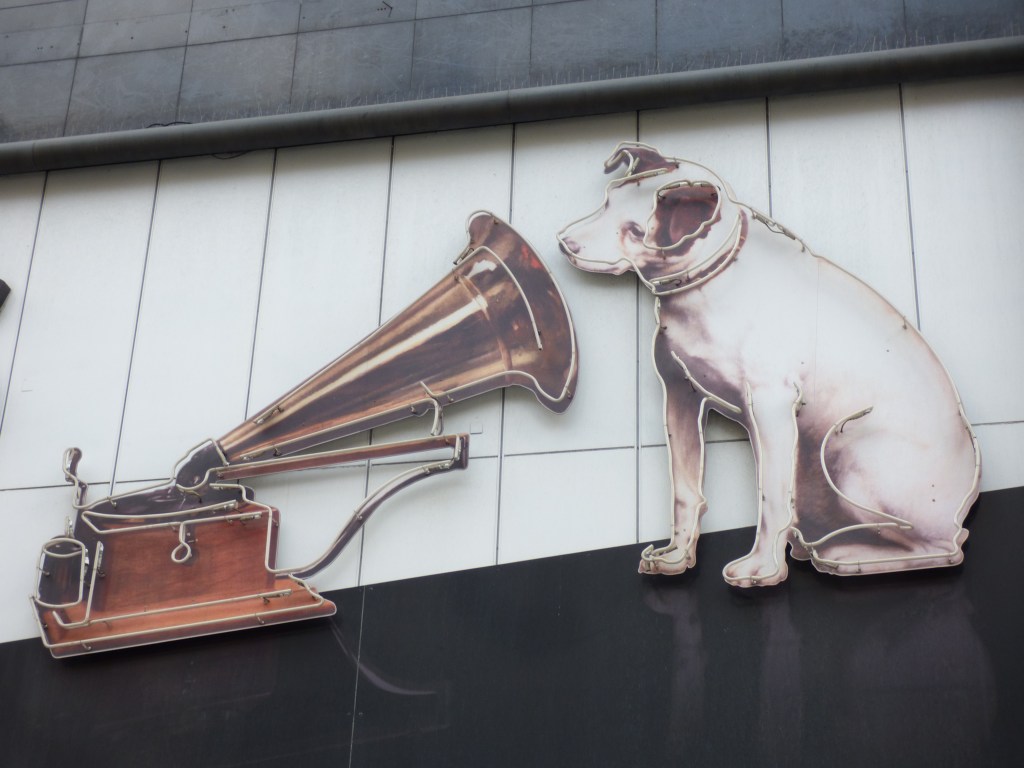
And something nostalgic – ‘Nipper ‘ above the now closed HMV store in Piccadilly
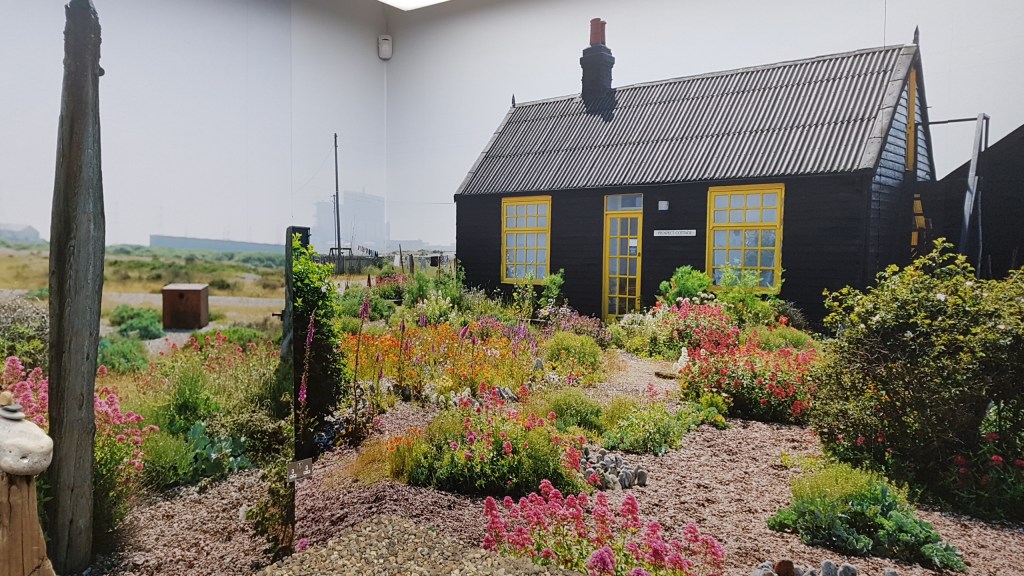
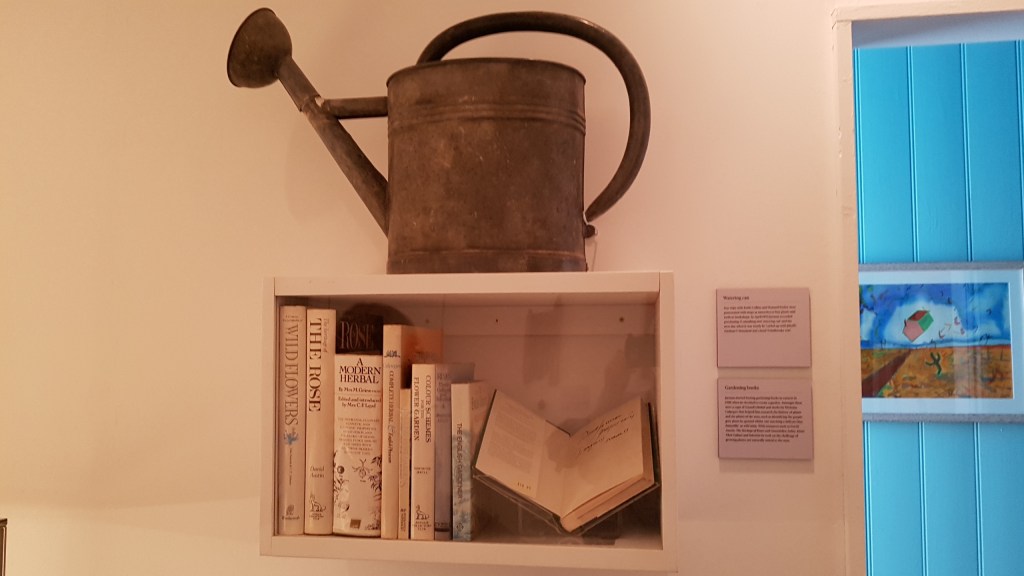
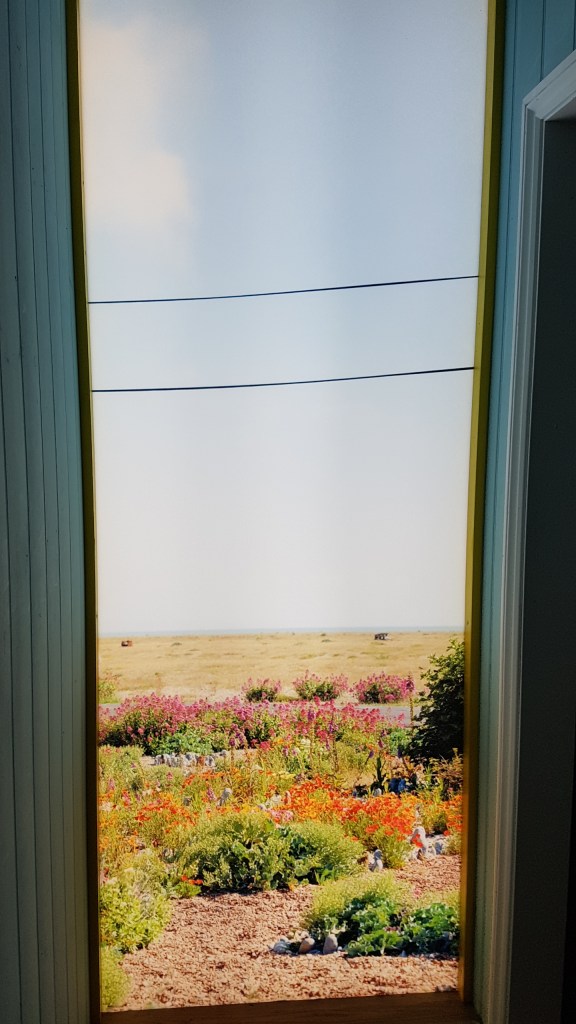
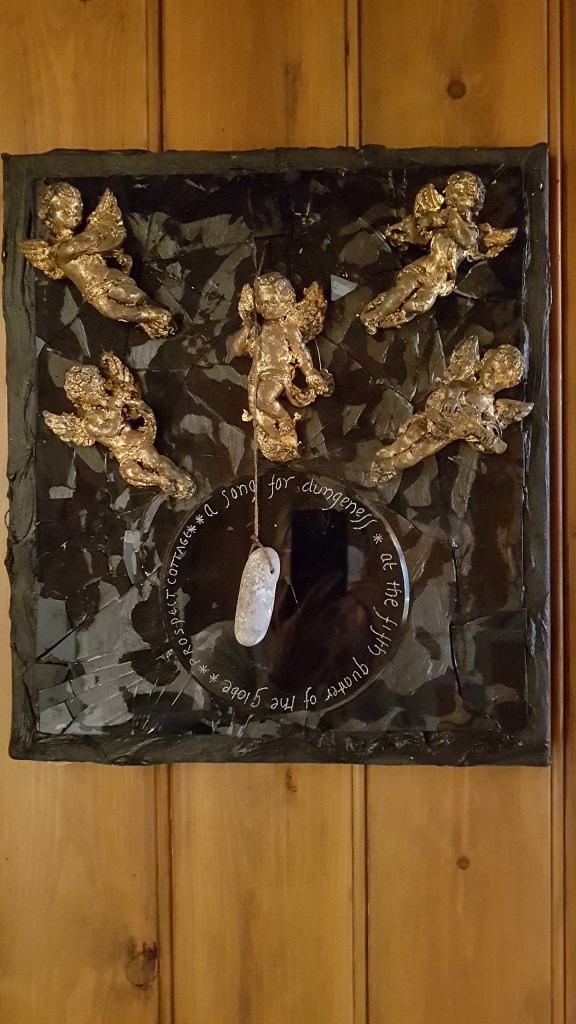
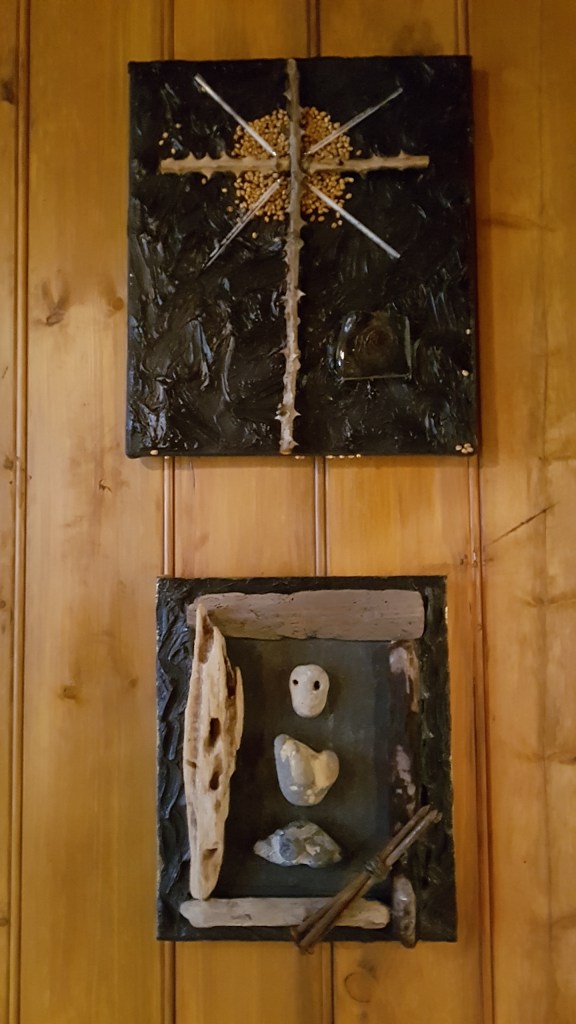
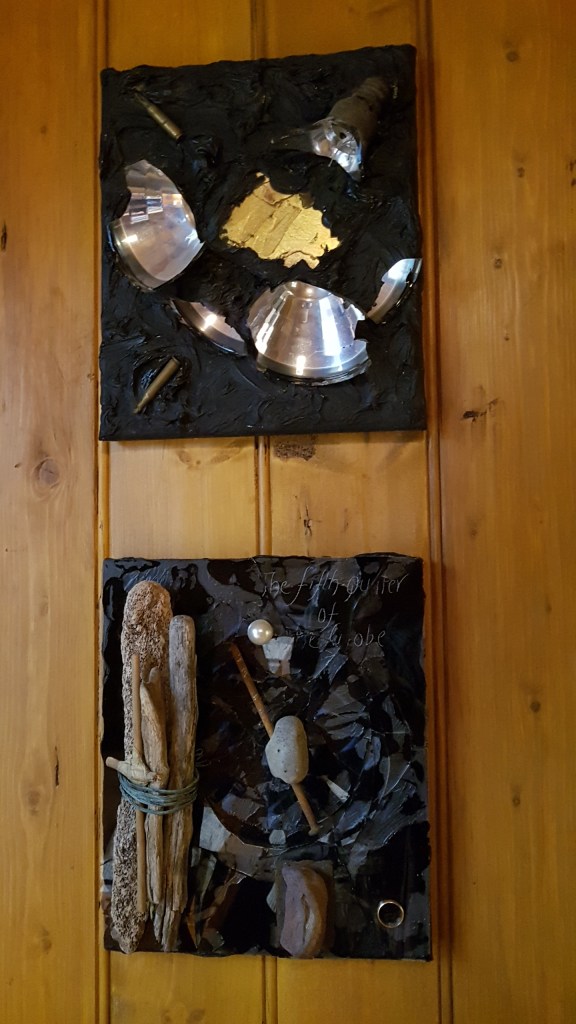
Derek Jarman was a Film Producer and in the 1980’s he bought Prospect Cottage in Dungenesss and turned it into a haven. With a lifelong interest in gardening he set about making a garden on the beach, not only with flowers but art pieces made from beach finds. The walls of the cottage also contained his art works.
When he died there was the possibility that the cottage might be sold and turned into a holiday cottage. The Art Fund stepped in to save this unique cottage by crowdfunding, and they were lucky encough to raise the funding to buy it.
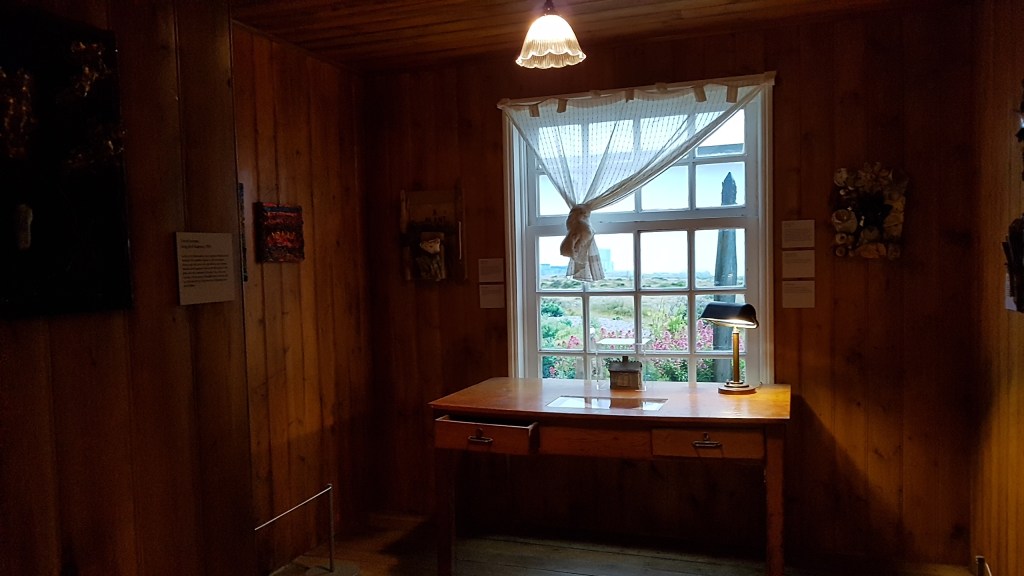
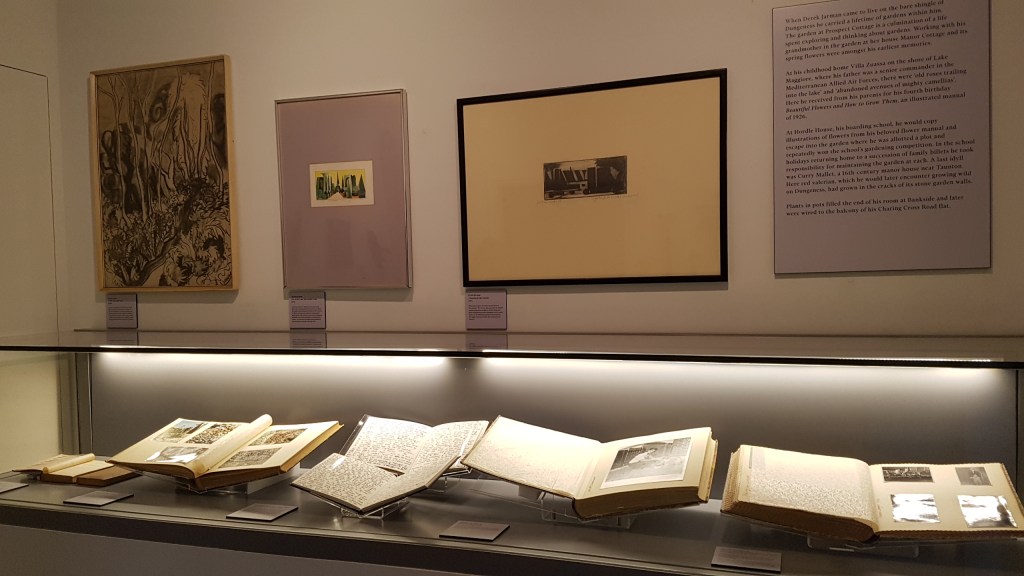
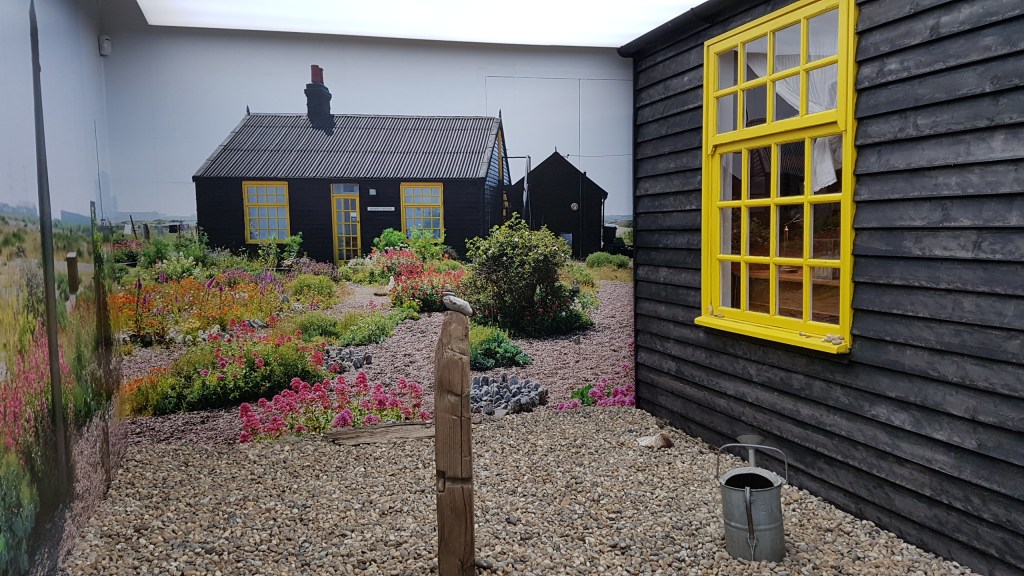
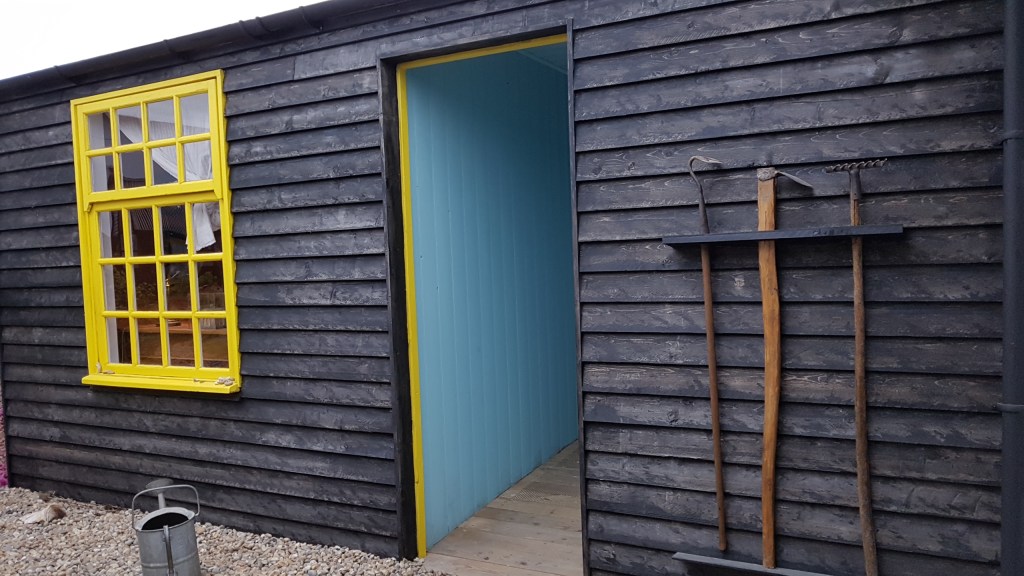
The Garden Museum in Lambeth has a selection of Jarman’s art works, letters, books, journals and tools on display. It is only a small exhibition, but they have done it very well. They have created a room with a mock up cottage set on pebbles, so when you walk in it feels like you are on the beach. On the walls the cottage is depicted with the surounding scenery, the Nuclear Power Station in the background. Inside the installation are three rooms. One has a film running, a film Jarman took on the beach. Opposite are the other two rooms, the first contains a case with the journals, letters and photos, the other room has desk in from of a window overlooking the pebble beach.
This is indeed a unique cottage, and hopefully, in time, it will be possible to visit the real thing.
Derek Jarman art works
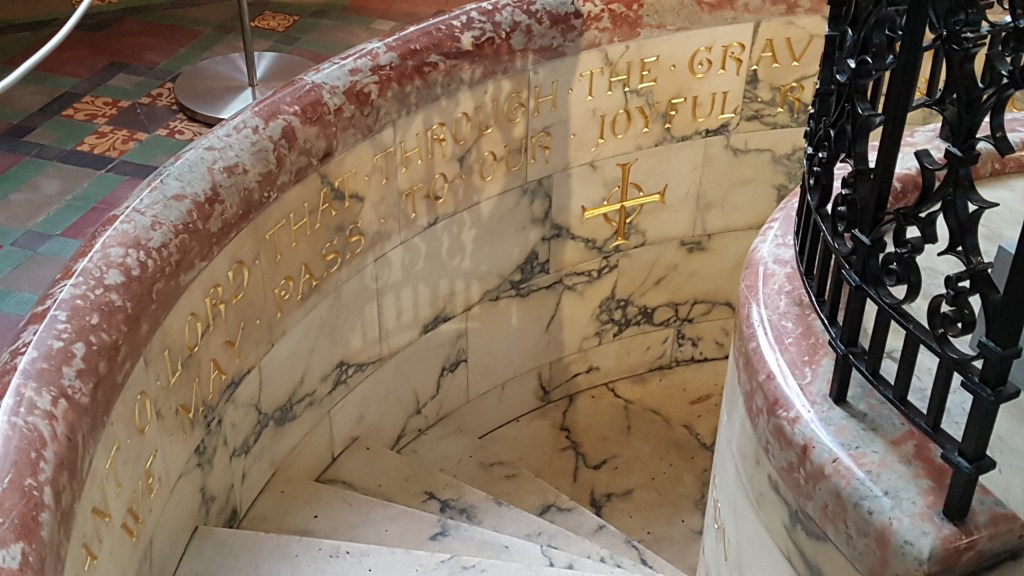
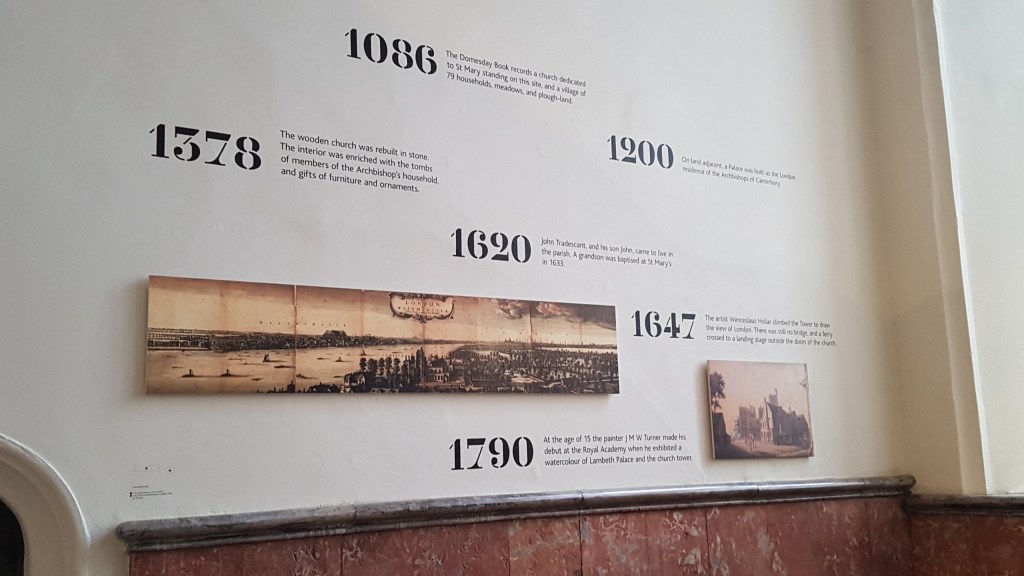
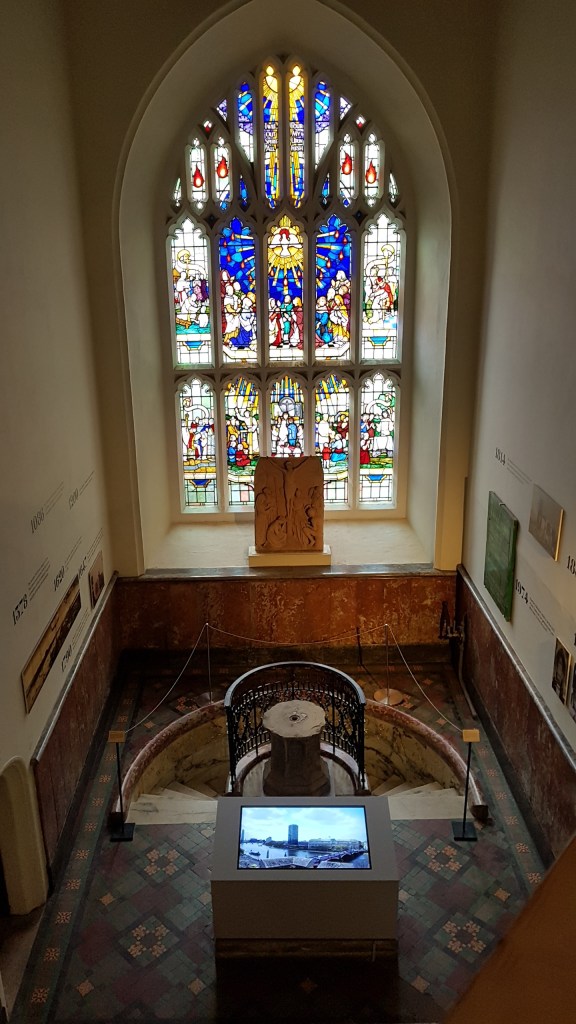
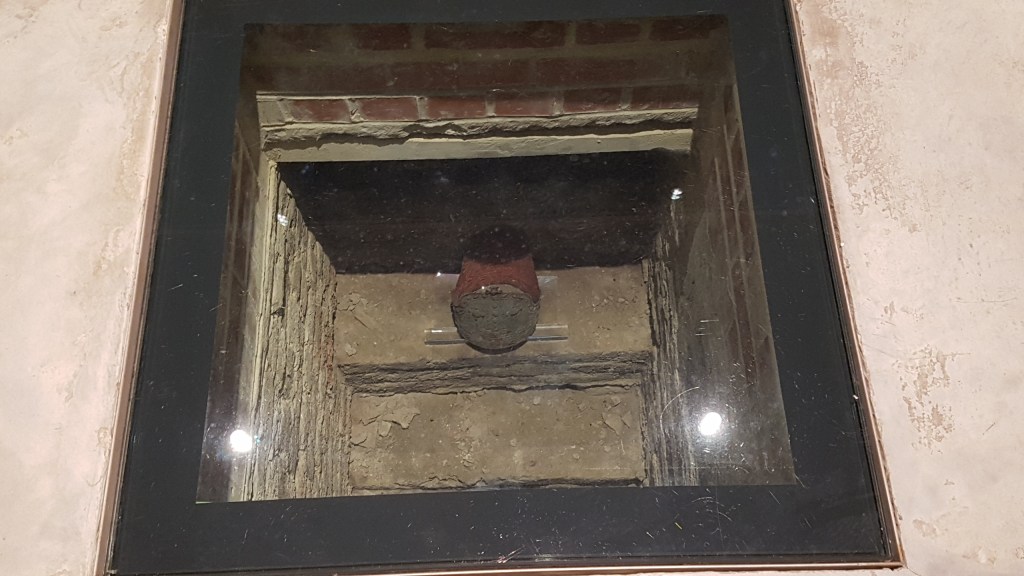
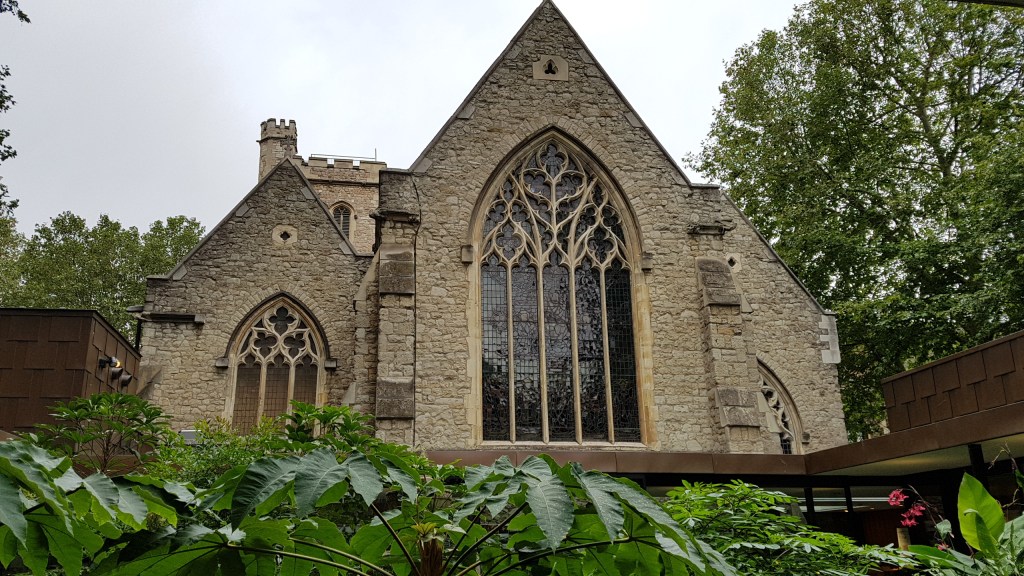
The Garden Museum itself has undergone renovations since I was last there. They have a brand new cafe area around the garden and a learning space for schools and groups. Also here on the ground floor is the history of the church, the former St Marys-at-Lambeth, the oldest church in Lambeth. You can see the walk in baptismal font and there is a tower with over 300 steps from where you get a good view of the River Thames (haven’t been up there yet).
The walk in baptismal font
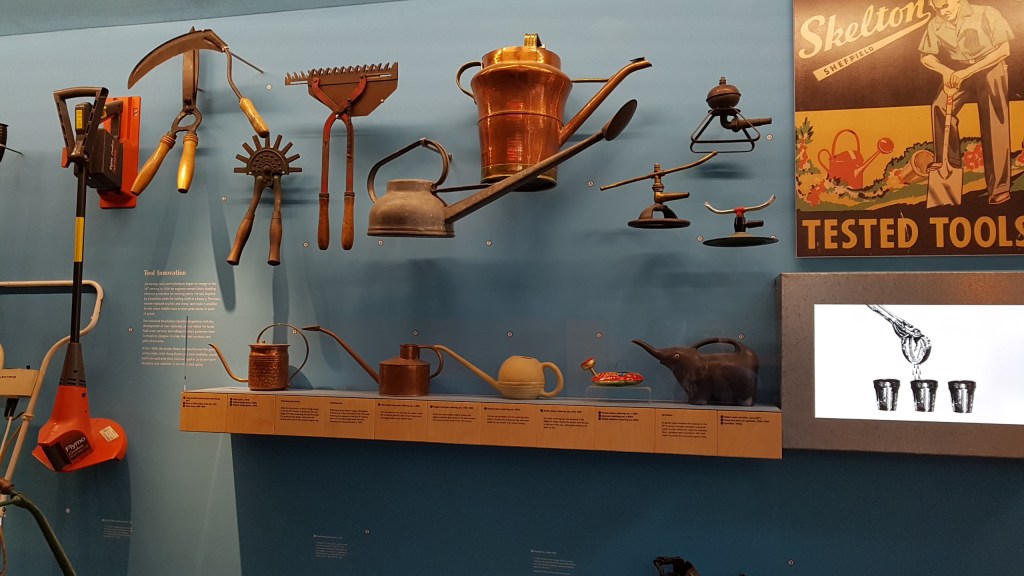
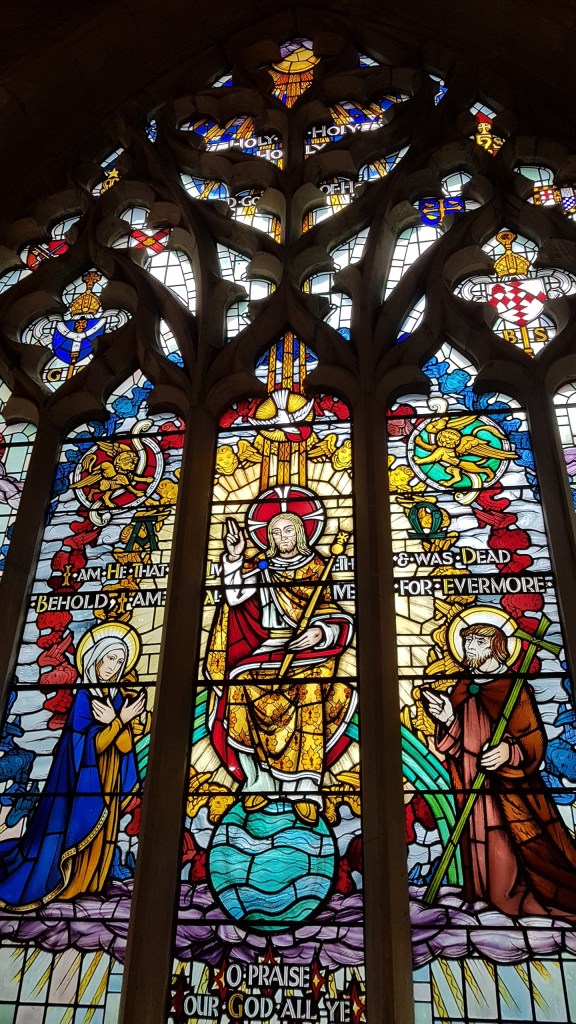
Upstairs you find gardening through the ages, with tools, photos, paintings and methods, posters and, let’s face it, nostalgia! Also from up here are good views of the stained glass windows. I remember the museum as being bigger, but maybe its the way the space is being used now.
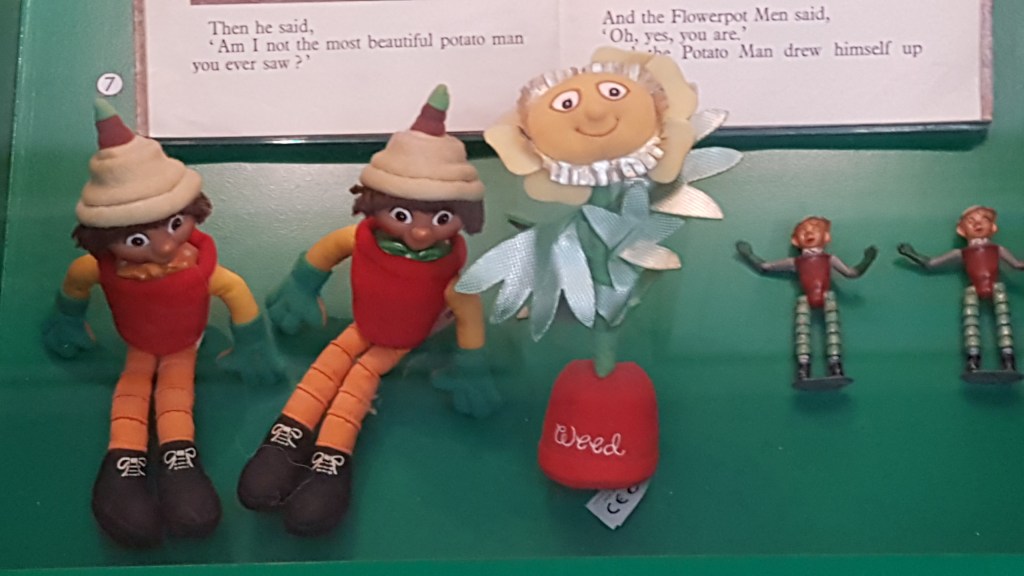
Bill & Ben
While renovation was taking place there was a surprise find. It wasn’t thought the church had a crypt as it was so close to the river and would have flooded. However, when taking up some floor slabs they found lead coffins beneath. It turned out there were five former Archbishop of Canterbury’s buried there, along with others. Around twenty or so coffins have been found. You can read all about it here. There is also a short video about the find.
Here you can see the entrance to the crypt with the Archbishop’s Mitre
The Garden Museum was set up in 1977 to honour John Tradescant (1570-1638), who was the first gardener and plant hunter in British history. He is also buried at the church. The church was due for demolition. Thank goodness it was saved.
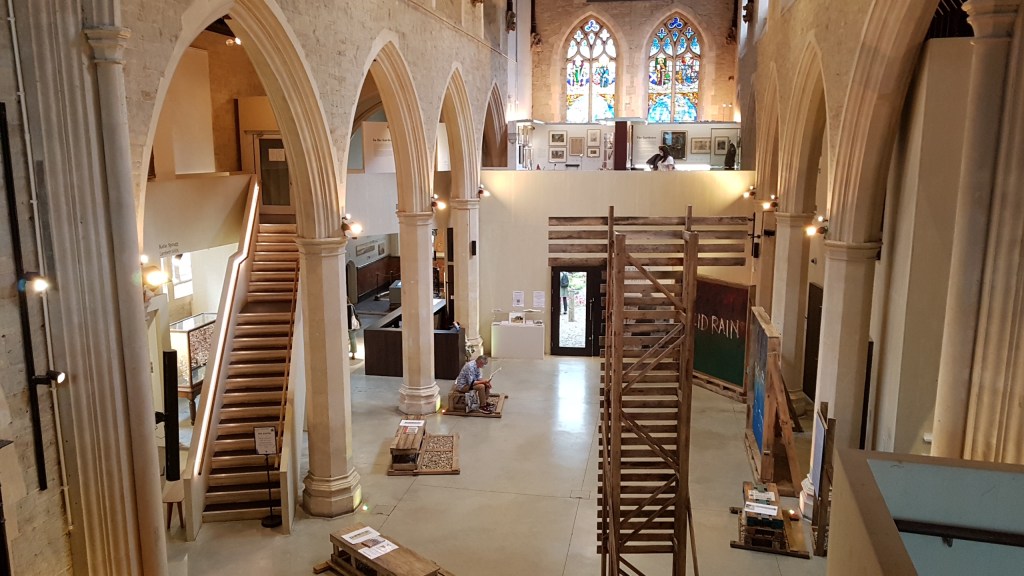
A view across the museum from upstairs
You can walk to the museum from Waterloo station (17 mins), or take the tube to Lambeth North.. The museum is opposite Lambeth Bridge.
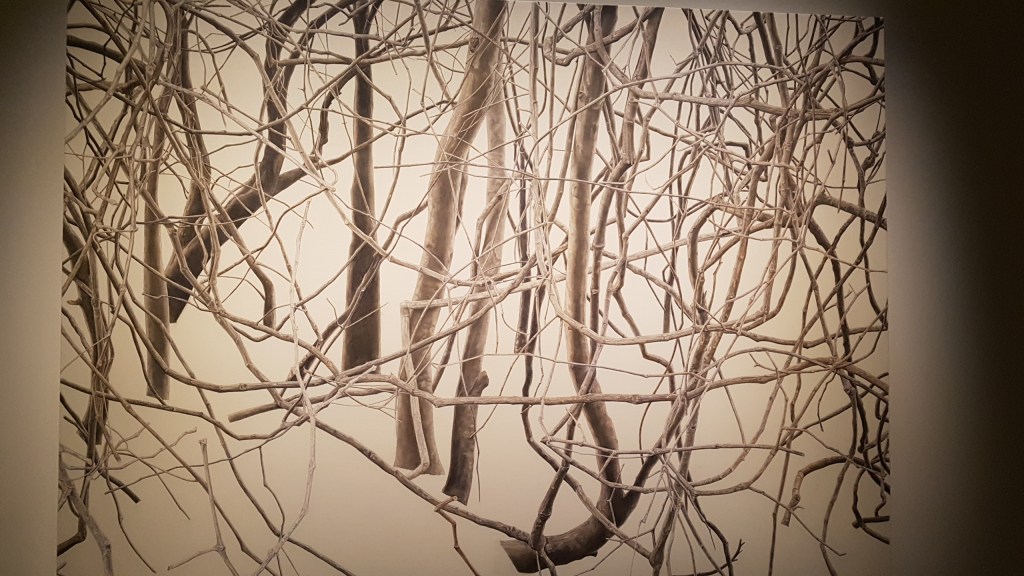
This was an exhibition I wanted to see, but ran out of time as lockdown hit. I was so thrilled to find it had re-opened and booked a ticket. I went last Thursday, just as the heatwave began. My aim was to get out of London as soon as possible afterwards!
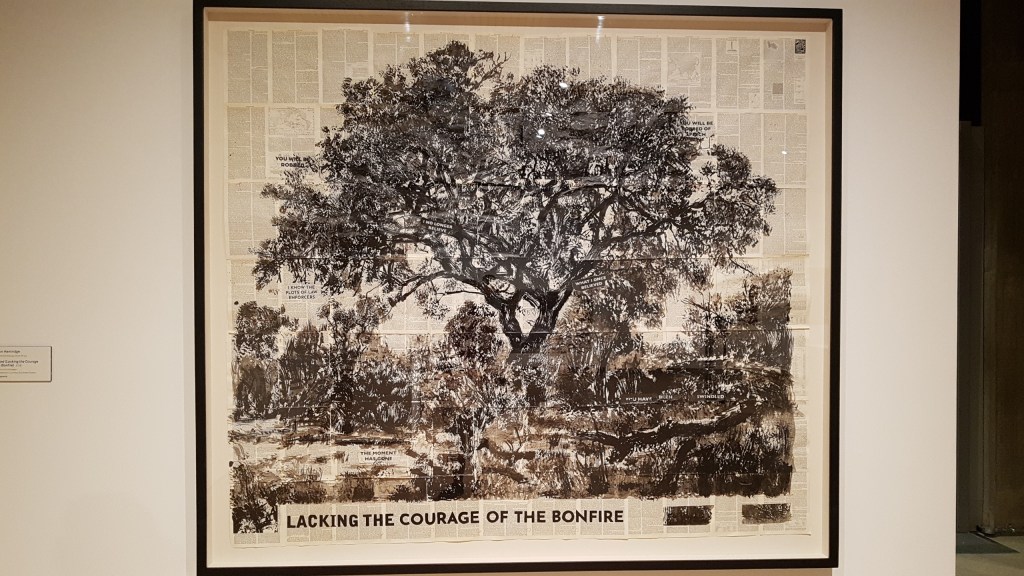
Ink on found paper
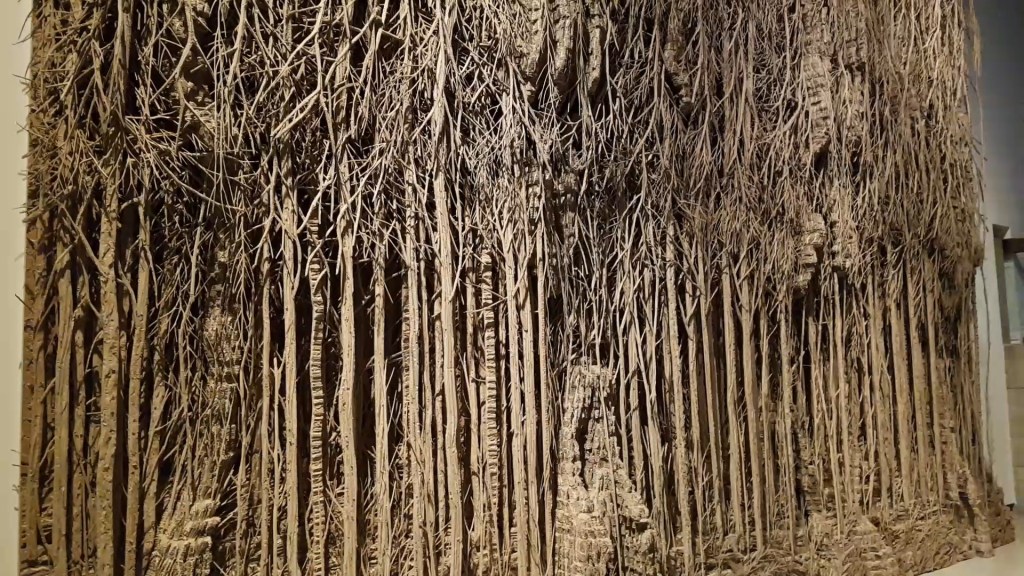
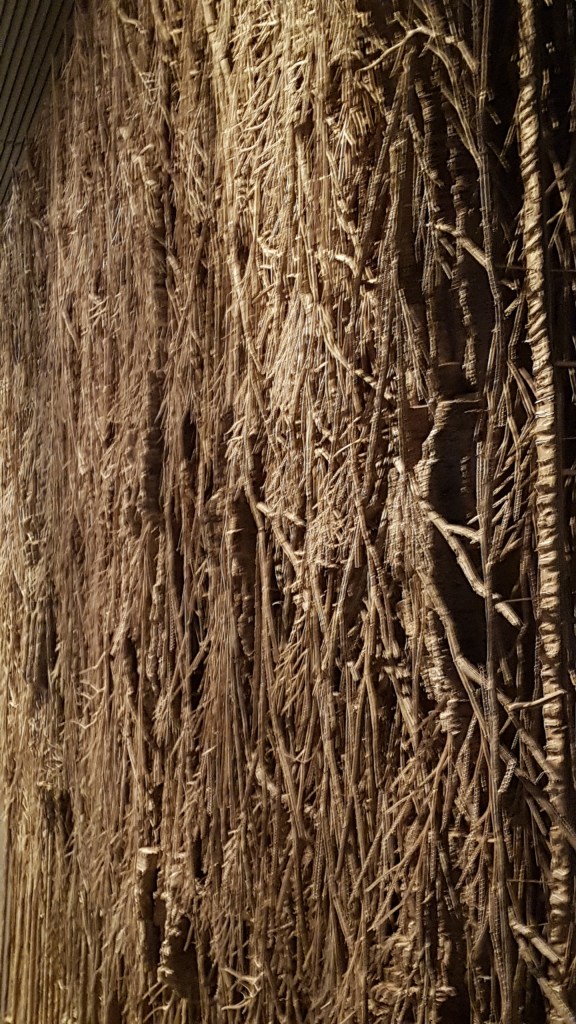
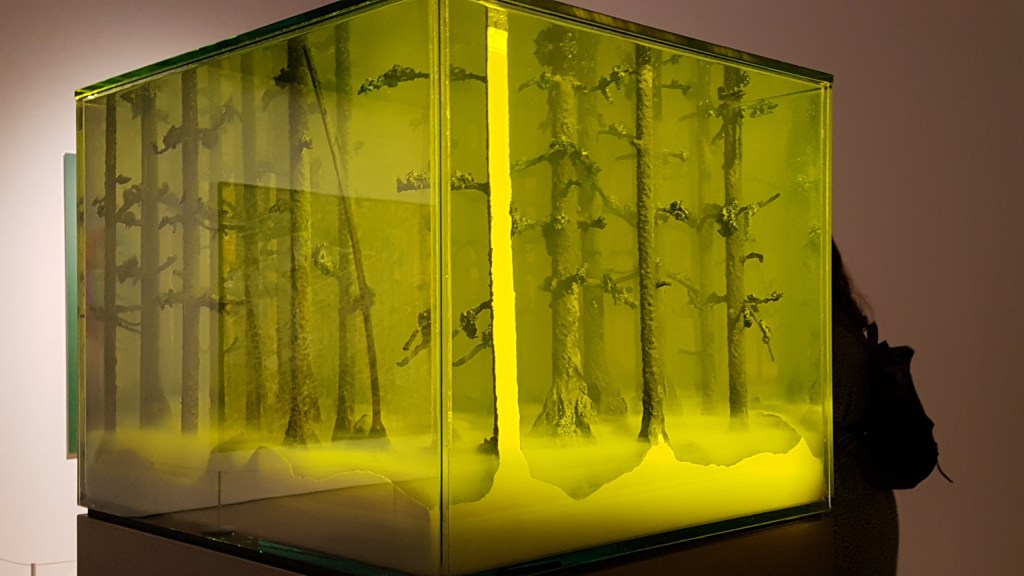
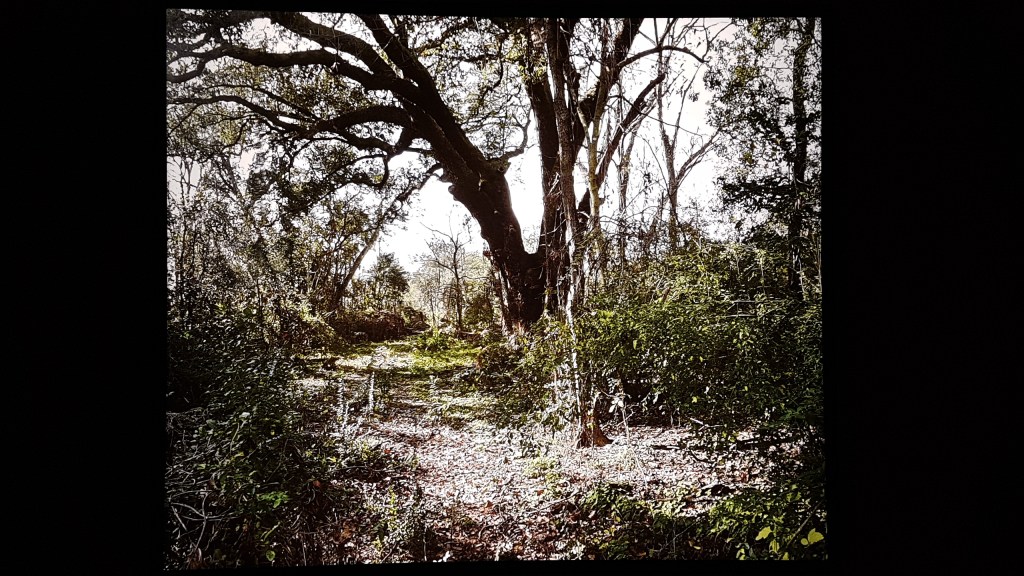
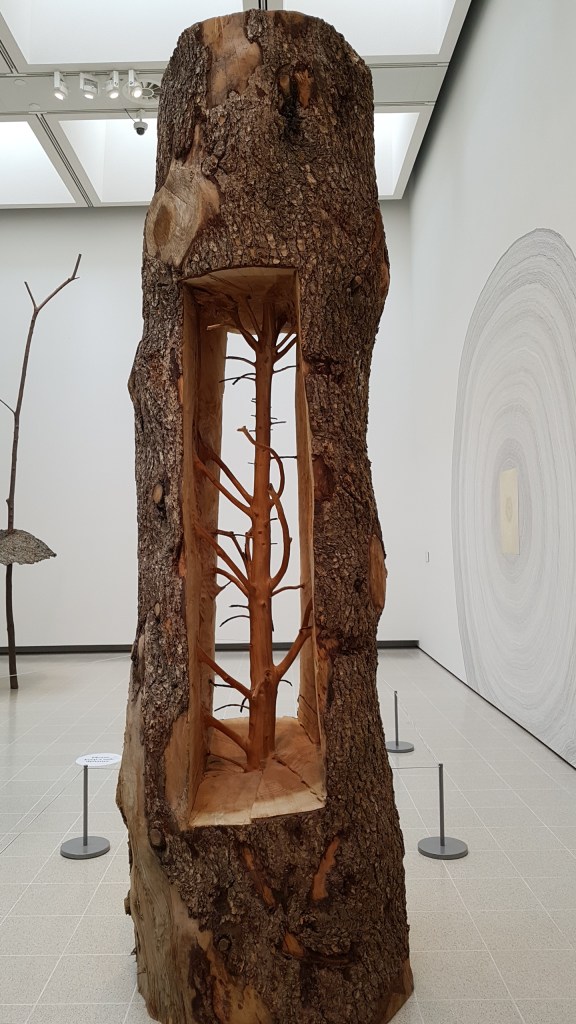
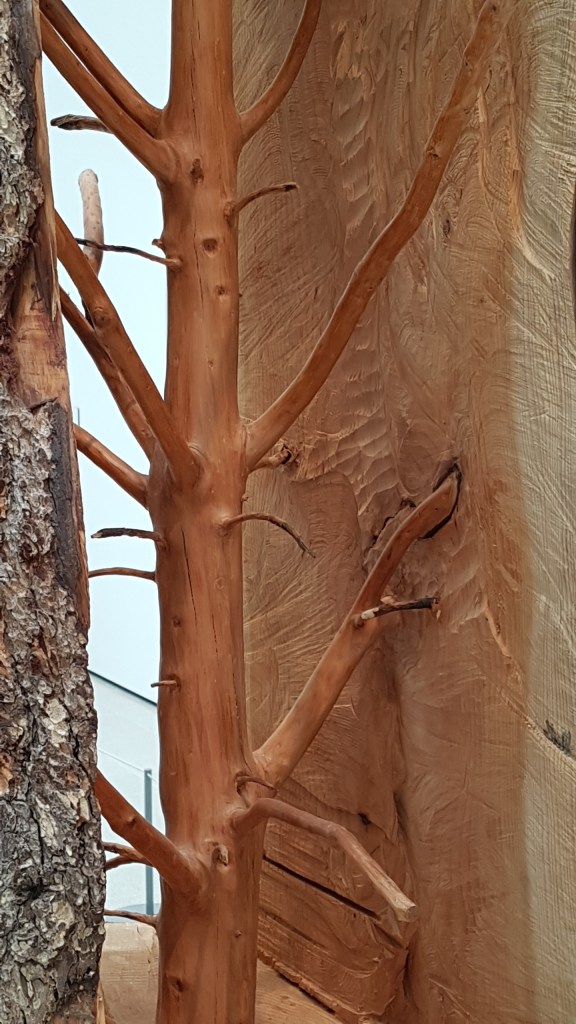
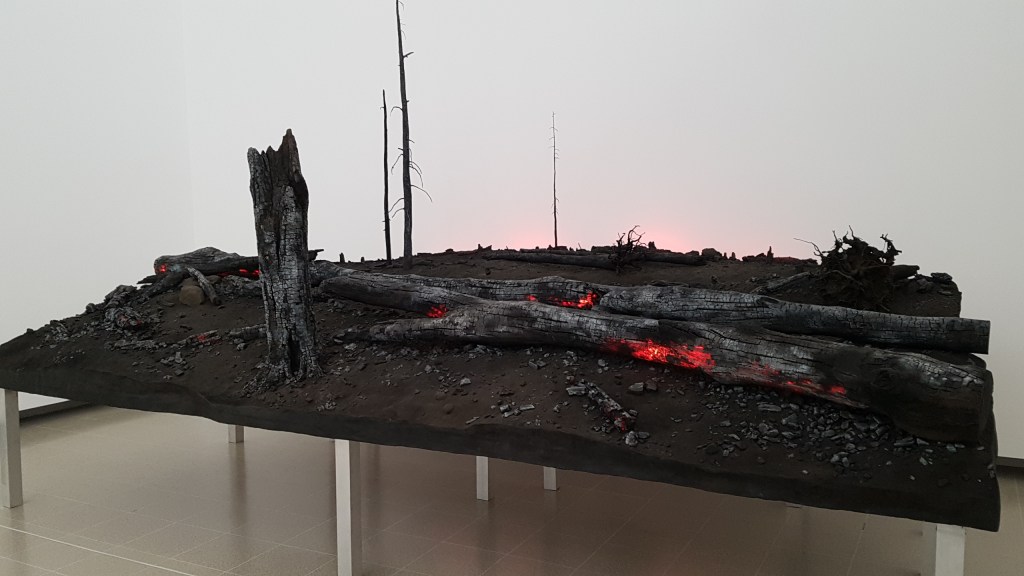
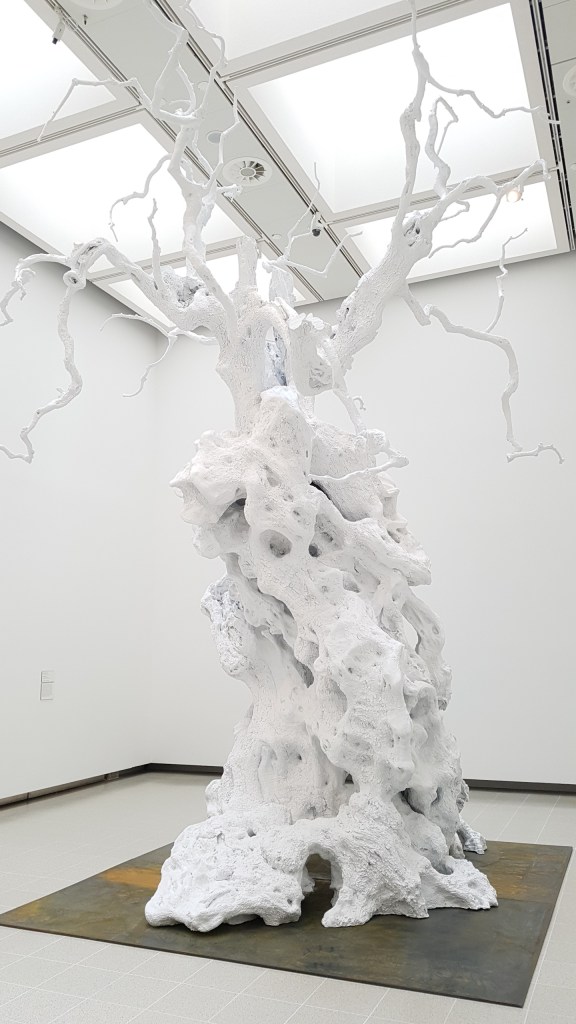
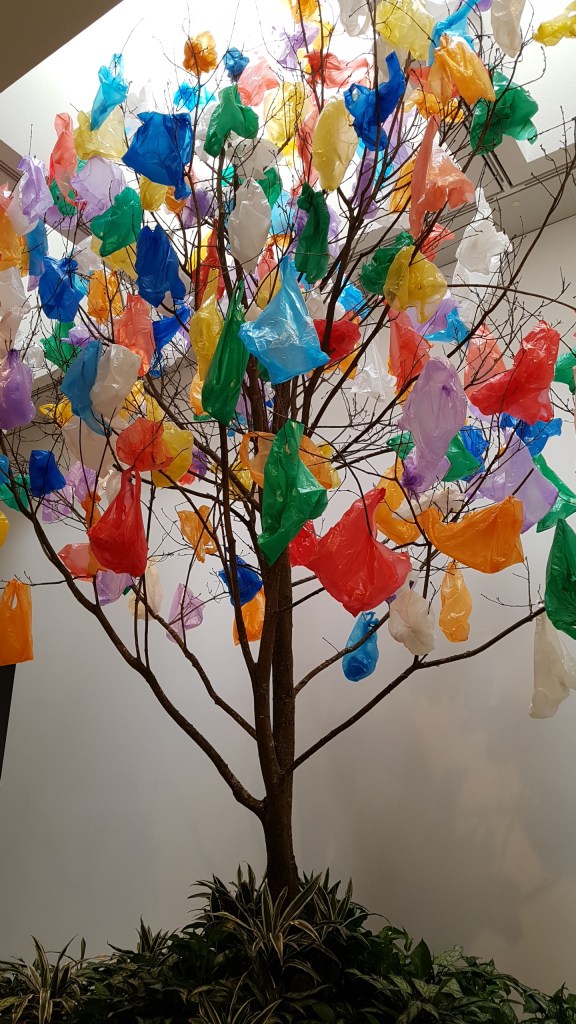
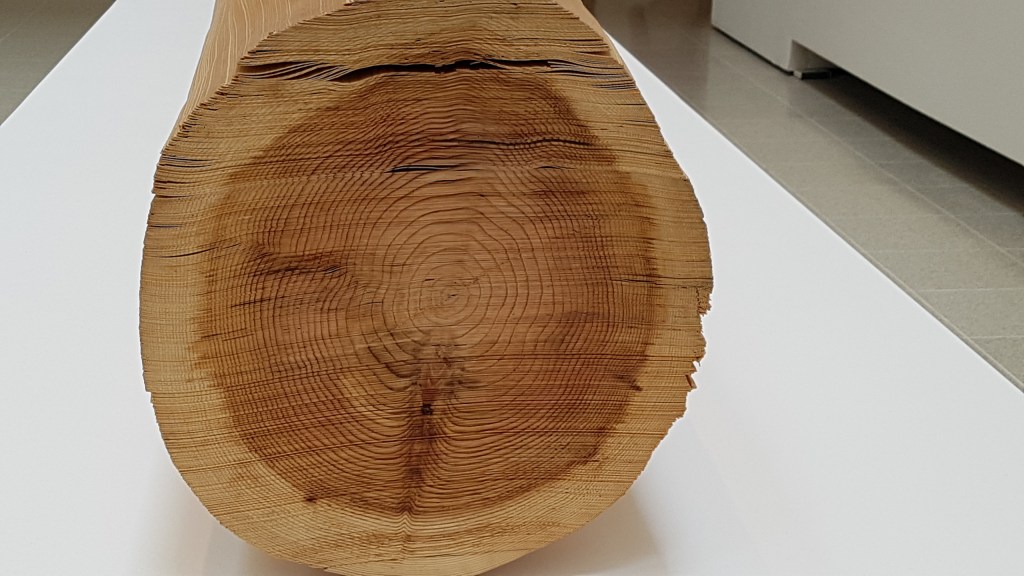
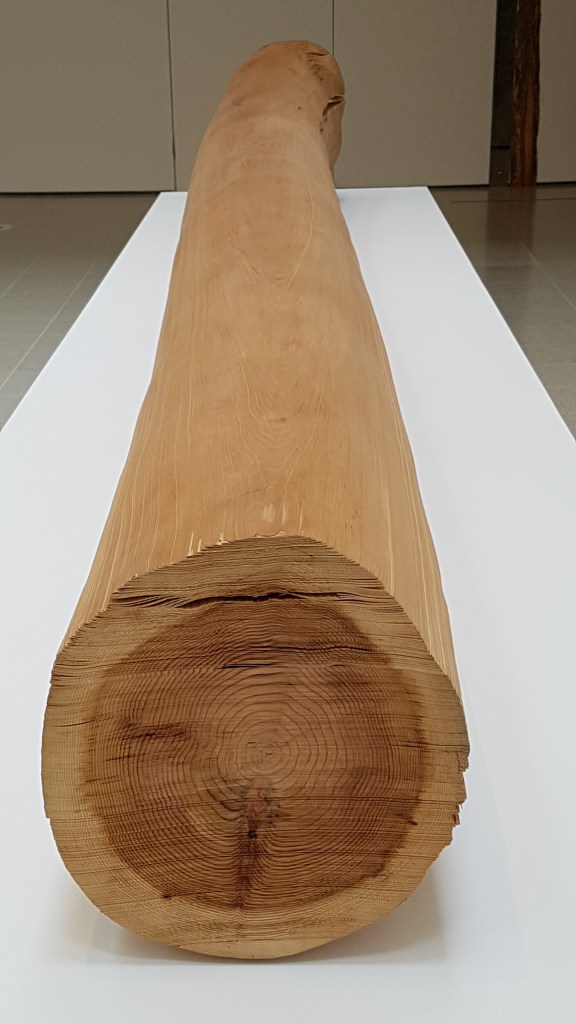
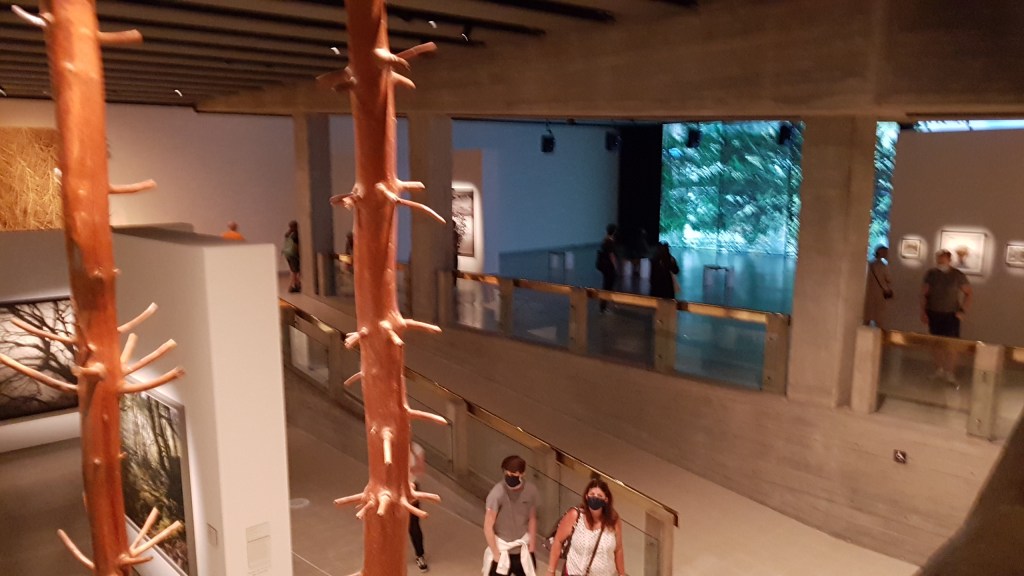
Among the Trees is a calming exhibition with a mix of photos, paintings, real wood, installations and multi-media. The gallery was well managed and it was not crowded. The experience was a good one. I particularly enjoyed the films – one is a horizontal full length tree with it branches swaying, with a person standing under it. The other is a three minute time lapse of a trees through the seasons. This was quite mesmerising. My other favourites were the wood and cardboard structure close to the entrance of the exhibition, a tank with trees (not real ones!), the log showing all the rings, the charcoal featured landscape, and the trunk of a tree where most of the middle has been scooped out but in the centre stands the tree as it would have been in its younger days. The branches correspond to the knotty parts on the outside of the bark.
Cardboard and wood
Detail
The Lynching Tree – where black slaves were hung (graves below). Photo – Steve McQueen (12 Years A Slave)
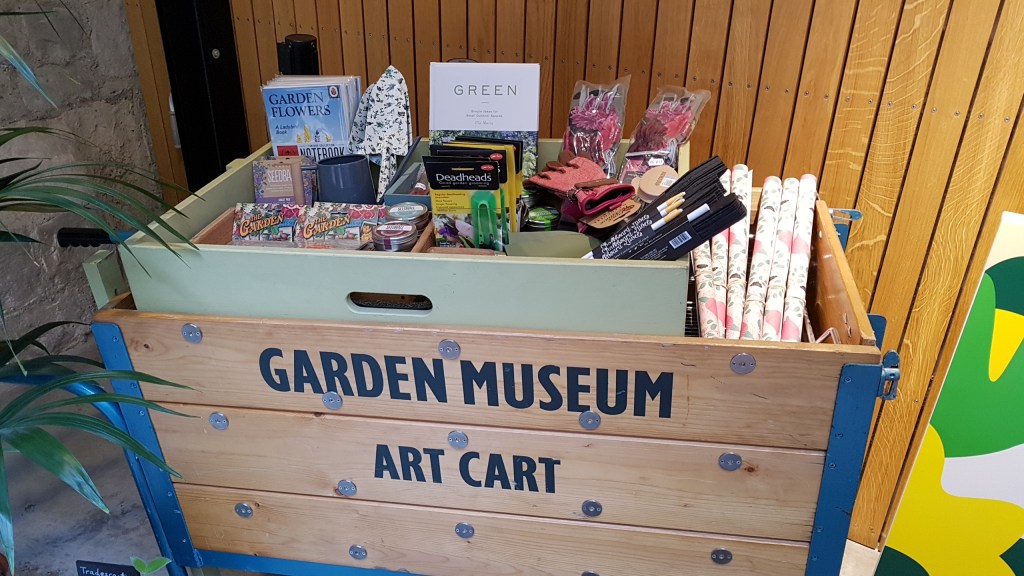
I had thought I’d skip through the gift shop. Hah! no way. There was a lot drool over and I came away with a book, some notelets and a bar of vegan soap!
detail
Charcoal landscape
The heatwave in London is finally breaking. We’ve had six days of temperatures over 30c, with several at 34c and 36c. With these high temperatures I have to admit that I’ve not been out on my travels for a week. If I don’t get thngs done in the early morning, nothing gets done! The house is like an oven by lunchtime and there is nowhere cool here until 6pm, when I venture into the garden. There are storms in the forecast and there was rain this morning. Hopefully, by next week I will be able to face the transport system again and get back to my exploring.
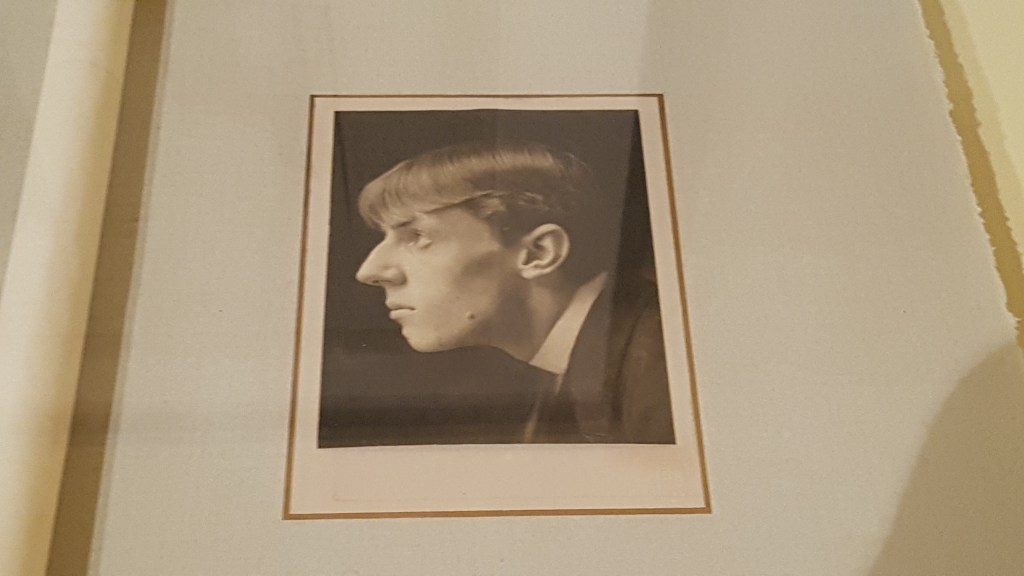
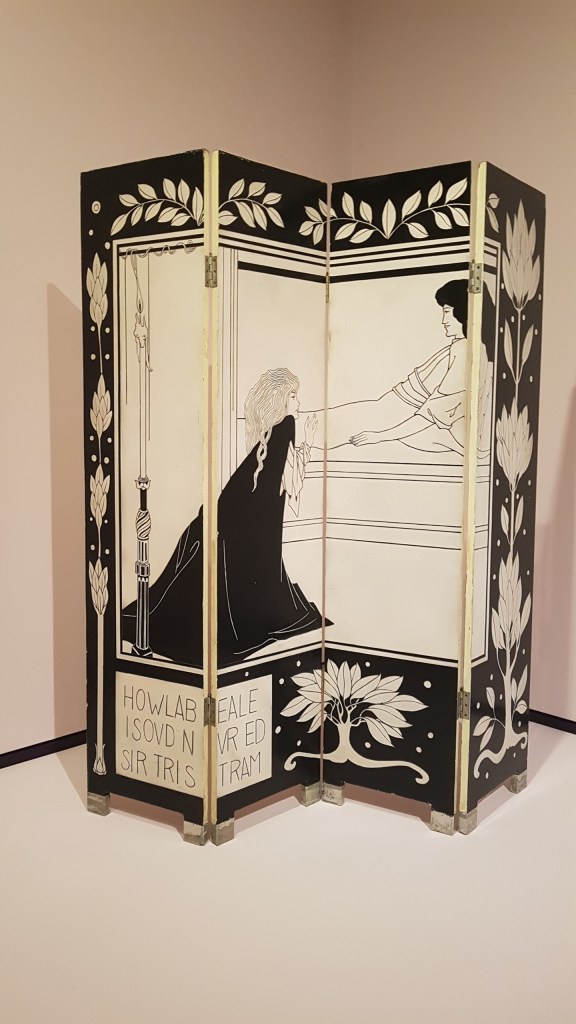
Aubrey Beardlsey was born on 21st August 1872 in Brighton. He was an illustrator and author, highly prolific in his short life. He contracted TB as a child and knew his time was short. He died at the age of just 25 in France, leaving behind an amazing array of artwork.
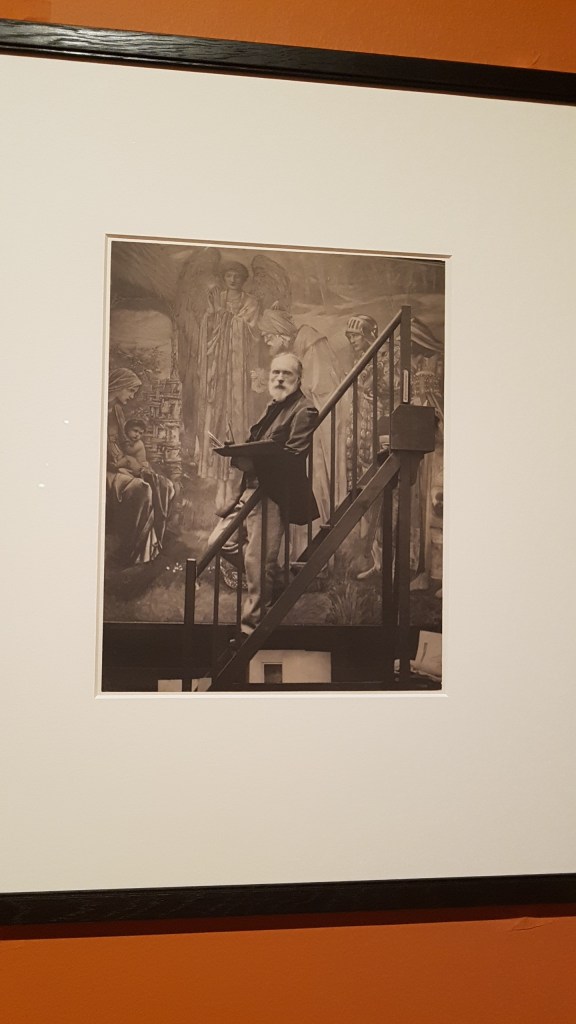
Edward Burne-Jones (in his studio) much influenced Bearsdley
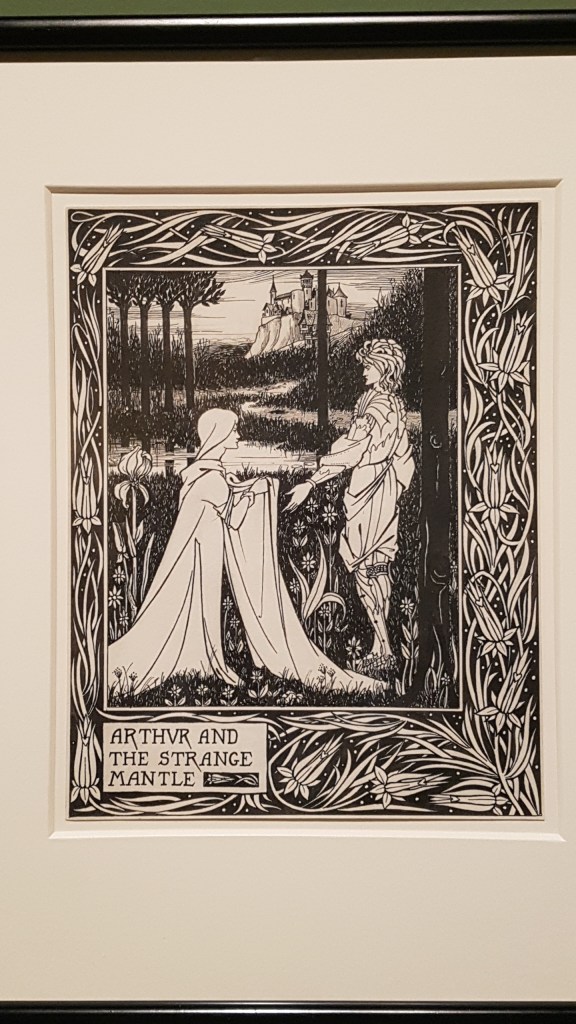
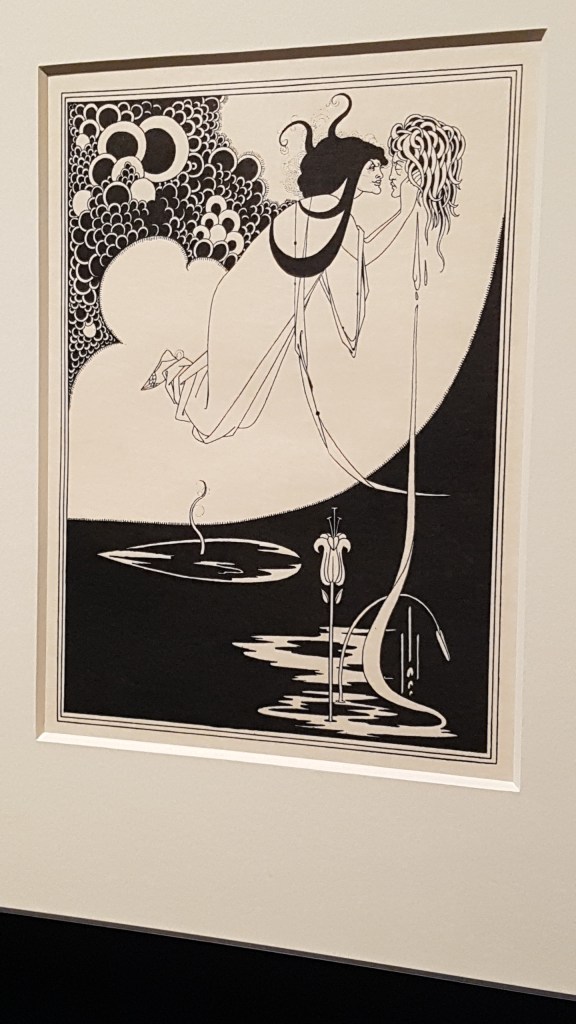
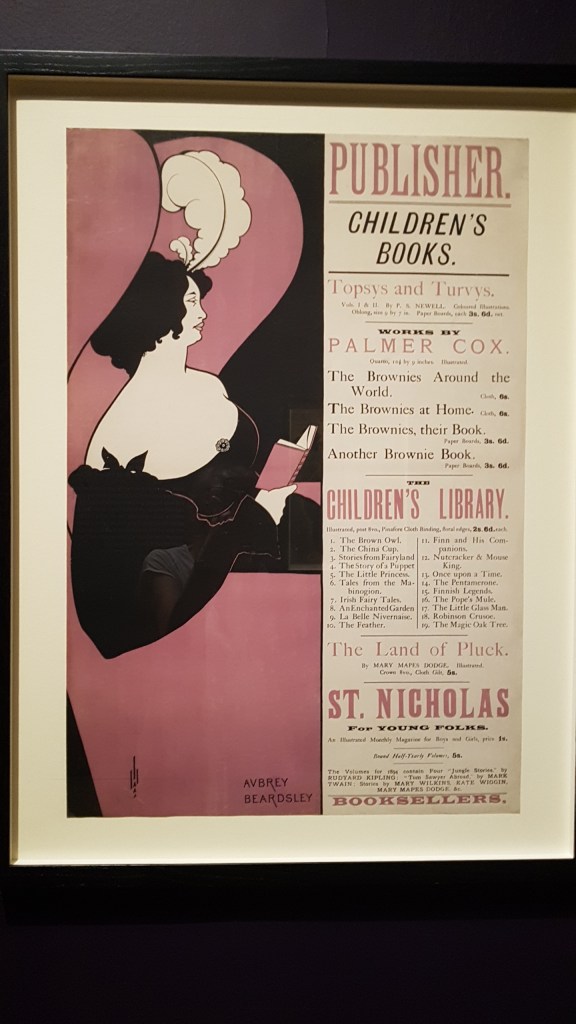
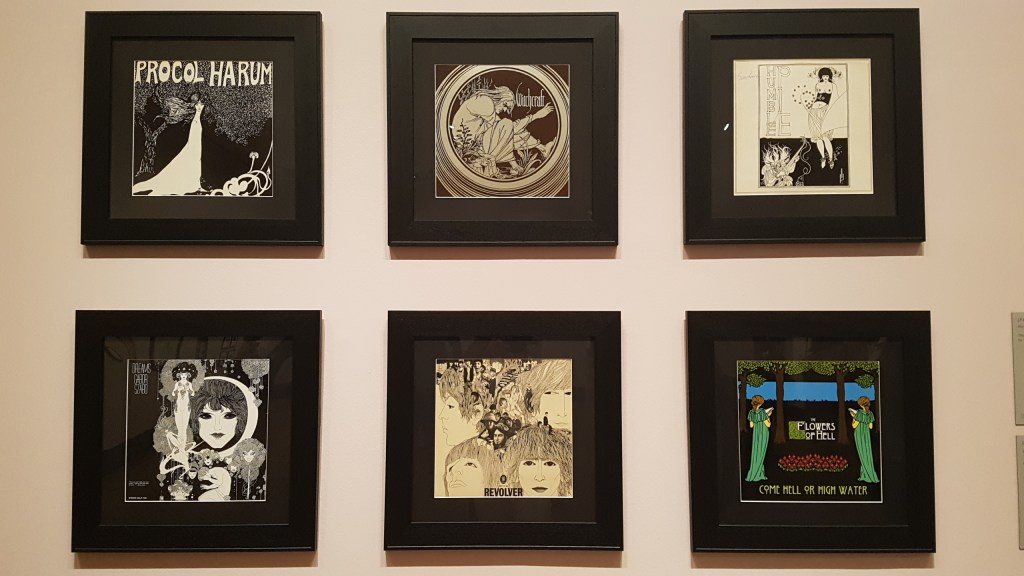
Bearsley was part of the aesthetic movement which included Oscar Wilde and was influenced by the pre-Raphaelite artist Edward Burne-Jones, whom he met. He was a controversial figure of the art-nouveau era with his dark, perverse and erotic drawings in pen and ink. He illustrated many books (Le Morte d’Arthur, The Rape of Lock and Wilde’s Salome) and posters. Having been sacked from one publication he started his own, The Yellow Book.
I first came across Bearsley when I was in my twenties and I ventured into drawing with ink. A friend showed me her own drawings and I loved the medium. I borrowed a book about Bearsdsey from the library and copied a few of his drawings, along with some Japanese ink drawings (which also influenced Beardsley). Many years later I attended a stunning exhibition of his work and bought the exhibition guide.
One of my favourite pieces
This exhibition closed as lockdown came and I wasn’t sure whether it would ever open again, but it did, and I went along last week. Many of the illustrations I had seen before, but I’d forgotten just how prolific his work was. I guess if you know your life is going to be short, you go for it!
One of Beardsley’s posters
My only grump about the exhibition was the number of people. I did not feel comfortable being in such close proximity to others. People were queuing to see prints, with people spending a long time in front of one, and that caused the room to overfil. There seemed to be no social distancing and no gallery staff in rooms. The only thing managed was the numbers entering the exhibition when we were told the first room was smaller and may seem more crowded. This was a far cry from the Royal Academy where I’d been a couple of weeks earlier. The Tate had only opened that week, so maybe things will improve, but as things were, it spoilt my day and I didn’t spend as long inside as might have otherwise. If there were reduced numbers it didn’t feel like it. It felt like a normal exhibition.
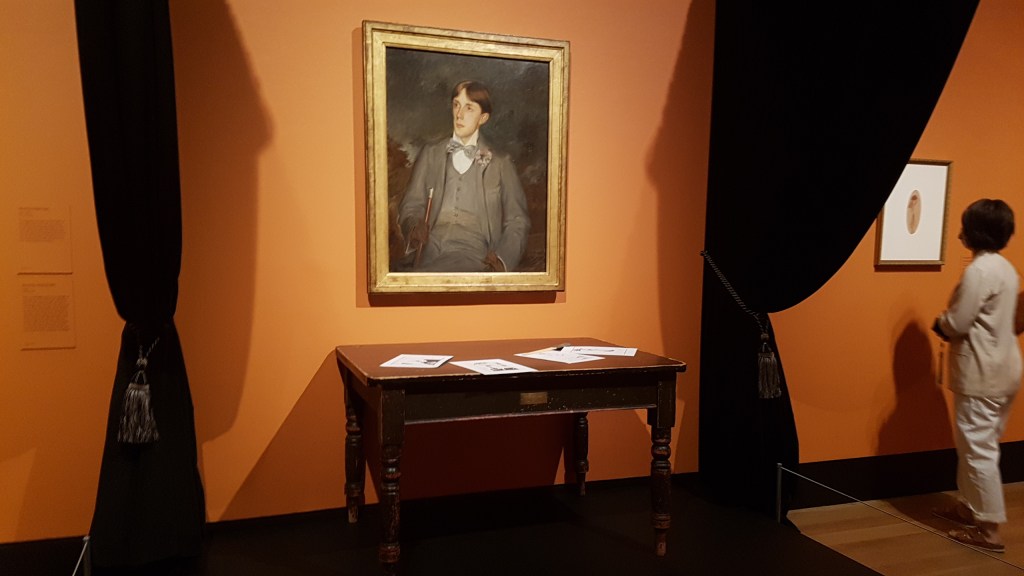
Portrait of Beardlsey over his drawing desk
Thankfully, I have seen most of the art work before, and I had a reduced ticket. If I’d paid full price I wouldn’t have been happy ayt all. I was glad to get outside again and didn’t even visit the shop!
Beardsley influenced many to come – here are some LP covers
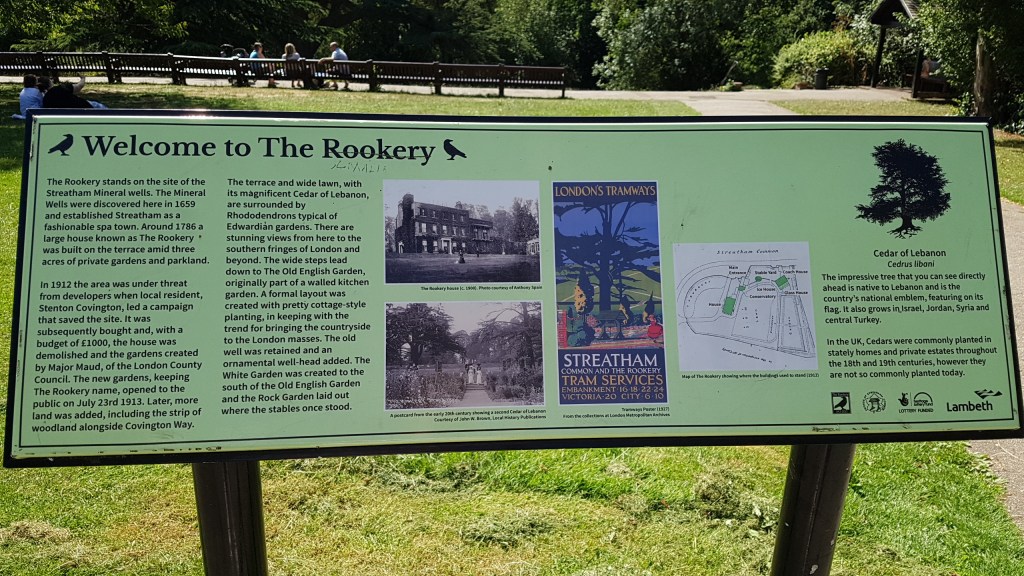
I only found out about The Rookery recently through an article I found on Facebook. It was time to check it out in person.
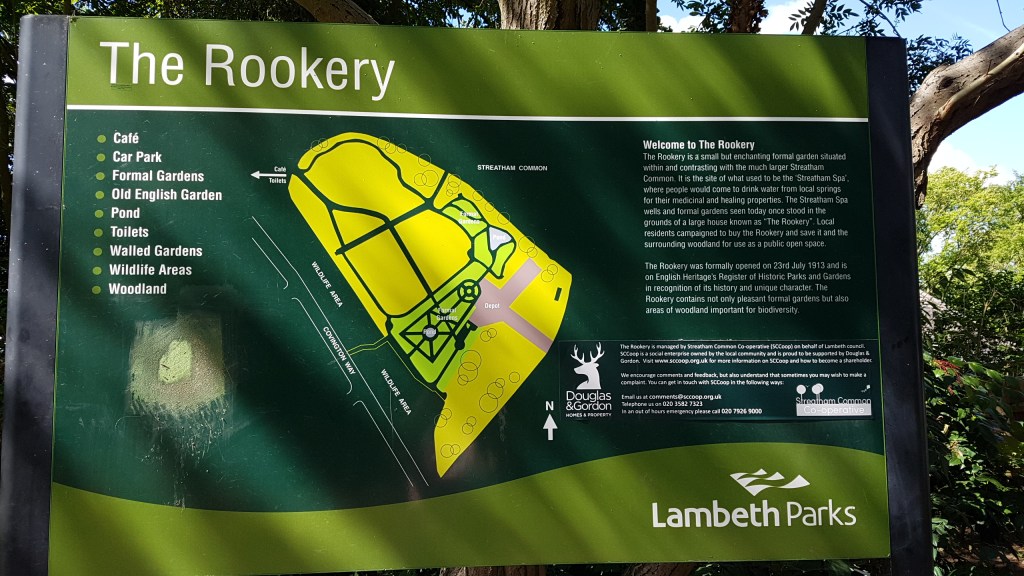
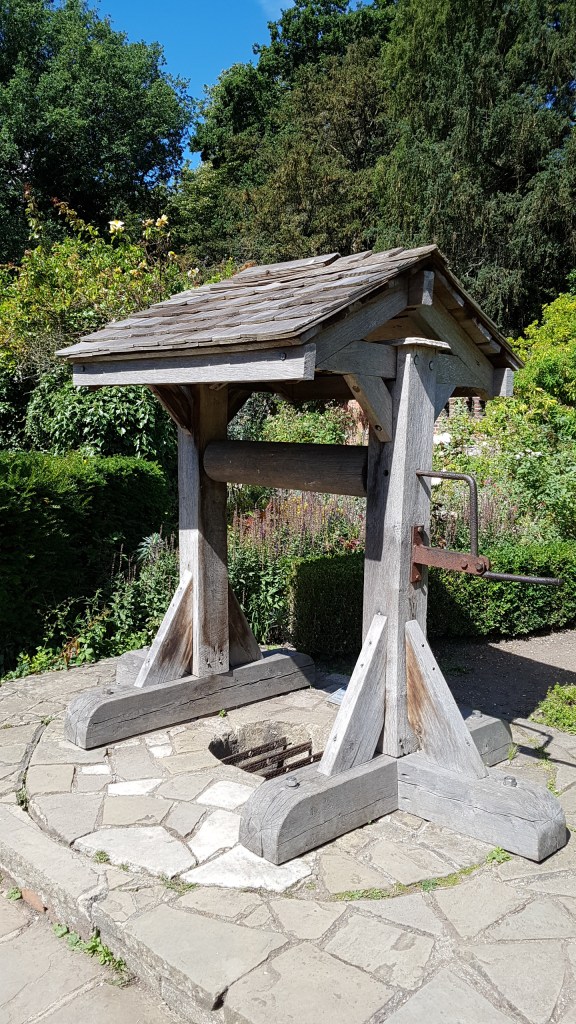
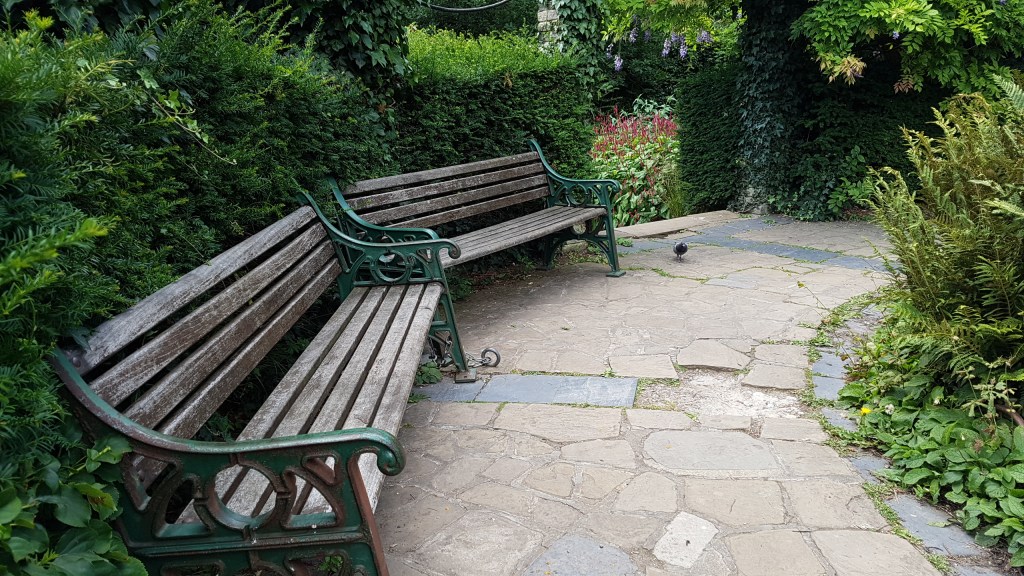
Nestled to the back and to the side of Streatham Common, The Rookery is a maze of gardens and new delights. Originally built as a Spa, there is a modern well to mark the spot. Created in 1659, the house and gardens were laid out on a site orignally known as Well House. Unfortunately, the spa waters were found not to be beneficial due to the clay soil.
Site of the Spa well
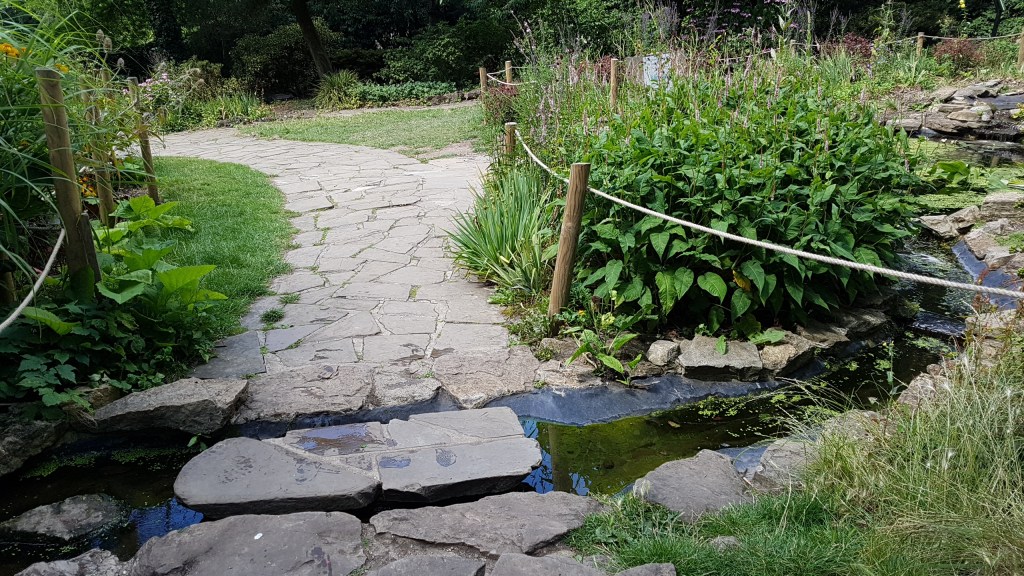
Stepping stones
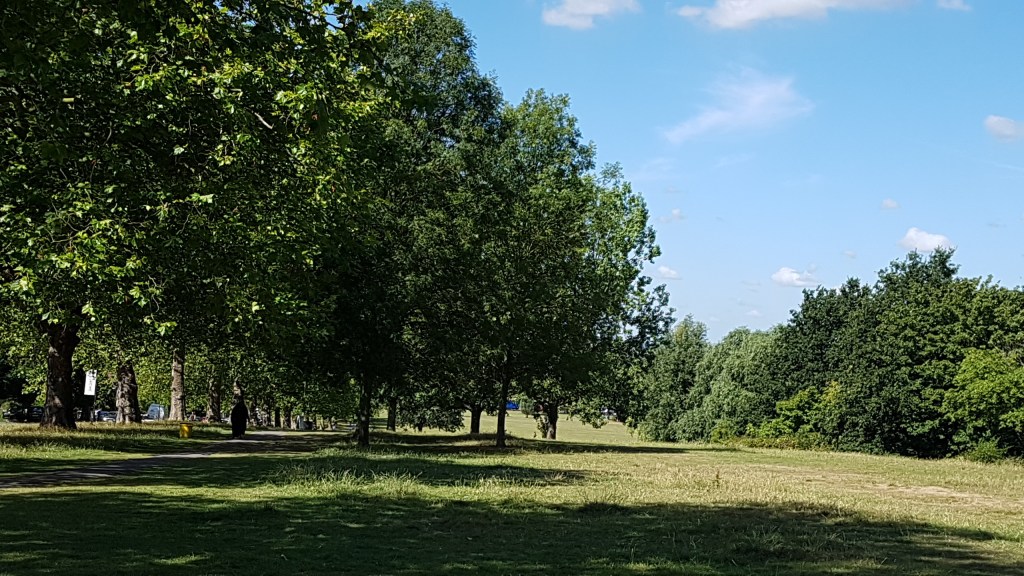
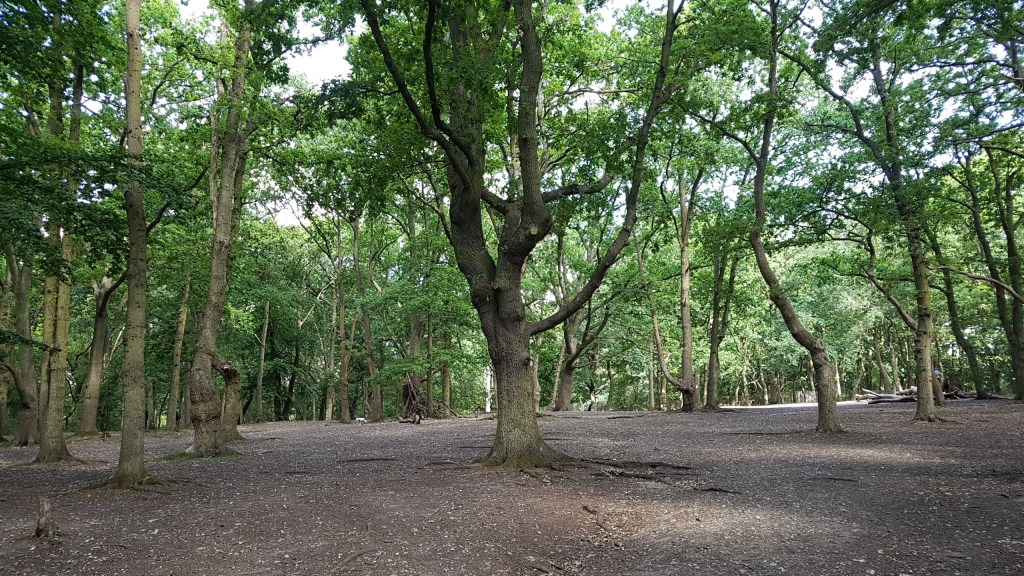
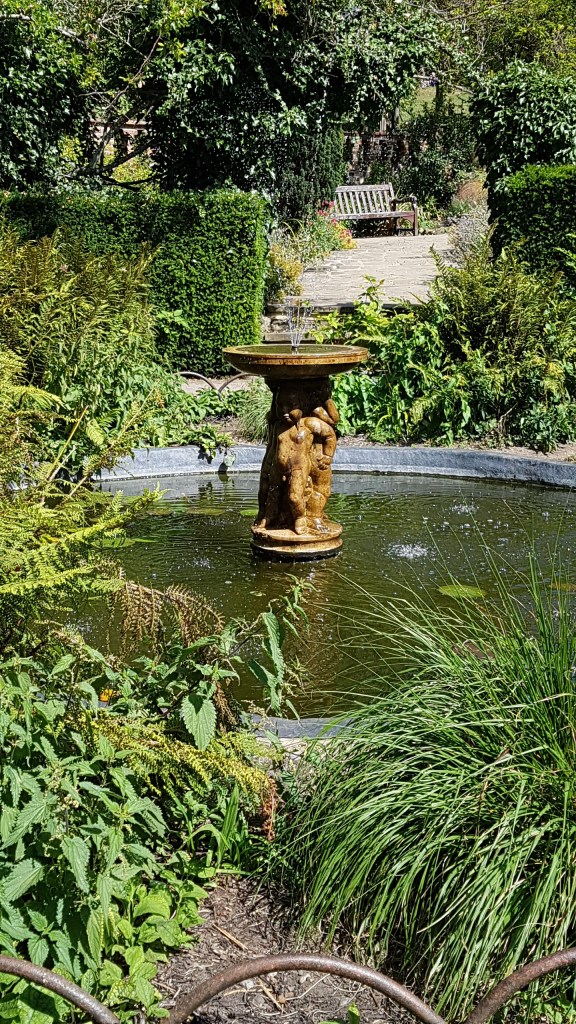
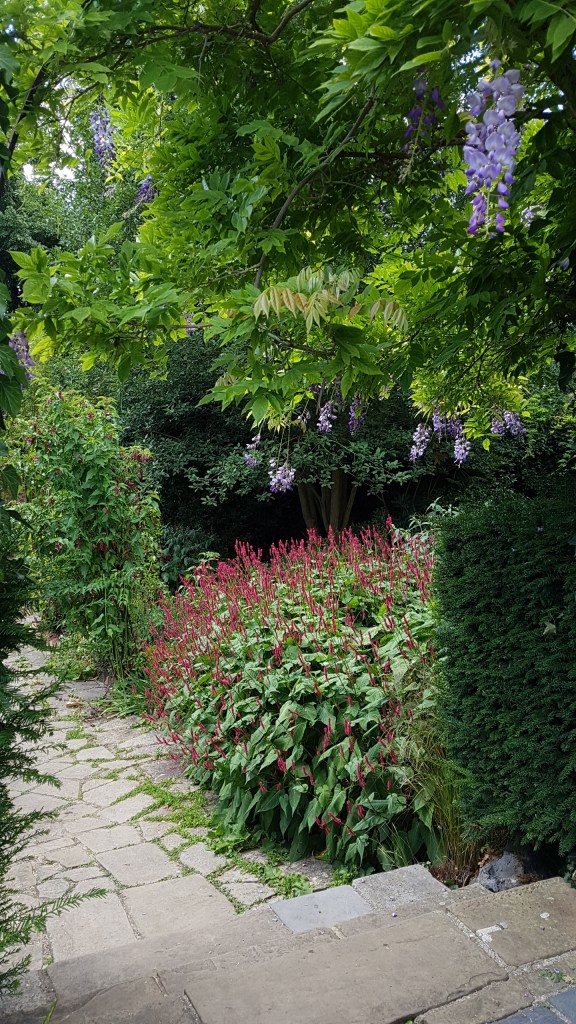
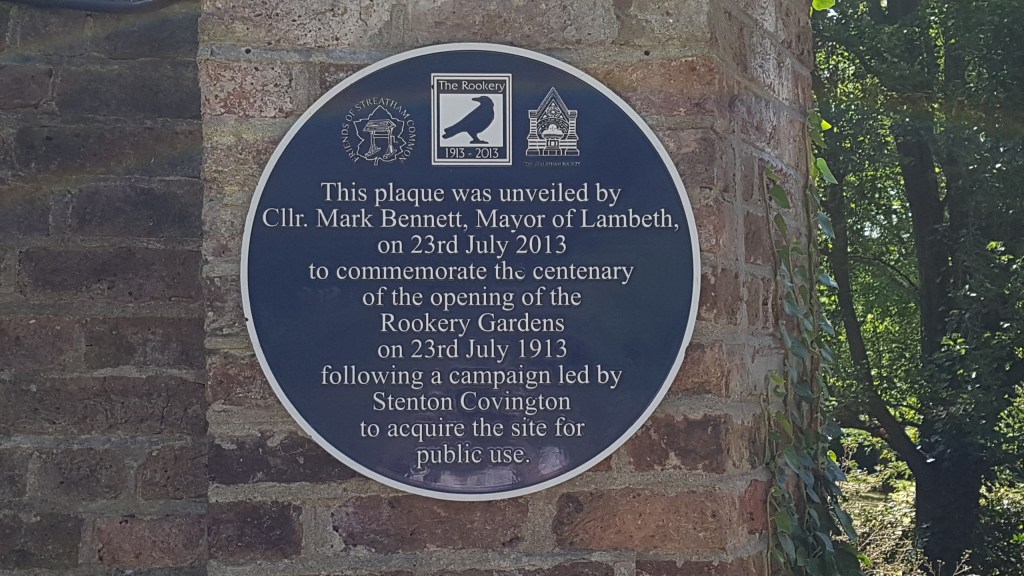
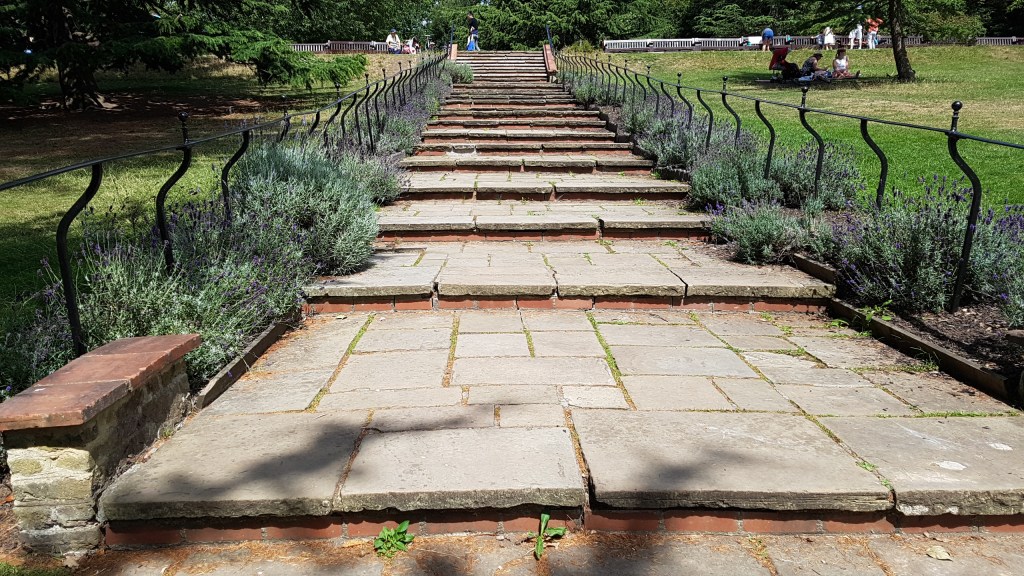
The present gardens were opened to the public in 1913 and haven’t changed much in all that time. Arbours and paths lead to different parts of the garden, gardens within gardens, so to speak. There are plenty of places to sit and this seems to be a favourite haunt of young families. You will find the well of Streatham Spa, a fountain, streams, and just outside there is wooded area which is part of Streatham Common.
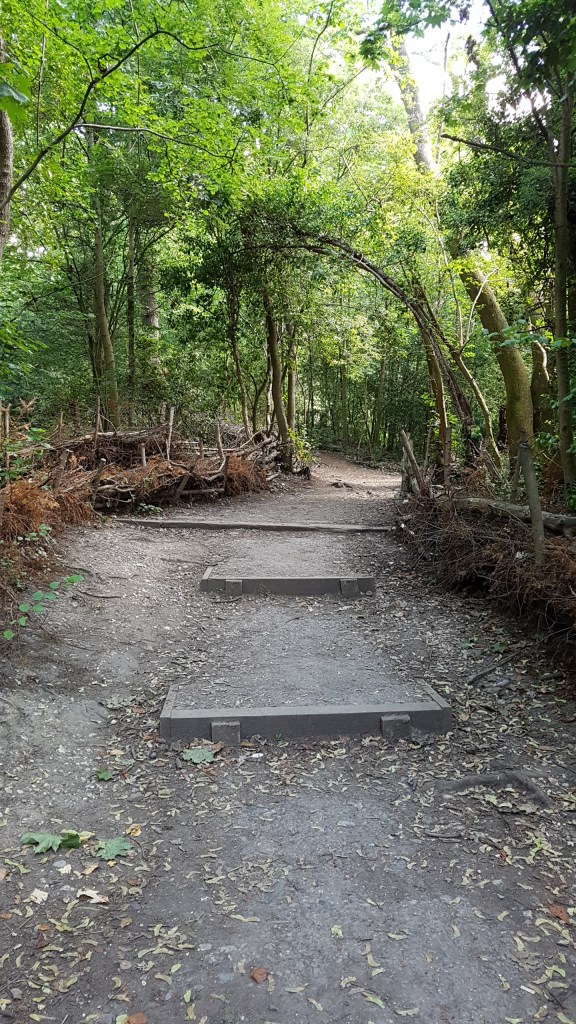
The woods
The Rookery Cafe sits on the edge of the gardens. It was open when I was there but to order food and drink you had to download an app first.
I can do no more than to share some photos with you. Nearest station is Streatham Common running from either Victoria or Cannon Street stations. From there it is a short walk. The gardens are free to visit and there are toilets!
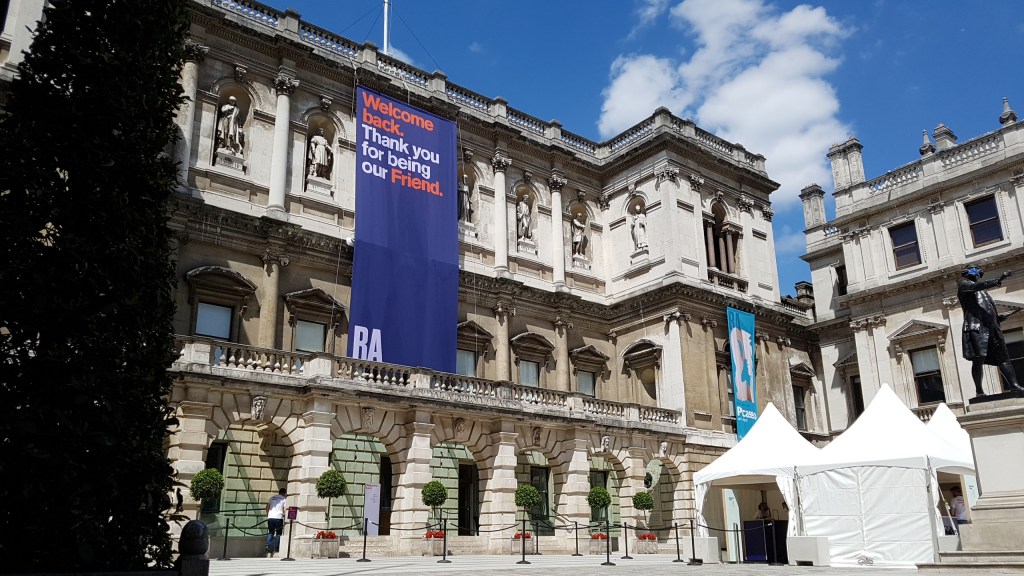
Some normality in life came with a visit to the Royal Academy last week. As museums and galleries begin to reopen, tickets are going like hot cakes. I was lucky to be able to book a ticket early on. Already there was limited availability, but I got one! I believe a second batch of tickets will be released shortly, but for now they have all sold out.
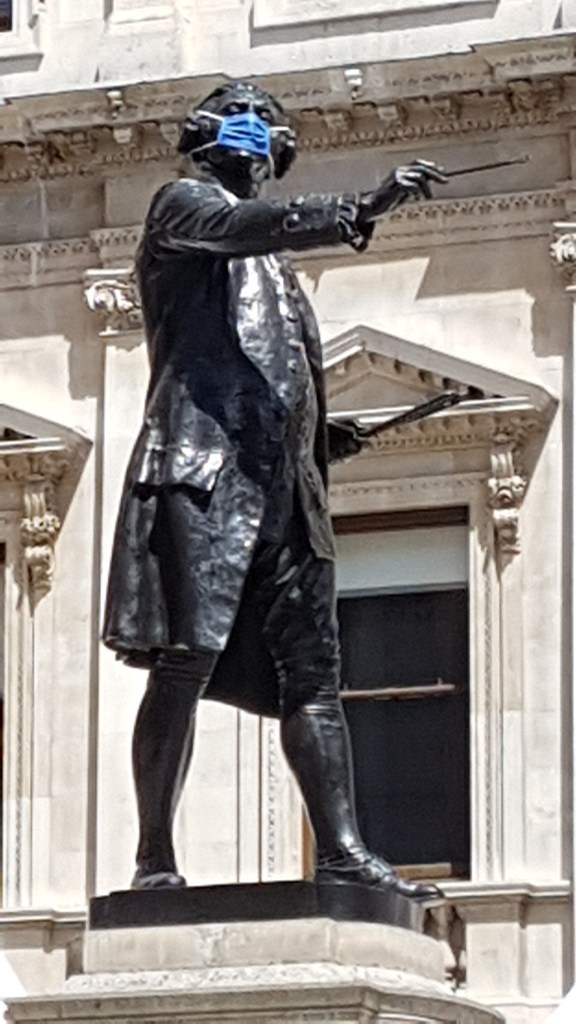
Even Joshua Reynolds is entering into safety procedures!
The staff managed the whole operation well. My timed ticket was for 2pm. Arriving a little early I took the opportunity of buying a cup of tea from the refreshment stall outside. Then I queued up. A young lady informed me of the procedure, including the timing (an hour for the exhibition), and soon I was in (hands sanitised, mask on, ticket scanned). Just to say that the toilets are open and a small shop is set up outside the exhibition for purchases of items on the theme of Picassco, and some other items too. The staff are quite happy to go and find any other item you might want from the main shop behind, but access to that is for staff only.
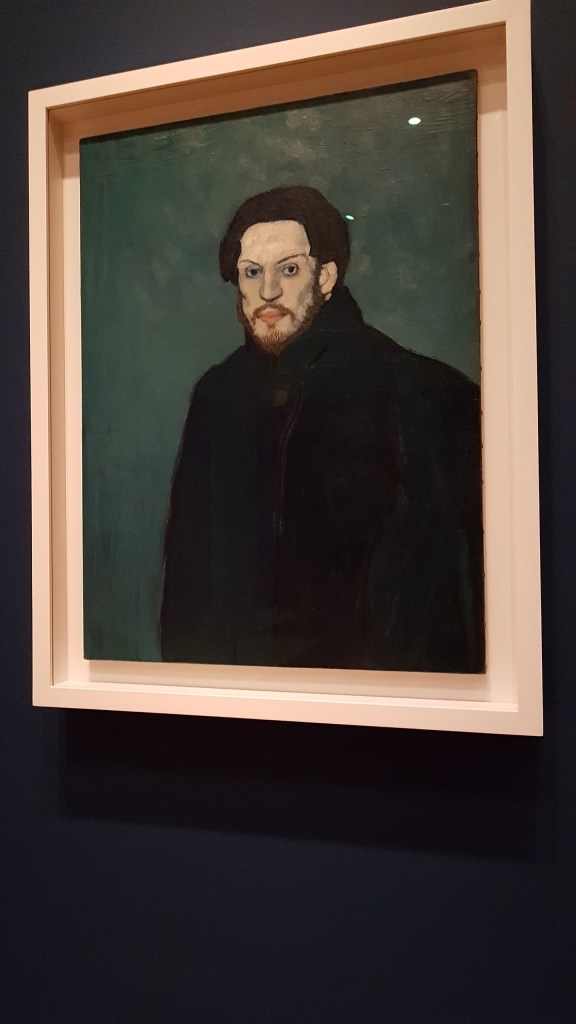
Self portrait
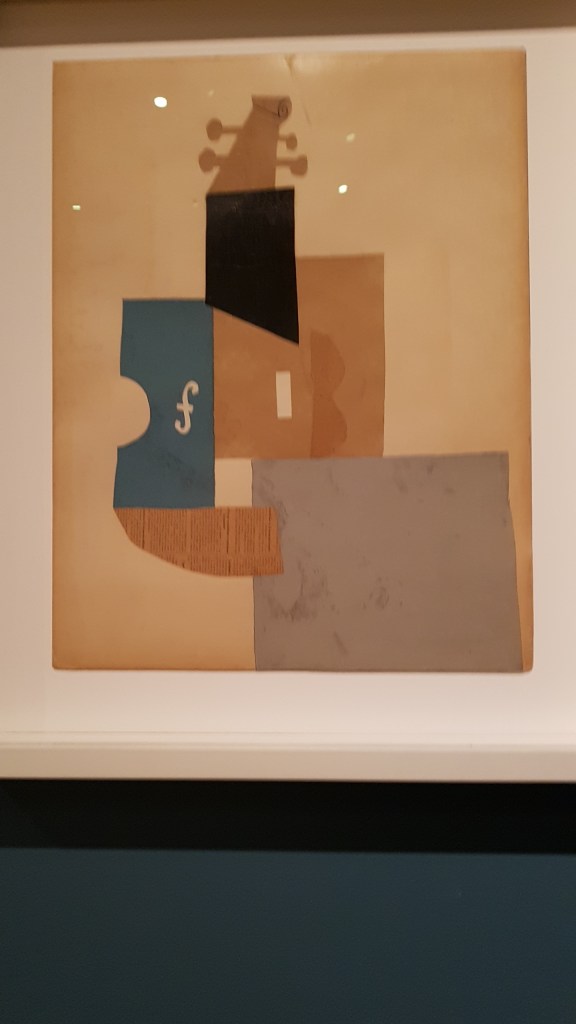
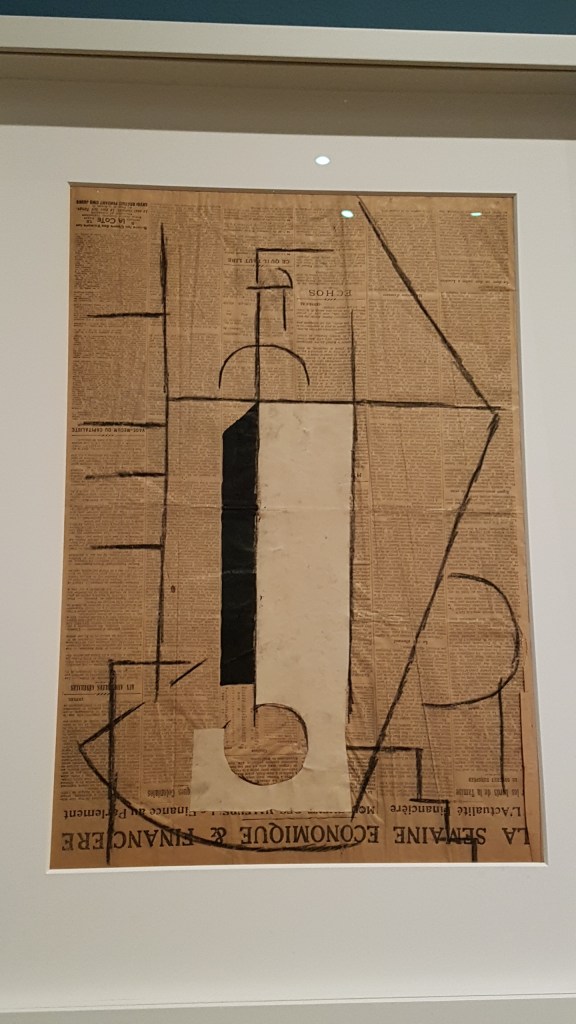
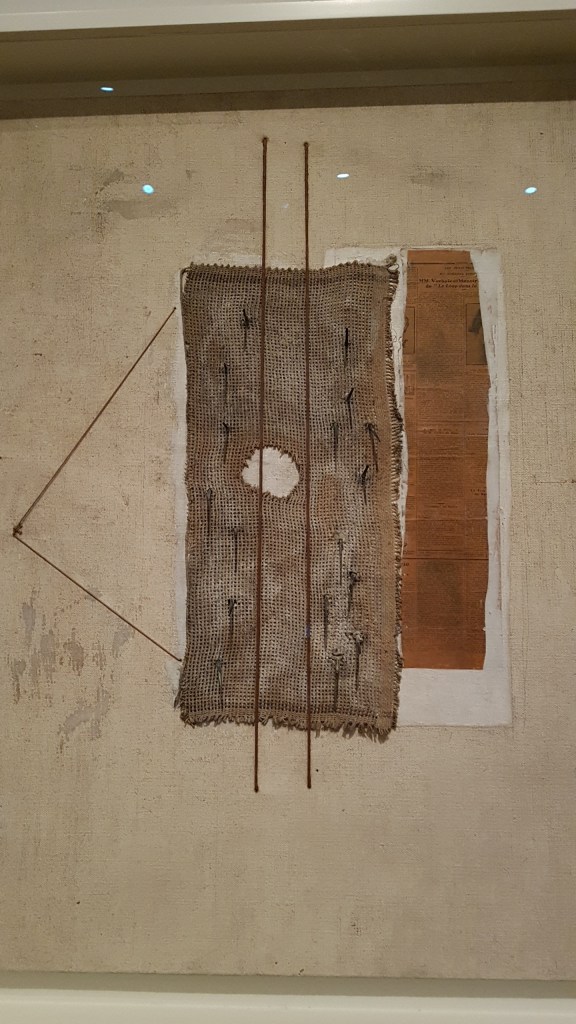
The contrasts of PicassoGuitar
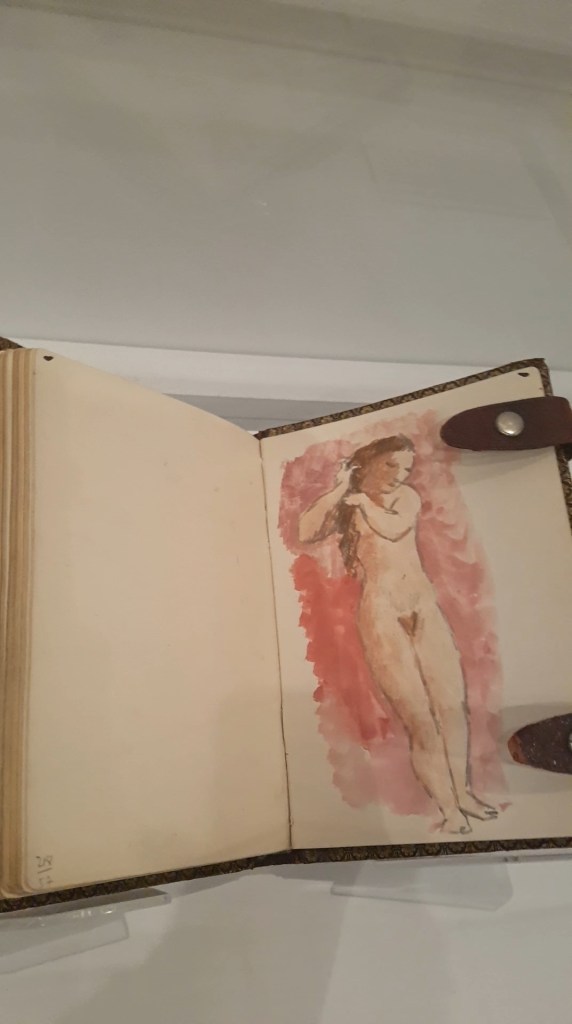
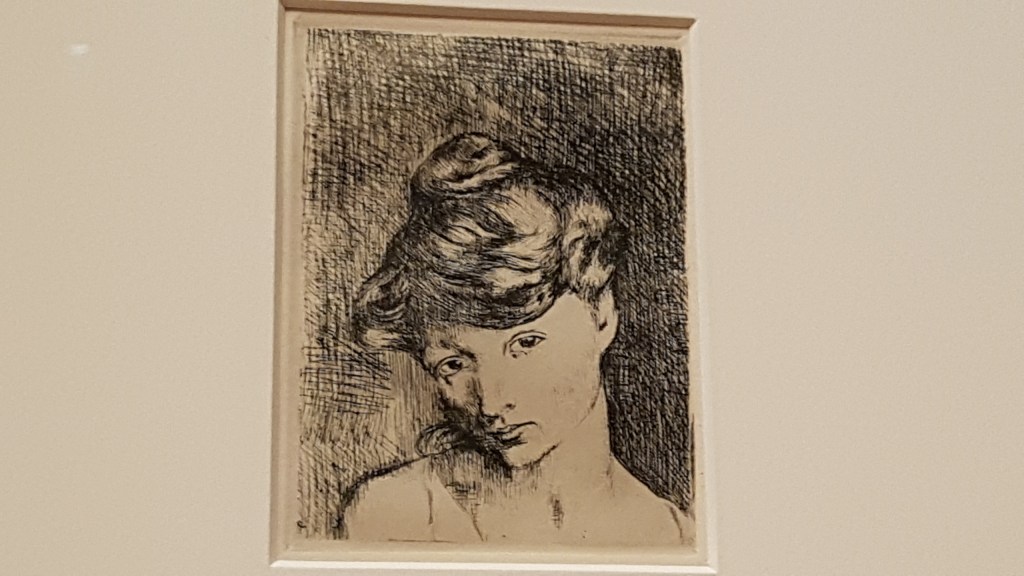
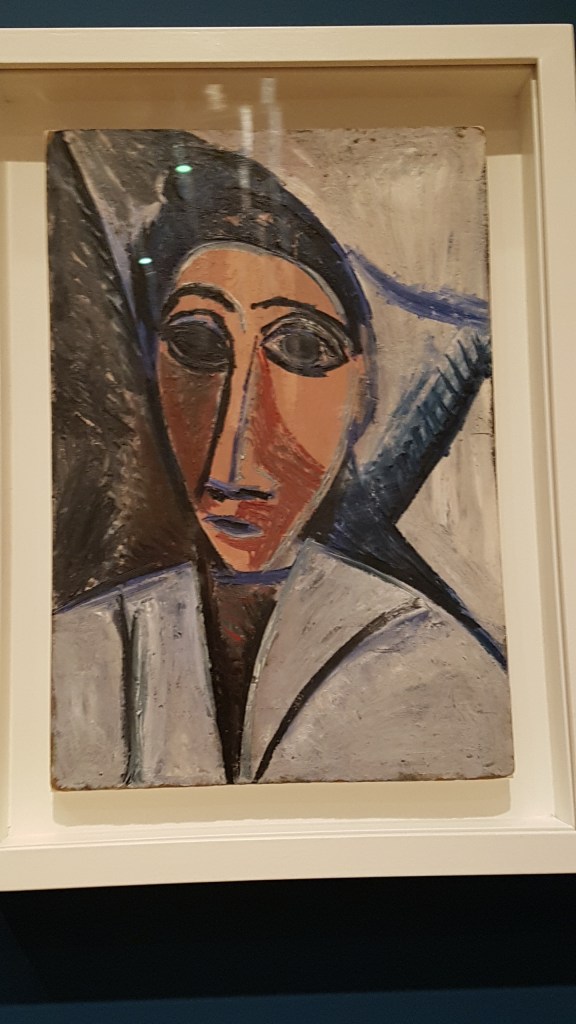
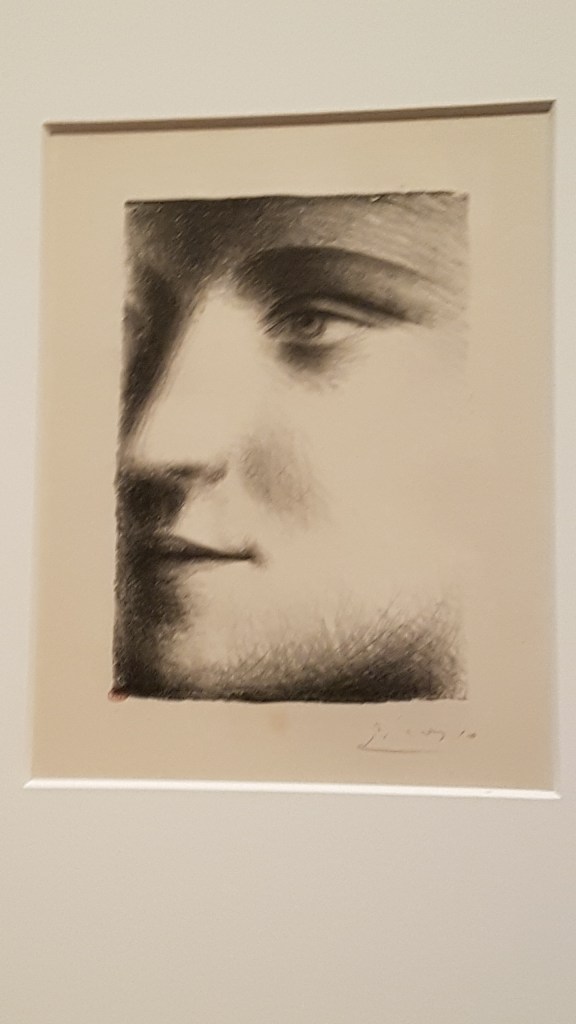
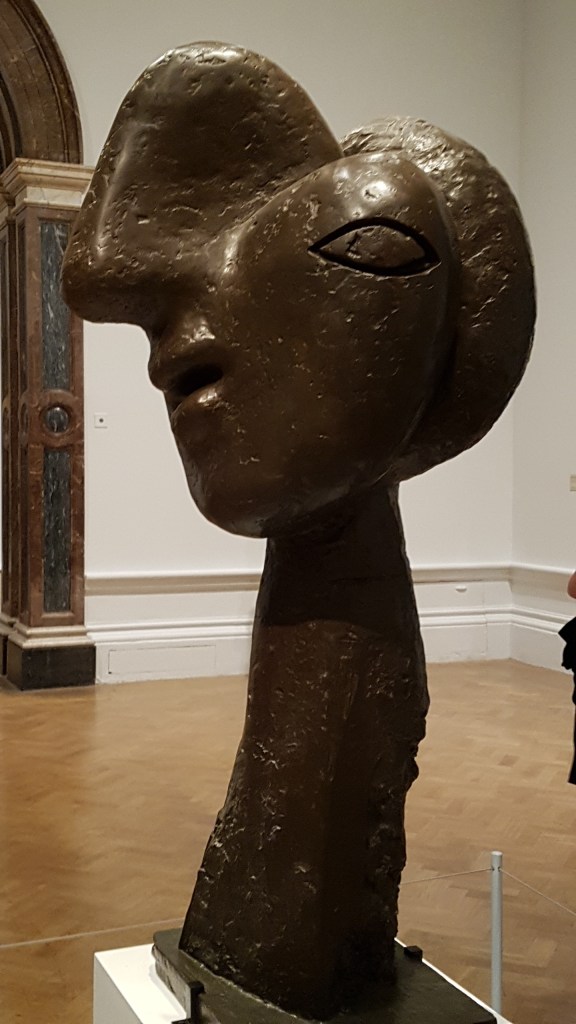
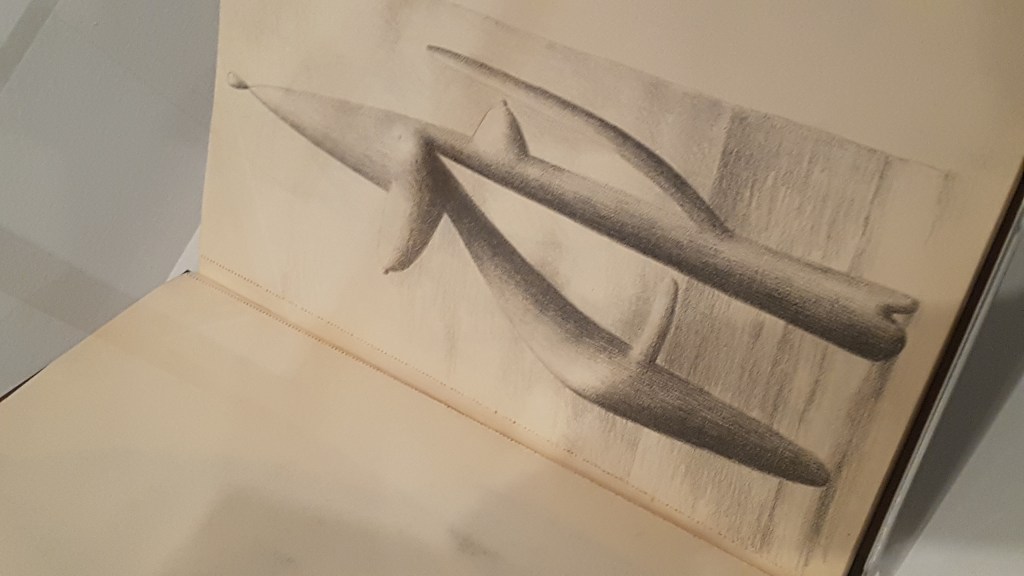
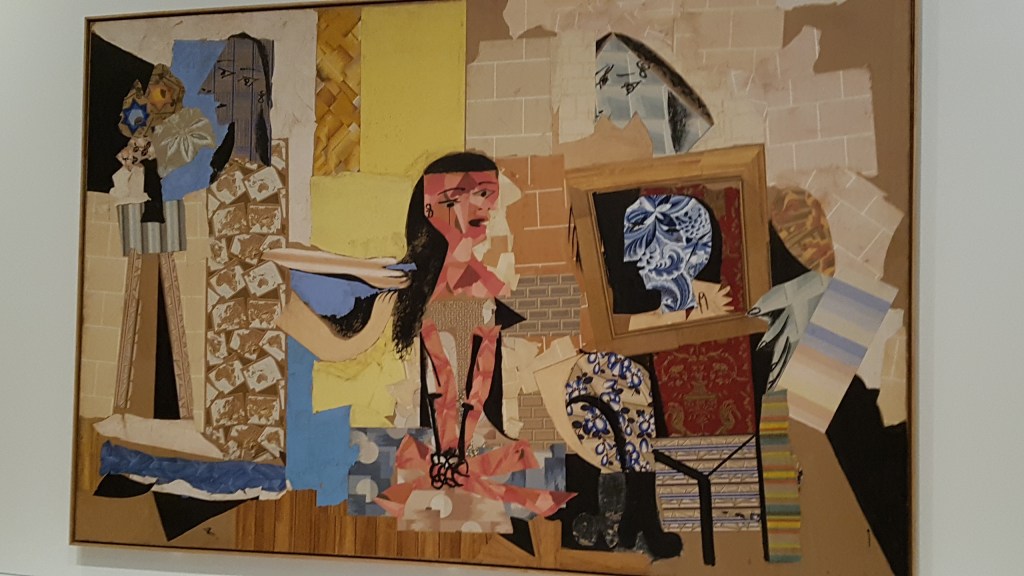
The exhibition featured work throughout Picasso’s working life. One forgets the earlier works, I think, because we tend to see Picasso as a Cubist artist, but Picasso used many styles and experimented using whatever was to hand. His work was constantly evolving, and that makes him fascinating.
More guitars
I loved his early works, but was surprised how much I liked his modern art. I was particularly drawn to his series of ‘guitar’ works using collage with paper cutting, string, and even 3D. Last year I saw his ‘blue period’ art works in an exhibition, but this is far more comprehensive as it spans so many styles and subjects. Picasso even worked on scenery and costume design for a play. It amazed me how prolific he was as an artist, and right to the end of his life he still experimented. I found this a truly inspiring exhibition.
Two bathers on the beach
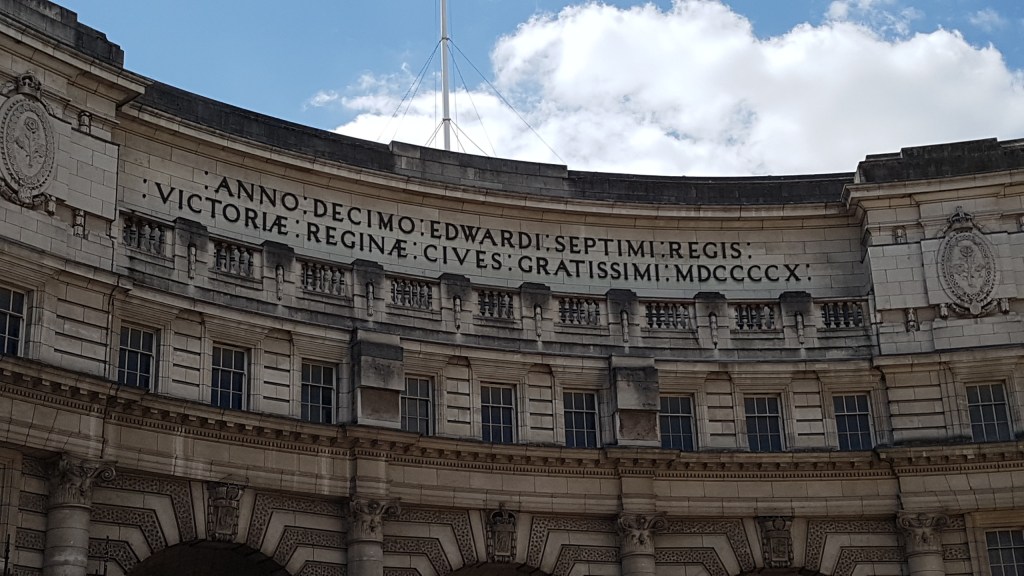
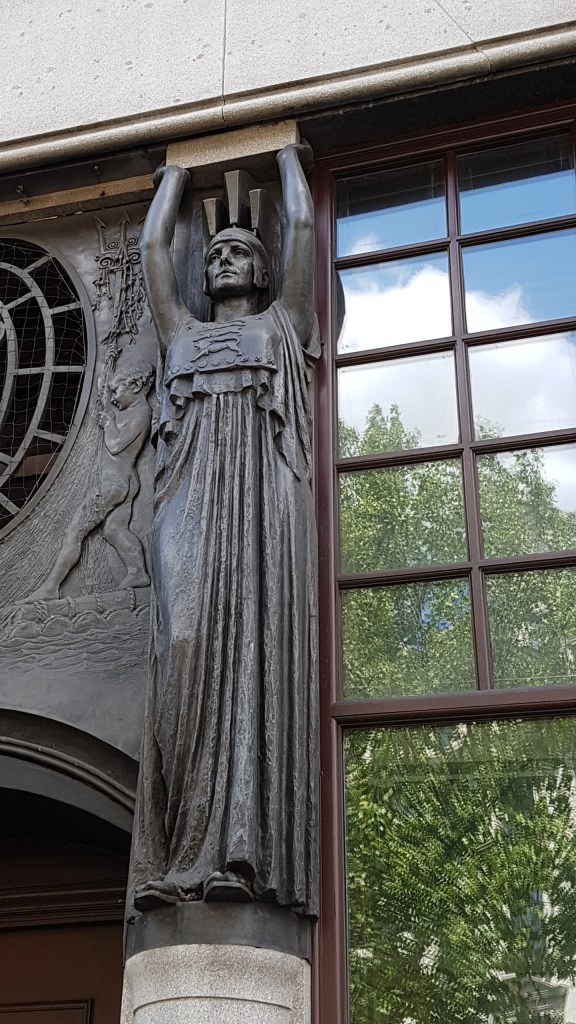
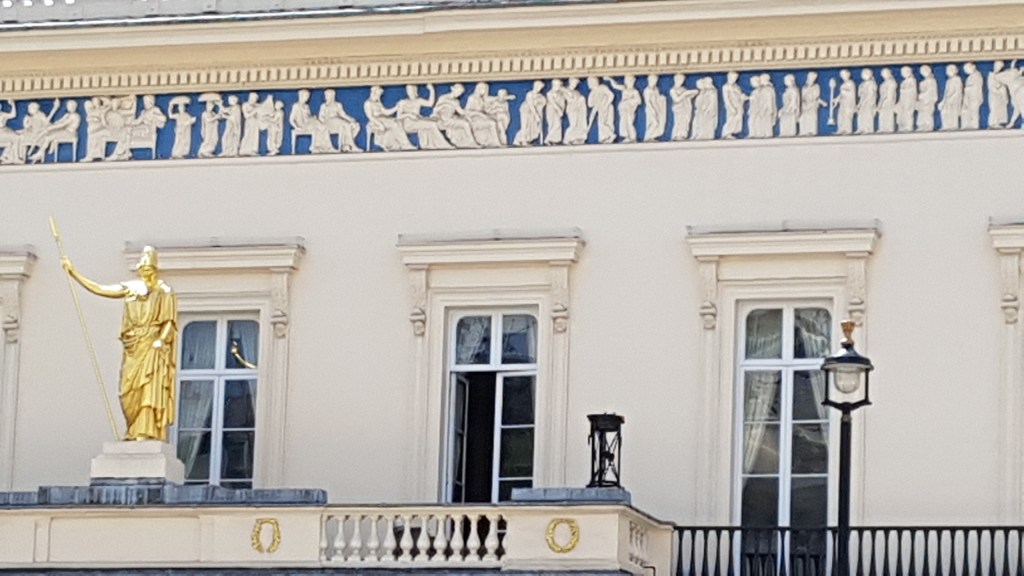
Both before and after the exhibition I found time to take some photos of London buildings around Piccadilly, Regent Street and so forth. We tend not to look up when in London, but we miss so much if we don’t. London was much quieter than usual, and even the so called ‘rush hour’ just wasn’t a rush. The train was slightly busier, but social distancing was possible with ease.
Admiralty ArchA little art deco near The MallDesigned by John Nash, I believe
Please note that entry to the Picasso exhibition is by pre-booked timed ticket only. You cannot enter the building without a ticket. Please refer to the website for information about booking and safety.








 My London+