Walk – Vauxhall to Waterloo via Oval, Kennington and Elephant & Castle

Knowing the weather was due for a downturn this week, I decided to go out on one of the two better days. So, on Monday I set off with a couple of intentions. Things didn’t turn out quite as expected, but a visit to Kennington Gardens was an unexpected delight and made the trip worthwhile.

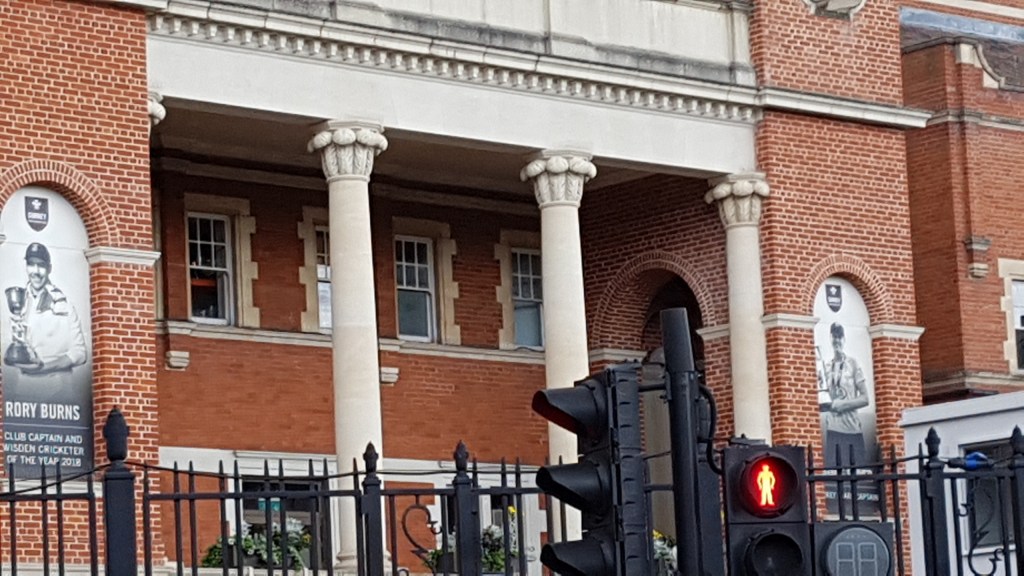
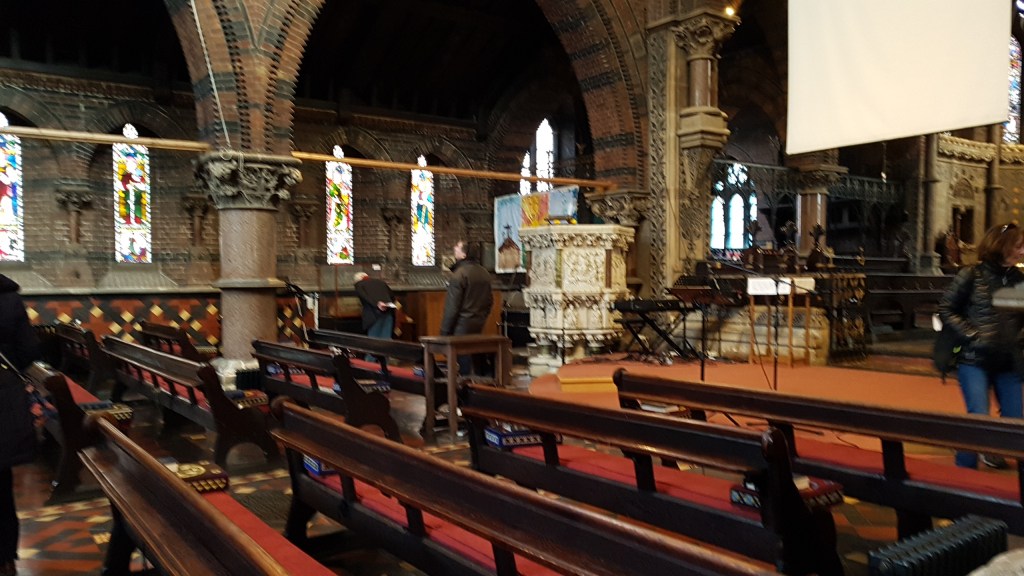
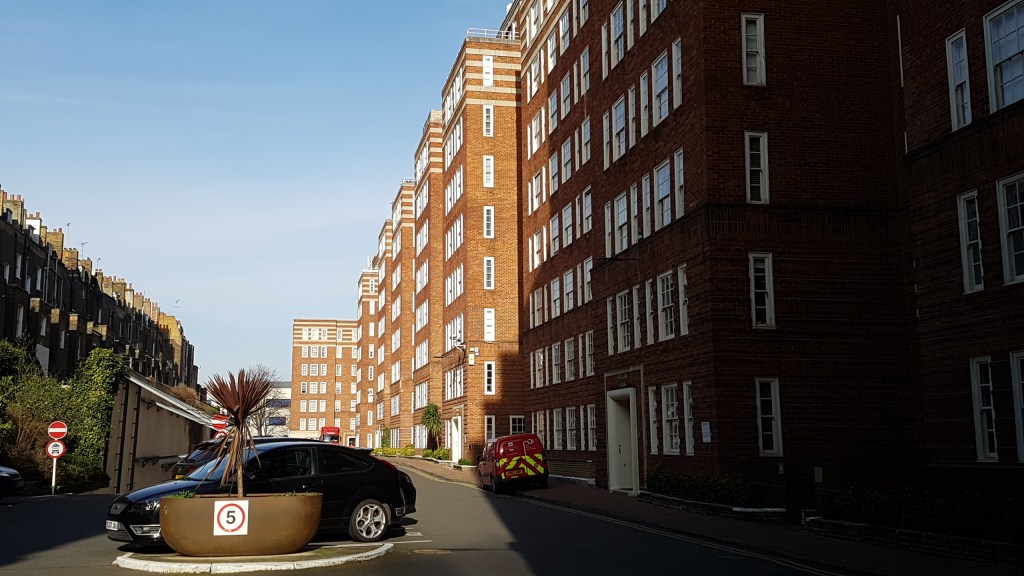
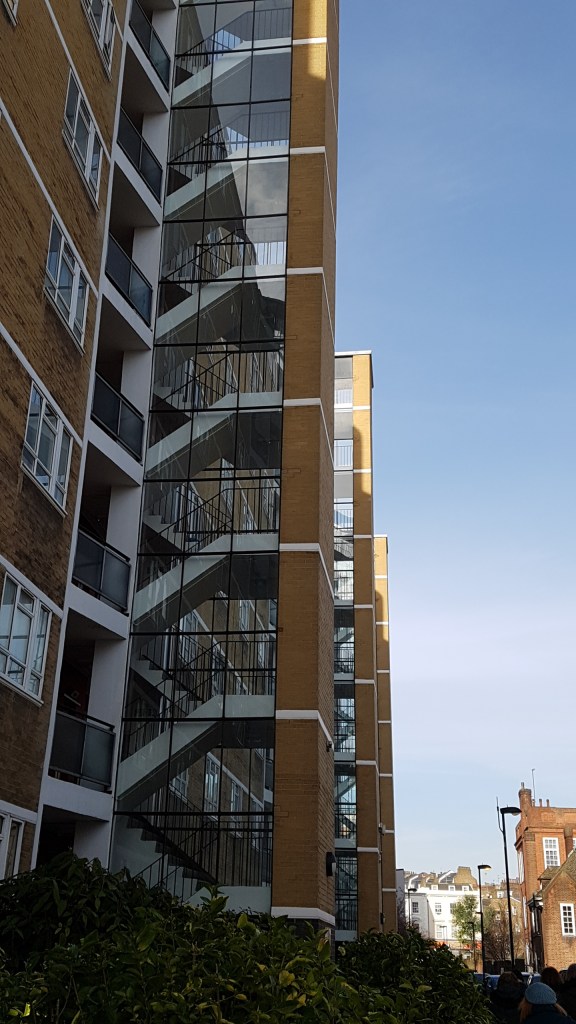
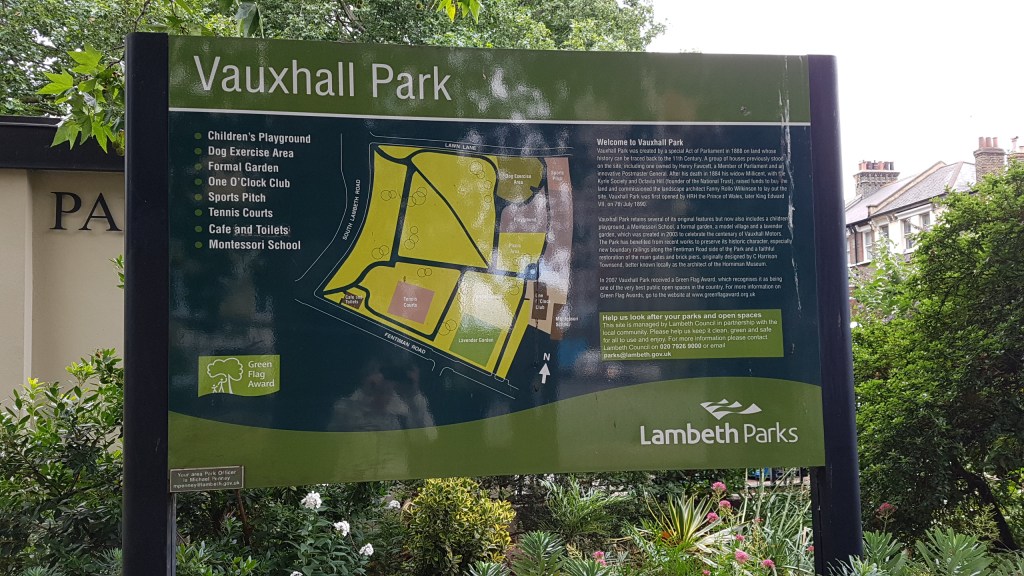
My first port of call was Vauxhall Gardens, only to find that it was in the middle of a re-vamp and barriers closed off the flower beds. Only the tennis courts and cafe were open. So, then it was off to my second port of call Harleyford Road Community Garden via Oval. I’m not a cricket fan, but I thought it would be nice to see where Oval Cricket Ground was. On the way I found an old red brick building which intrigued me. I later found out that this is the former Belgrave Hospital for Children founded in 1866, the original building being in Pimlico. The building here on Clapham Road was built between 1899 and 1926, as it was added to. It was designed by Charles Holden in the arts and craft style. The hospital joined the National Health Service in 1948 as part of King’s College Hospital Group, but closed in 1885. It was designated a Grade II Listed Building in 1881. The hospital was converted into residential accommodation in the 1990’s.
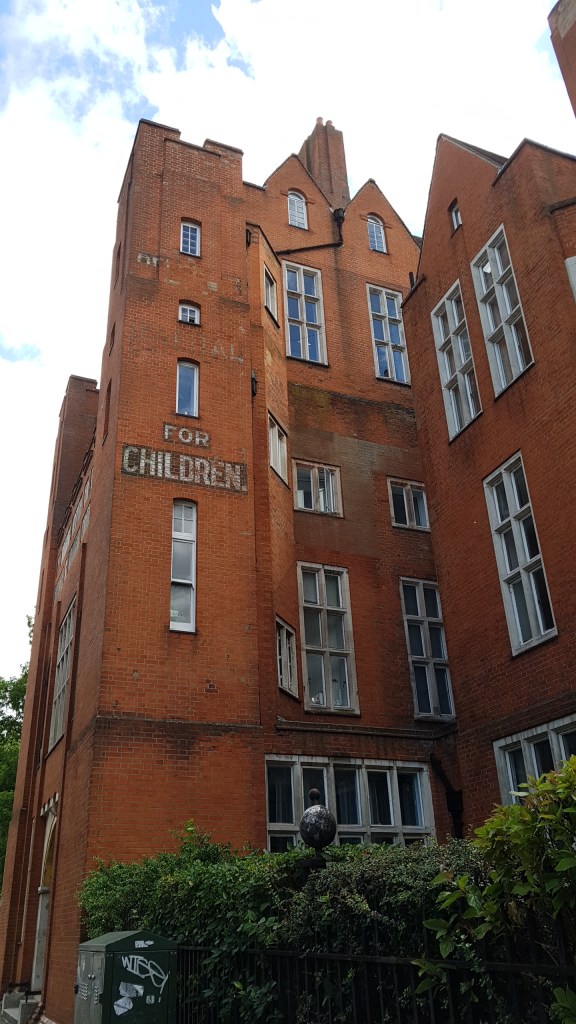
Former Belgrave Hospital for Children, now flats

Onwards to the Oval Cricket Ground for some photos and then to the community garden, which I knew was nearby by. However, the gardens were locked still, due to Covid 19!
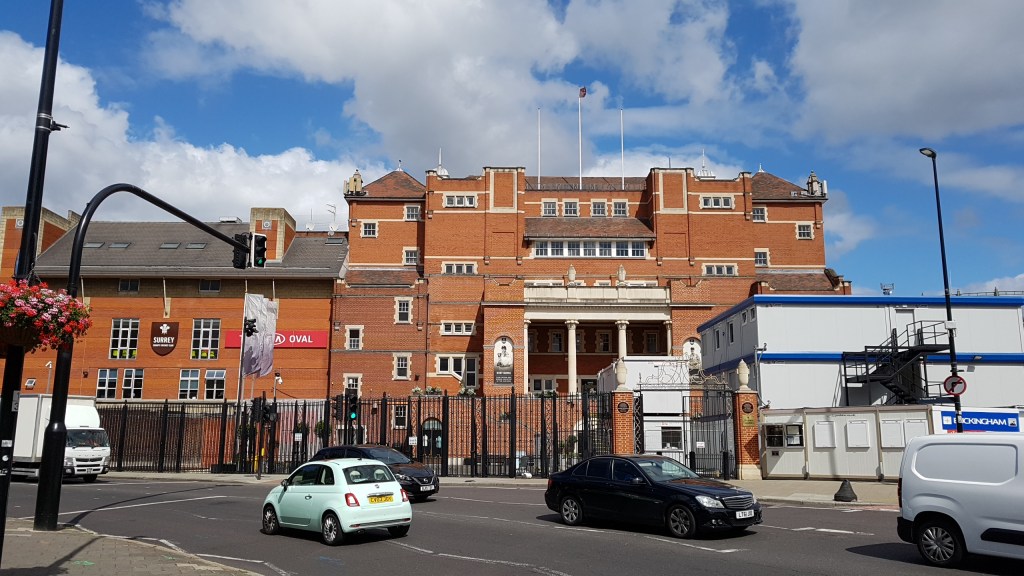
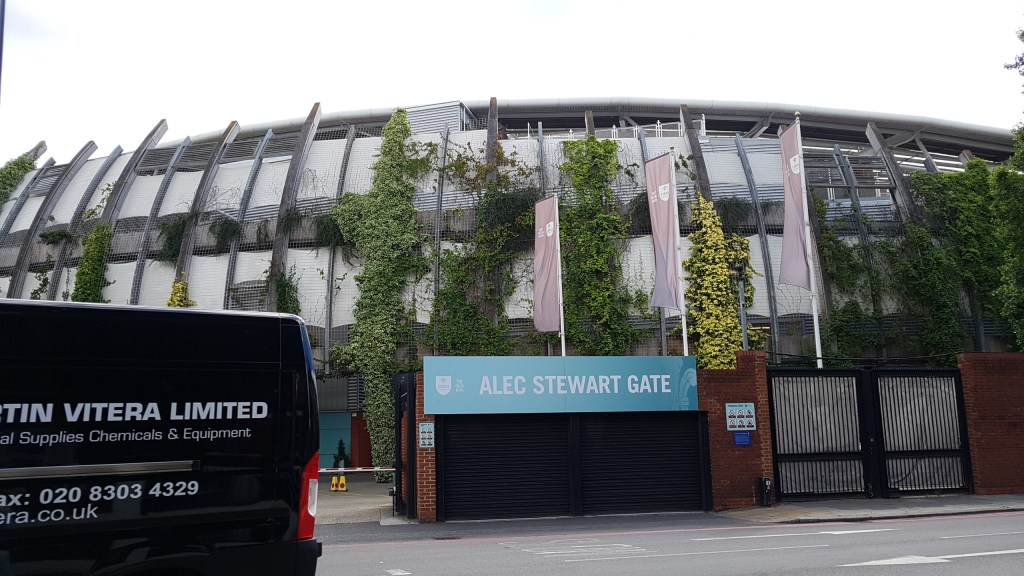
The Oval Cricket Ground

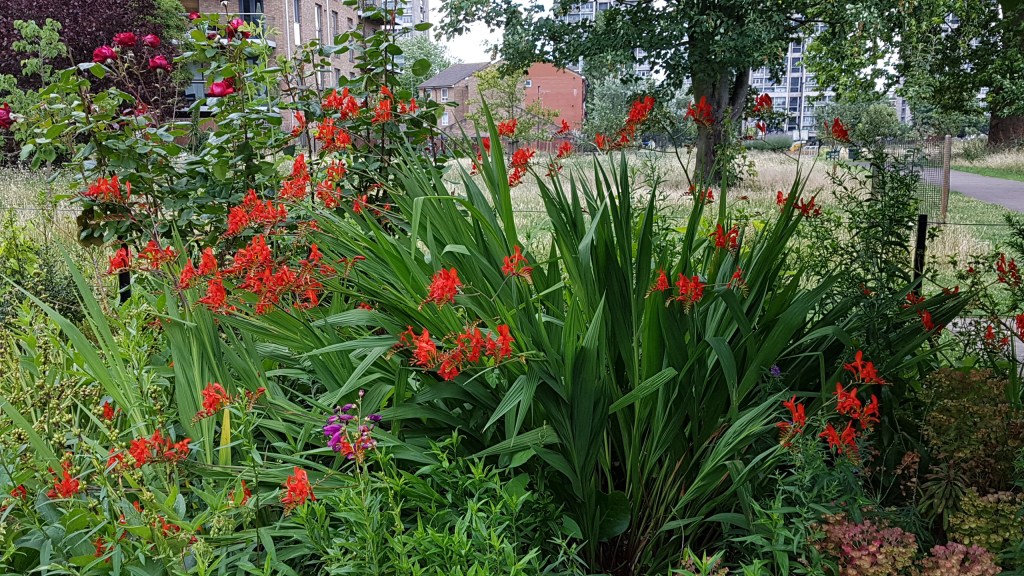
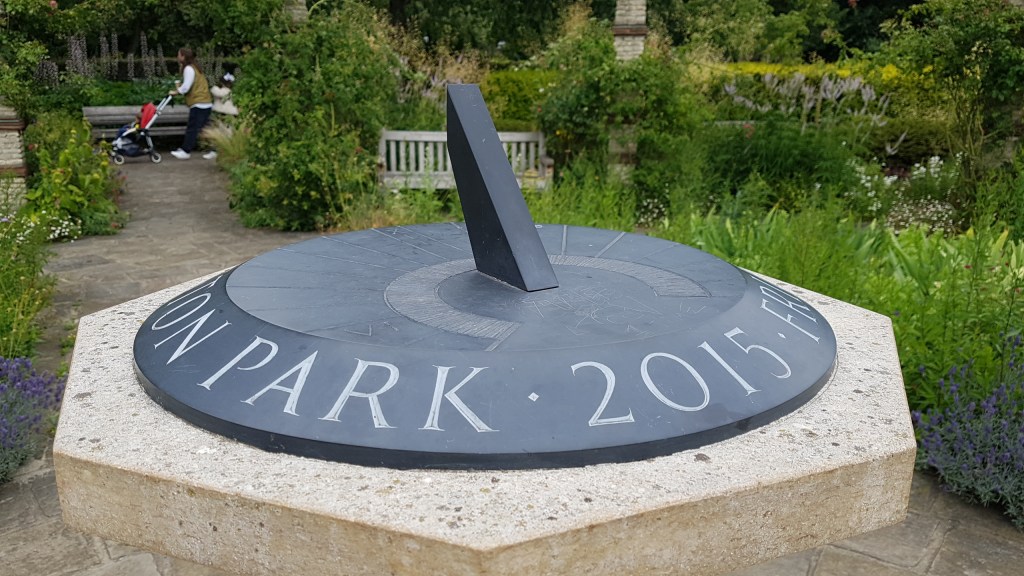
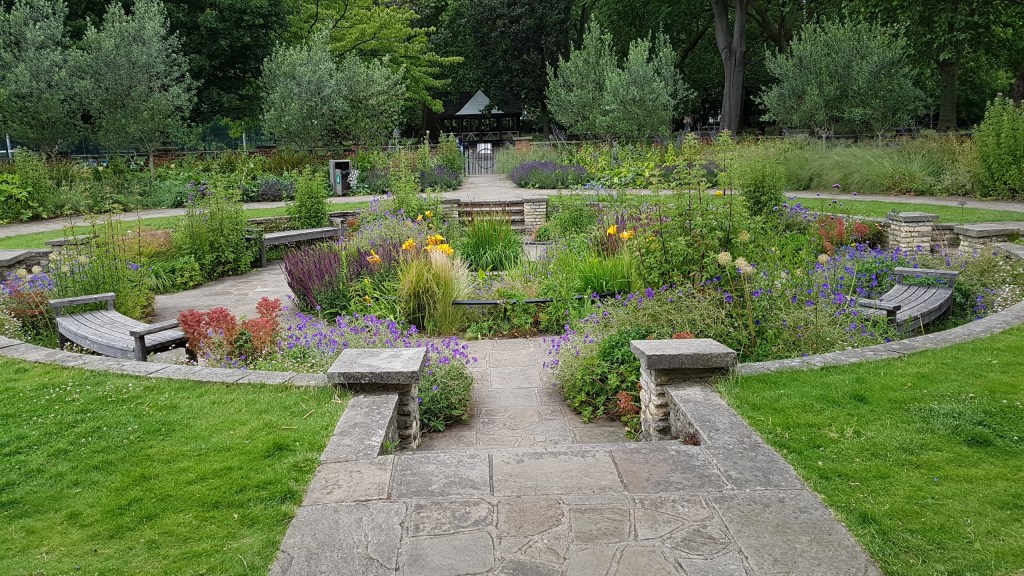
I decided to double back and visit Kennington Gardens which I had noticed opposite Oval tube station. This was well worth going back to. It has a beautiful flower garden with pond and plenty of seating areas, tennis courts, football (looked like 5-a-side astro turf), a cafe (closed when I was there) and skate bowl. Lots of trees and border plants and lots of plaques telling the history of the park and nit’s former buildings. This is a lovely place to sit and relax away from the busy world. Definitely worth a second trip sometime.
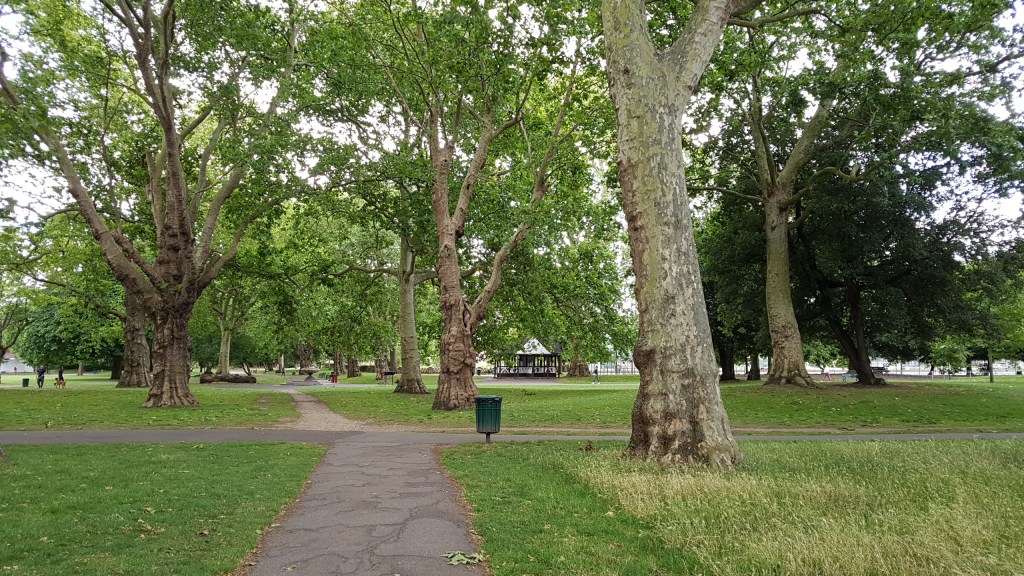
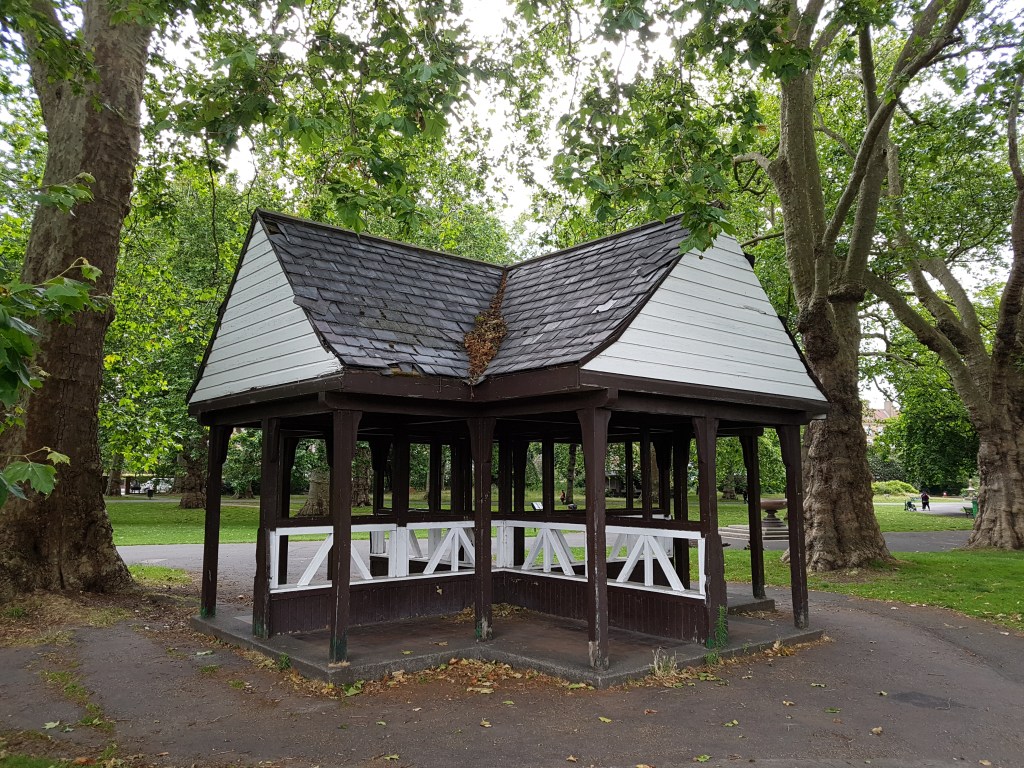
Kennington Gardens

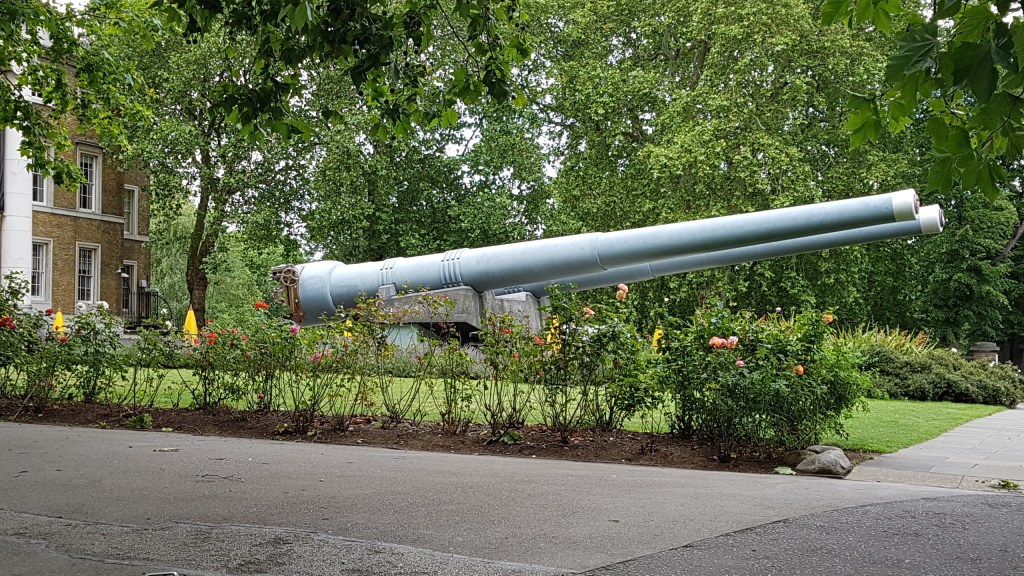
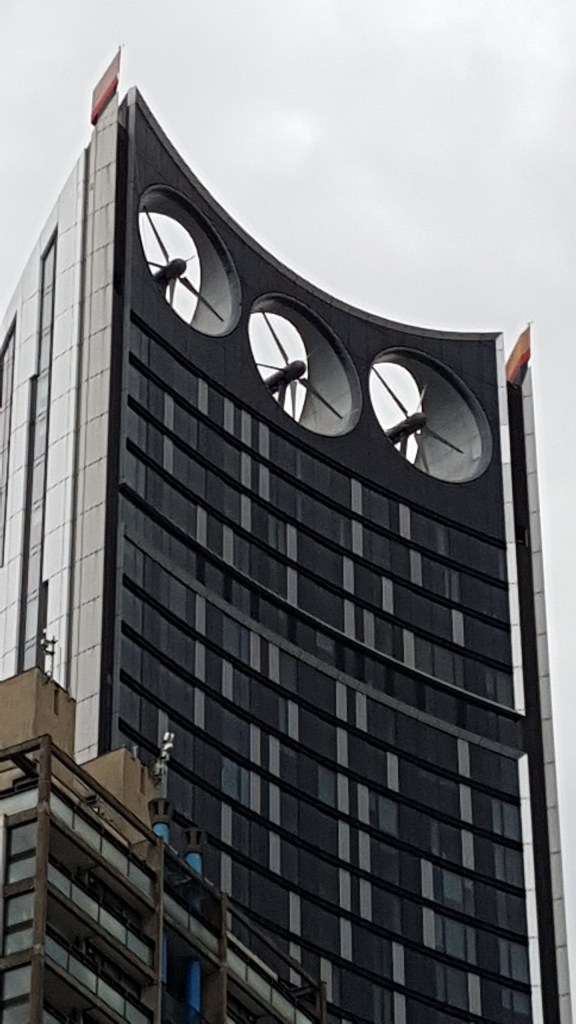
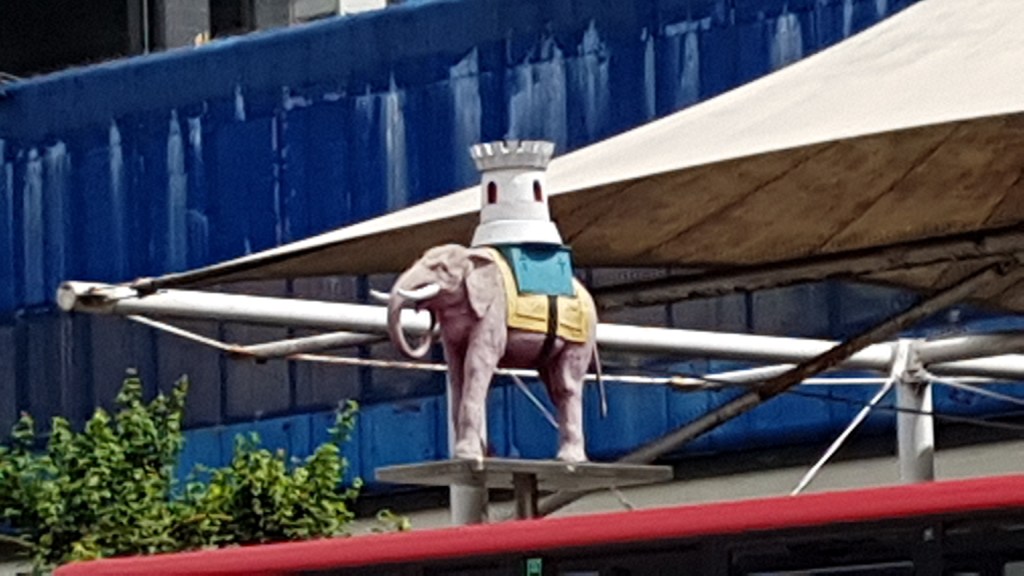
Leaving the park I headed along Kennington Park Road in the general direction of Vauxhall. My internal map was a little off (which it often is), but it was the tall buildings that threw me. I found myself in Elephant & Castle. There was a former churchyard (nothing, not even the church, remains), now the site of a Leisure Centre. Over the road is the famous shopping centre. I carried on and followed the signs to the Imperial War Museum. Further down, I spotted Elliot Row Pocket Park (closed). A tiny garden with a children’s play area. Finally, I reached the gardens of the Imperial War Museum. At present the Museum is shut, but I am sure it well re-open soon, as other museums and galleries are beginining to. Having been there many times, it is well worth a visit.
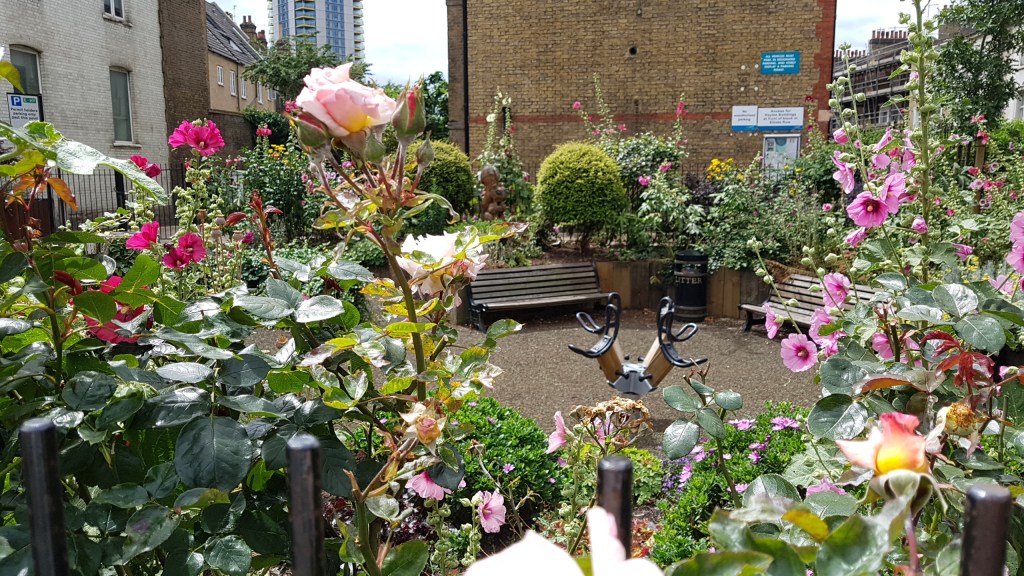
Elliot Row Pocket Park
There’s something about this building……(Elephant & Castle)

From here it was a short walk to Waterloo, cutting through a side road and passing Morley College where I have taken a few courses over the years!
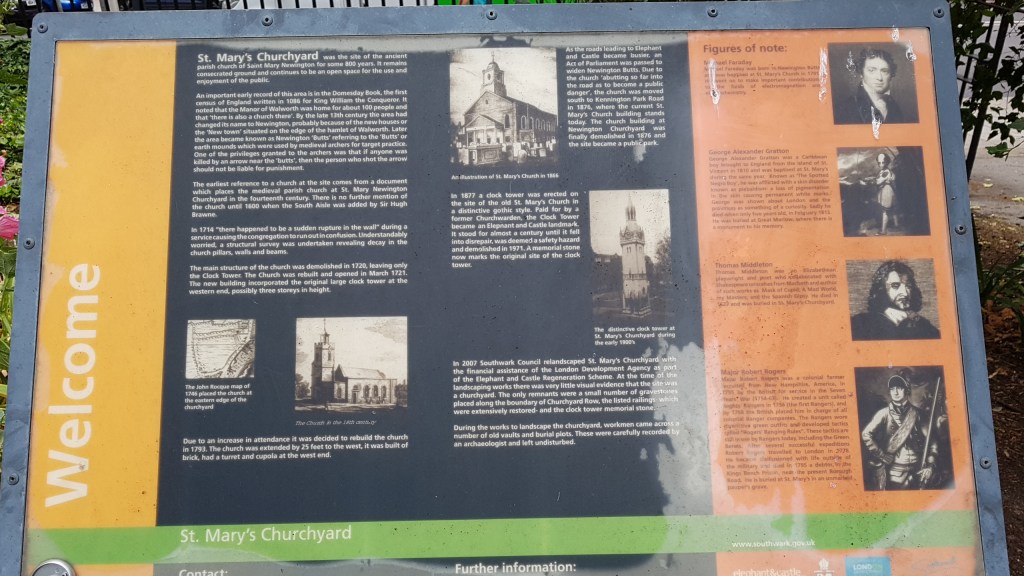
Imperial War Museum

Quiet London

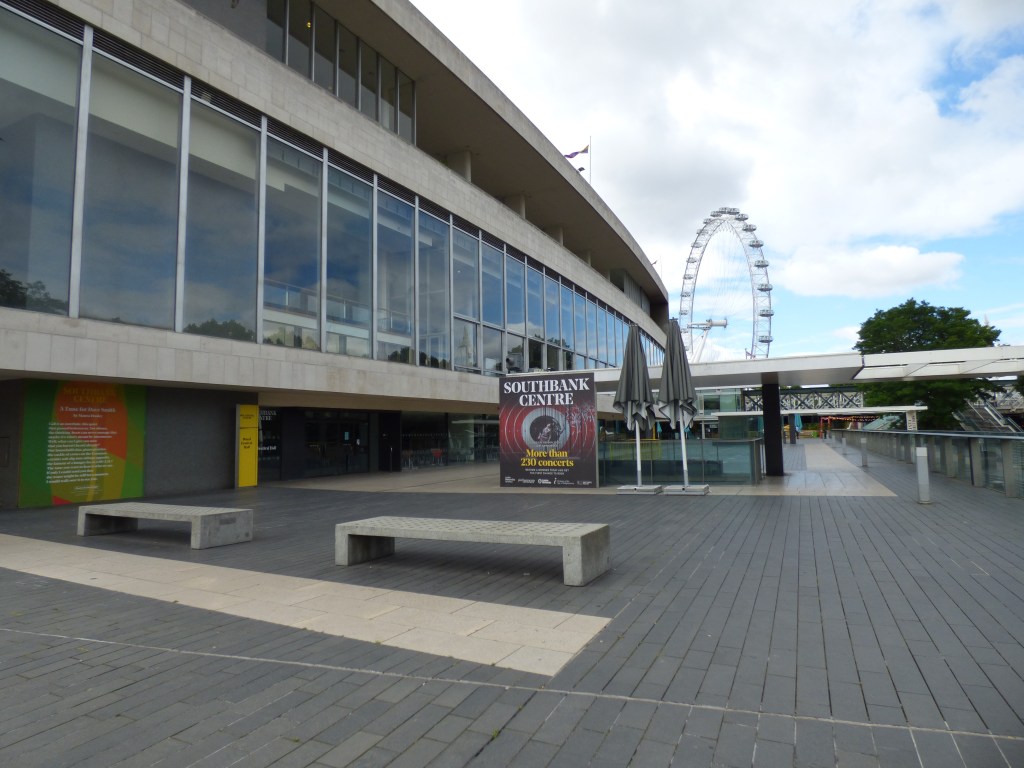
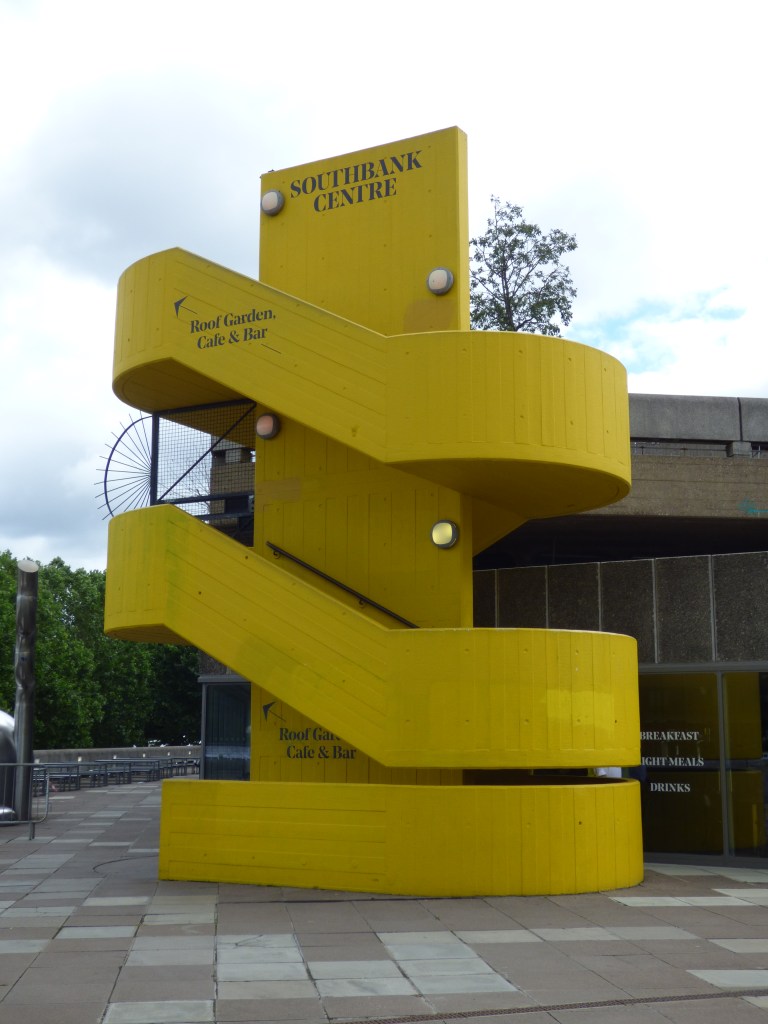
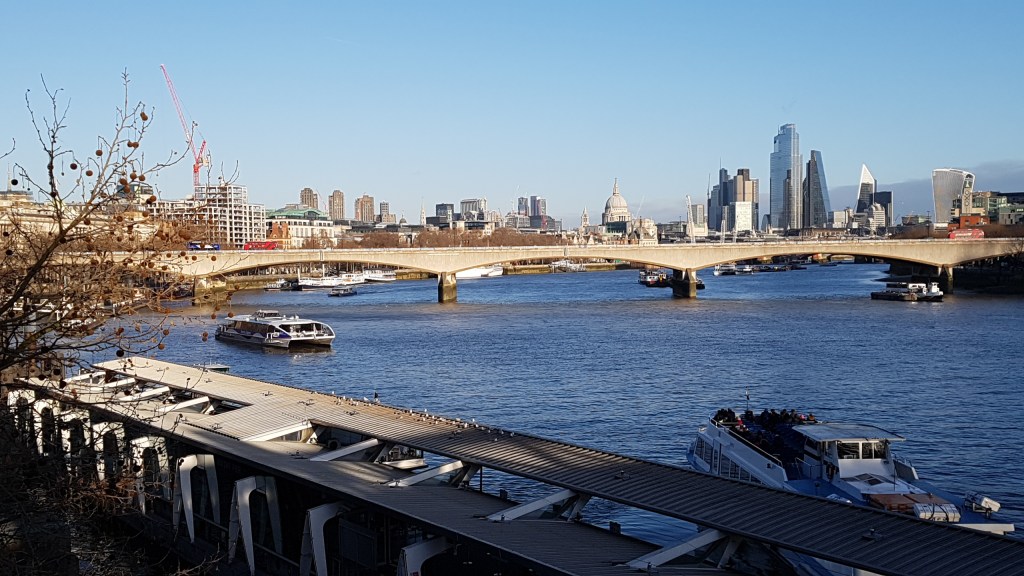
Southbank

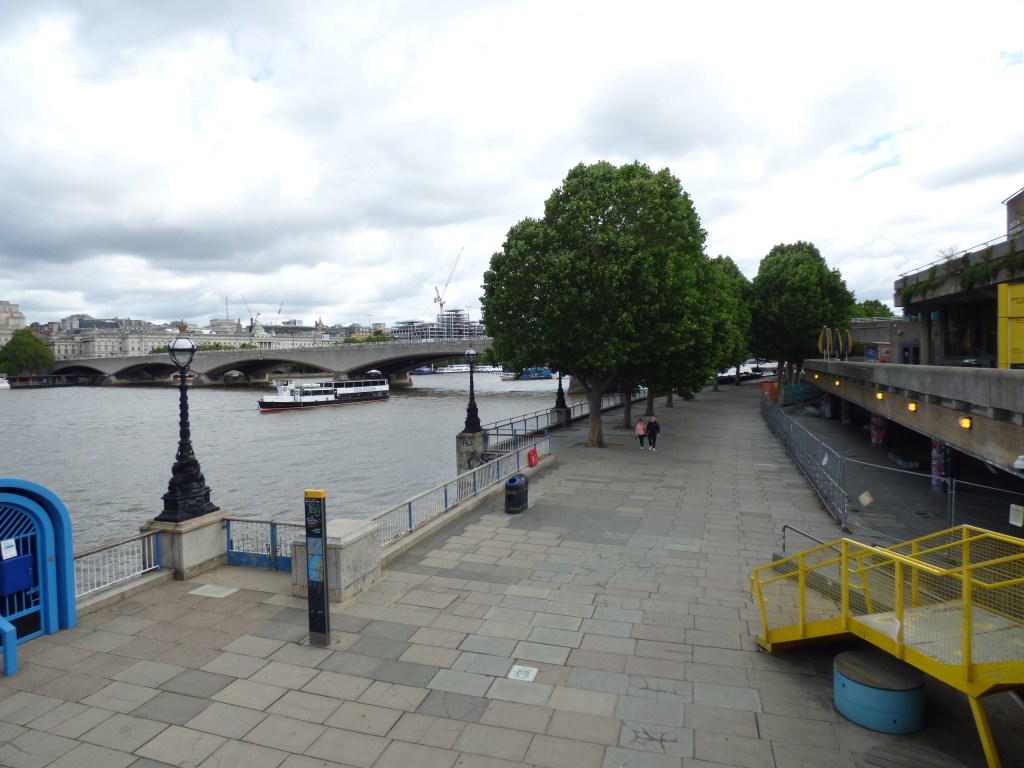
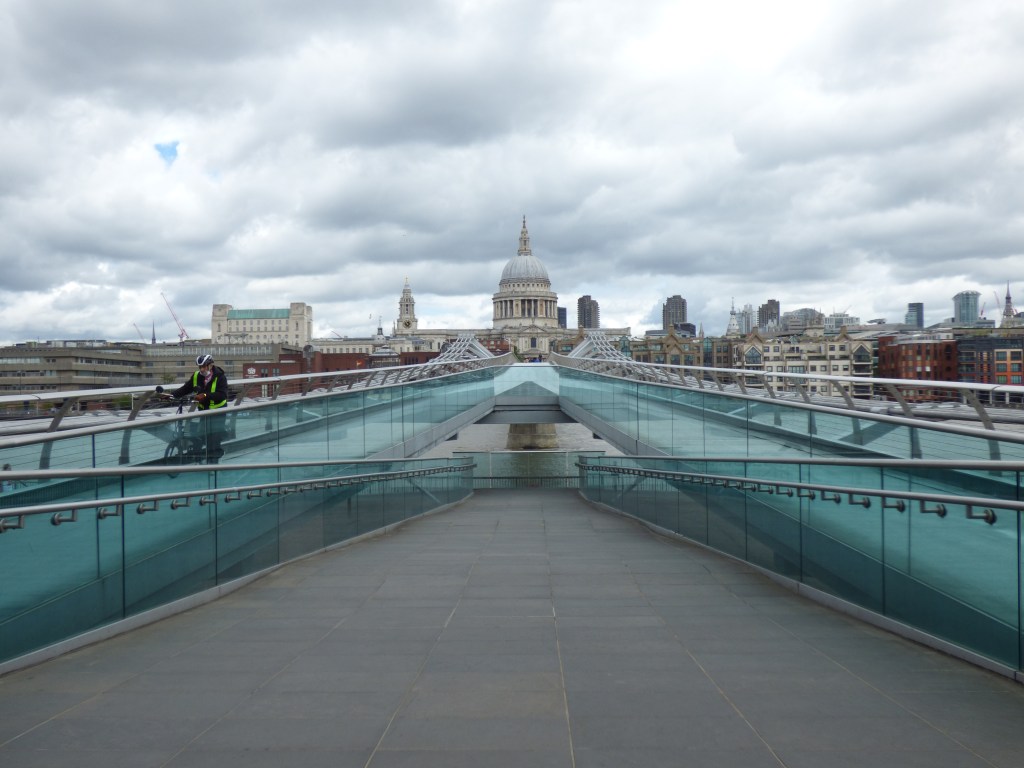
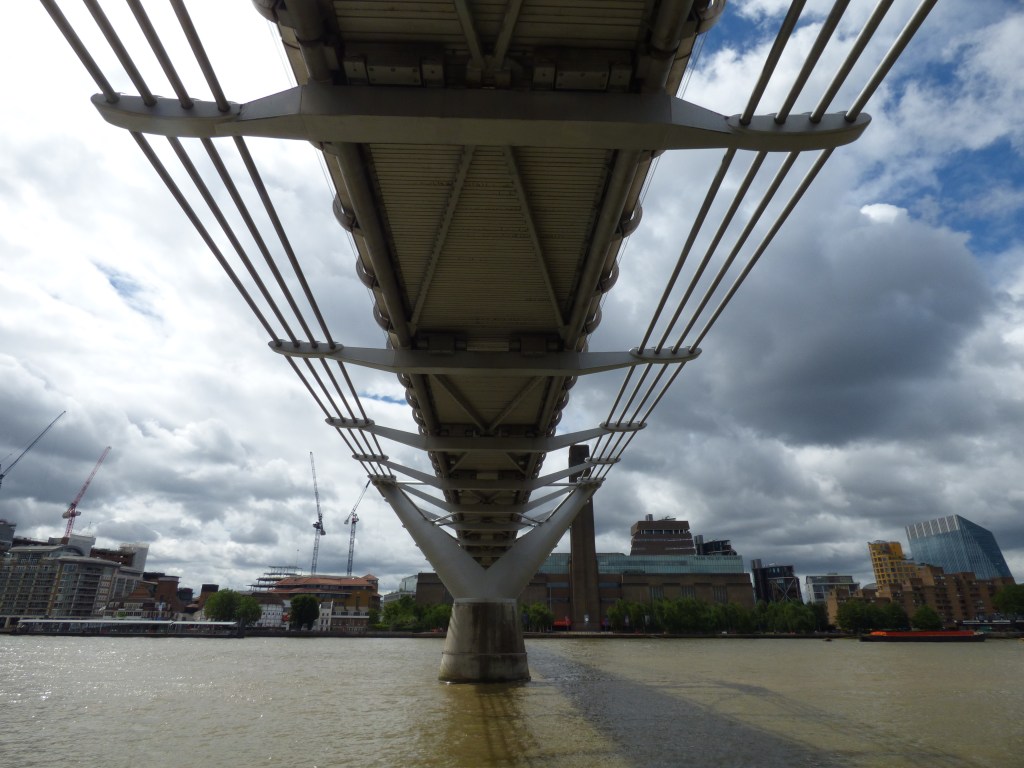
Last week I ventured into London. I wanted to see it before everything opens up again. The train journey in wasn’t busy, nor was the station. Everywhere was really quiet, though there were a few joggers out. I walked along the River Thames on the south side down as far at Tate Modern and the Millennium Bridge, briefly walked to The Globe, and then came back and crossed the bridge. Along the north bank it was also quiet.

Millennium Bridge

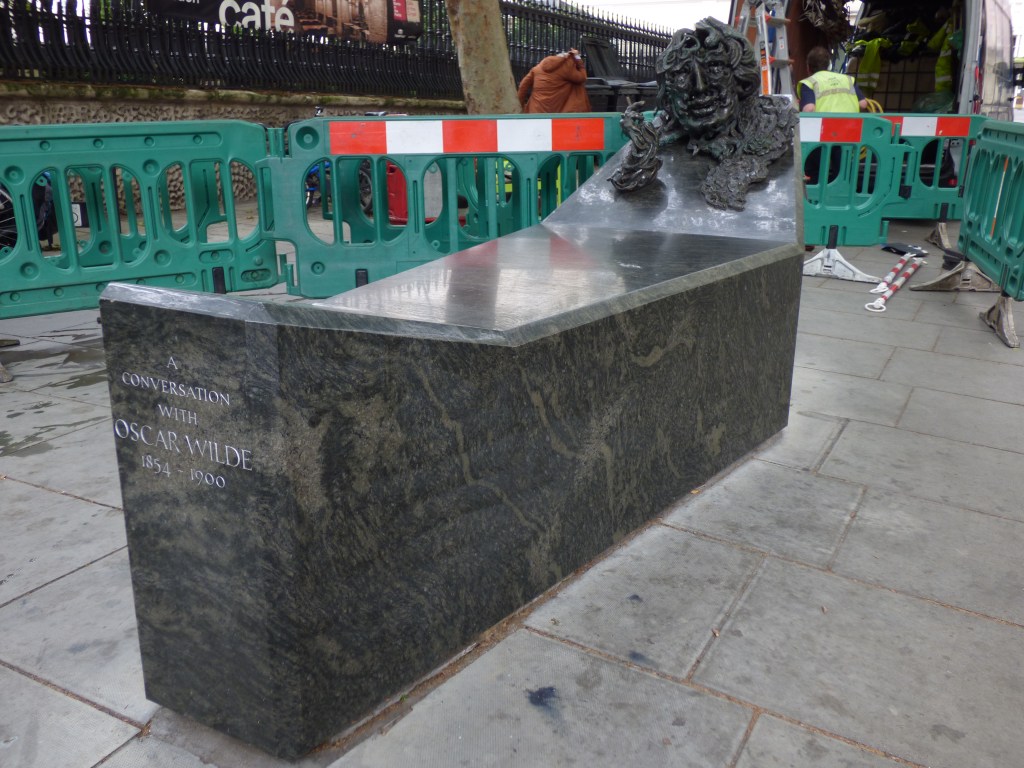
The Embankment gardens were occupied mostly with workmen taking breaks from whatever building they were working on behind the park. Temple Station appeared still to be shut. I came up to Embankment tube and then up to Charing Cross. There I crossed over and went to Martins-in-the-Fields, where a pretty empty Trafalgar Square was before me on the other side. What I was after was a photo of Oscar Wilde’s statue, which usually has someone sitting on it, or groups of people hanging around it. Today, it there was no one. However, road work barriers marred the shot. It’s like I’m not meant to get a good photo!

I’m doomed to get a decent photo

Walking back, I turned off to some side roads and then walked back over Hungerford Bridge, where there is a one-way walking system in place – very wise. By then I was hungry and weighing up my options. I decided to buy a sandwich from the station and go over to St John’s Churchyard to enjoy it. It was a nuisance having to keep putting my mask up and down to go in and out of the station. I admit I hate wearing a mask. Because I wear glasses, there is a knack to getting it just right otherwise every time I breathe my glasses steam up. It’s also hot and annoying! However, I’ll put up with it to get out and about again.

By Charing Cross

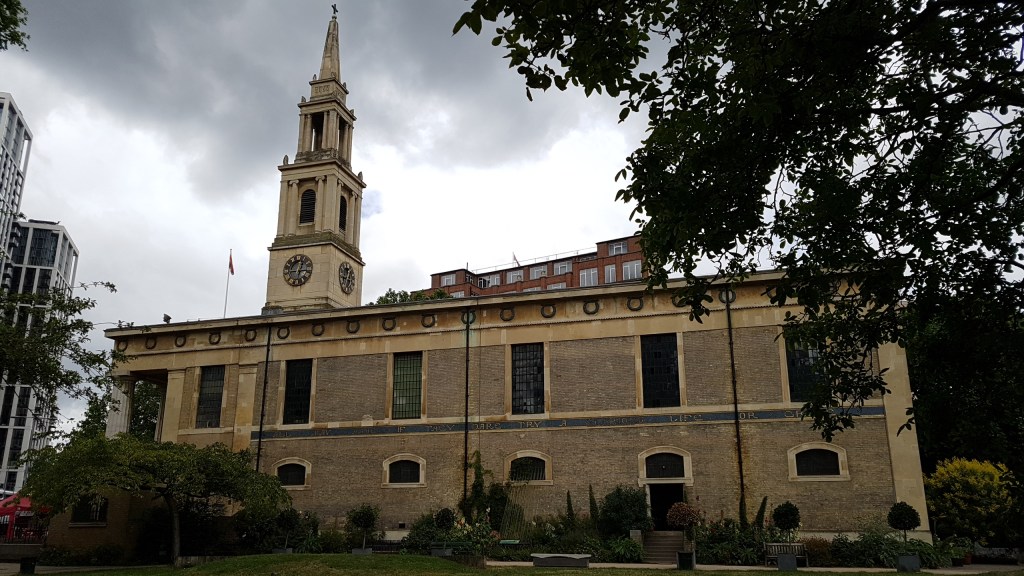
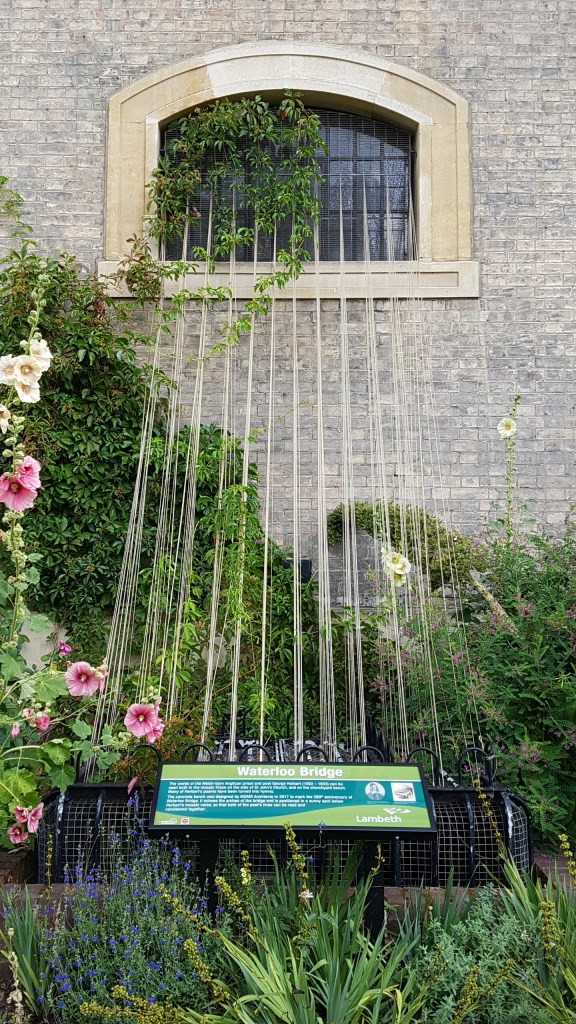
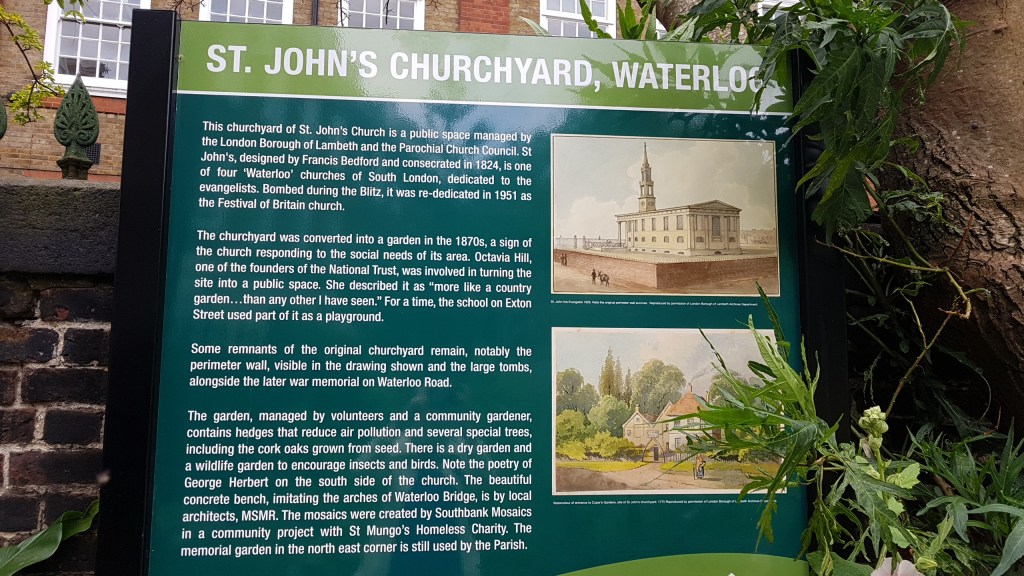
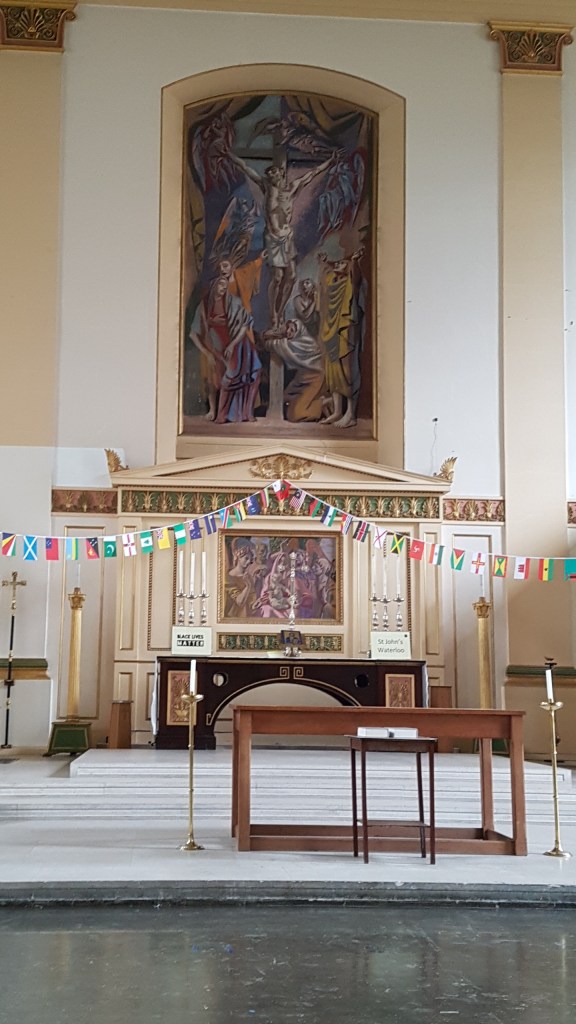
St John’s Churchyard (Waterloo) is one of my favourite places, and today it was almost empty. Normally it is buzzing with people. I sat on a bench to relax and eat my sandwich. As I was leaving I noticed the church was open, so I decided to go in for a few minutes. I’ve not been inside a church since February. At the door was hand sanitiser, and chairs spaced apart in a semi-circle. There was a lady at a desk keeping an eye on things, but otherwise I was the only one there.

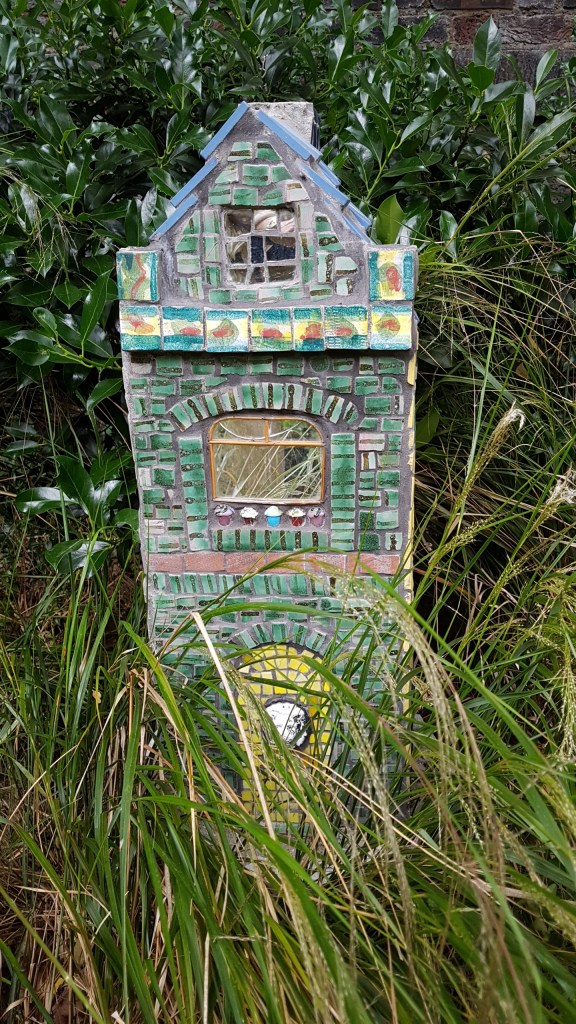
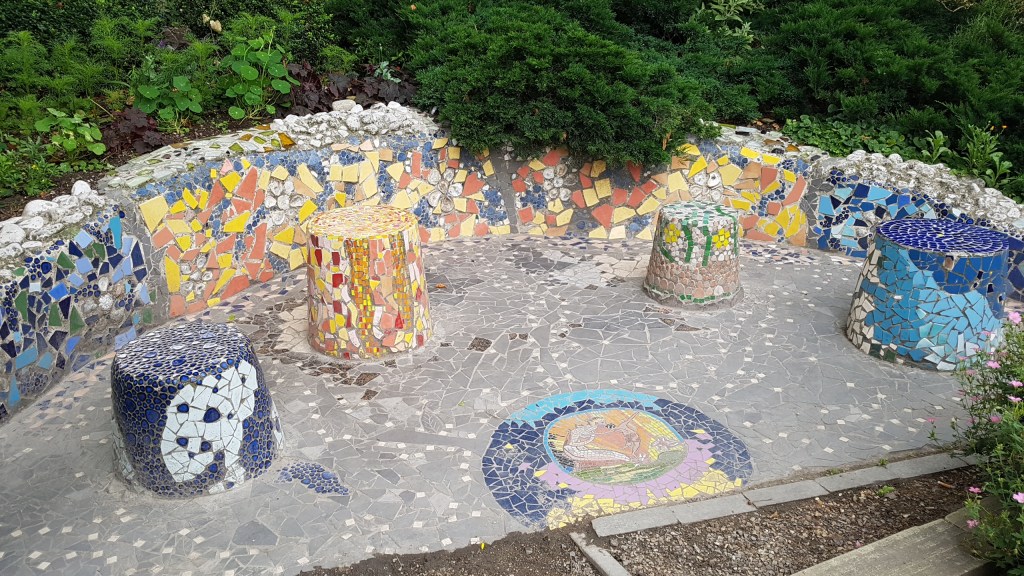
Known for its Mosaic garden (created by Southbank Mosaics) this is a lovely example in St John’s Churchyard
St John’s, Waterloo
St John’s, Waterloo

London today

My London is a strange place today. As Coronavirus numbers increase so the city and the country as a whole shuts down. In the last twenty-four hours the streets are quieter, buses run almost empty and tubes and train station have been deserted. Here, like in other countries of the world, we are being told to go out only if necessary – for work (though companies are being encouraged to allow their staff to work from home), food shopping and essentials, to avoid bars or to socialise in groups. This is a weird world right now.

Although I don’t live in the centre of London my own town is no different. Presently schools are still open, cafes, normally very busy places, have a handful of customers, yet the supermarkets are struggling to cope with the number of people stockpiling food, toilet rolls and cleaning products. I walked out of one supermarket on Monday because the queues were so long. I refused to join in with this crazy lot and went somewhere else.

I had to visit the dentist yesterday. I was worried they would cancel, but no. It was only for a routine check, but it was evident while I was there that people were cancelling left, right and centre. The receptionist told me that theirs has to be a sterile space and people were cancelling unnecessarily. I wonder how long they can continue like this.

Already I am getting confused with the days of the week. My usual groups that meet regularly in the week are now all cancelled. They were my routine, my pointers for each week ahead. Now there is nothing in my diary to look forward to, and for someone who loves to be out and about, this feels strange. At home, life goes on. You wouldn’t know anything was wrong unless you turn on the TV and watch the news. I guess this is the time we see if humankind adapts to enforced isolation. A week, yeah, okay, months?

So what am I going to blog about? Perhaps I should re-name the blog through my window!

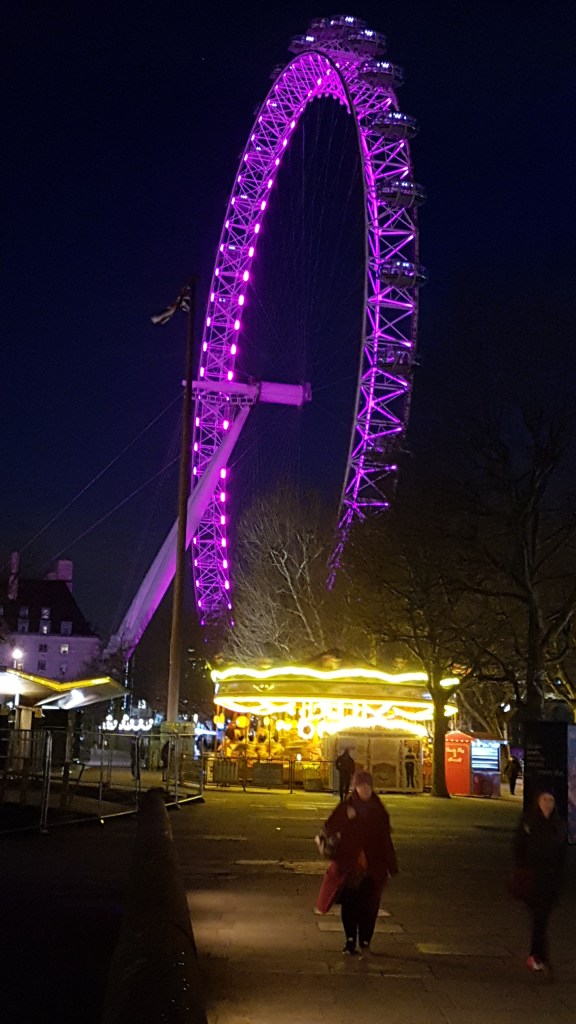
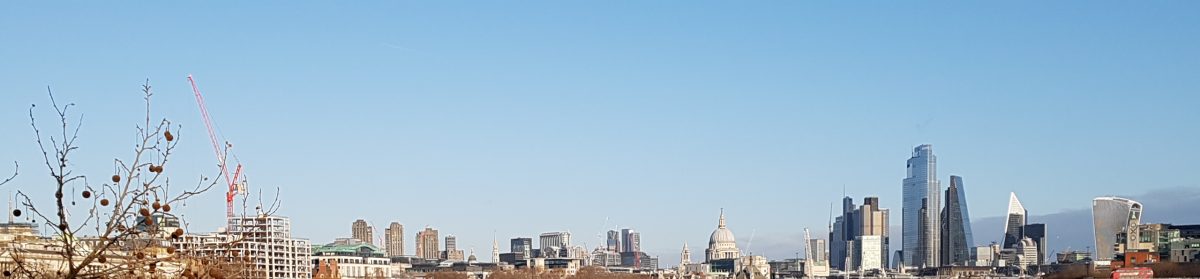
London Southbank just last Friday night

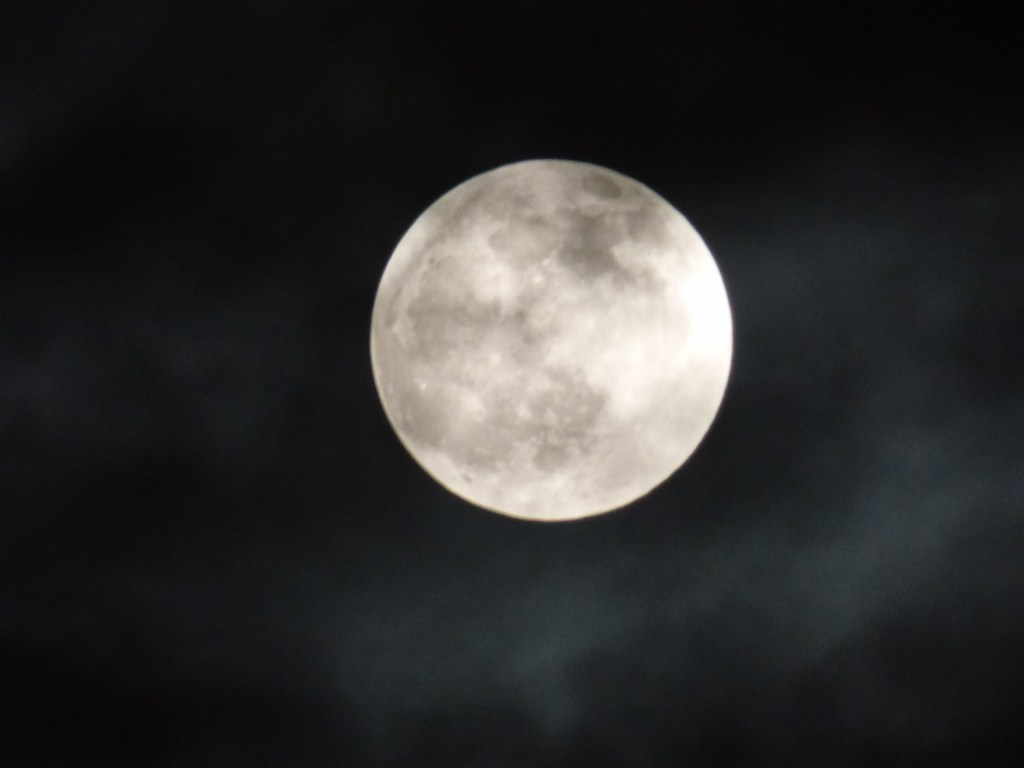
I thought I might blog about places I have been to in the past and post some inspiring photos. We have a garden and spring is here. I take lots of photos of flowers, the sky, and often the moon. So, while I may not be able to travel around (all theatres, museums and galleries have closed anyway) I hope I can still find something to blog about. If you would like to respond about how things are where you are, please feel free to do so. Let’s keep positive. Stay safe and well everyone.

Bermondsey Walk

Today I joined a group of people on a walk through Bermondsey. How lucky were we with the weather? Yes, it was a chilly wind, but the sun was shining and there wasn’t a rain cloud in sight!

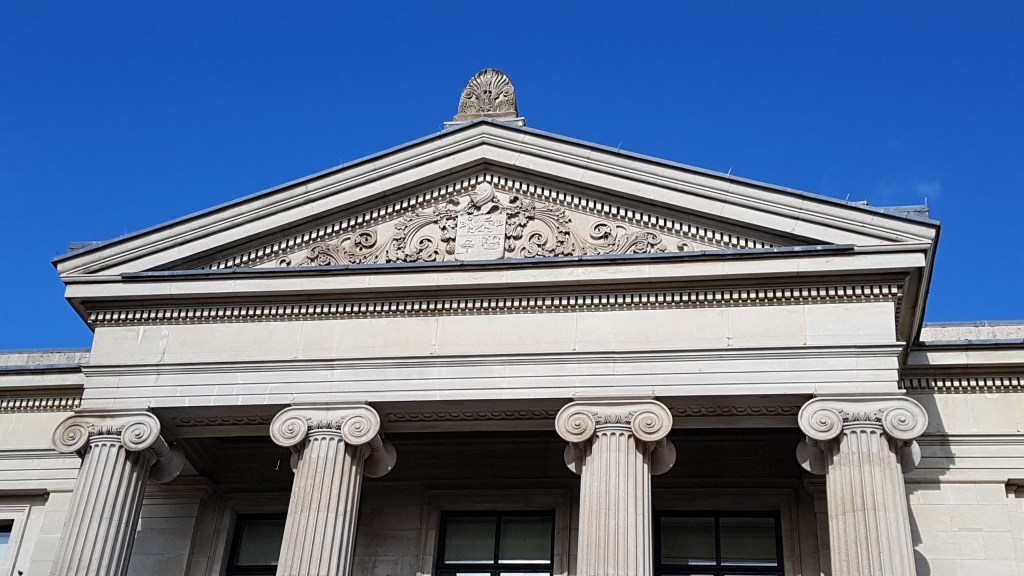
Council Offices showing the Bermondsey Crest

I was particularly keen to do this walk as my grandfather’s family lived here. Actually, my grandfather four generations back was the first to live by the River Neckinger. The river has long since been built over but there are clues to the past, and if you know where to look (I do!) you can see where the river finally runs into the Thames.

The walk began from Bermondsey tube station. The road outside had barriers along it due to the Vitality Half Marathon taking place. Lots of runners (including someone dressed as a rhino) were being cheered on.

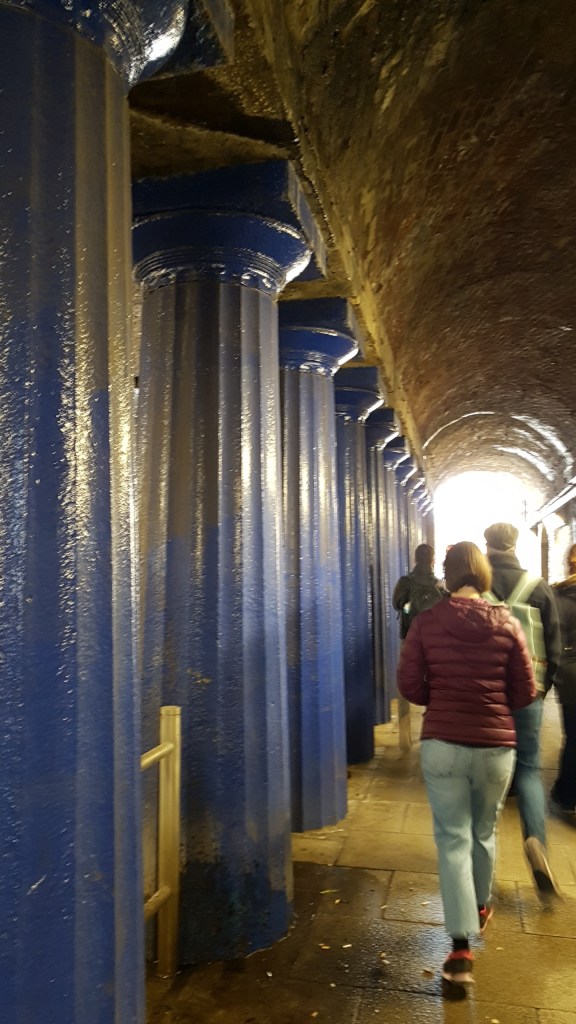
Walking under the bridge by the old Bermondsey Spa Station
St James Church

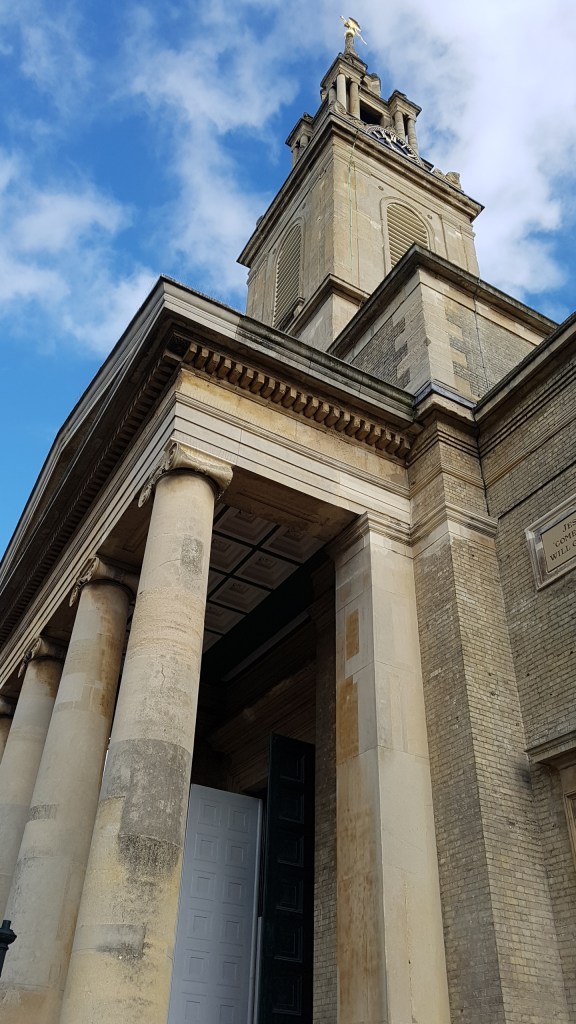
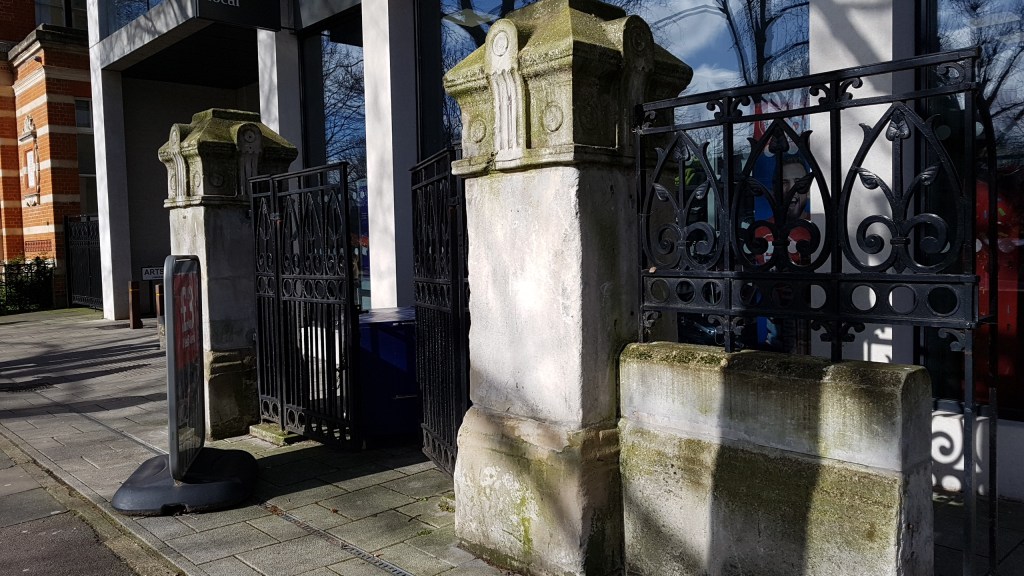
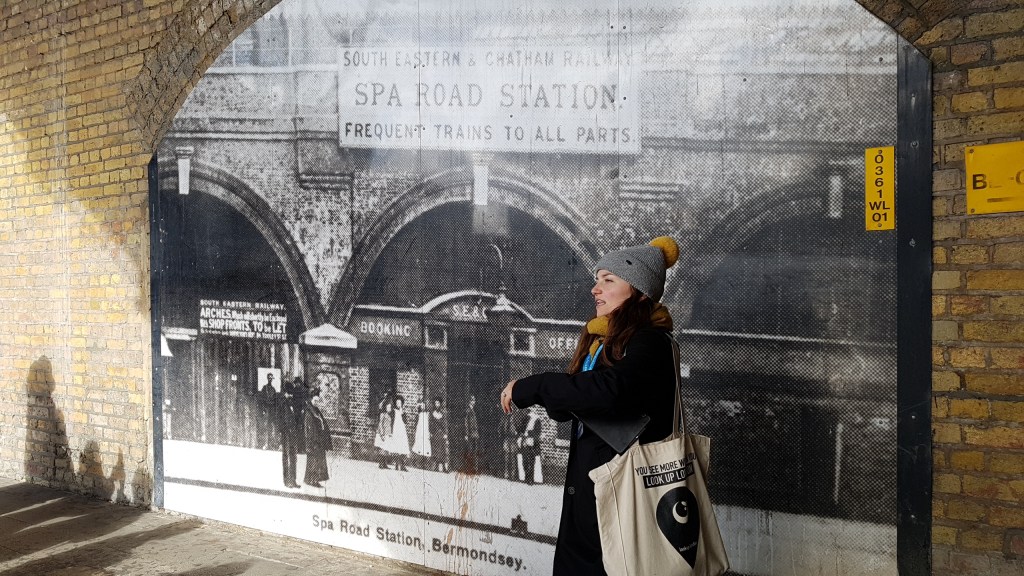
Our first stop, St James Church, is quite an imposing place with Roman pillars. (Since coming home I have discovered that my great-grandfather married here!). We carried on into Spa Road where Bermondsey Spa Road Station once stood. We walked under the bridge (rather nice pillars) and out the other side where there is a park where once the spa waters were. It was the place to come in those days. On the other side of the road is the council offices. Not the original as they moved along a bit, but on the pediment of the building you can see the Bermondsey Crest. The only part of the original council building remaining is part of the wall and gates, behind which is now Sainsbury’s Local!

Further down is the library, which is original. Above the windows are busts of writers. Inside there is Buddhist Prayer Room. Our guide showed us a photo of it and said that it was in use at weekends but they are very friendly people there, and if you go along in the week you can see it for yourself.

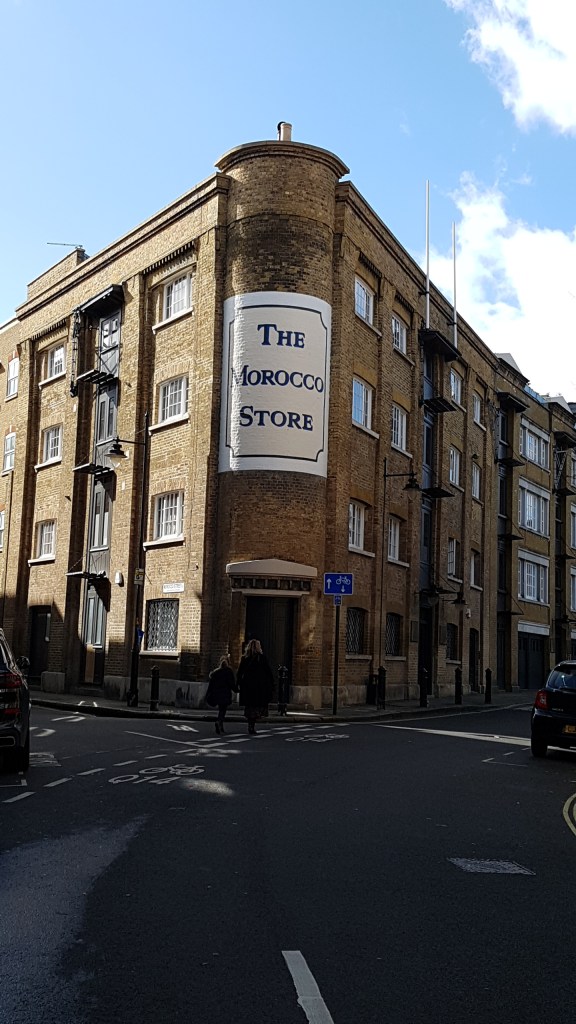
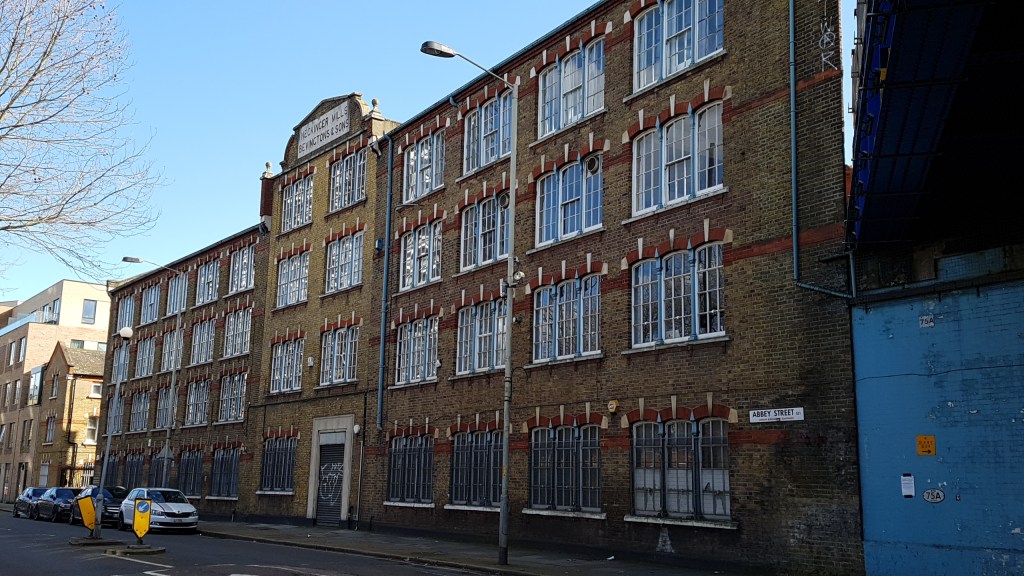
The area had many factories. Most of these have now been converted into flats. There is Hartley’s (the jam makers), a custard factory and a biscuit factory. However, there were also factories dealing in curing furs. One such factory Alaska cured seal furs, another cured goat skins, and in one road Christies hat factory used felt . Then women working there had to use a solution of mercury and some other acid to separate the fibres. This is where the saying ‘mad as a hatter’ comes from, because the mercury caused loss of memory, slowness, slurred speech and the shakes. It was only outlawed in 1912 in this country.

Alaska Factory where seal skins/fur was cured

Tanning was also big business in this area. Of course central London did not want the smell so factories were downstream, where big open vats were used filled with dog poo and urine to cure the hides. People were paid to collect dog poo for this industry! My great grandfather started out as a boot maker. He was in the right place! The smell must have been dreadful, and all the effluence poured into the Thames. Street names, like Tanners Lane, show the past, along with old warehouses now turned into offices and apartments.

Here goat hides were cured
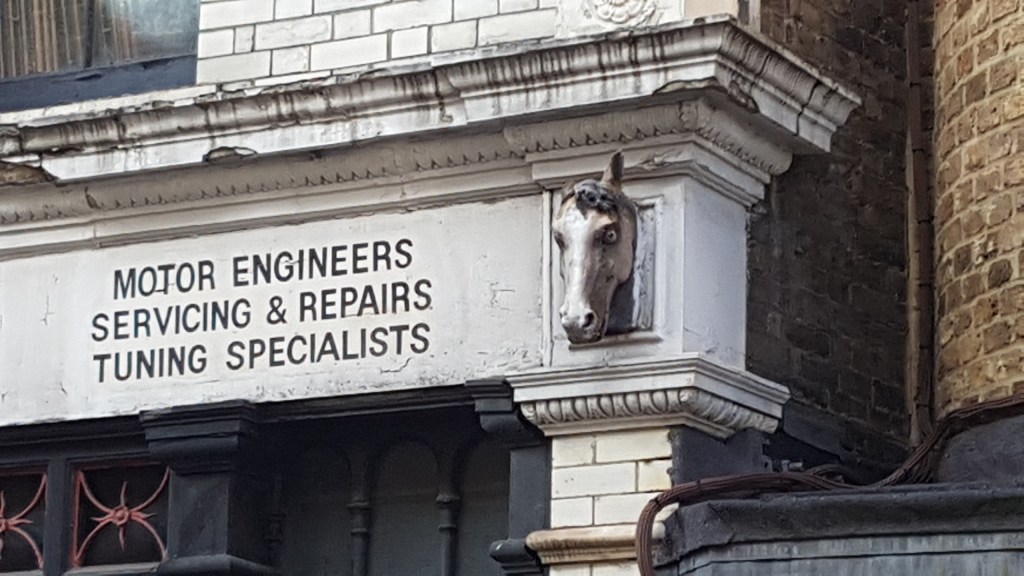
Before it was an auto repair shop this was a Farrier, hence the horse head

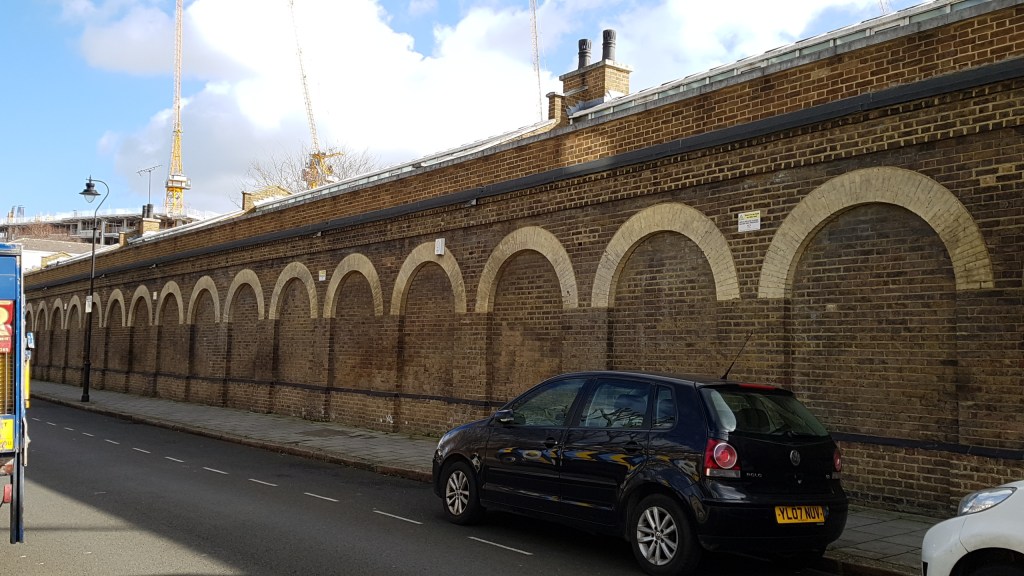
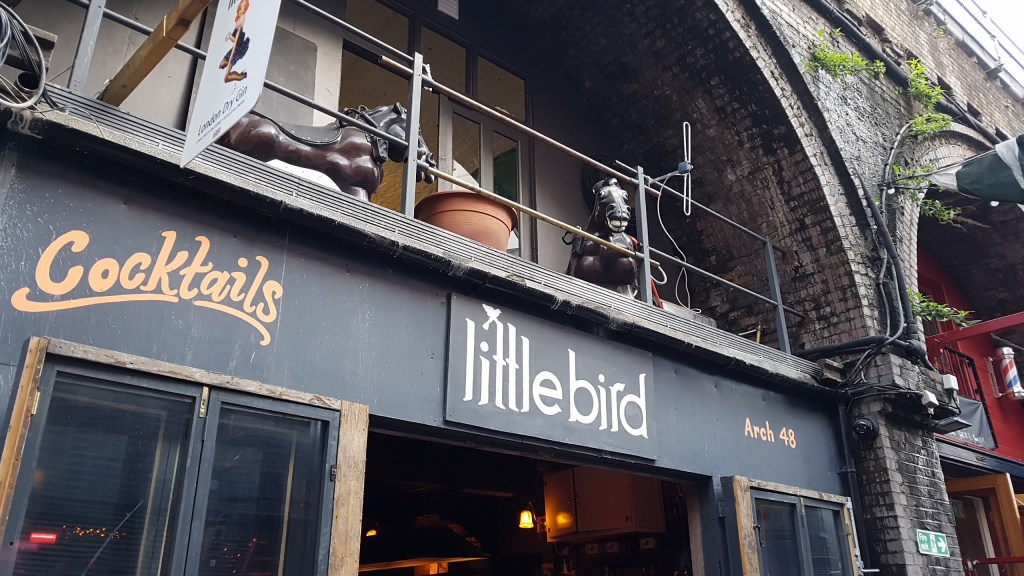
The railways seemed to build new stations at the drop of a hat only to demolish them and build another. We came across two very close by. The second one had nothing to remember it by except around the corner where the arches are. They were the former stables. As goods came in horse and carts were used to deliver them. The old houses were once places workers would have lived in. These days the two bedroom houses go for about £600,000!

The former stables around the corner from a station (no longer there)
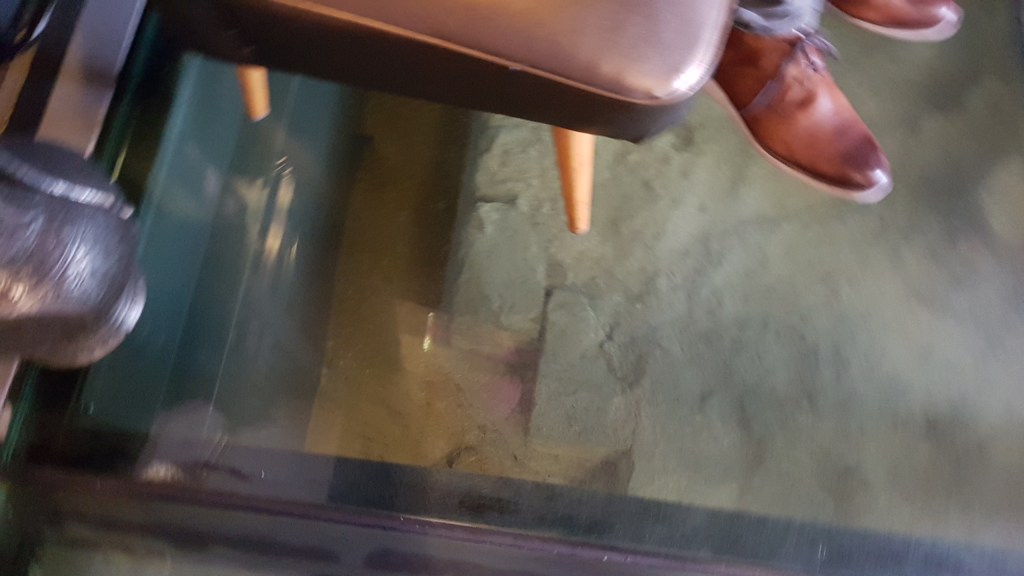
The remains of Bermondsey Abbey under a restaurant floor!

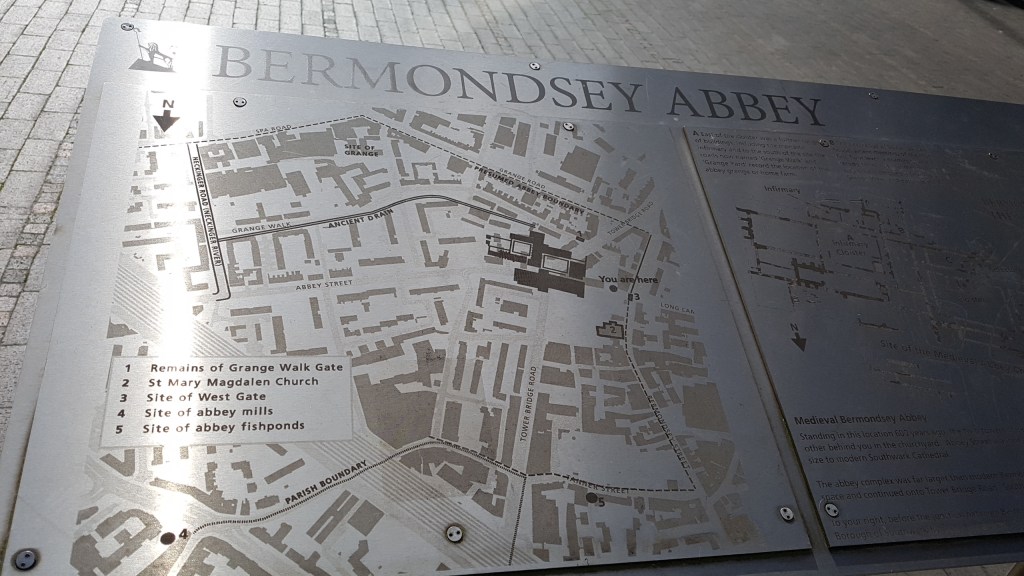
Another highlight was discovering Bermondsey Abbey ruins, close to the now lost Neckinger River. The only way to see them is to go into the restaurant where you can see a small part through a glass flood. Our guide knows them in the restaurant so we were able to go in. Unfortunately they were given the wrong advice about the flooring so only you can only see part of a wall through one panel as the rest of the floor has frosted glass. To change it would cost £40,000!

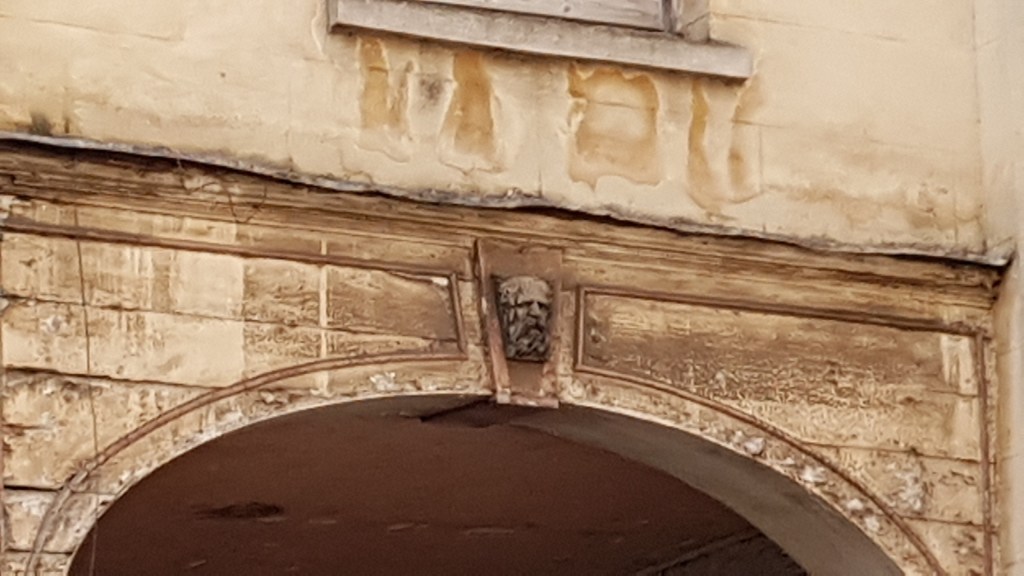
The head of a river god on one of Bermondsey’s oldest buildings

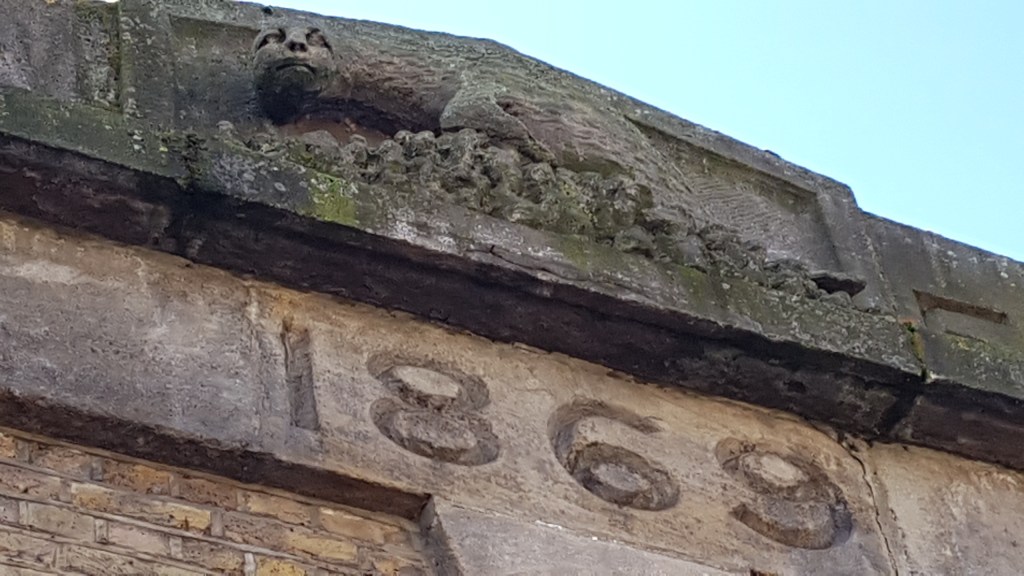
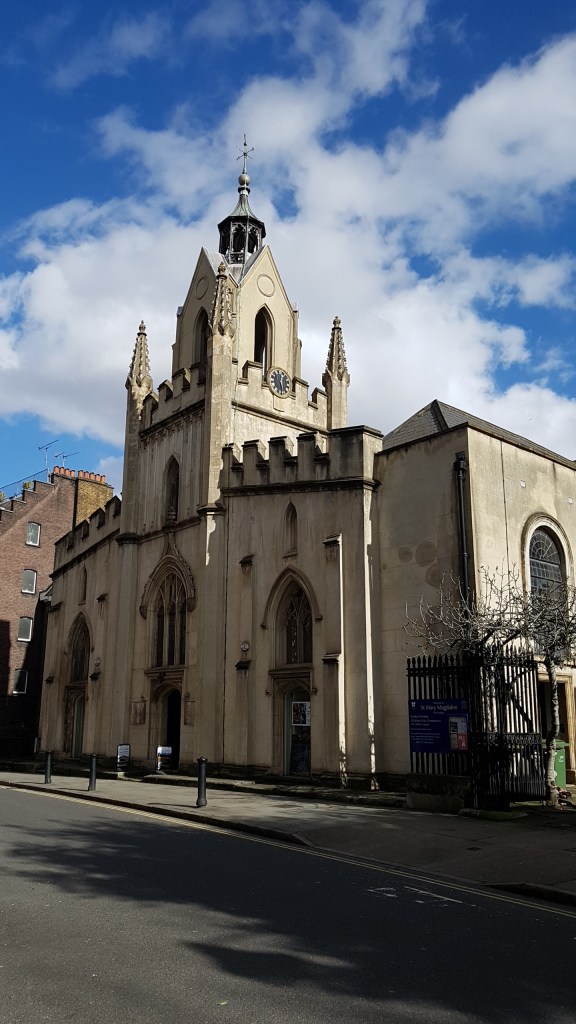
Over the road stands St Mary Magdalene (where, in the graveyard, I believe one of my ancestors is buried). Let’s hope he wasn’t dug up because the people known as The Resurrectionists took bodies for medical research. There is a tower house (now a cafe) where watchmen stayed to keep an eye open for anyone hoping to dig up a newly buried body! Next we stopped at a row of buildings which are the oldest in Bermondsey. Over the arch of one is the head of a river god.

St Mary Magdalene Church
The Watch House over the cemetery (now a cafe)

To finish we walked into Maltby Street, a narrow alleyway where there is a street market selling hot food from around the world. The aroma was wonderful. Some of our group went into some eating places to the side but I went off to explore and take a few more photos before walking to London Bridge station and the homeward journey.

In Maltby Street
The factory close to where my ancestors lived
Our guide tells about Spa Road Station

Short walk in Hammersmith

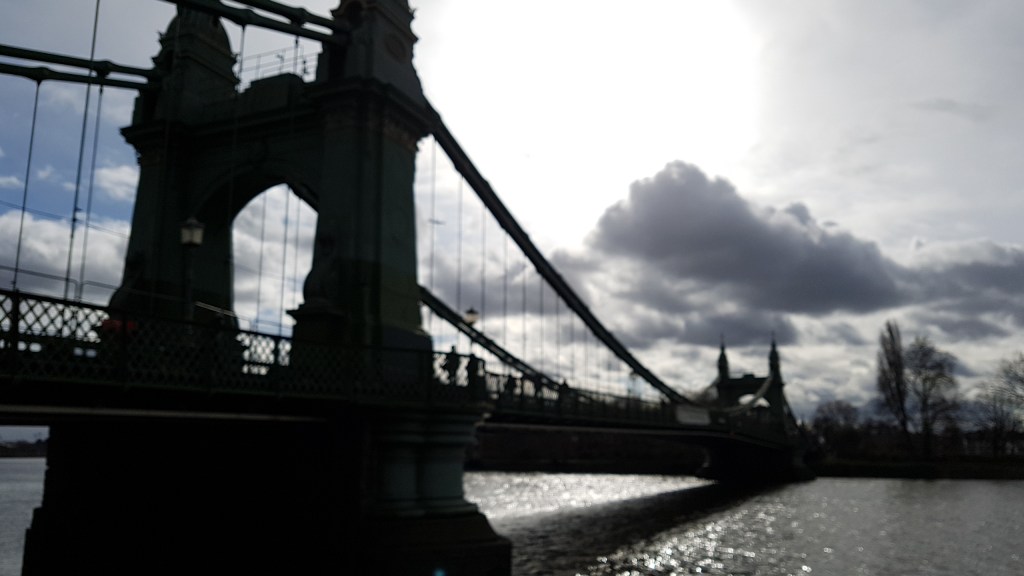
Hammersmith Bridge

Every Tuesday I go along to a writing group meeting in a cafe in Hammersmith. Today I arrived early so I took a short stroll along part of the Thames Path, a path I know quite well. Above is a photo of Hammersmith bridge designed by Joseph Bazalgette and opened in 1887. Currently the bridge is closed to traffic as major repairs are required, but pedestrians can still access it.

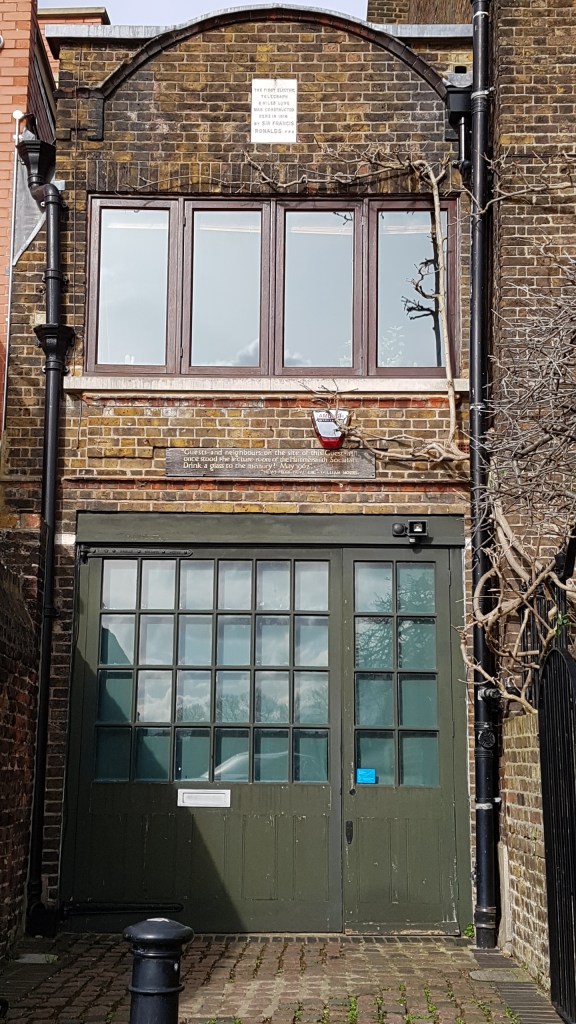
The Coach House

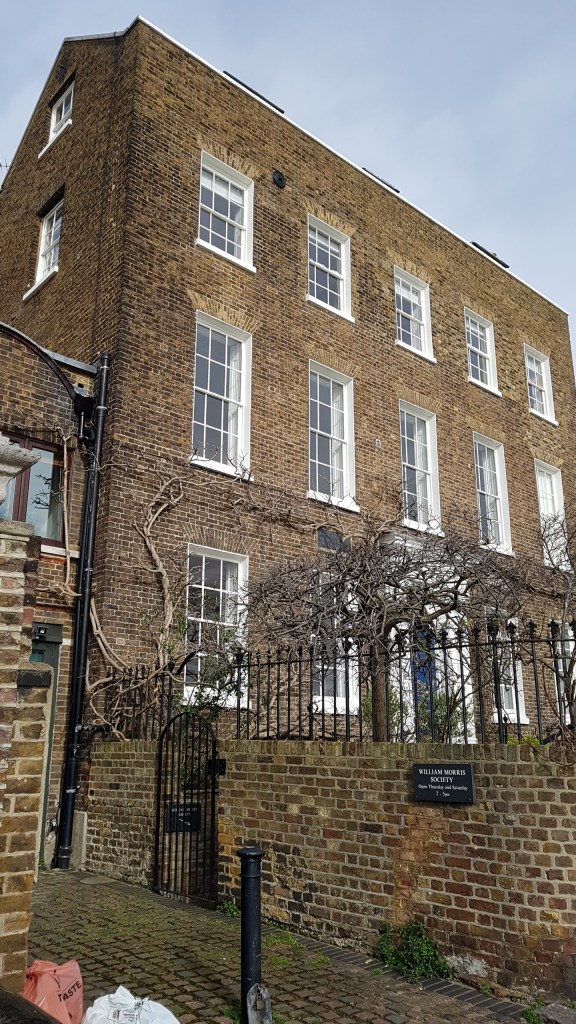
I walked just a little way along the pathway until I came to Kelmscott House where William Morris (a major influence in the Arts & Craft Movement and founder member of the Pre-Raphaelite Brotherhood) lived from 1778 to 1896. The house is privately owned but The Coach House is home to the William Morris Society and open on certain days of the week. It is well worth a look. I visited several years ago. The Coach House is where the Hammersmith branch of the Socialist League met. There you will see a printing press used by William Morris, as well as tiles and furniture.

The main house

The house is just a stones throw from Emery Walker’s House, which is presently closed, but I aim to visit when it re-opens. Emery Walker was a good friend of William Morris and they often met together.

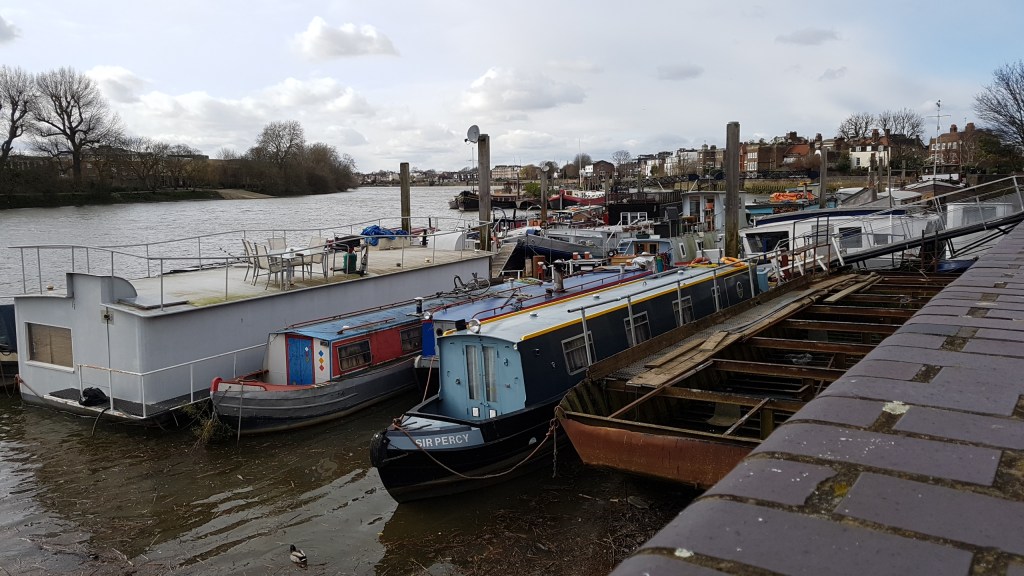
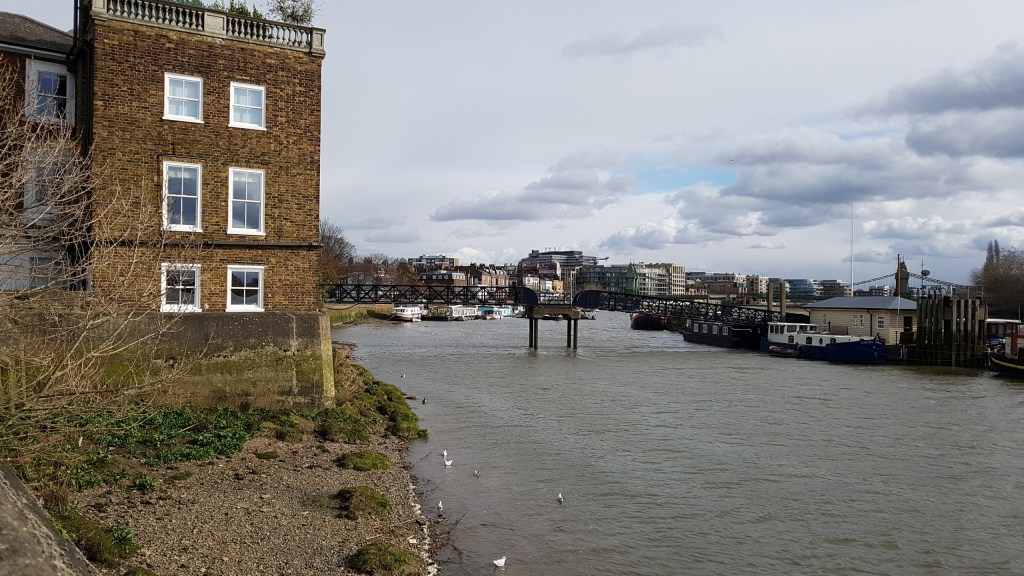
River Thames at Hammersmith
Another Thames view

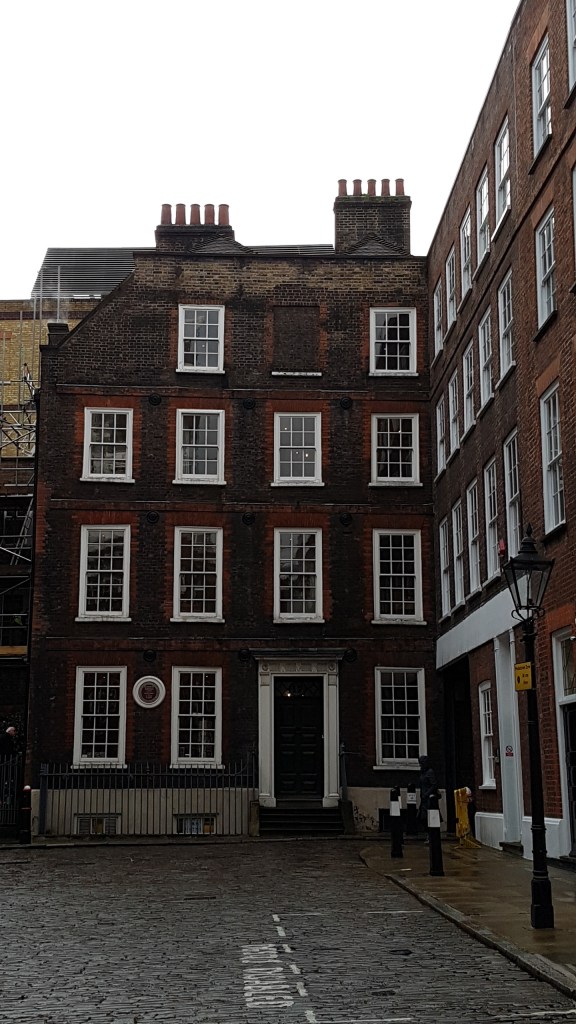
Dr Johnson’s House and St Vedast Church

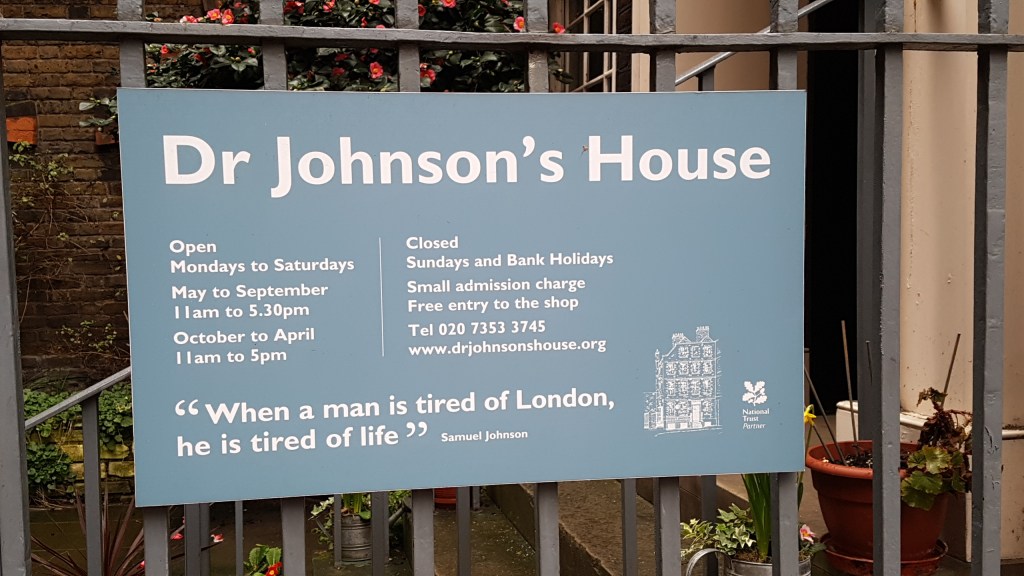
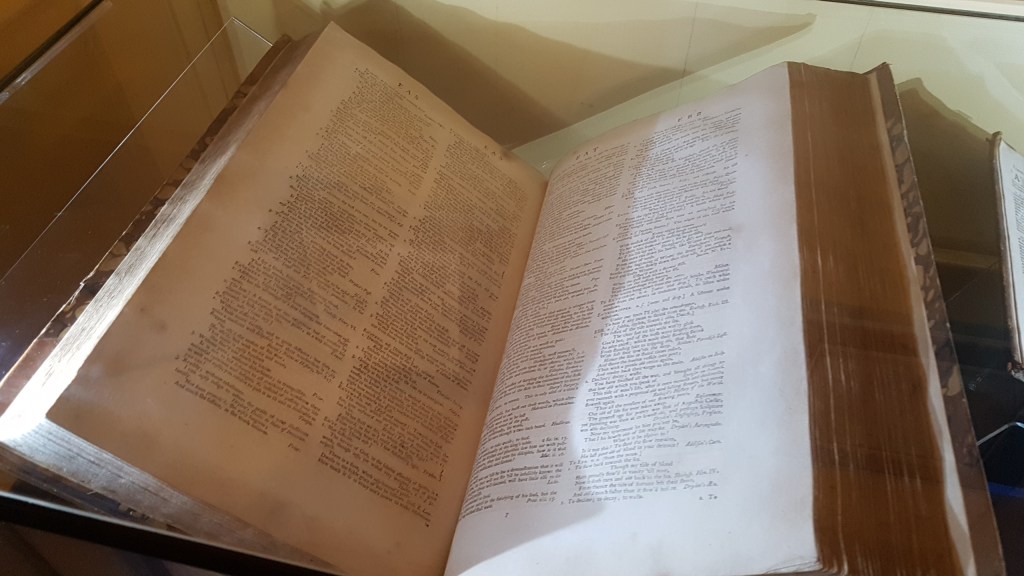
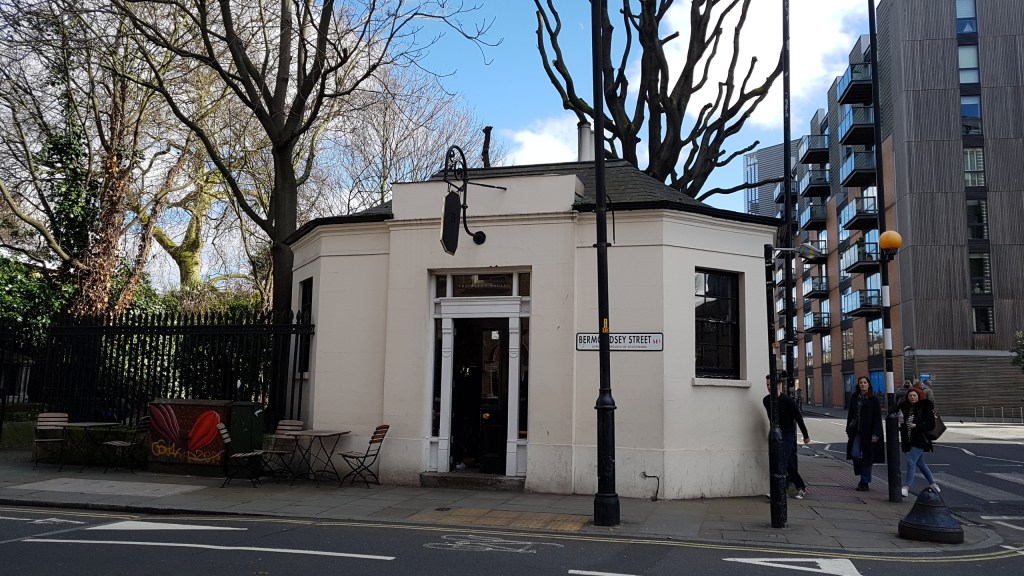
Hidden in the back alleys off Fleet Street and Fetter Lane is the house of Dr Samuel Johnson whose most important work is his dictionary commissioned by a syndicate of booksellers in 1746. There are copies for you to peruse in one of the rooms. His most famous saying is:

When a man is tired of London, he is tired of life….

The house has a quiet disposition but one can imagine the sound of horse and carriage moving through the square. In fact we heard horses hooves and moved to the window only to observe two police horses clip clopping across the cobbles!
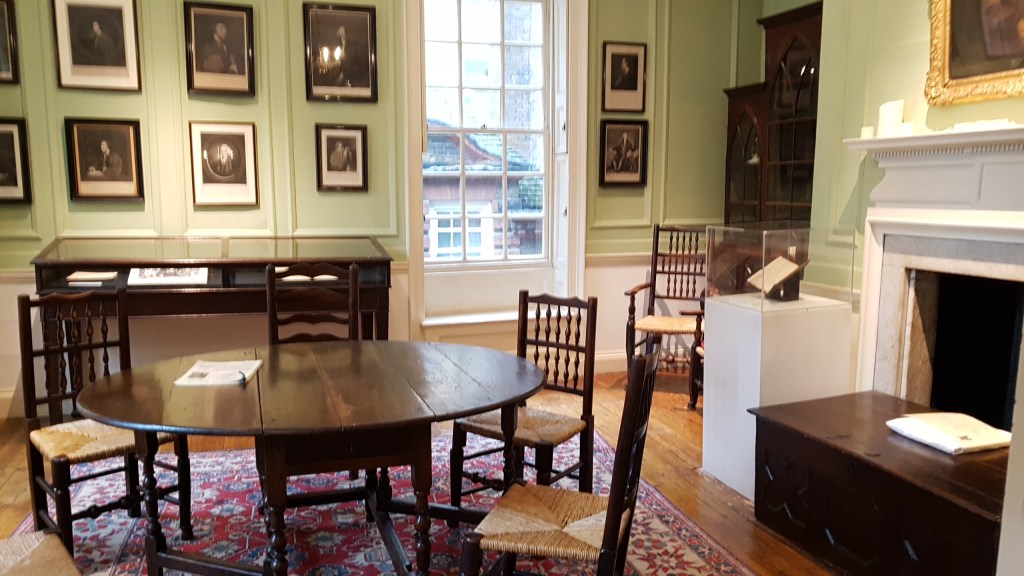
The rooms are sparsely furnished but with plenty of information and a chance to sit at a table to read the information sheets and take in the atmosphere. I never realised how much this man wrote…a man who could write a novel in a week! He was friends with David Garrick of the Garrick Theatre and there is a trunk in the withdrawing room containing some theatre costumes from the Garrick.
The Withdrawing Room (for the ladies) The chest to the right contains costumes from The Garrick Theatre

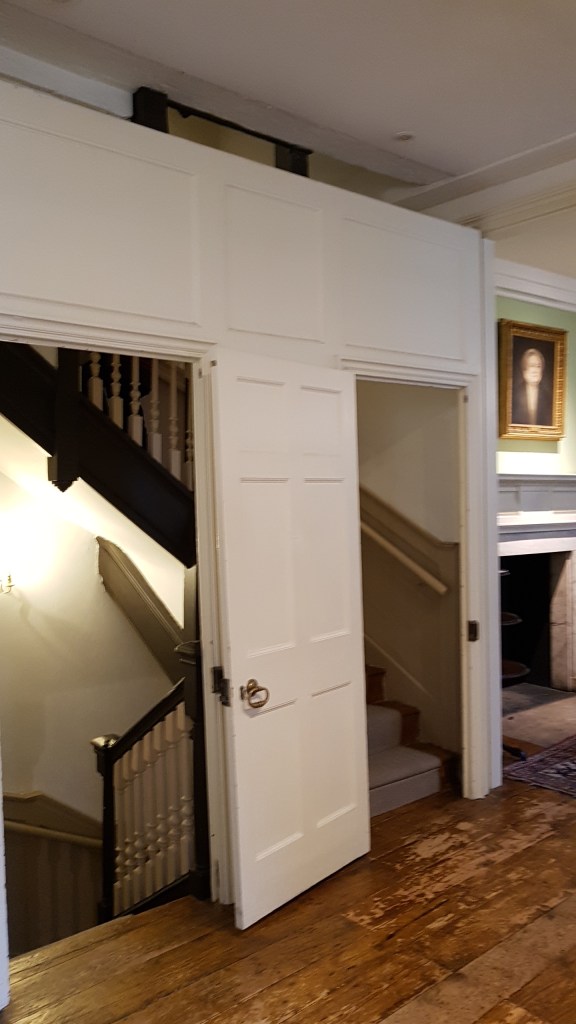
On the first floor containing the Withdrawing Room is a unique moving partition wall and doors.

Partitioning walls/doors

Samuel Johnson married a widow with children but does not appear to have had any children of his own. He was born in Lichfield in 1709. His father was a bookseller who seemed to be incompetent with money. Unable to stay at Oxford University for more than a year Johnson headed to London with his wife where he worked as a freelance journalist. Johnson was awarded an honorary Master of Arts degree before his dictionary was published. Sadly his wife died in 1752 before the book was published.

The dictionary
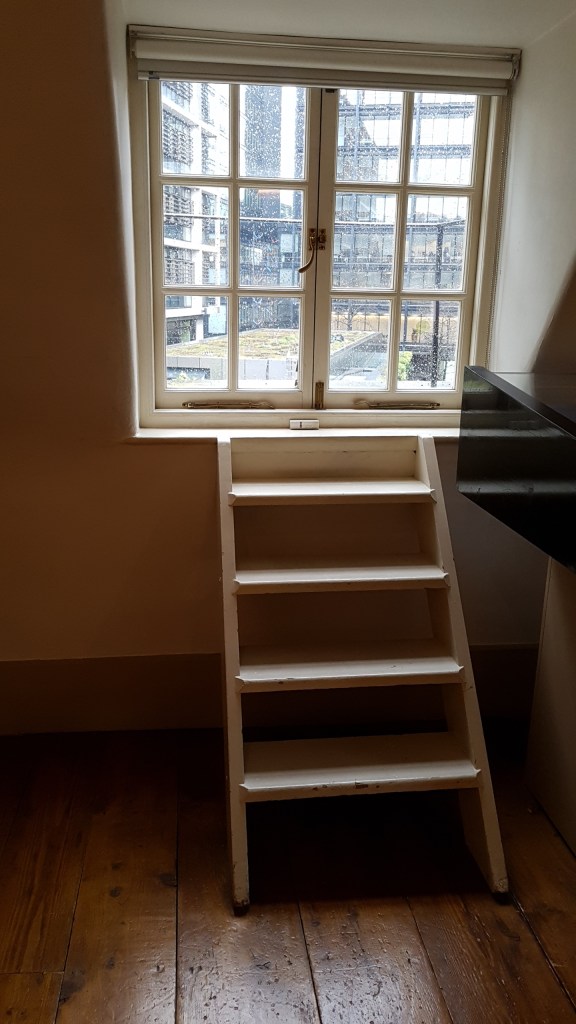
The attic floor. Outside the window is a long ledge where tomatoes were grown

Johnson wrote essays, poems and biographies as well as plays.

The house is owned by National Trust, so free to members, and £7 for everyone else (there are concessions for students). Nearest tube station is Temple.

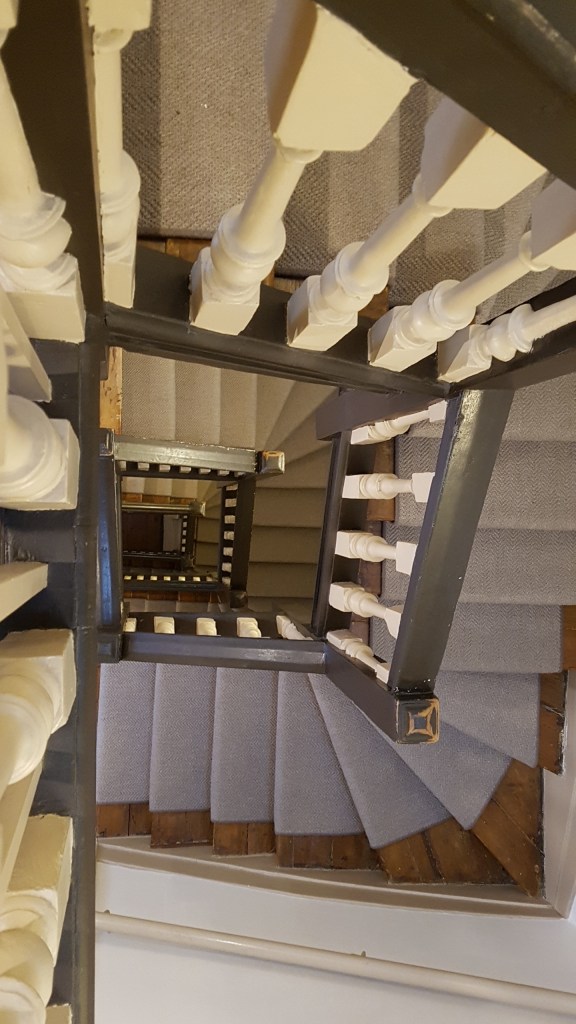
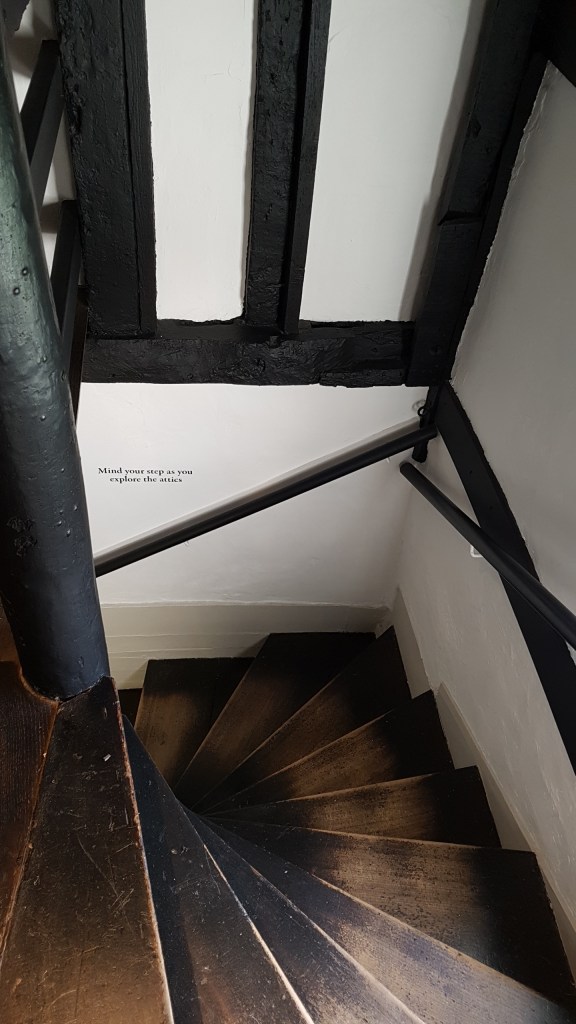
The staircase – it’s a long way down
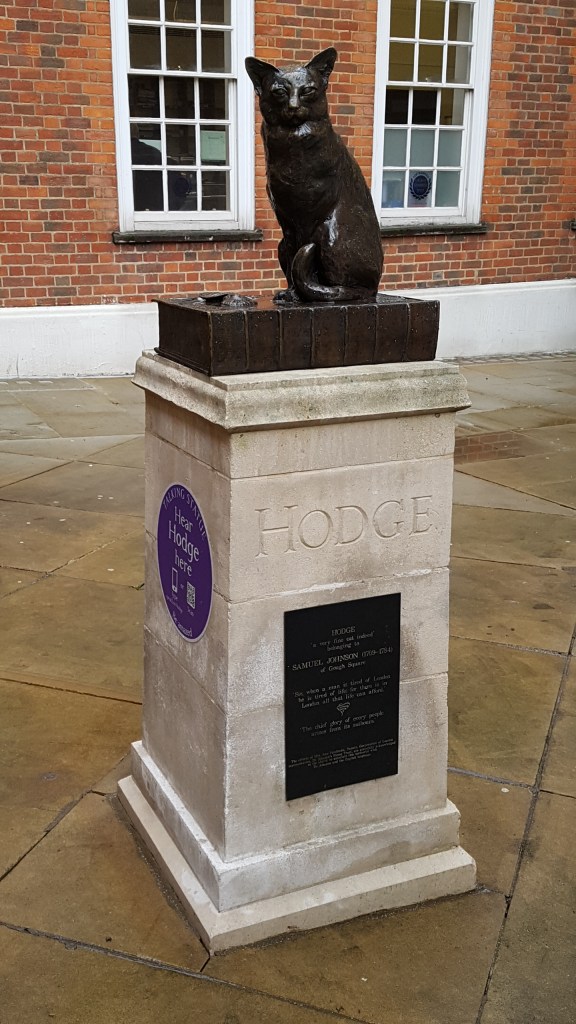
In the Square is a statute of Dr Johnson’s pet cat, Hodge

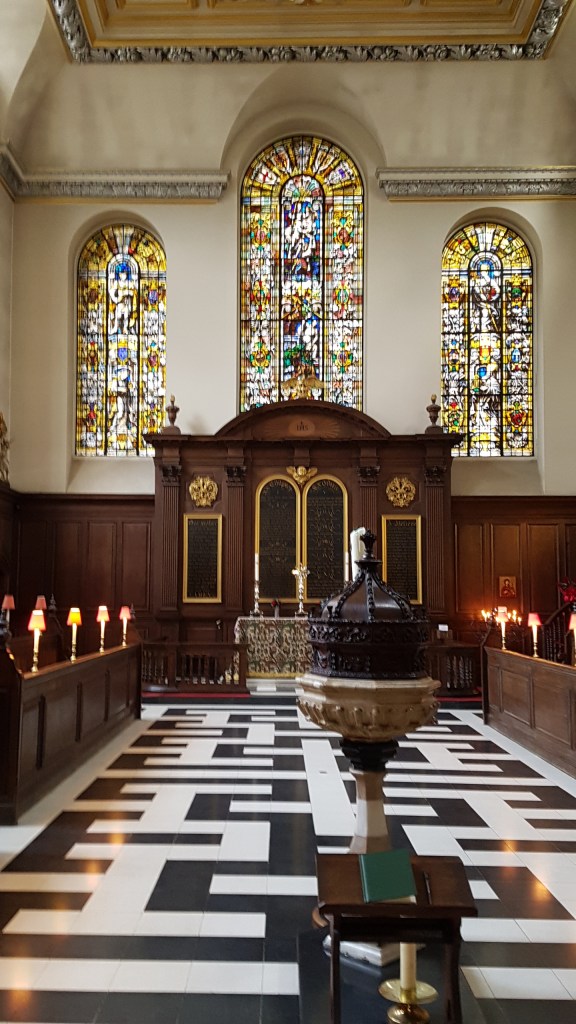
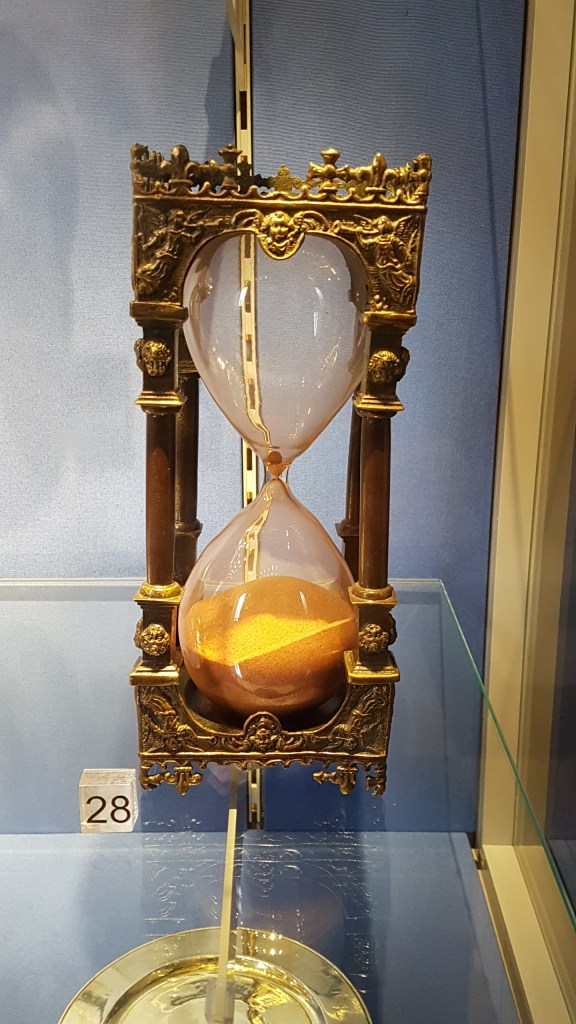
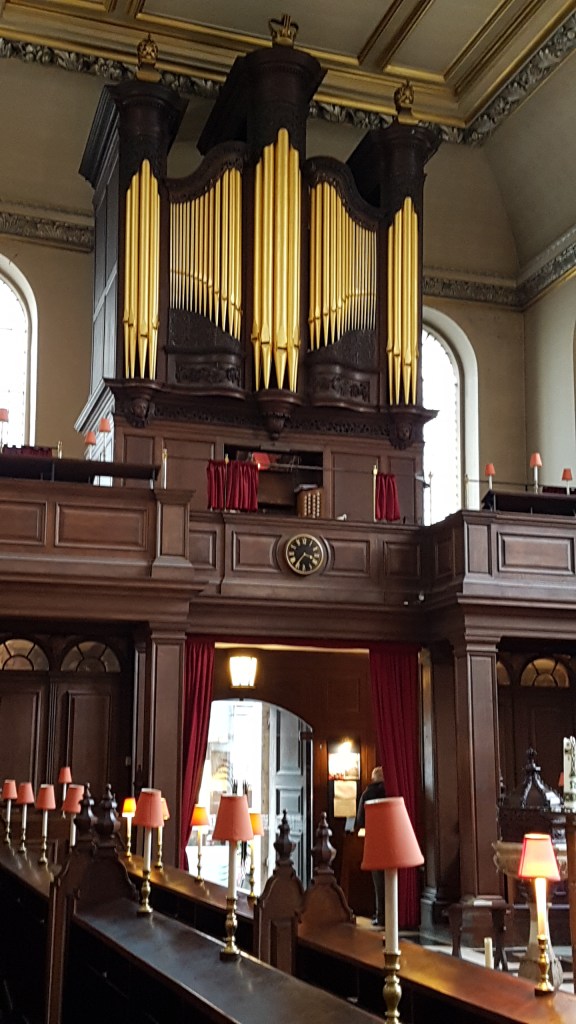
After leaving the house there was time for a short wander nearby. We found a little church tucked away behind all the new buildings near St Paul’s and One New Change. The church, St Vedast-Alias-Foster, is small but beautiful inside. Sir John Betjeman (former Poet Laureate) was part of the Parochial Church Council. I was fascinated by the sermon timer. I’ve never seen one before. There is enough sand in there for an hour! To the side of the church is a small and peaceful courtyard. Finding this church was just by chance, but what a lovely find. The church on Foster Lane, off Cheapside.

St Vedast
The sermon timer!
The Courtyard, St Vedaast

Pimlico

The morning of this walk began misty, but by the time I met the group I was walking with (our leader a Blue Badge Guide), the sun was out and blue sky was all around us.

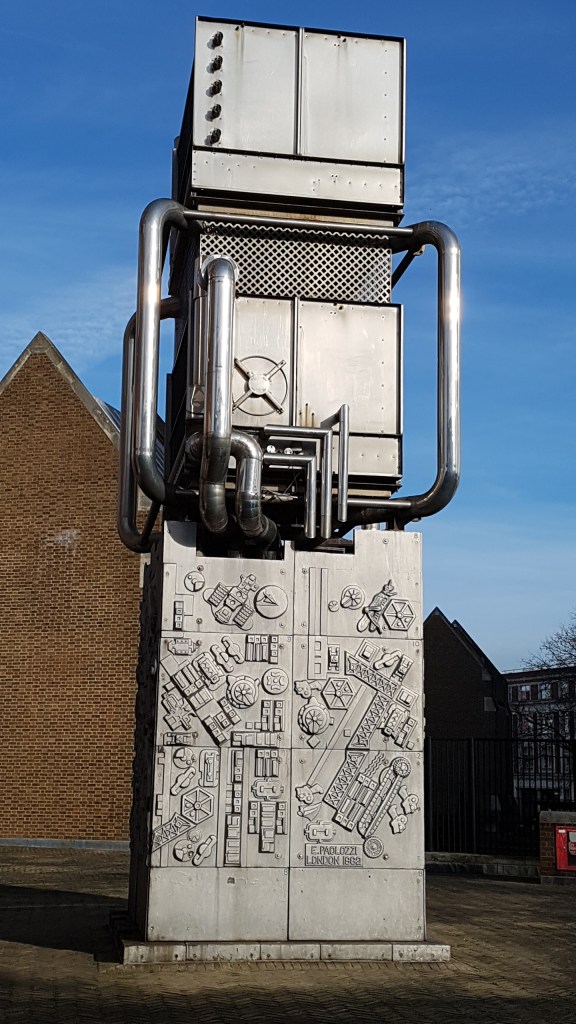
Ventilation Shaft near Pimlico tube station – sculptor –  Eduardo Paolozzi. This is a listed artwork

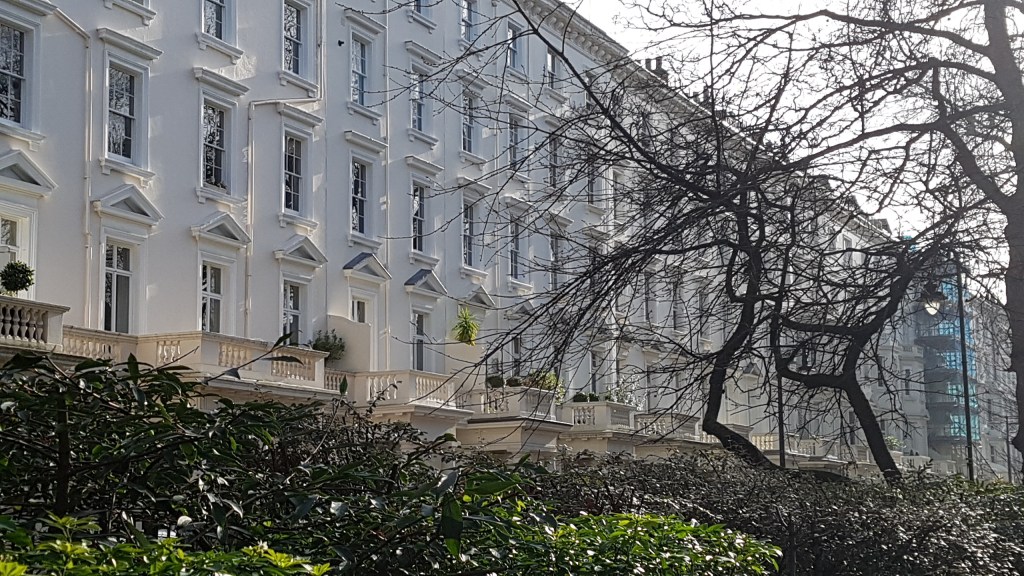
Pimlico is close to Westminster, up (or is it down) river. It started out as marsh land. Hardly anyone lived there. The Manor of Ebury (or The Five Fields) is a triangular piece of land which eventually passed into the hands of Mary Davies, who as the age of twelve married (yes, really) Sir Thomas Grosvenor in 1666. By the time of the nineteenth century there was a demand for houses and so Pimlico, not as popular as its neighbours of Belgravia and Mayfair, began a building campaign. The man to do it was Thomas Cubitt and he used reclaimed soil from St Katherine’s Dock (close to the Tower of London) to help with construction and built a grid of handsome white stucco buildings.

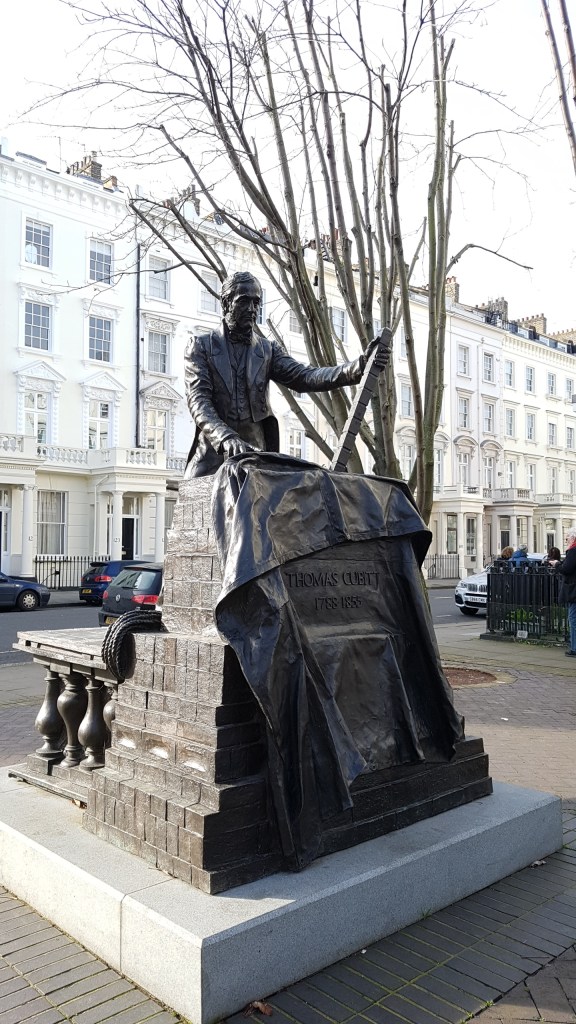
Statue of Thomas Cubitt

Cubitt preferred to be known as a builder rather than an architect. He was also consulted by Prince Albert to help redesign Osborne House. There is a statue of Thomas Cubitt in Denbigh Street.

Pimlico has three squares, all of which have their own gardens. Only one of these, St George’s, is open to the public. The other two you need keys for (the residents of the houses on those squares hold keys as it’s part of their shared gardens), and very beautiful those gardens look, too.

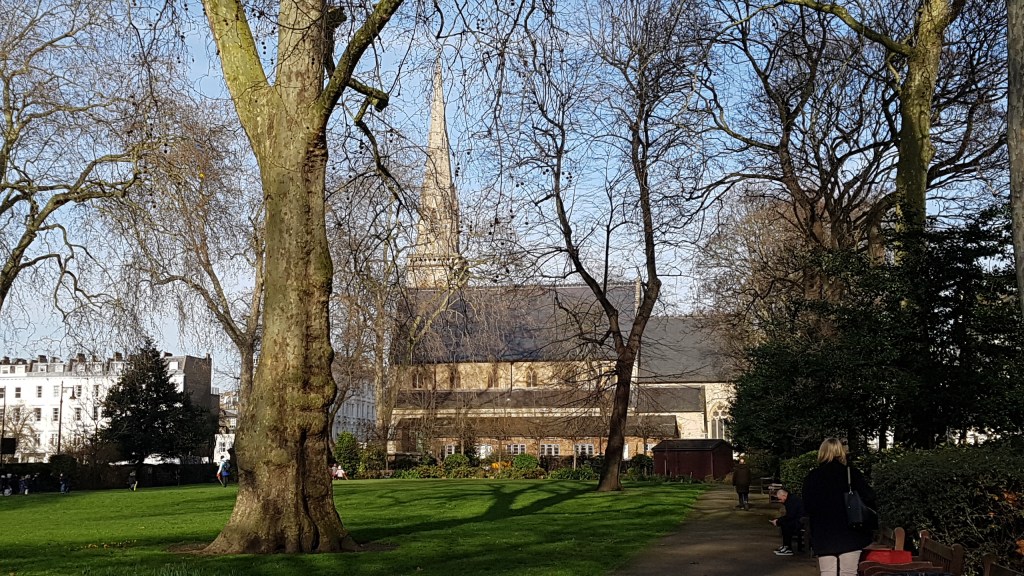
St Saviour’s Church from St George’s Gardens

We walked through St George’s garden to the right, through the trees, is St Saviour’s Church built by Thomas Cundy (Junior). This church’s claim to fame is their kindergarten in which Diana, Prince of Wales, worked before she married Prince Charles. Apparently, there is a bench in the gardens dedicated to her and the work she did there.

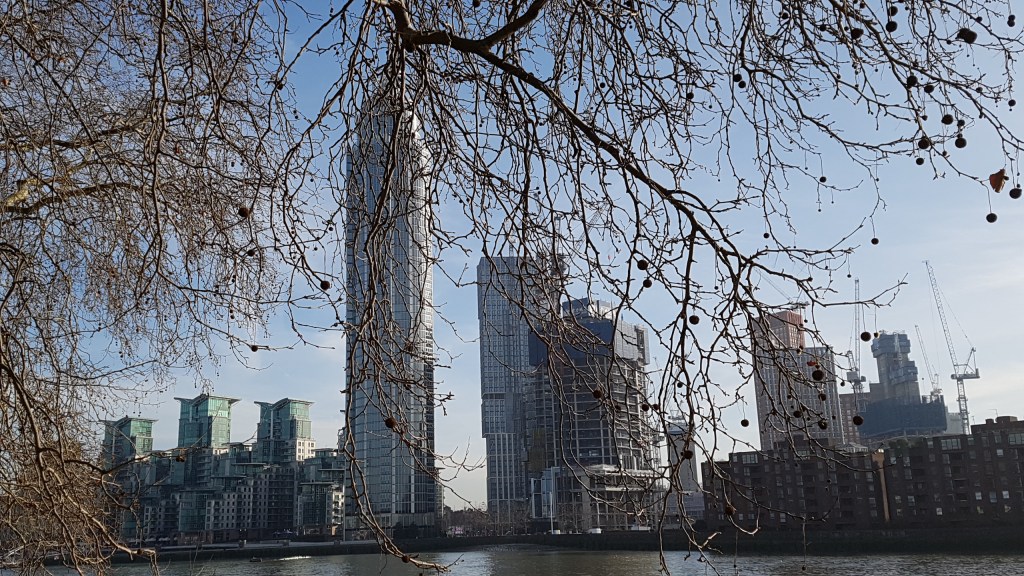
Over the road from St George’s Gardens is the River Thames. From here you can see the many tall buildings of Vauxhall, including the 8th tallest in England. Unfortunately, in 2015 a helicopter clipped to top of this in fog one morning killing several people. At one time there was a landing stage, or pier, leading from the Thames to St George’s Square, very nice for the residents! Today there is Pimlico Gardens with a statue of William Huskisson, a politician who unfortunately became the first person to be killed in a train accident, that train being Stephenson’s Rocket.

The 8th tallest building

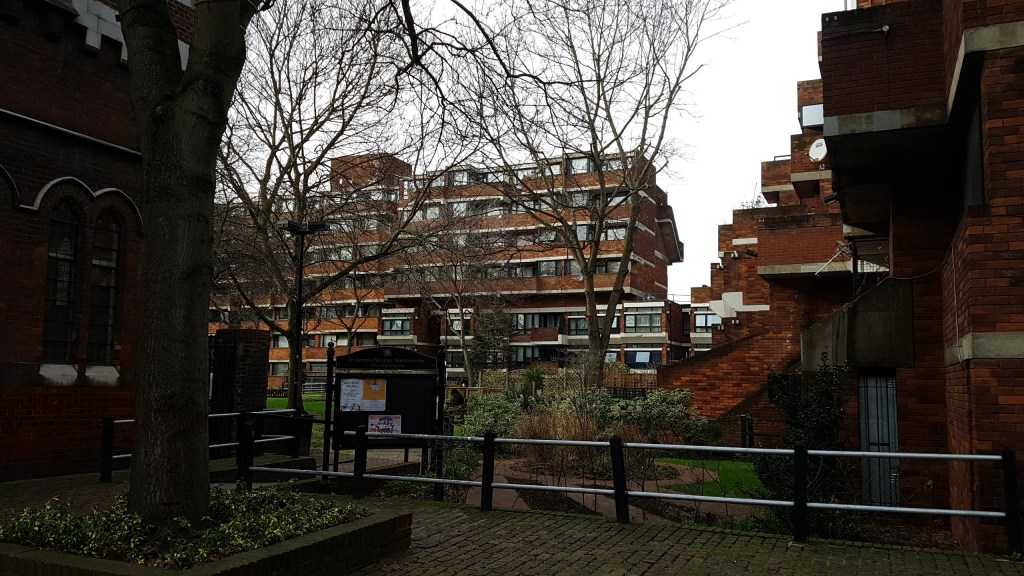
There is a great mix of housing in Pimlico, the beautiful buildings of Cubitt, new (1960’s) award winning estates near St James the Less Church, and the Churchill Gardens estate which boasts Grade I Listed status. There is even a line of Grade I Listed telephone boxes. One estate, the Dolphin, has its own shops and a swimming pool. Being close to Westminster it was popular with MP’s, but also housed a spy, Oswald Mosley and Diana Mitford.

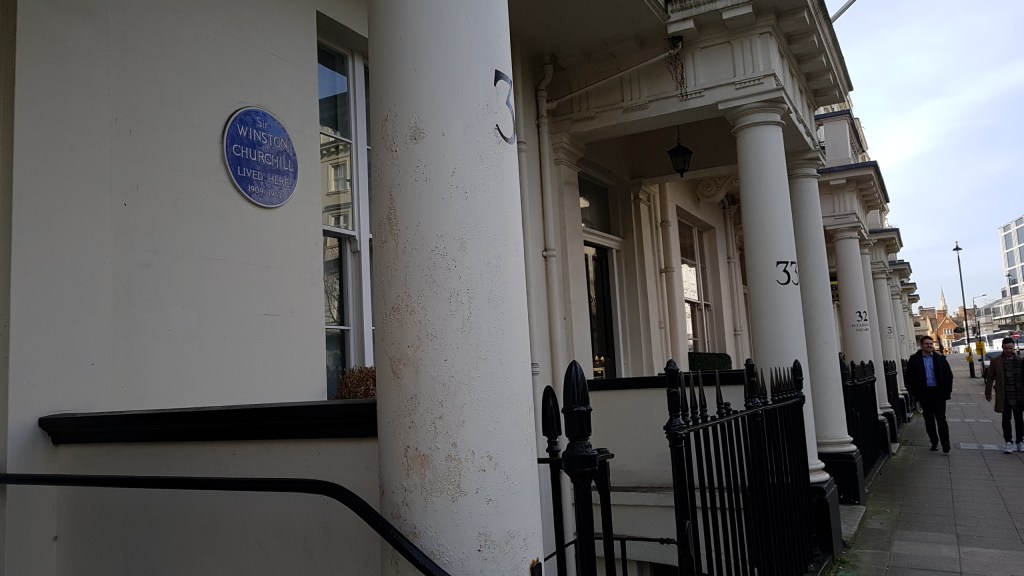
Nearby in Eccleston Square, is where Winston Churchill himself lived and where his first two children were born. Next door is the Labour Party’s former Headquarters from where they ran their 1926 General Strike Campaign.

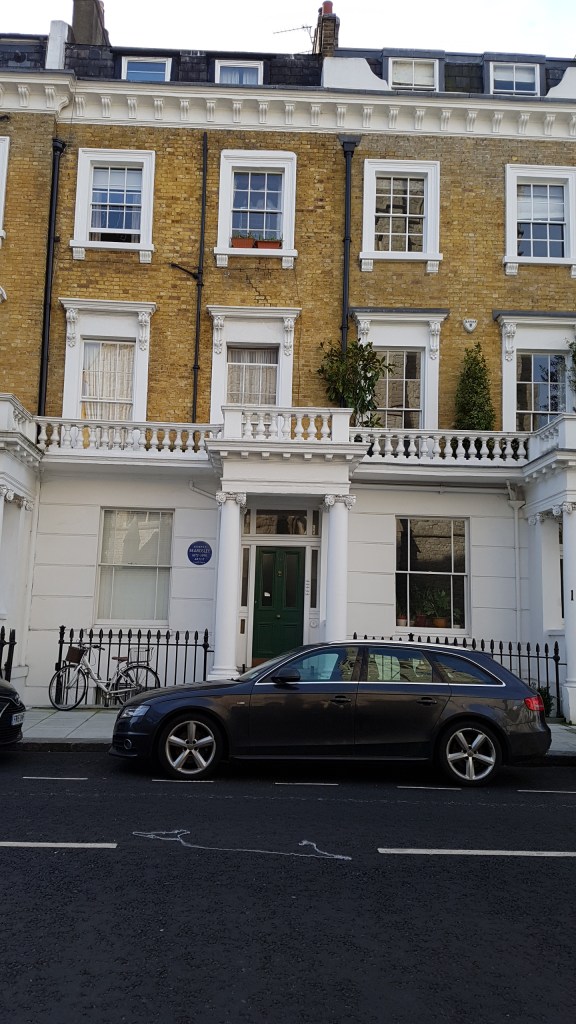
There are other famous people who once lived from Pimlico, including the man who invented Lawn Tennis (Major Walter Wingfield), Laura Ashley, Michael Costa (conductor of music) and Aubrey Beardsley (artist).

Aubrey Beardsley’s house

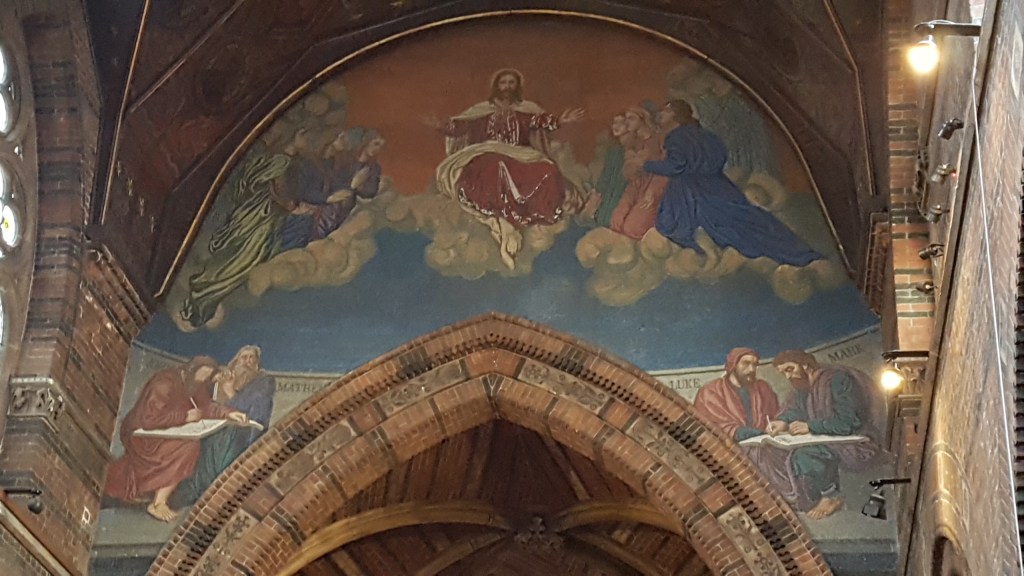
Finally, we ended our walk at St James the Less, a very unusual church. Very dark inside but the detail is amazing – the ironwork, bricks (same brick as the estate it adjoins) and it has the lovely artwork by George Frederic Watts, a Victorian artist of the aesthetic movement. Originally a painting, the paint began to come apart, so the work was made into a mosaic. Being a fan of the aesthetic movement, I was delighted to come across this.

Mosaic by G F Watts

This was the end of the walk and back at Pimlico tube station we said our goodbyes and went our separate ways. Pimlico may be small but it is more interesting than I ever knew.

St James the Less, Pimlico
Dolphin Court
Thomas Cubbit housing, St George’s Square
One of the listed estates
The Packington Estate by St James the Less has won numerous awards for best estate. Each unit has its own balcony or garden

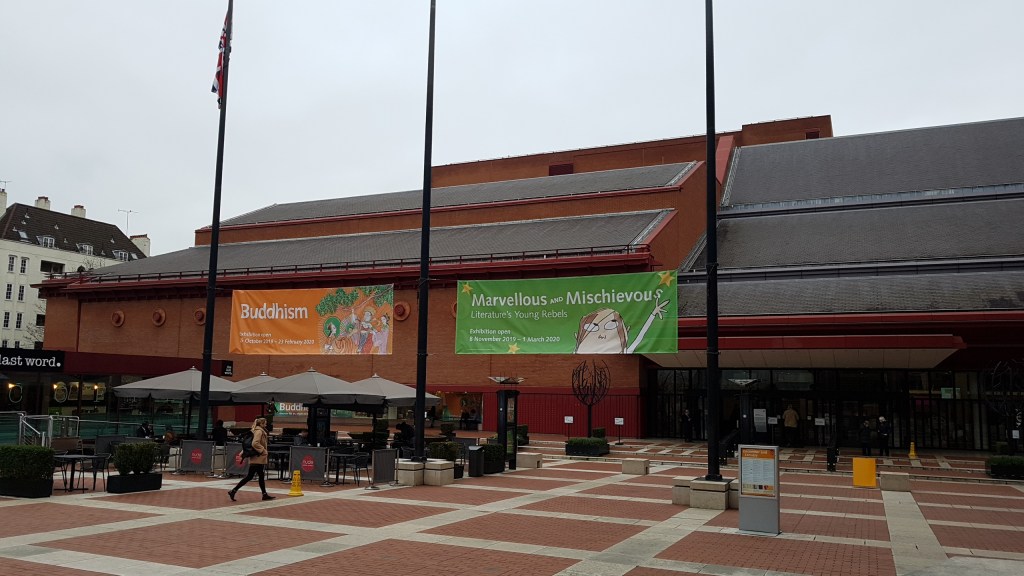
Buddhism Exhibition at The British Library

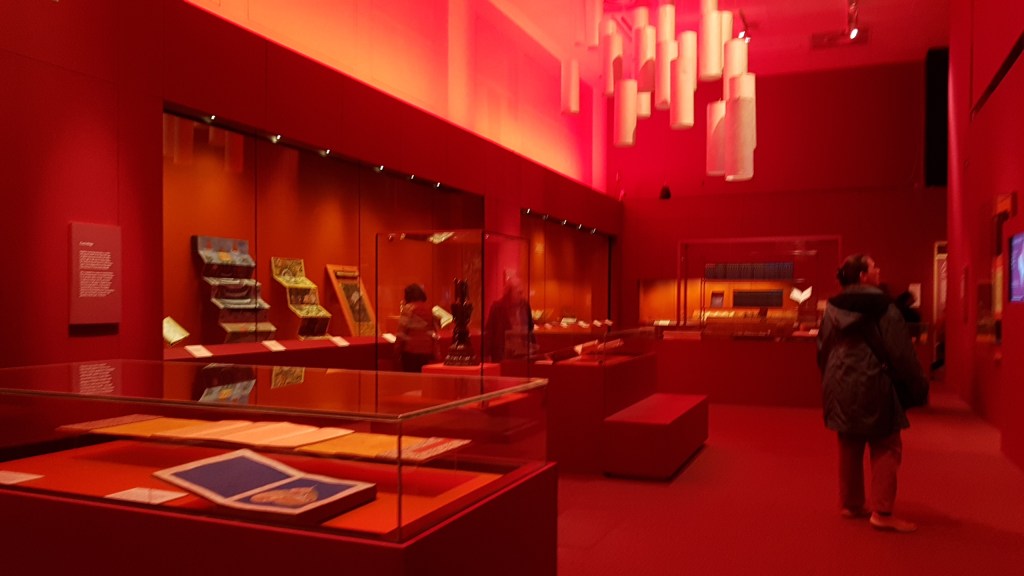
A very red interior to the exhibition, The British Library

There are three main traditions of of Buddhism, Theravada, Mahayana and Vajrayana with around 500 million followers. The leaflet accompanying the exhibition tells me that 300,000 of those live in the UK. Originating from India, the Buddha was born Prince Siddhartha Gautama over 2,500 years ago in modern day Nepal.

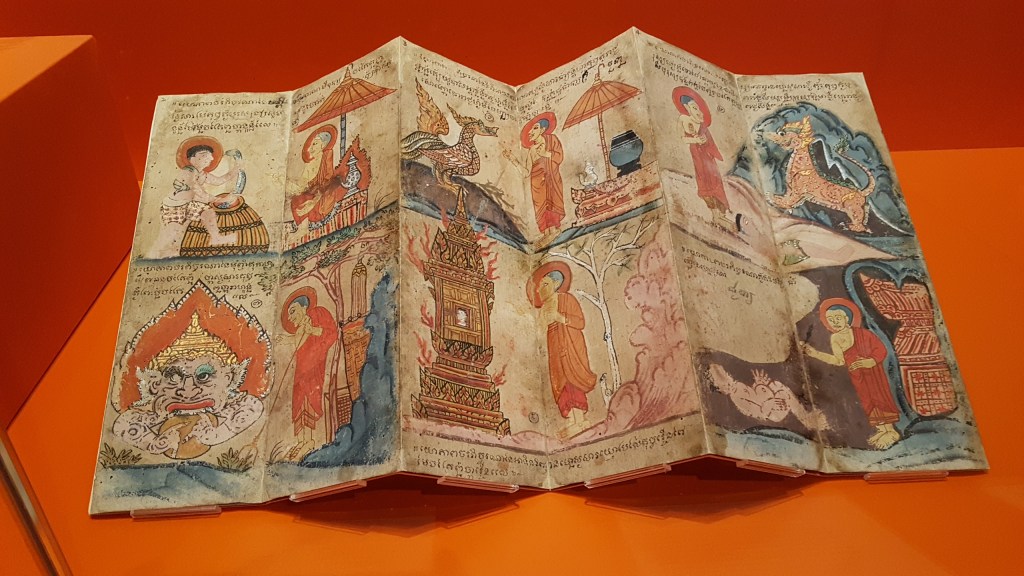
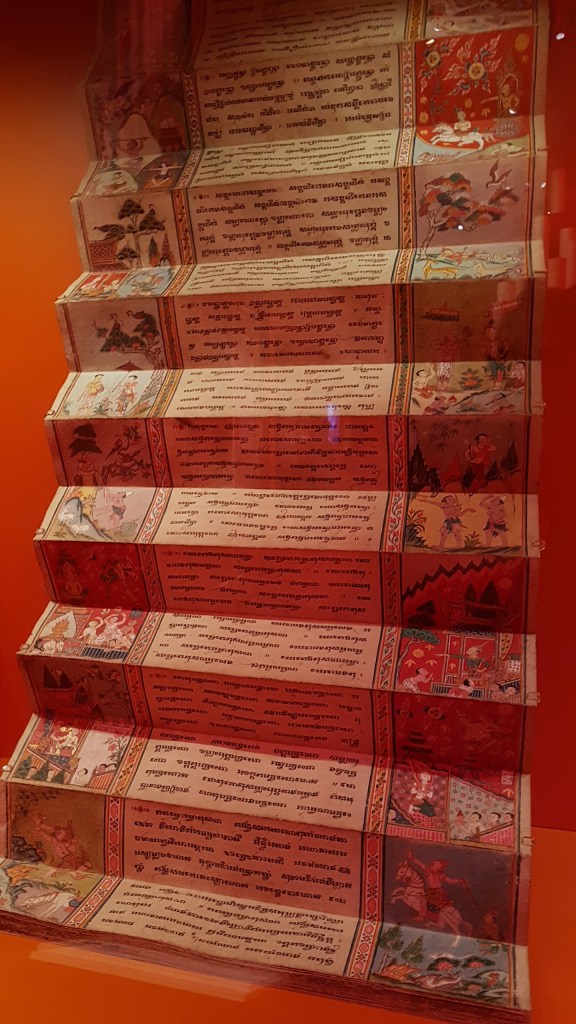
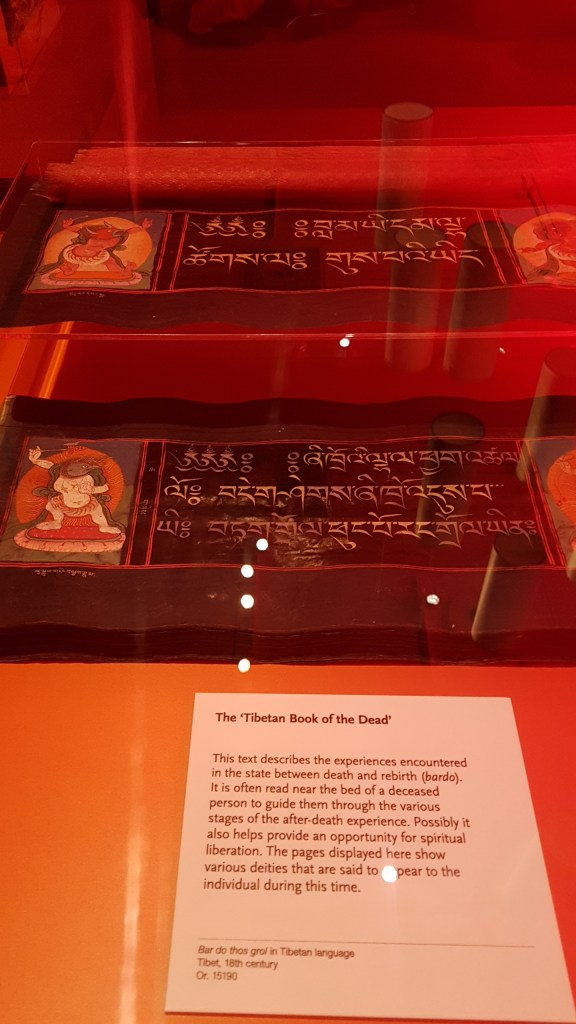
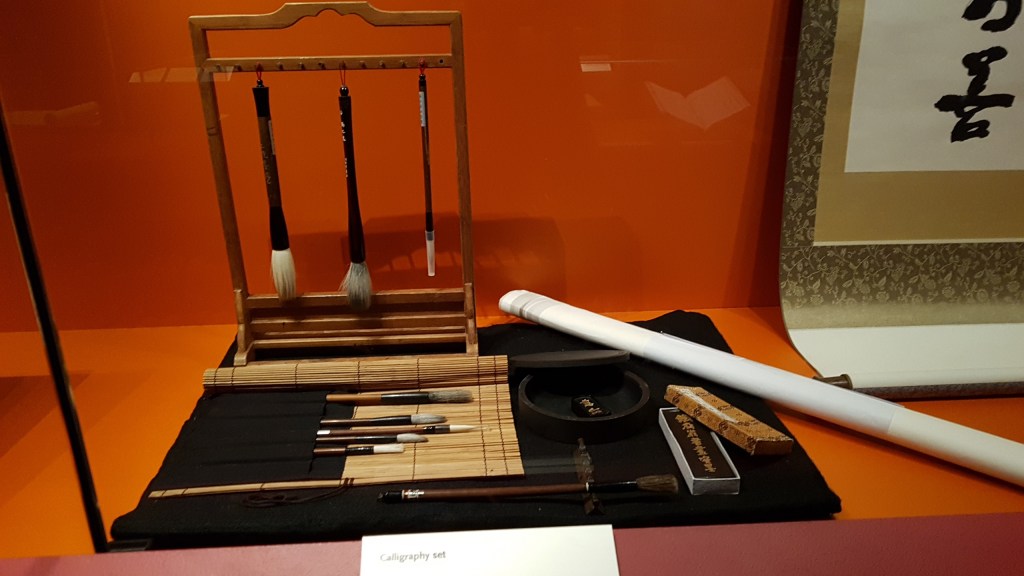
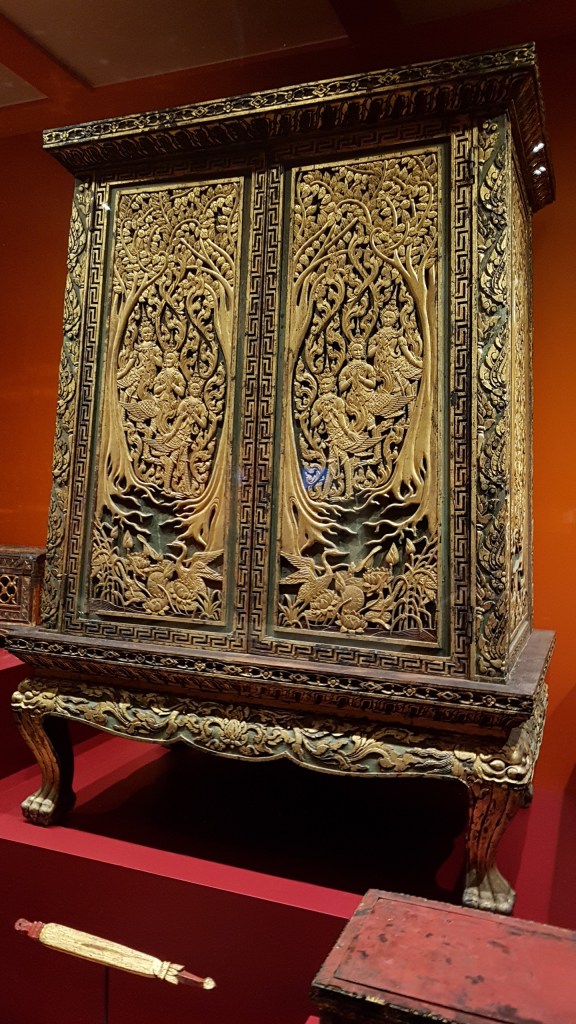
The exhibition documents the Buddha’s life from birth to death in beautifully coloured scrolls and then goes on to explain Buddhist philosophy, the spread of Buddhism and its practice. The Buddha’s teachings were written on palm leaves and later block printed. Gold and silver was also used. The calligraphy and art work is quite beautiful.

Meditation Manual to overcome fears and aversions

It is said that the Buddha had previous lives (reincarnation being one of the major believes, as in Hinduism) and the last ten of those are mentioned in a document on show (see photo below). There are at least twenty-four previous Buddha’s, who predicted Buddhism. Buddhist believe that there is another Buddha to come. He is known as Maitreya he currently resides in one of the Buddhist’s heavens.

The last ten lives of Buddha

For monks there are 227 rules they have to follow. For the women there are 311 rules, the extras are mainly for their own protection. The Noble Path, or Middle Way, offers a path to liberation from the cycle of suffering and rebirth.

An interesting exhibition, the colour work on the scrolls is amazing, very bright. I came away knowing a little bit more than I did in the beginning, the stories a reminder of its close relation….Hinduism.

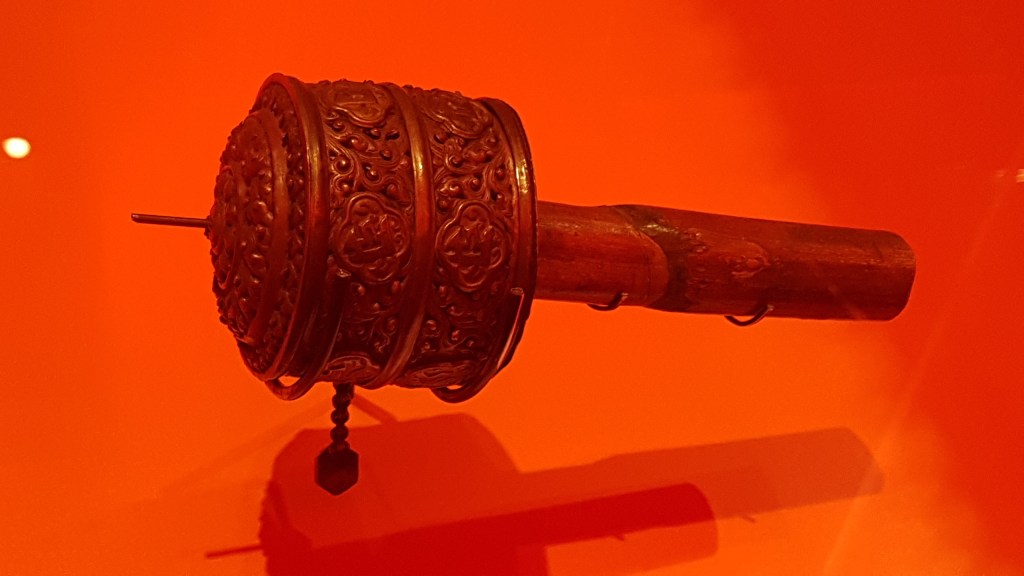
Prayer Wheel

Calligraphy set – China
Manuscript Box
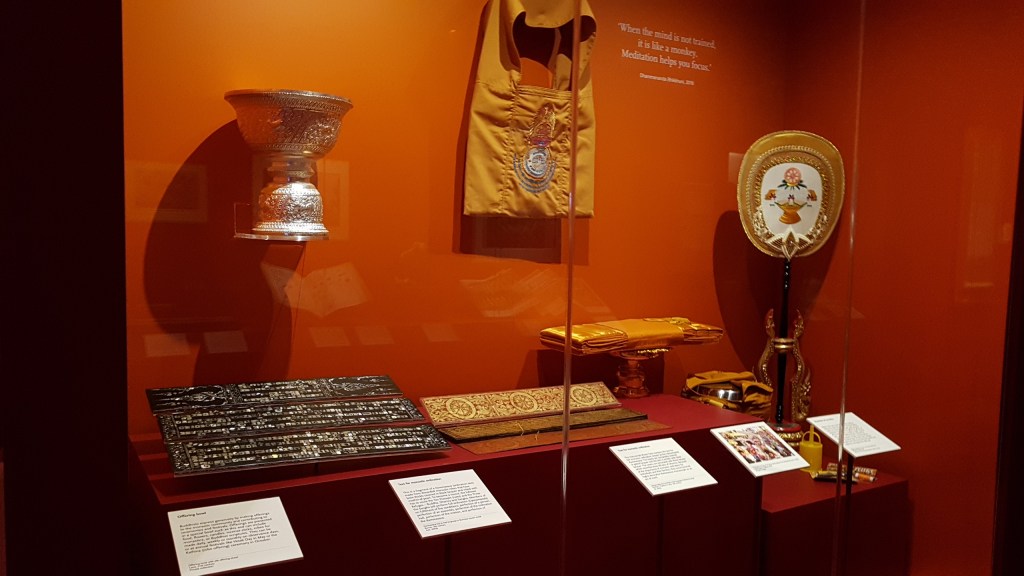
Ordination items

The exhibition is on until 23rd February

Nearest station is Kings Cross/St Pancras

Whitehall House, Cheam Village

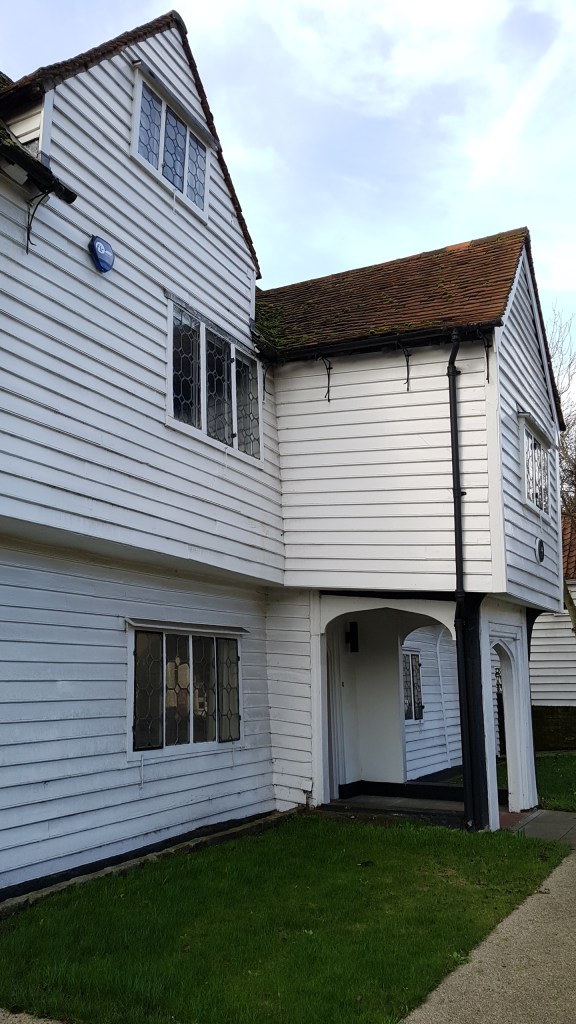
Whitehall House

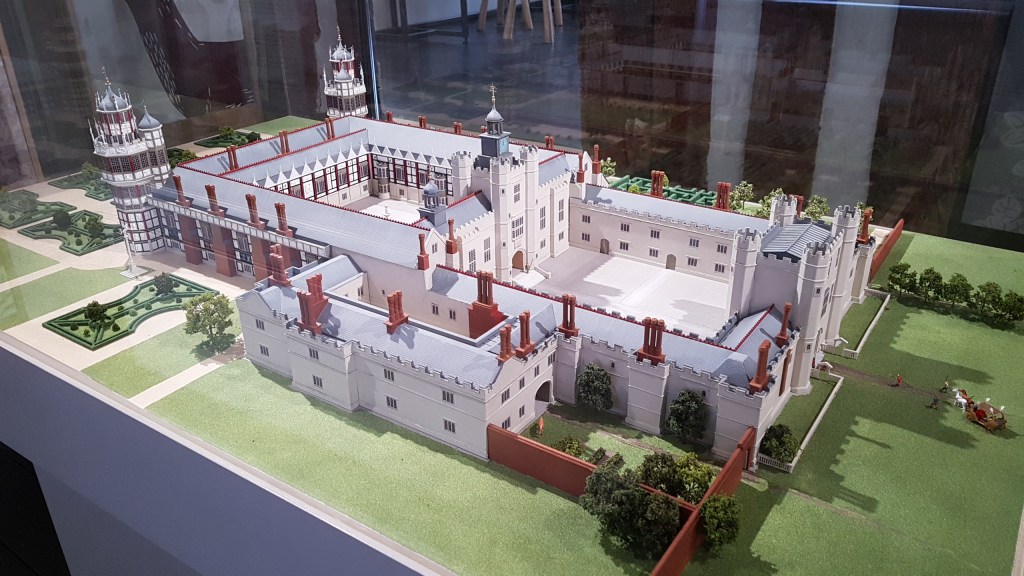
Built in around 1500, the white wooden façade of Whitehall House stands out on Malden Road as the bus pulls into the village. The whole of this area is steeped in history. It was occupied by stone age people and the Romans built London Road (the A24) into London. The village stands between Worcester Park and Sutton (London Borough of Sutton). Farmers, potters and brewers worked here, and later Cheam bricks were produced here. King Henry VIII built a palace at Nonsuch Park (a short walk away) after having seen a palace in France. The name Nonsuch comes from there being non such palace like it! Gold leaf was used in abundance.

Model of Nonsuch Palace, built by Henry VIII

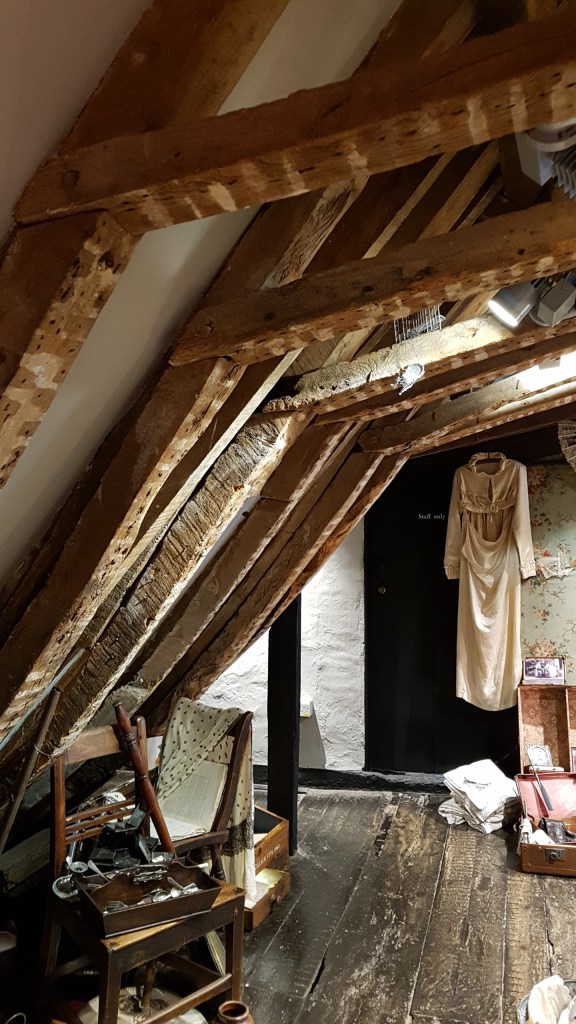
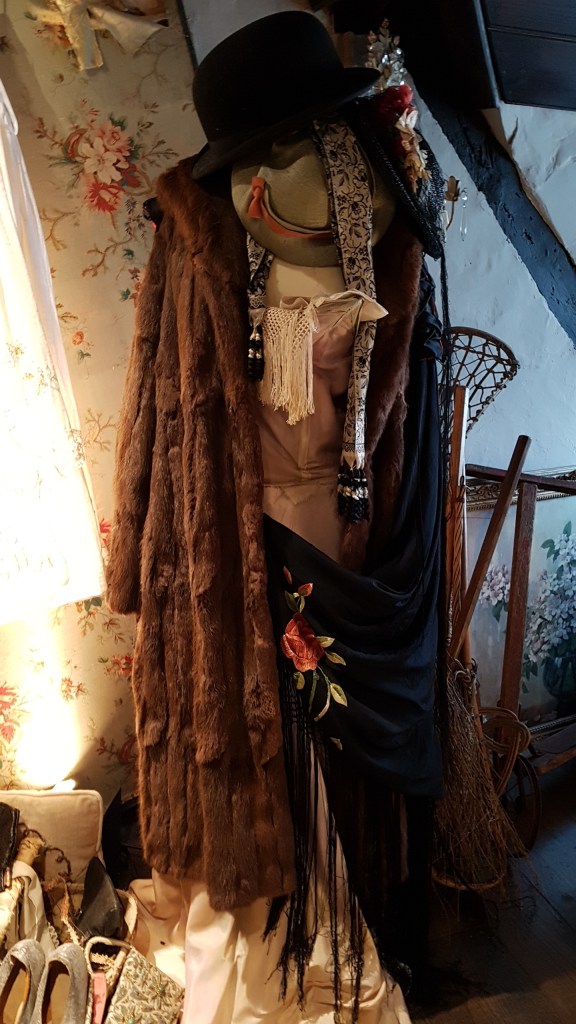
Whitehall House is open on Thursday, Saturday and Sunday and is run by volunteers who are knowledgeable and helpful. The house is free to explore. Inside are original beams and a wall where the property once ended (before it was extended). We were offered a leaflet pointing out the main features/things of interest to guide us through the ground, first floor and attic rooms. Firstly, we watched a short video about the history of Cheam. Then it was off to explore the rooms. I loved the twisty staircase (handrail for safety), and particularly enjoyed the attic rooms with the mish-mash of items from the past. Collections of things belonging to the previous occupants are set out in bundles around the rooms. Even in the roof space there are things dangling – children’s clothes, a chandelier – and the roof itself is original! My camera was clicking away like crazy.

Original roof. The attic rooms

There was lots of information up in the attic rooms. Lists of people who lived there, including the family and servants, a door which was marked with Royalist leanings, a marked place on the floor where the original staircase was, and lots else.

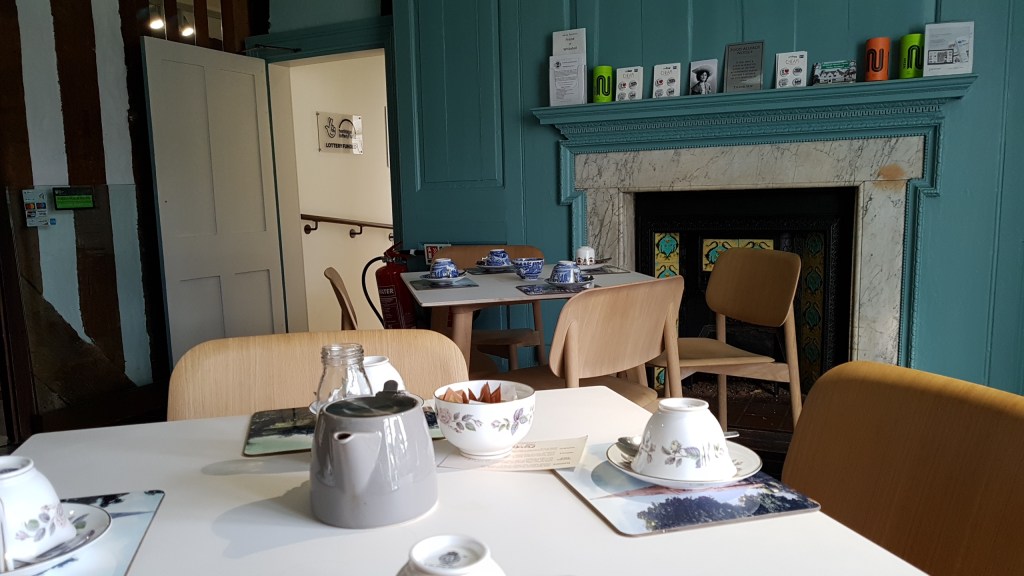
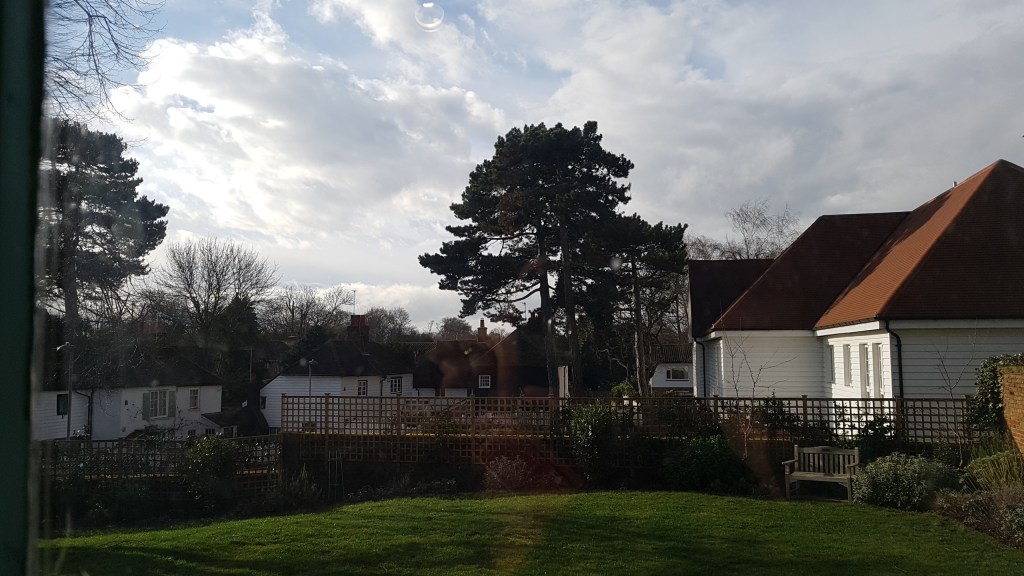
When we finally returned to ground floor we were in need of a cup of tea! The lovely vegetarian/vegan café was waiting for us. Dainty cups and saucers sat waiting on tables and behind us a view of the garden. A relaxing end to our visit. I must add that the toilet facilities are really good. These things are important!

The cafe

The house had a makeover a while back and they’ve done a splendid job. I was told that the company who did the work have been in business since before Whitehall House was built! I guess they felt right at home. It really is an amazing place with a great history.

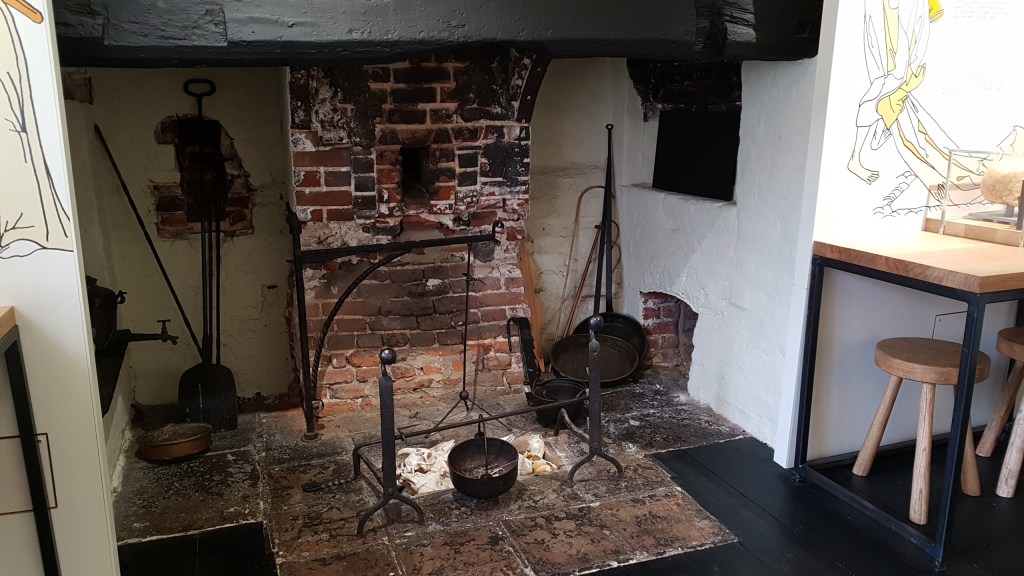
Fireplace, Ground floor room

While we were there, we picked up a couple of leaflets – Whitehall street trail and Cheam trail. We shall be back to check those out at some time as Cheam village has a glut of wonderful buildings and spaces to enjoy.

The view from the cafe over the garden and beyond

Design a site like this with WordPress.com
Get started