Bermondsey Walk

Today I joined a group of people on a walk through Bermondsey. How lucky were we with the weather? Yes, it was a chilly wind, but the sun was shining and there wasn’t a rain cloud in sight!
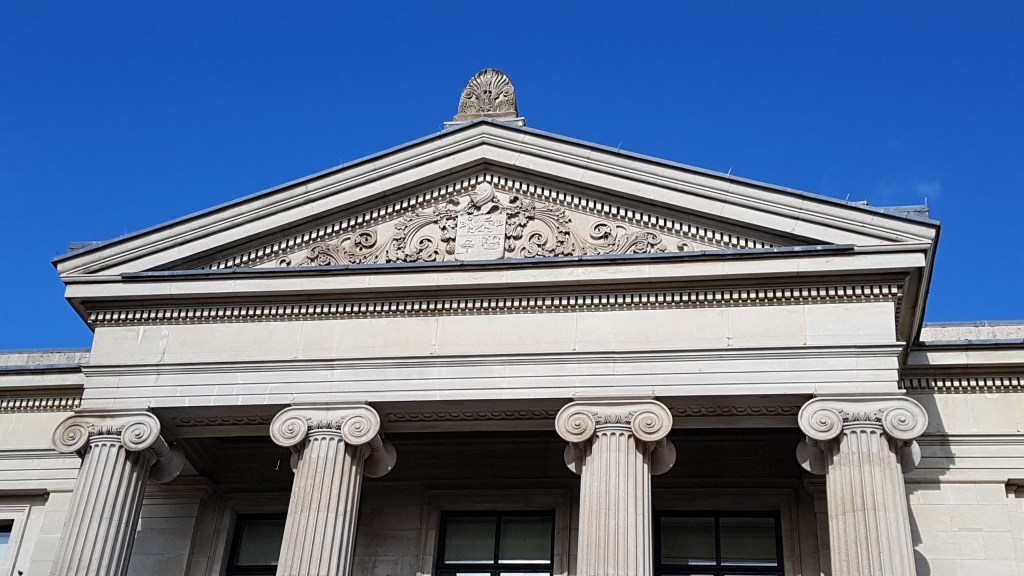
Council Offices showing the Bermondsey Crest

I was particularly keen to do this walk as my grandfather’s family lived here. Actually, my grandfather four generations back was the first to live by the River Neckinger. The river has long since been built over but there are clues to the past, and if you know where to look (I do!) you can see where the river finally runs into the Thames.

The walk began from Bermondsey tube station. The road outside had barriers along it due to the Vitality Half Marathon taking place. Lots of runners (including someone dressed as a rhino) were being cheered on.
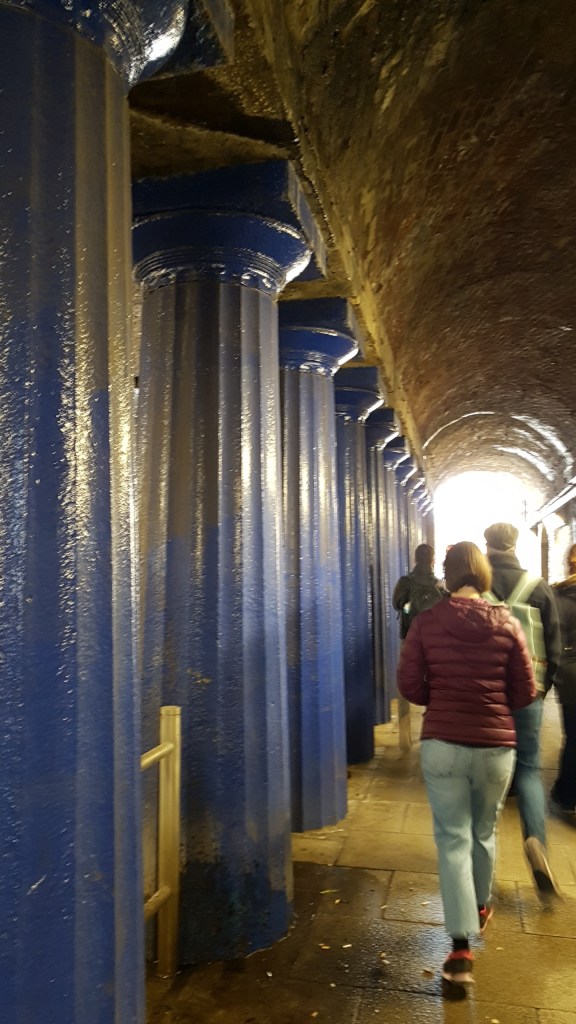
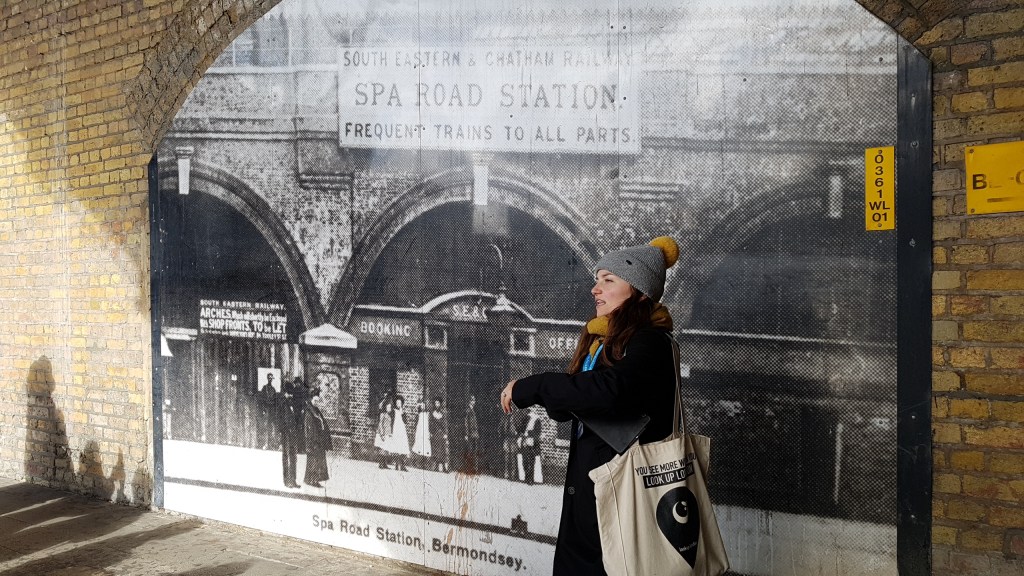
Walking under the bridge by the old Bermondsey Spa Station
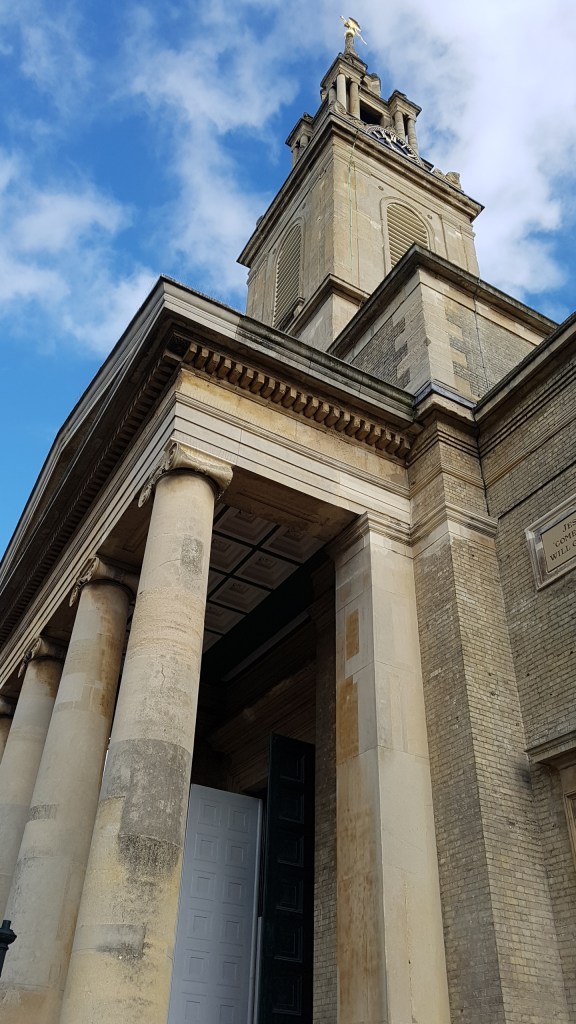
St James Church

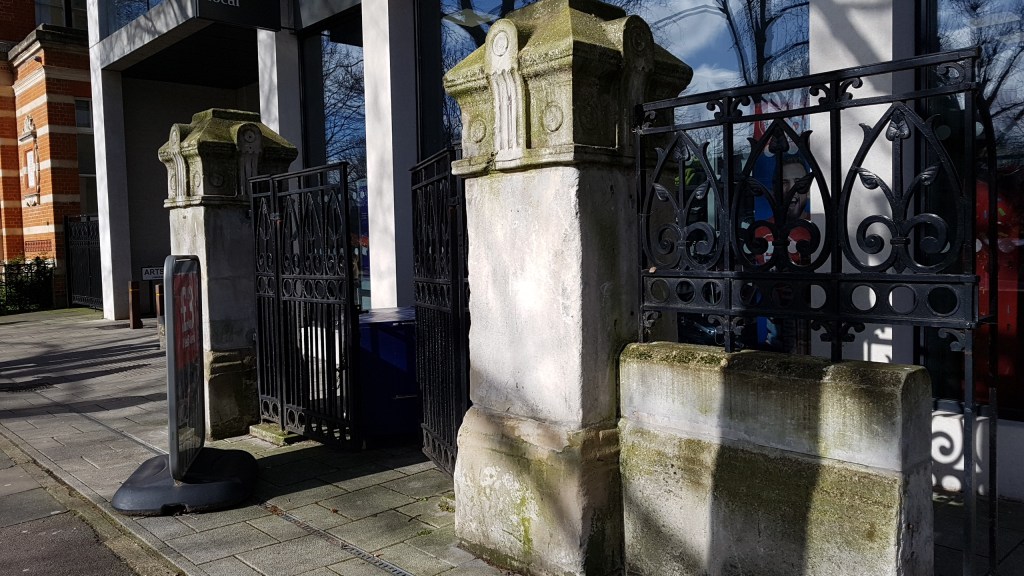
Our first stop, St James Church, is quite an imposing place with Roman pillars. (Since coming home I have discovered that my great-grandfather married here!). We carried on into Spa Road where Bermondsey Spa Road Station once stood. We walked under the bridge (rather nice pillars) and out the other side where there is a park where once the spa waters were. It was the place to come in those days. On the other side of the road is the council offices. Not the original as they moved along a bit, but on the pediment of the building you can see the Bermondsey Crest. The only part of the original council building remaining is part of the wall and gates, behind which is now Sainsbury’s Local!
Further down is the library, which is original. Above the windows are busts of writers. Inside there is Buddhist Prayer Room. Our guide showed us a photo of it and said that it was in use at weekends but they are very friendly people there, and if you go along in the week you can see it for yourself.

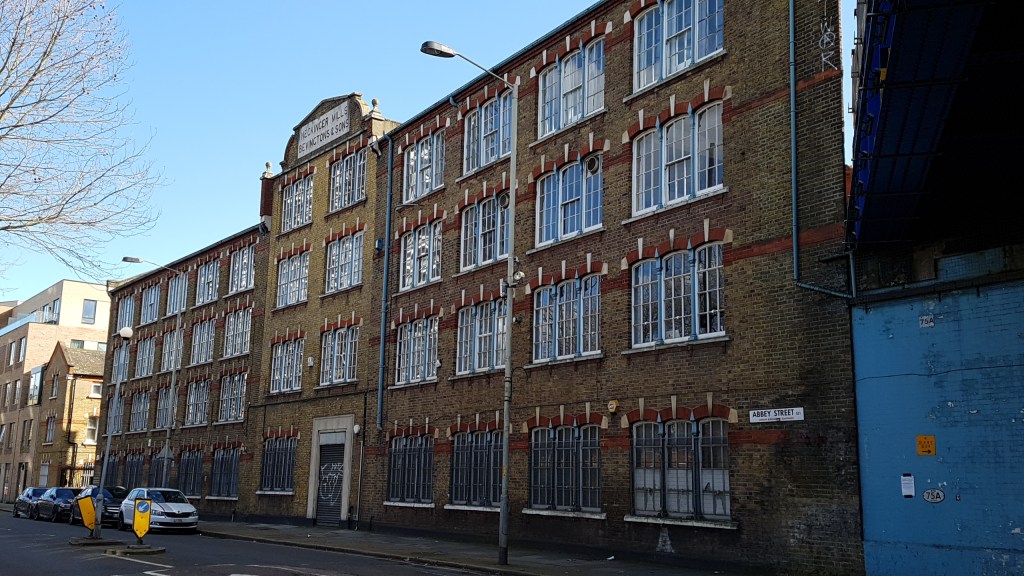
The area had many factories. Most of these have now been converted into flats. There is Hartley’s (the jam makers), a custard factory and a biscuit factory. However, there were also factories dealing in curing furs. One such factory Alaska cured seal furs, another cured goat skins, and in one road Christies hat factory used felt . Then women working there had to use a solution of mercury and some other acid to separate the fibres. This is where the saying ‘mad as a hatter’ comes from, because the mercury caused loss of memory, slowness, slurred speech and the shakes. It was only outlawed in 1912 in this country.
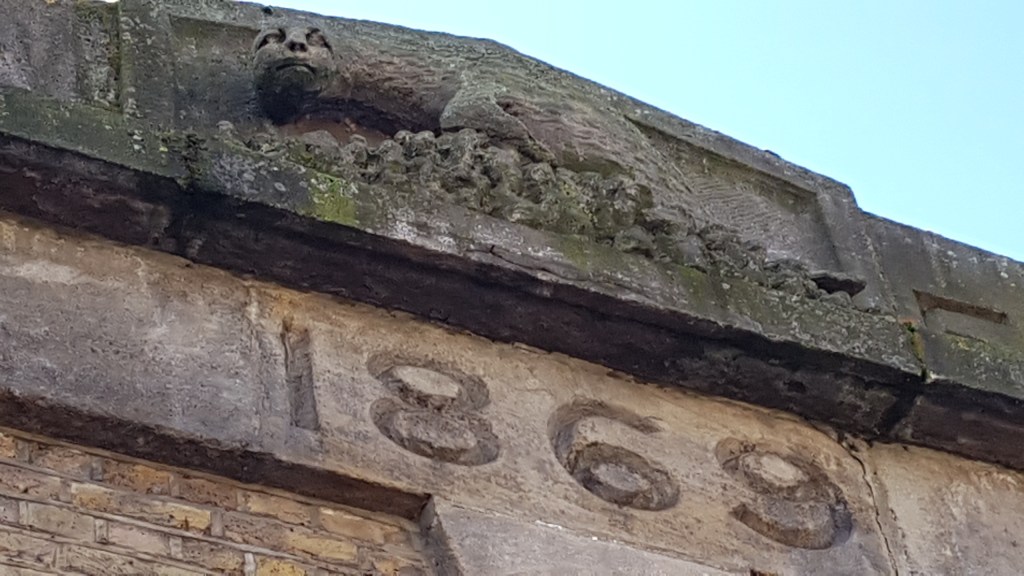
Alaska Factory where seal skins/fur was cured

Tanning was also big business in this area. Of course central London did not want the smell so factories were downstream, where big open vats were used filled with dog poo and urine to cure the hides. People were paid to collect dog poo for this industry! My great grandfather started out as a boot maker. He was in the right place! The smell must have been dreadful, and all the effluence poured into the Thames. Street names, like Tanners Lane, show the past, along with old warehouses now turned into offices and apartments.
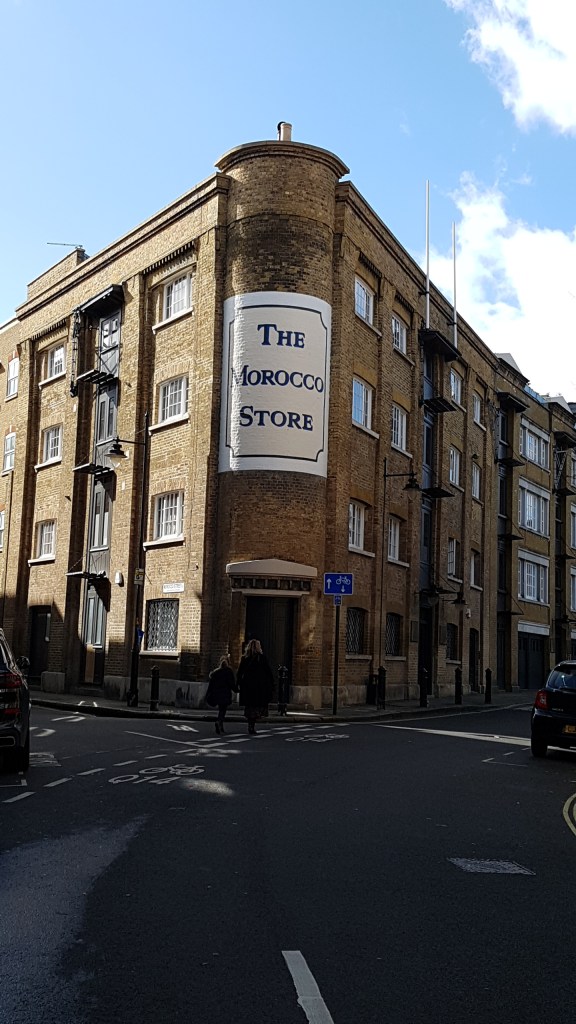
Here goat hides were cured
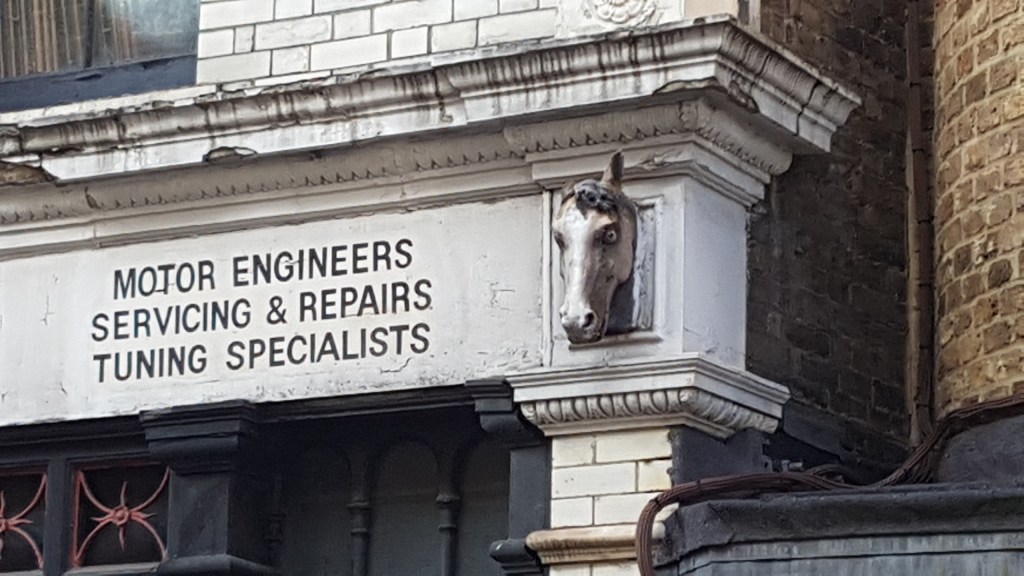
Before it was an auto repair shop this was a Farrier, hence the horse head

The railways seemed to build new stations at the drop of a hat only to demolish them and build another. We came across two very close by. The second one had nothing to remember it by except around the corner where the arches are. They were the former stables. As goods came in horse and carts were used to deliver them. The old houses were once places workers would have lived in. These days the two bedroom houses go for about £600,000!
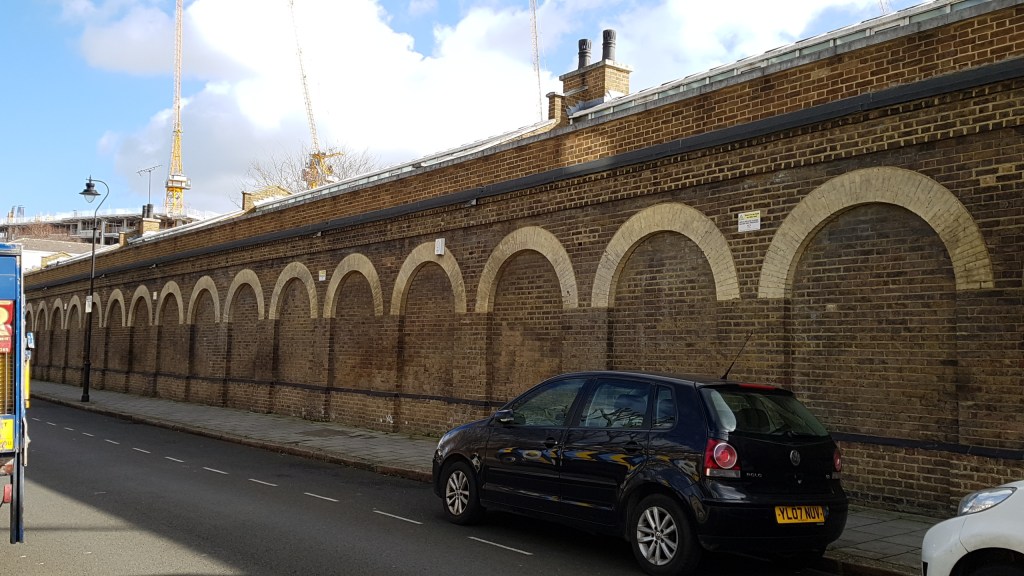
The former stables around the corner from a station (no longer there)
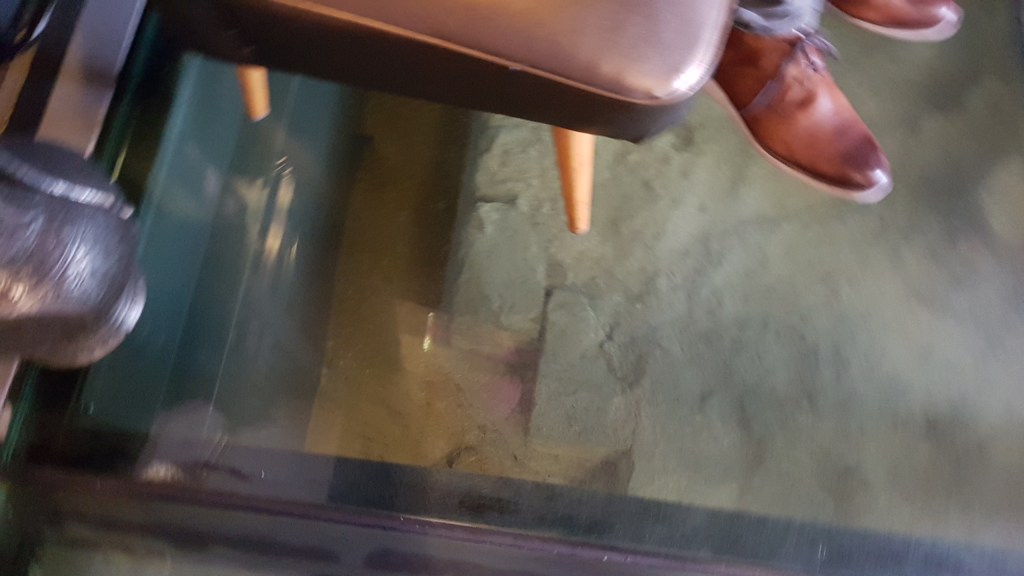
The remains of Bermondsey Abbey under a restaurant floor!

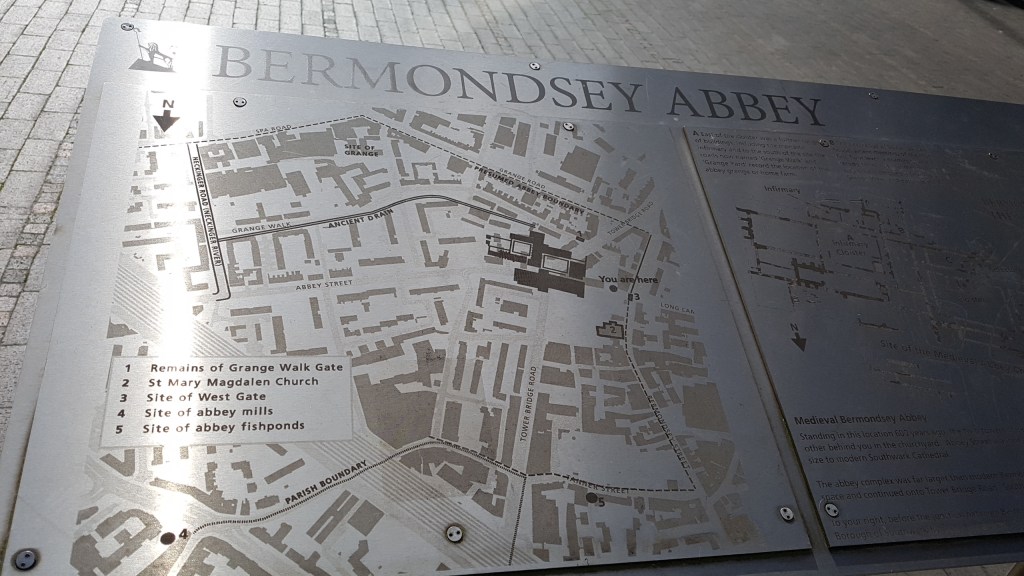
Another highlight was discovering Bermondsey Abbey ruins, close to the now lost Neckinger River. The only way to see them is to go into the restaurant where you can see a small part through a glass flood. Our guide knows them in the restaurant so we were able to go in. Unfortunately they were given the wrong advice about the flooring so only you can only see part of a wall through one panel as the rest of the floor has frosted glass. To change it would cost £40,000!
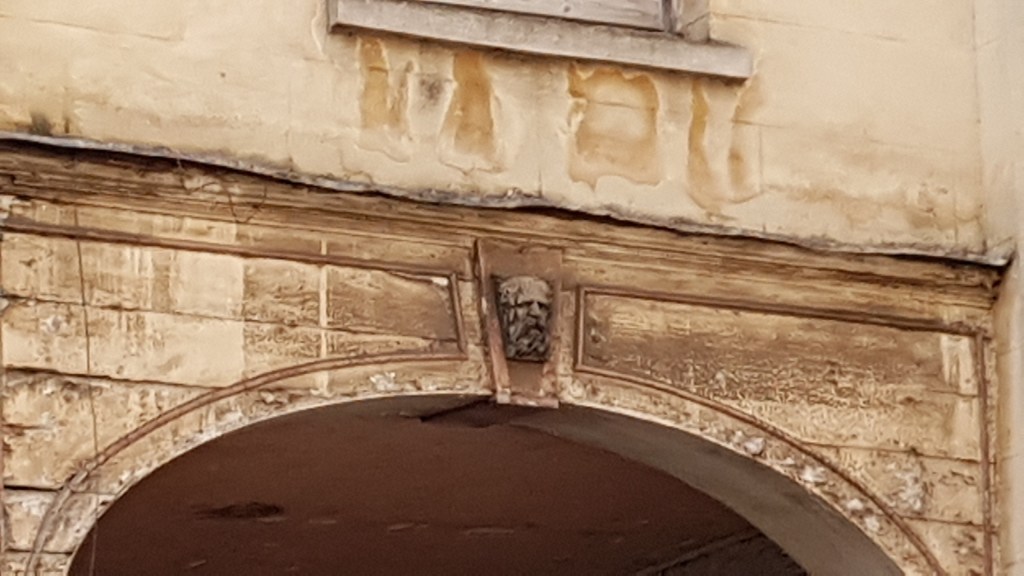
The head of a river god on one of Bermondsey’s oldest buildings

Over the road stands St Mary Magdalene (where, in the graveyard, I believe one of my ancestors is buried). Let’s hope he wasn’t dug up because the people known as The Resurrectionists took bodies for medical research. There is a tower house (now a cafe) where watchmen stayed to keep an eye open for anyone hoping to dig up a newly buried body! Next we stopped at a row of buildings which are the oldest in Bermondsey. Over the arch of one is the head of a river god.
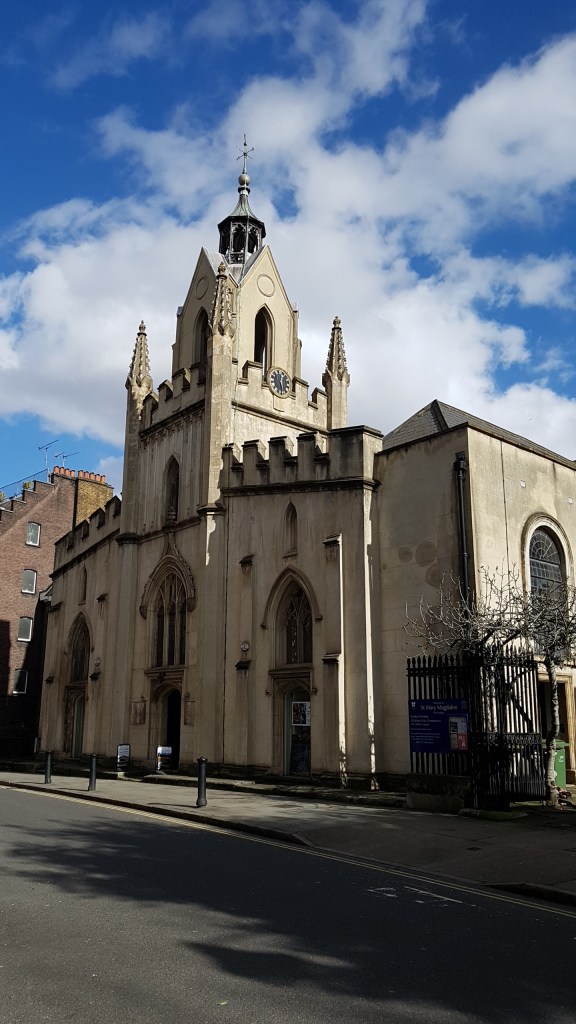
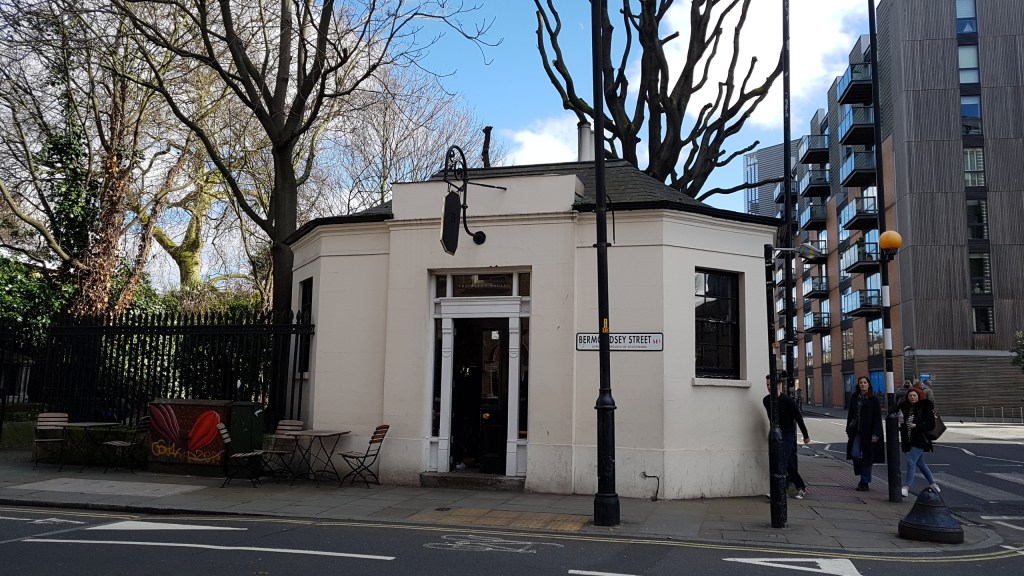
St Mary Magdalene Church
The Watch House over the cemetery (now a cafe)

To finish we walked into Maltby Street, a narrow alleyway where there is a street market selling hot food from around the world. The aroma was wonderful. Some of our group went into some eating places to the side but I went off to explore and take a few more photos before walking to London Bridge station and the homeward journey.
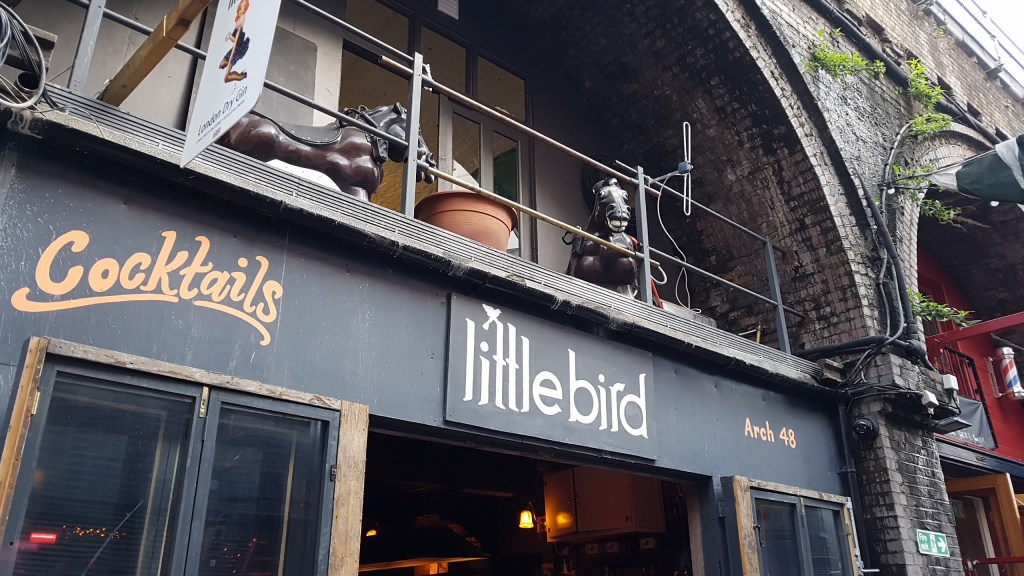
In Maltby Street
The factory close to where my ancestors lived
Our guide tells about Spa Road Station

Wandle Trail – Carshalton Ponds to Merton Abbey Mills

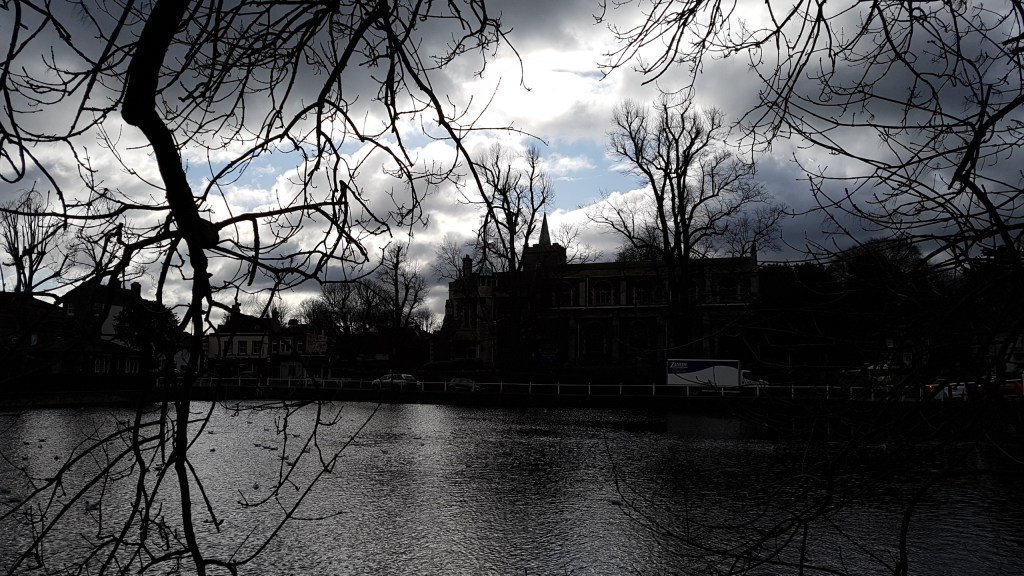
Looking across the ponds

In January I walked the first leg of the river Wandle Trail from Croydon to Carshalton Ponds. Although the book /map I am using breaks the whole walk (Croydon to Wandworth) into two sections I have decided to split it into three sections. The reason being I like to amble and detour sometimes to see things on the way and take photos.

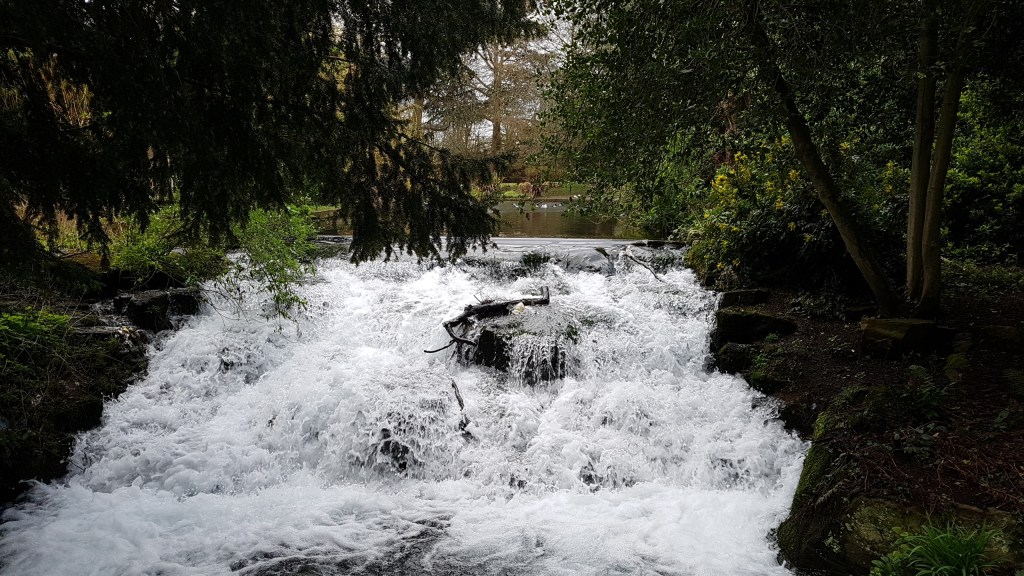
Waterfall behind Carshalton Ponds

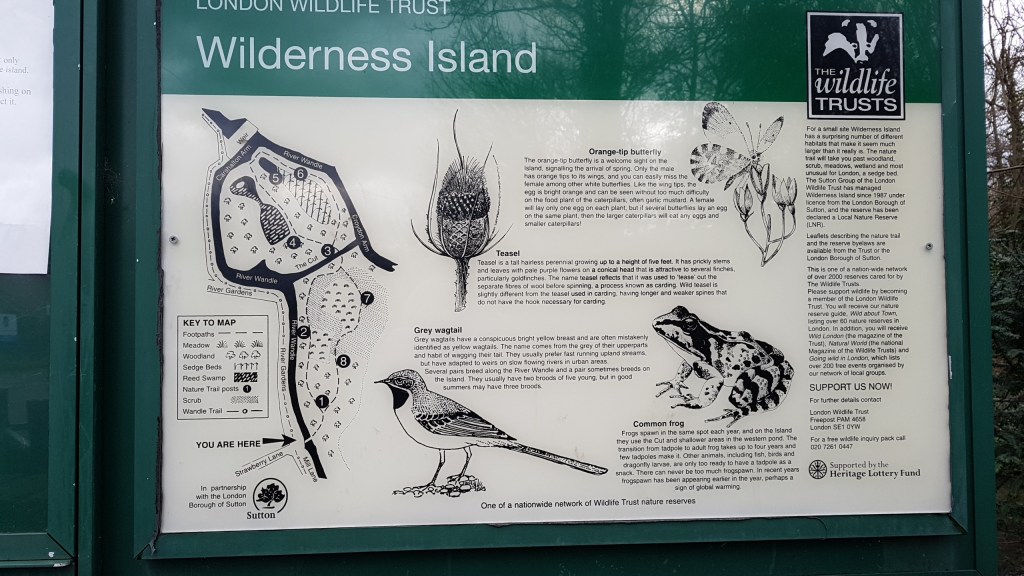
So yesterday I set off on the second leg arriving in Carshalton early with time for a quick hot chocolate in Costa and making use of their facilities before setting off. My first stopping point would be Wilderness Island which meant heading up behind the ponds where spring flowers were blooming and there was a lovely waterfall. I followed the path left and came out on the road. Further up I arrived at Wilderness Island, a nature reserve, and this was my first detour as I stopped and headed inside for a walk along the pathways. A Kingfisher darted between the trees over the river, but it was too quick to get a photo. It was more an ‘oh, wow!’ moment.

Wilderness Island
Claudio Funari’s Community Garden

Back on the trail I headed along a footpath running along the back of the Nature Reserve and followed the river round and eventually coming across Claudio Funari’s Community Gardens. Such a lovely find, so pretty. Crossing diagonally across the road I headed down another path where I became a little unsure if I was on the right path to Watercress Park. Walking across another park I became a bit confused as to where I was so I stopped a guy who knew the area well. I thought I was in Poulters Park but I was ahead of myself as it came up later. Then came Watermeads Nature Reserve (second detour) where I met a group of ramblers who advised that the path in the other direction was less muddy, though it was a slightly longer way round. I took their advice and walked the long way. It was a lovely walk and quiet.

Poulter Park (I think)
Watermeads Nature Reserve

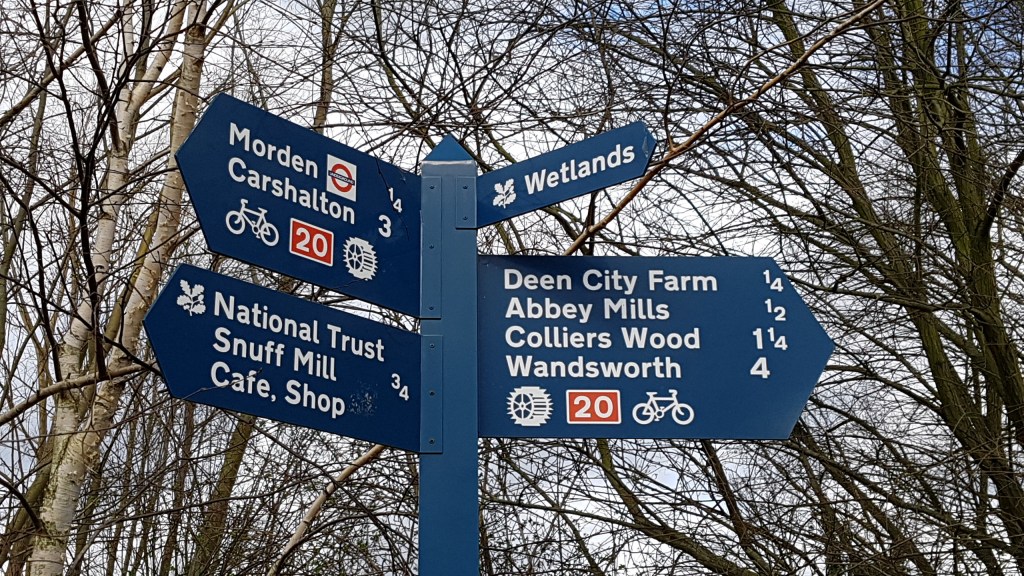
Arriving at Ravensbury Park I came across the bridge that had recently collapsed. Traffic could not cross but pedestrians could go round it. Here there were some flood defenses. Ravensbury Park was quite a delight, very pretty and worth another look sometime. On exiting it was just one road to cross and I was into Morden Hall Park, a place I know well. I headed towards the Potting Shed cafe (National Trust) and had lunch there (toilet break too), before heading into the garden centre for a look around. Morden Hall Park has lots going on for children. The Snuff Mill runs courses of pond dipping and other activities, especially in school holidays (last October half term it was pumpkin carving). There is also a second cafe and second hand bookshop, and by the garden centre is an aquarium and outdoor shed displays.

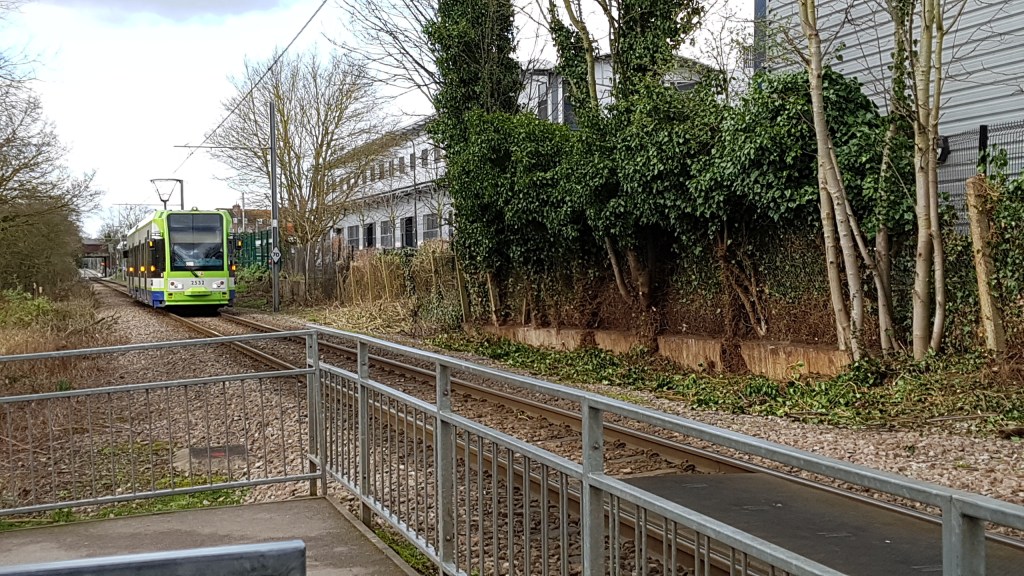
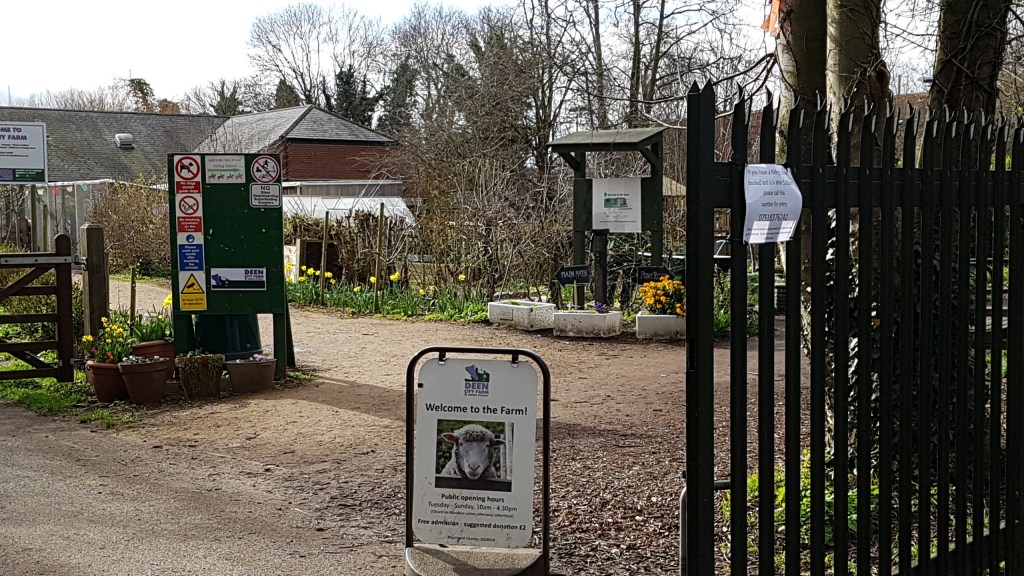
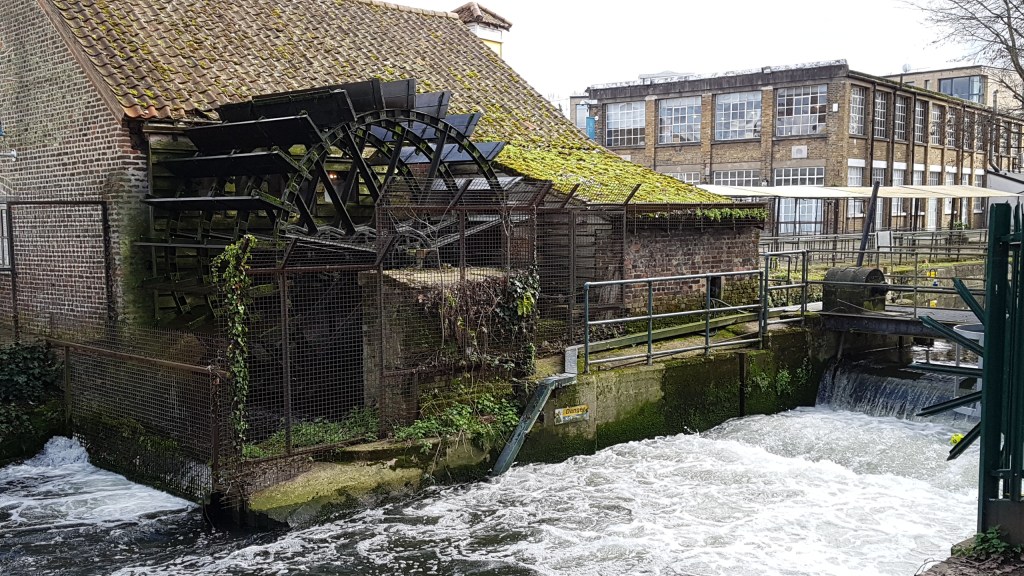
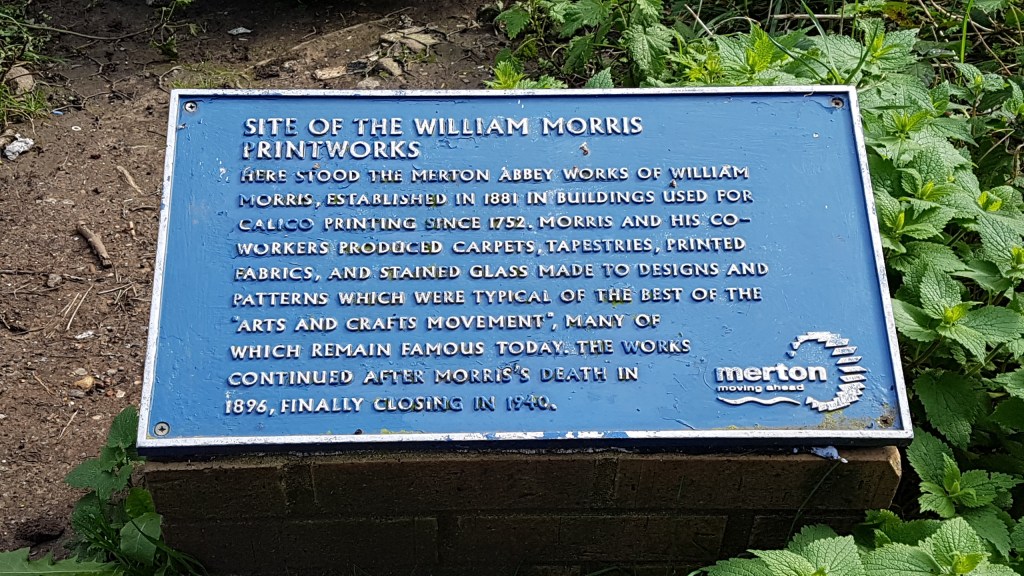
I was now on the final part of my walk across the park (there are wetlands with boardwalks and kids play area, but I missed this section out this time). At one point you have to cross the tram line and then its a straight run down to Deen City Farm and Merton Abbey Mills where William Morris once had his print works. Here the walk ended.

Just before existing Ravensbury Park
The Snuff Mill, Morden Hall Park
Morden Hall Park
Tram crossing

I’d chosen yesterday to walk as it was the best day of the week (the weather has been keeping me from being outdo0rs – I am a fair weather walker!) With three layers and a jacket and hat I was never really cold. The walk was just over 5 miles and took around two hours with stops for lunch and photos.

Deen City Farm enttrance
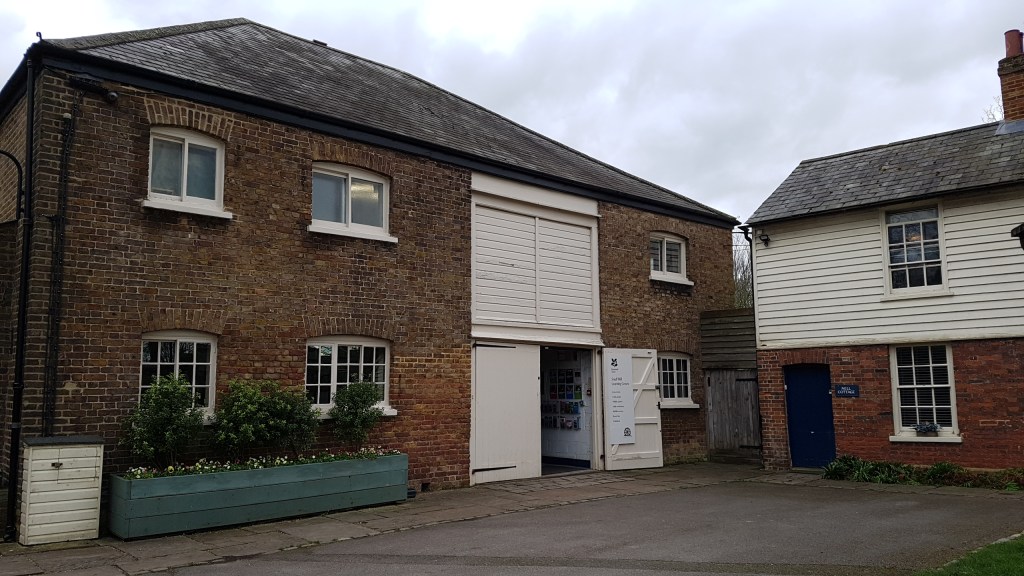
Working water mill at Merton Abbey Mills

Short walk in Hammersmith

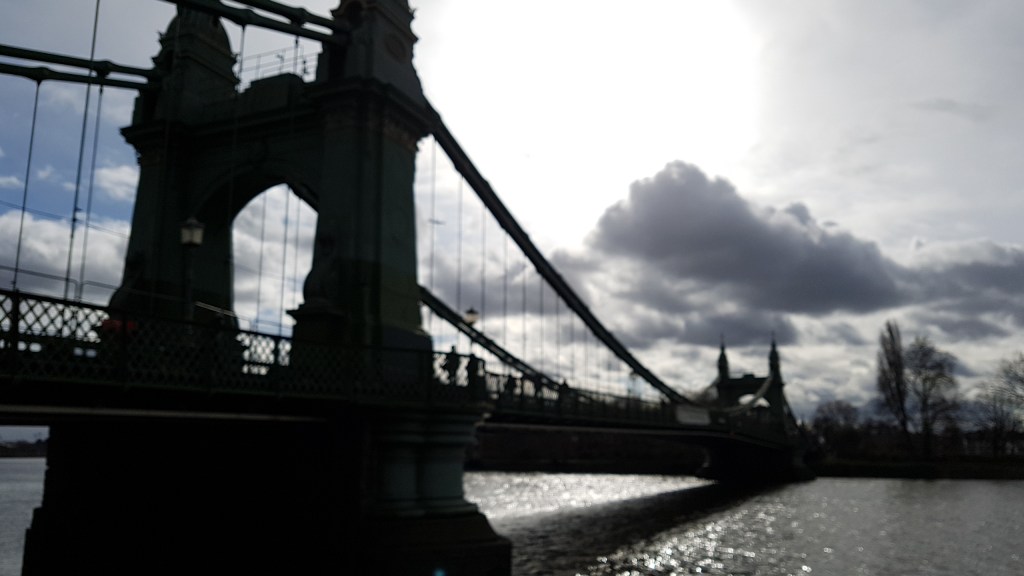
Hammersmith Bridge

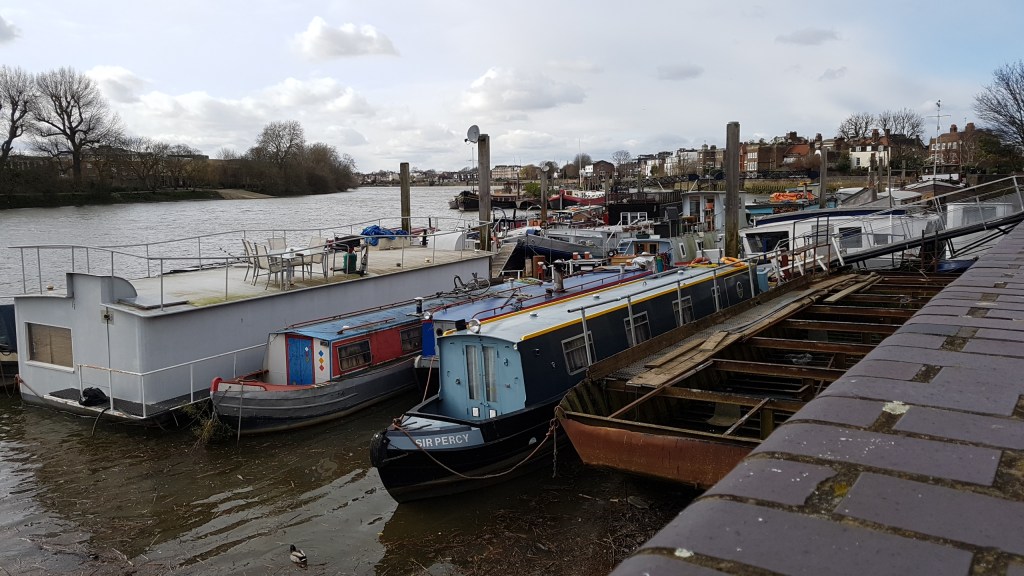
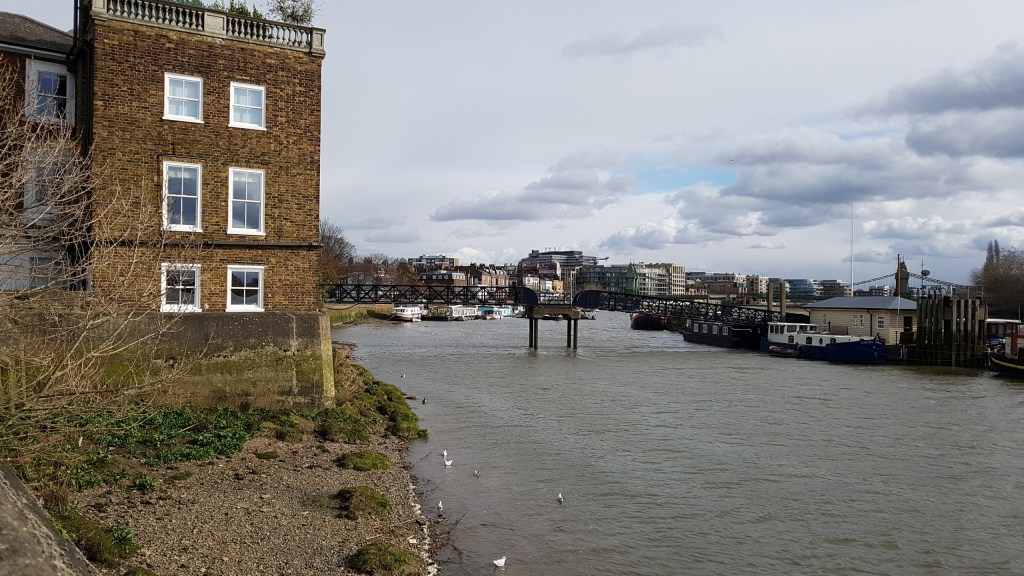
Every Tuesday I go along to a writing group meeting in a cafe in Hammersmith. Today I arrived early so I took a short stroll along part of the Thames Path, a path I know quite well. Above is a photo of Hammersmith bridge designed by Joseph Bazalgette and opened in 1887. Currently the bridge is closed to traffic as major repairs are required, but pedestrians can still access it.

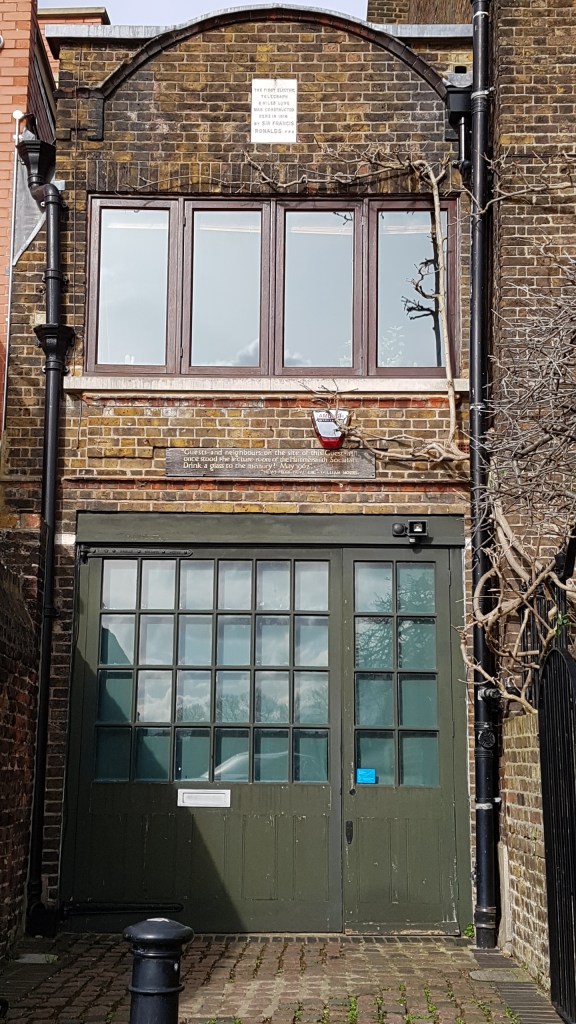
The Coach House

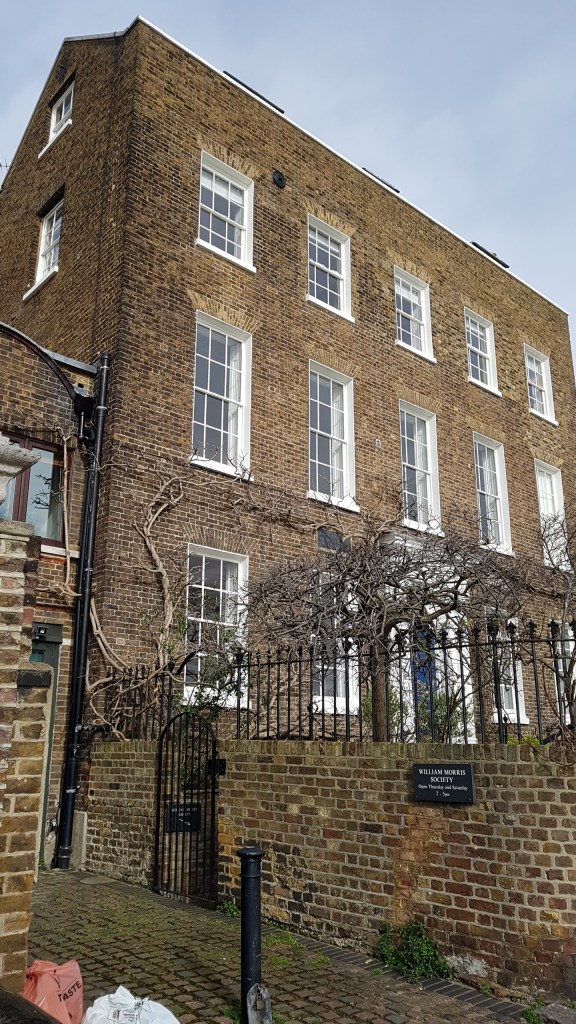
I walked just a little way along the pathway until I came to Kelmscott House where William Morris (a major influence in the Arts & Craft Movement and founder member of the Pre-Raphaelite Brotherhood) lived from 1778 to 1896. The house is privately owned but The Coach House is home to the William Morris Society and open on certain days of the week. It is well worth a look. I visited several years ago. The Coach House is where the Hammersmith branch of the Socialist League met. There you will see a printing press used by William Morris, as well as tiles and furniture.

The main house

The house is just a stones throw from Emery Walker’s House, which is presently closed, but I aim to visit when it re-opens. Emery Walker was a good friend of William Morris and they often met together.

River Thames at Hammersmith
Another Thames view

Pimlico

The morning of this walk began misty, but by the time I met the group I was walking with (our leader a Blue Badge Guide), the sun was out and blue sky was all around us.

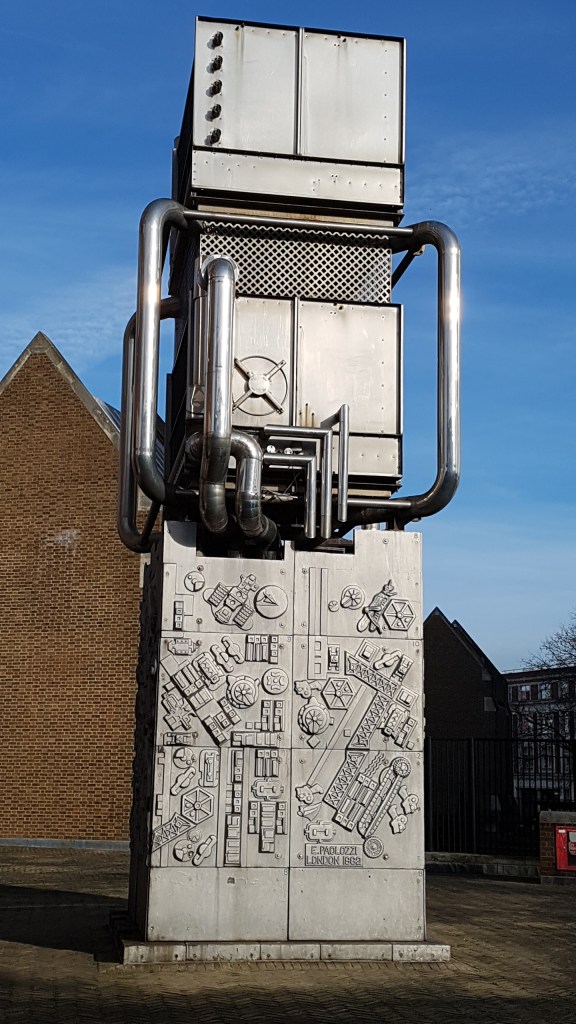
Ventilation Shaft near Pimlico tube station – sculptor –  Eduardo Paolozzi. This is a listed artwork

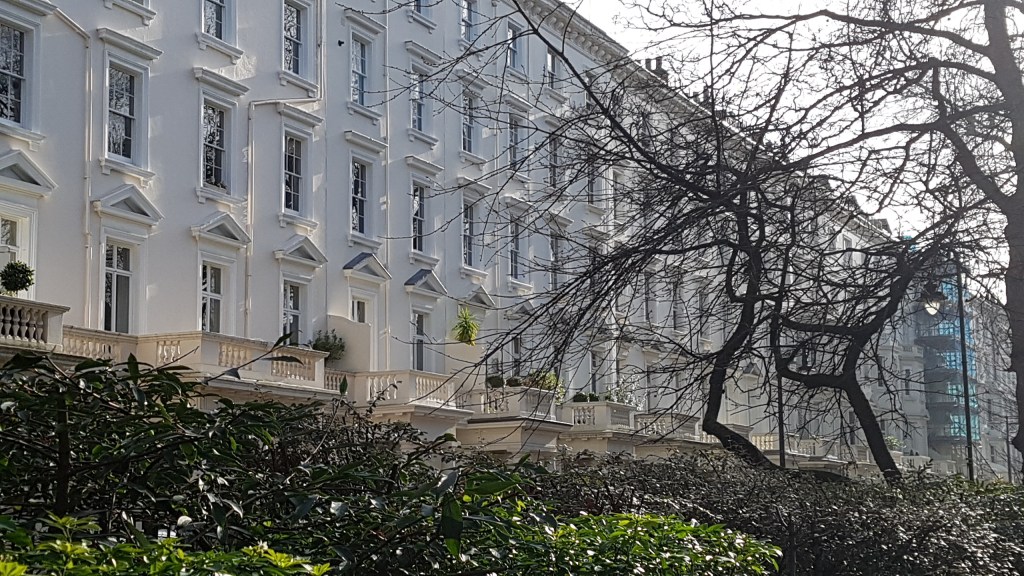
Pimlico is close to Westminster, up (or is it down) river. It started out as marsh land. Hardly anyone lived there. The Manor of Ebury (or The Five Fields) is a triangular piece of land which eventually passed into the hands of Mary Davies, who as the age of twelve married (yes, really) Sir Thomas Grosvenor in 1666. By the time of the nineteenth century there was a demand for houses and so Pimlico, not as popular as its neighbours of Belgravia and Mayfair, began a building campaign. The man to do it was Thomas Cubitt and he used reclaimed soil from St Katherine’s Dock (close to the Tower of London) to help with construction and built a grid of handsome white stucco buildings.

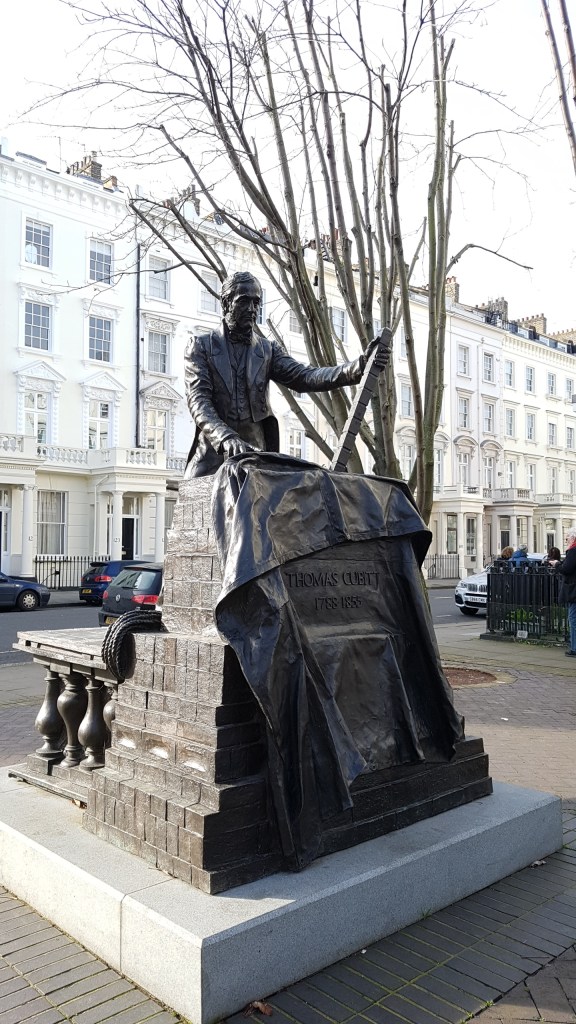
Statue of Thomas Cubitt

Cubitt preferred to be known as a builder rather than an architect. He was also consulted by Prince Albert to help redesign Osborne House. There is a statue of Thomas Cubitt in Denbigh Street.

Pimlico has three squares, all of which have their own gardens. Only one of these, St George’s, is open to the public. The other two you need keys for (the residents of the houses on those squares hold keys as it’s part of their shared gardens), and very beautiful those gardens look, too.

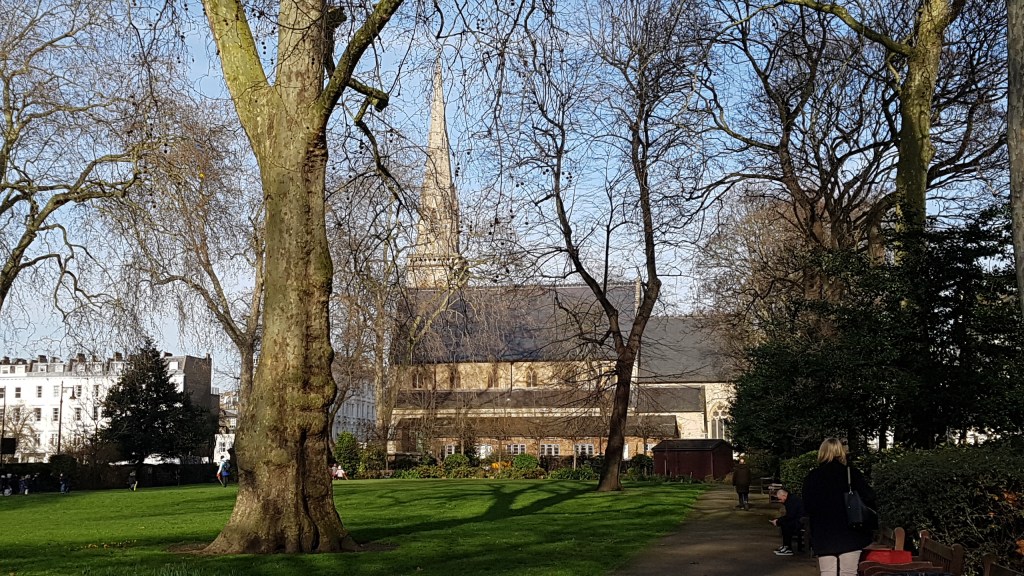
St Saviour’s Church from St George’s Gardens

We walked through St George’s garden to the right, through the trees, is St Saviour’s Church built by Thomas Cundy (Junior). This church’s claim to fame is their kindergarten in which Diana, Prince of Wales, worked before she married Prince Charles. Apparently, there is a bench in the gardens dedicated to her and the work she did there.

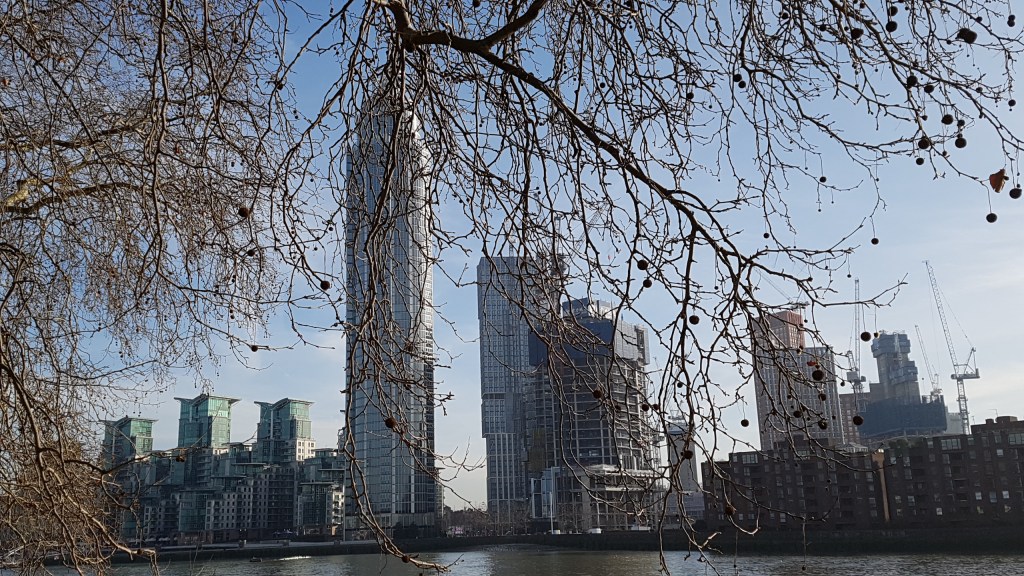
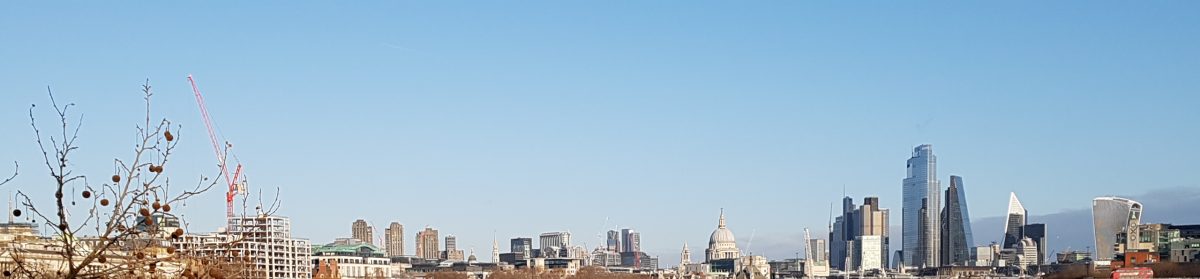
Over the road from St George’s Gardens is the River Thames. From here you can see the many tall buildings of Vauxhall, including the 8th tallest in England. Unfortunately, in 2015 a helicopter clipped to top of this in fog one morning killing several people. At one time there was a landing stage, or pier, leading from the Thames to St George’s Square, very nice for the residents! Today there is Pimlico Gardens with a statue of William Huskisson, a politician who unfortunately became the first person to be killed in a train accident, that train being Stephenson’s Rocket.

The 8th tallest building

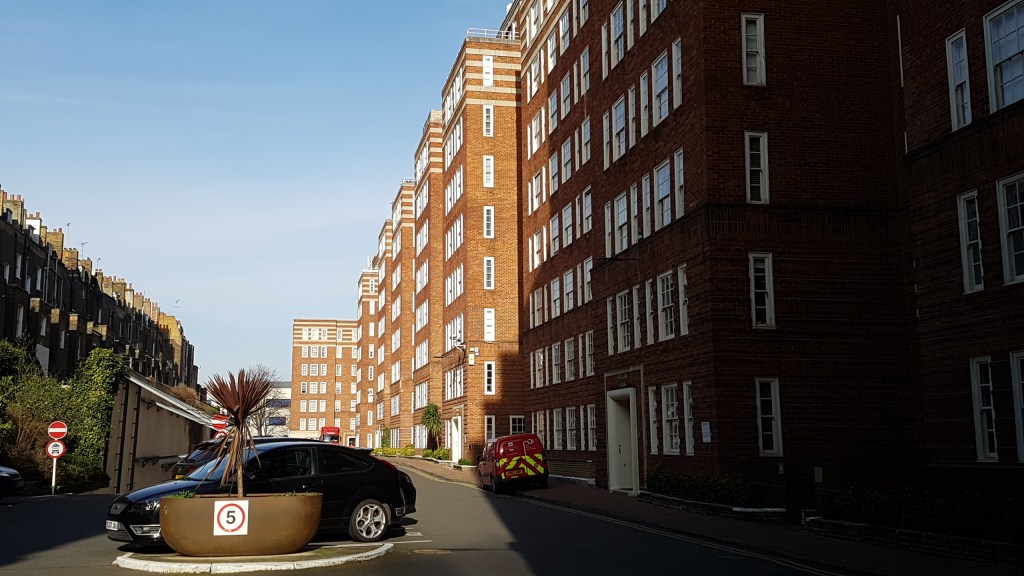
There is a great mix of housing in Pimlico, the beautiful buildings of Cubitt, new (1960’s) award winning estates near St James the Less Church, and the Churchill Gardens estate which boasts Grade I Listed status. There is even a line of Grade I Listed telephone boxes. One estate, the Dolphin, has its own shops and a swimming pool. Being close to Westminster it was popular with MP’s, but also housed a spy, Oswald Mosley and Diana Mitford.

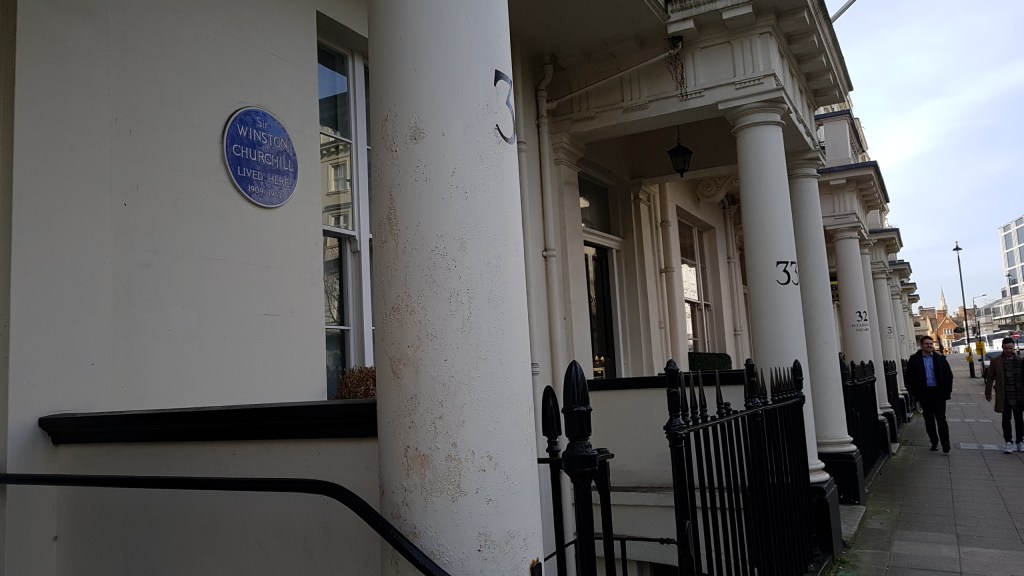
Nearby in Eccleston Square, is where Winston Churchill himself lived and where his first two children were born. Next door is the Labour Party’s former Headquarters from where they ran their 1926 General Strike Campaign.

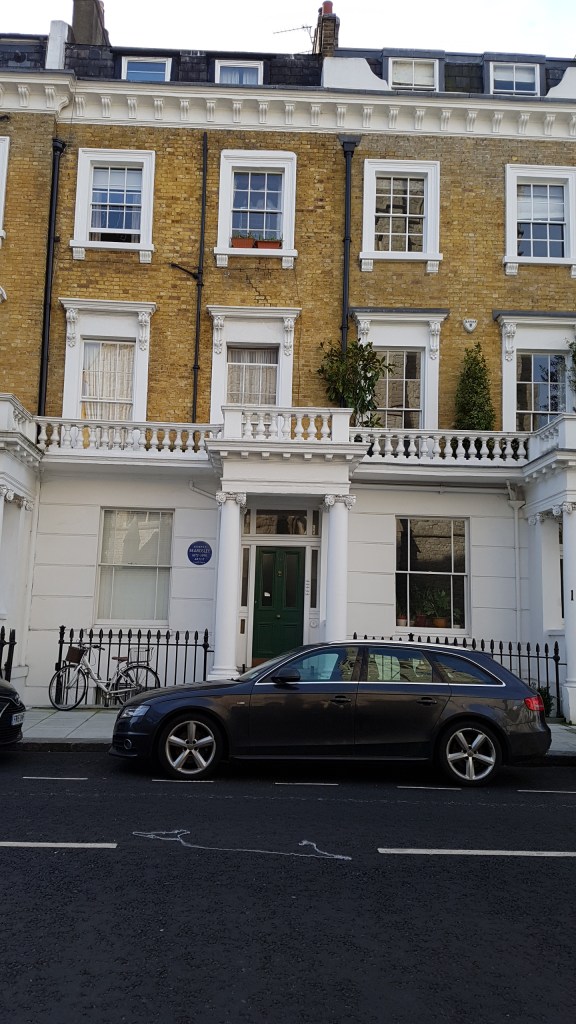
There are other famous people who once lived from Pimlico, including the man who invented Lawn Tennis (Major Walter Wingfield), Laura Ashley, Michael Costa (conductor of music) and Aubrey Beardsley (artist).

Aubrey Beardsley’s house

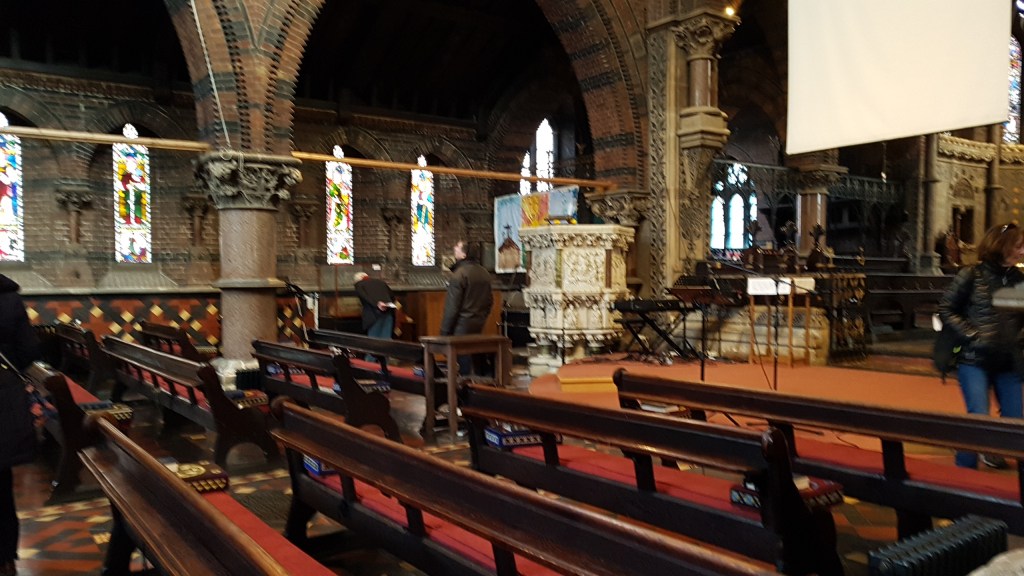
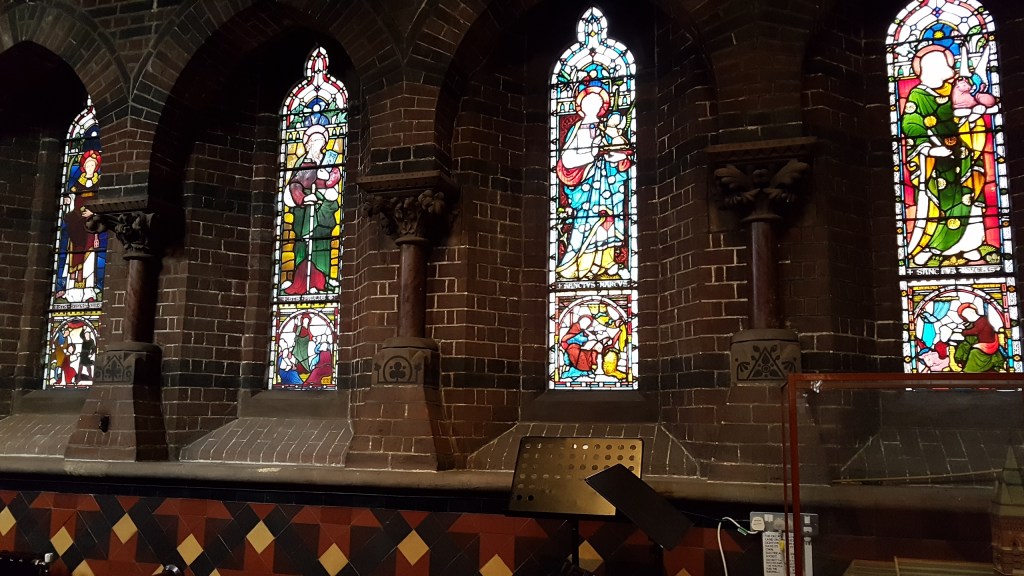
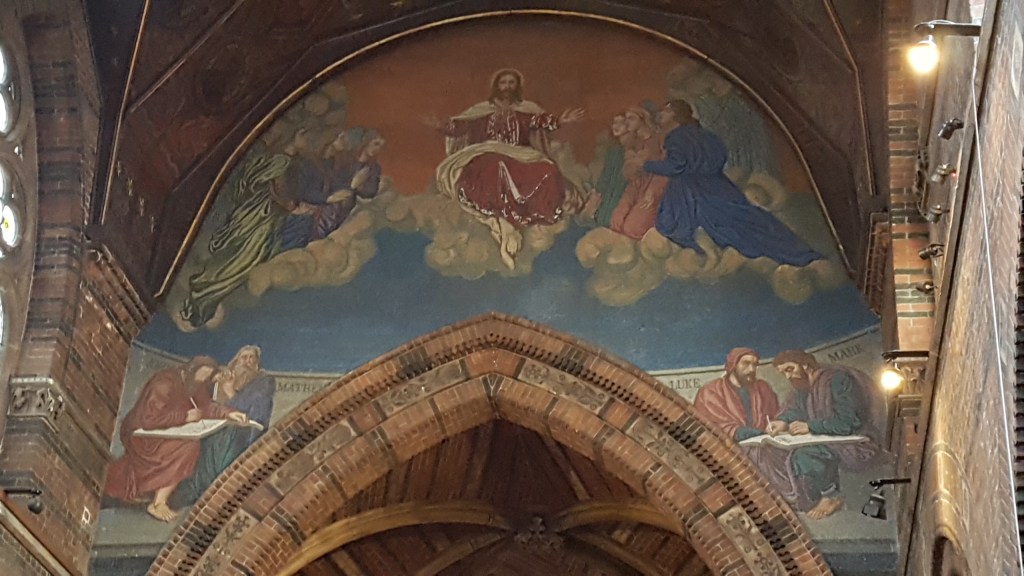
Finally, we ended our walk at St James the Less, a very unusual church. Very dark inside but the detail is amazing – the ironwork, bricks (same brick as the estate it adjoins) and it has the lovely artwork by George Frederic Watts, a Victorian artist of the aesthetic movement. Originally a painting, the paint began to come apart, so the work was made into a mosaic. Being a fan of the aesthetic movement, I was delighted to come across this.

Mosaic by G F Watts

This was the end of the walk and back at Pimlico tube station we said our goodbyes and went our separate ways. Pimlico may be small but it is more interesting than I ever knew.

St James the Less, Pimlico
Dolphin Court
Thomas Cubbit housing, St George’s Square
One of the listed estates
The Packington Estate by St James the Less has won numerous awards for best estate. Each unit has its own balcony or garden

Wandle Trail – River Walk (Wandle Park to Carshalton Ponds)

Wandle Park, Croydon

What do you do on a bright and frosty day? You pack a rucksack with a flask of hot chocolate and head out for a walk. The map for this walk can be downloaded from the Merton Council website, or follow it in the book London Waterside Walks. The whole walk is around twelve and a half miles (Croydon to the Thames), but we actually started in Wandle Park (where you pick up the river) as we travelled on the tram. Our aim was to walk to Carshalton Ponds and then review whether to continue to Merton Abbey Mills (the river eventually meets the Thames at Wandsworth, but that’s for another day!) In fact, we did end our walk at Carshalton Ponds.

The beauty of this walk is that there are various places you can drop out and catch a bus, train or tram. If you are travelling from a London terminal, trains run from Victoria to East Croydon from where you can walk or catch the Wimbledon bound tram and get off at Wandle Park.

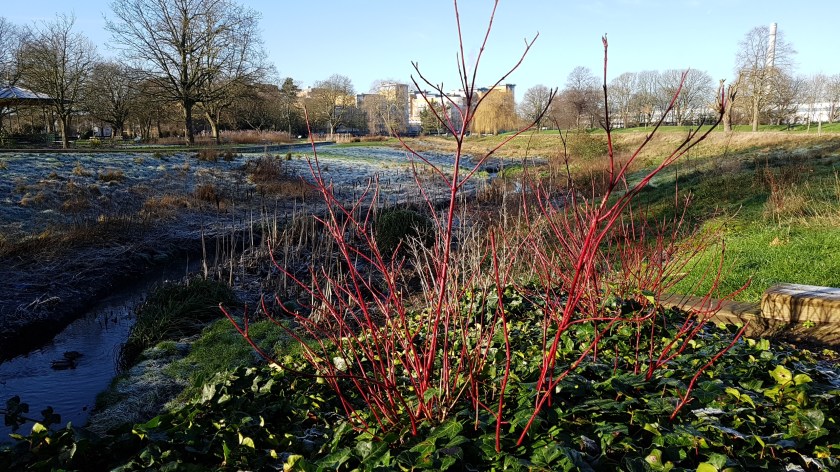
The River Wandle winds through the park until it disappears underground through the distant housing estate.

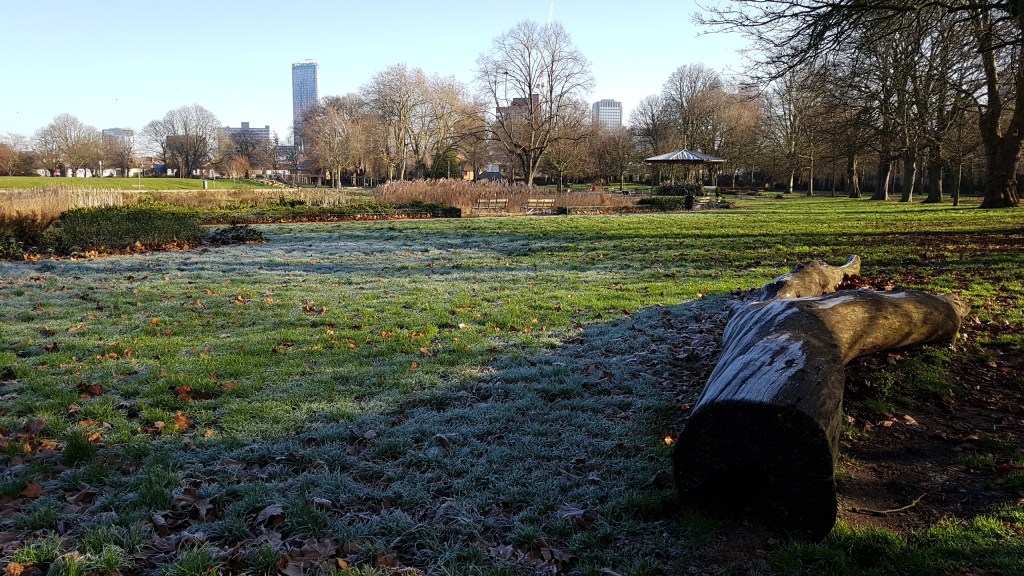
Wandle Park looked pretty with the sun on the frost. A stones-throw from the busy town of Croydon with its many shops, the Whitgift Centre and Fairfield Halls, the park is an oasis with playpark, bandstand, lake, grassed areas, skatepark, and of course, the river. This is where it begins, running through the park before going underground through a housing estate and meeting again at Waddon Ponds.

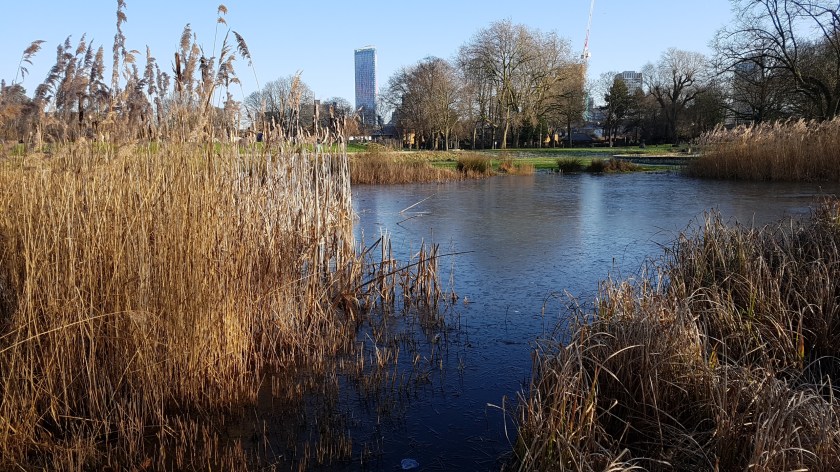
Frozen lake in Wandle Park, Croydon

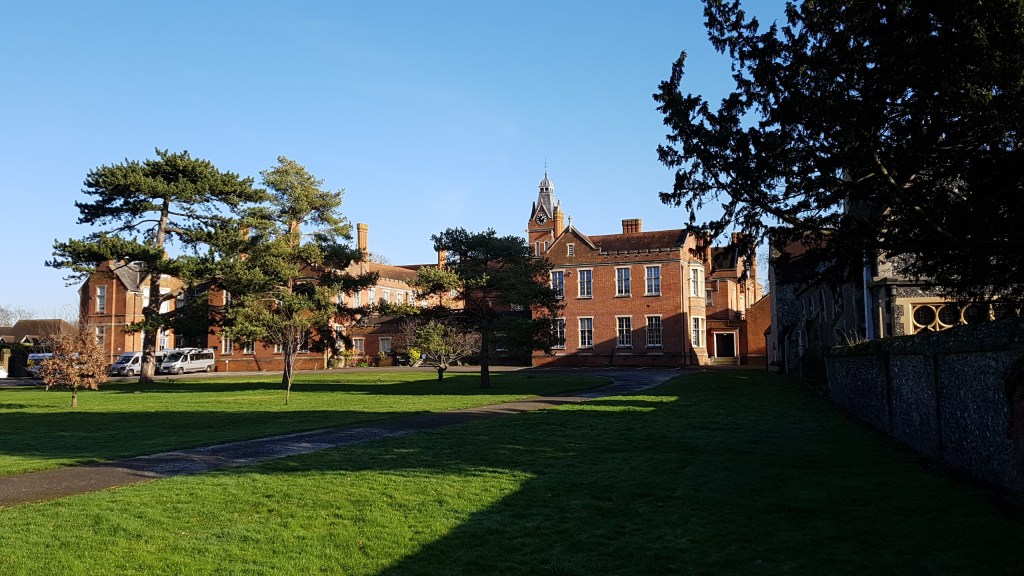
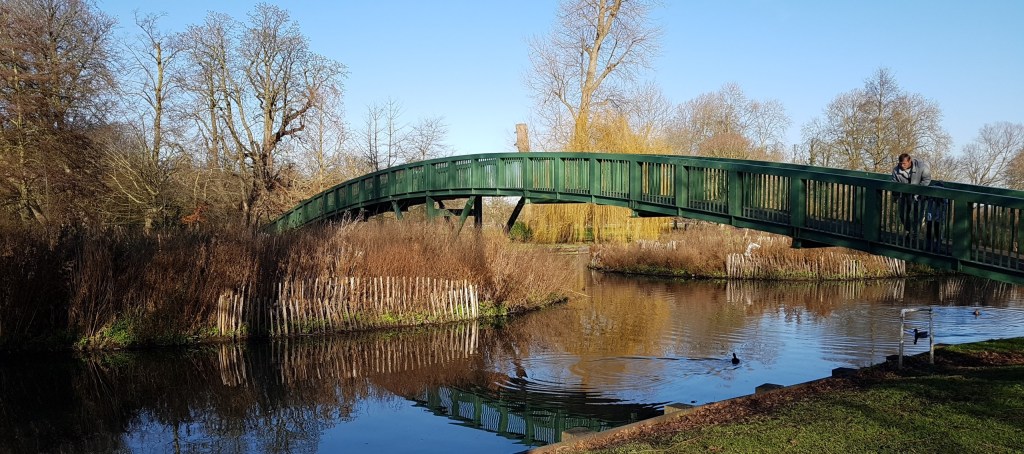
Waddon Ponds is a beautiful area hidden away behind the industrial estate off Purley Way. With benches, lookout points, a little bridge, this must be a great place to unwind in the spring and summer. You can circle the ponds before setting off to Beddington Park. This huge park (94 acres) is now split into several sections. In the past it was part of a deer park and Carew Manor and is mentioned in the Doomsday Book. It was sold off to pay family debts. It is now Council offices and an Academy.

Waddon Ponds
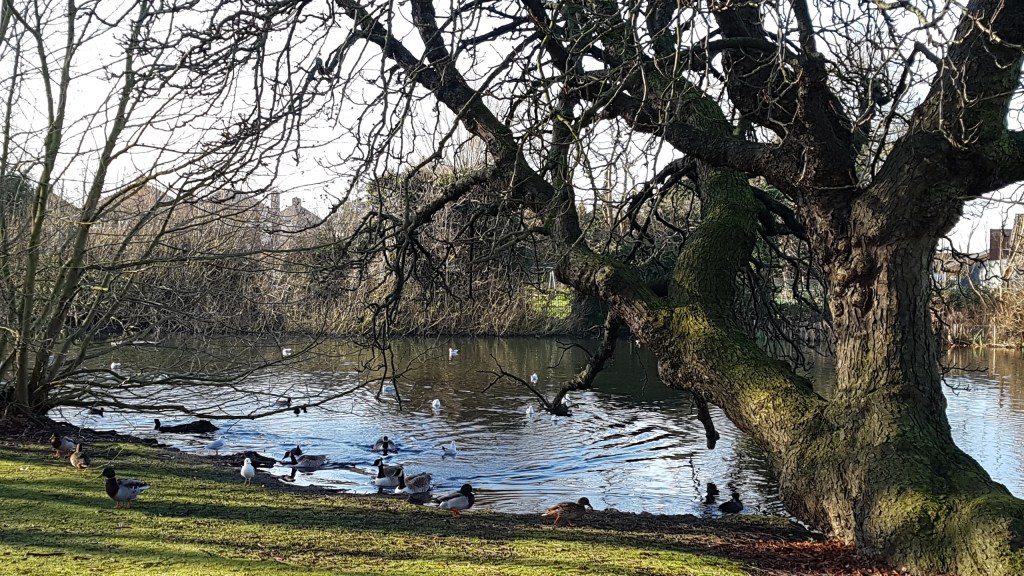
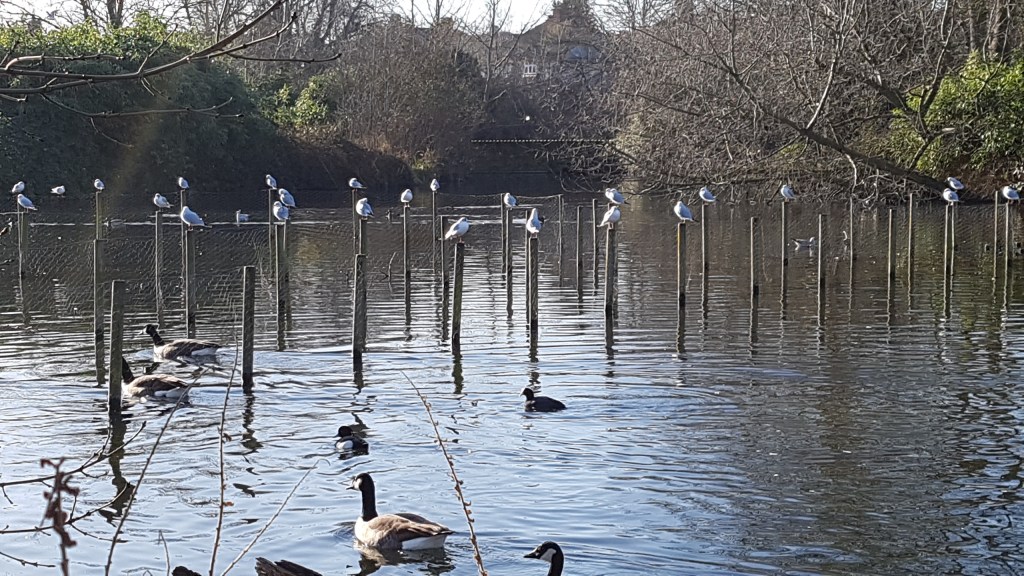
Gulls at Waddon Ponds

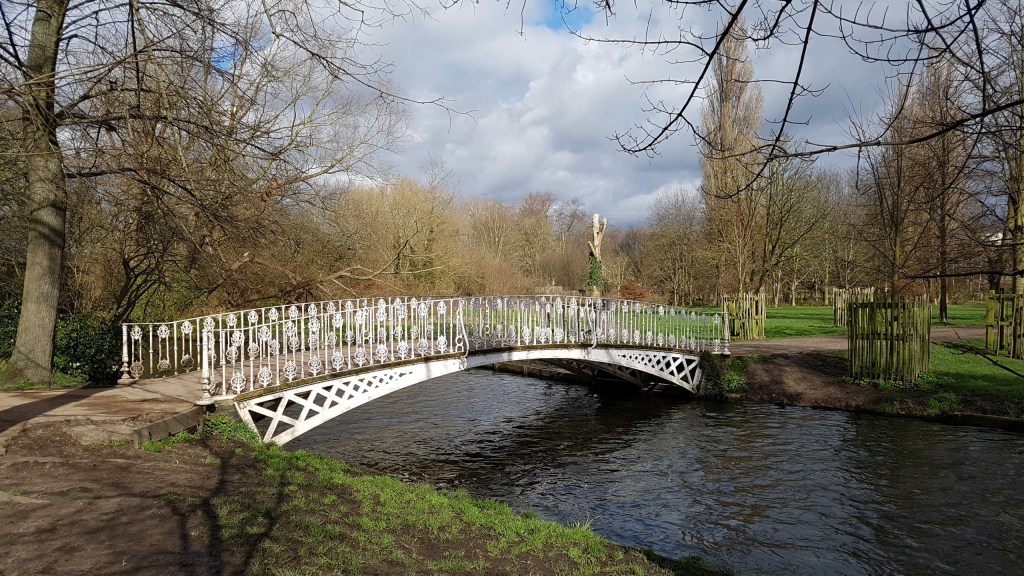
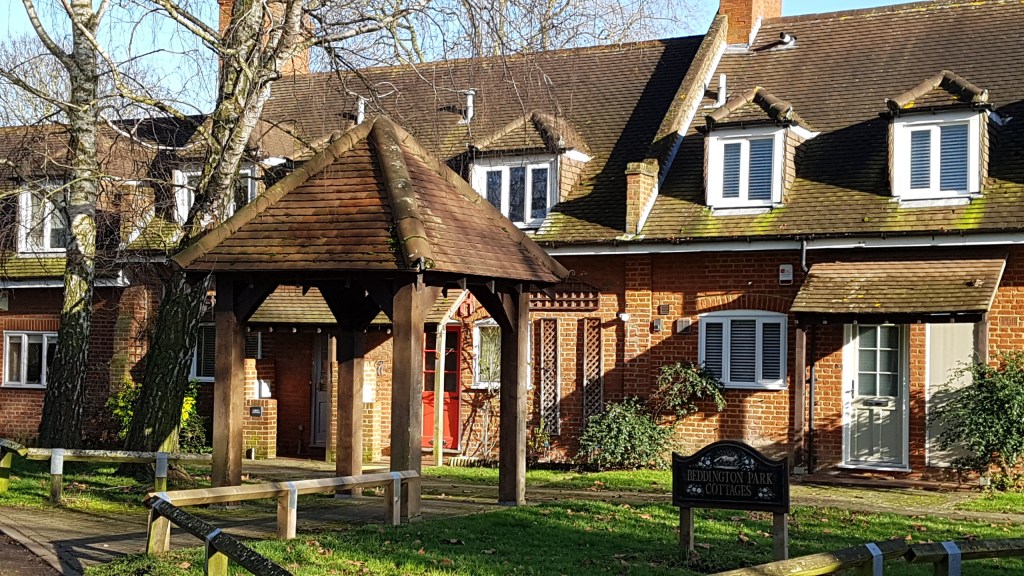
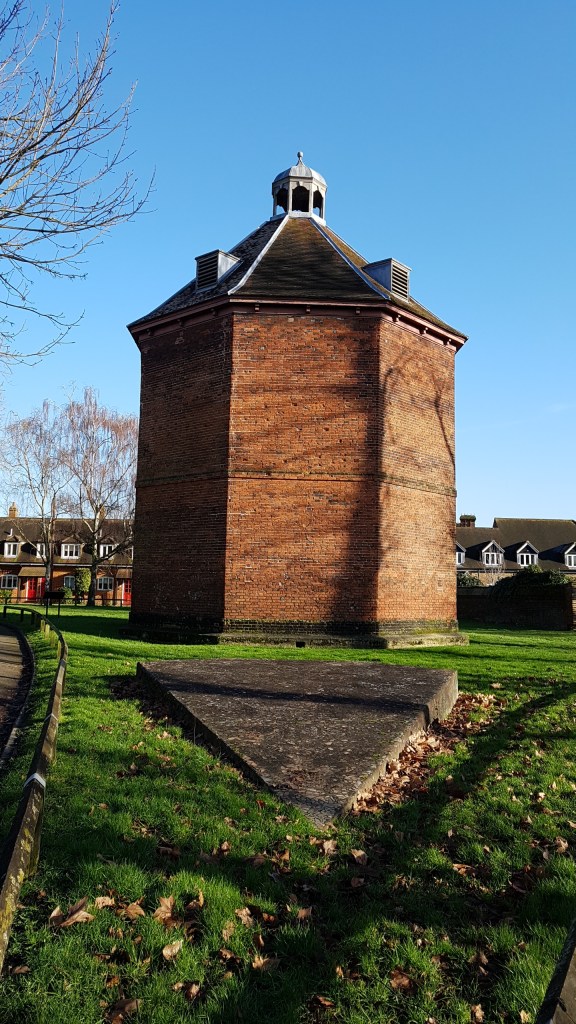
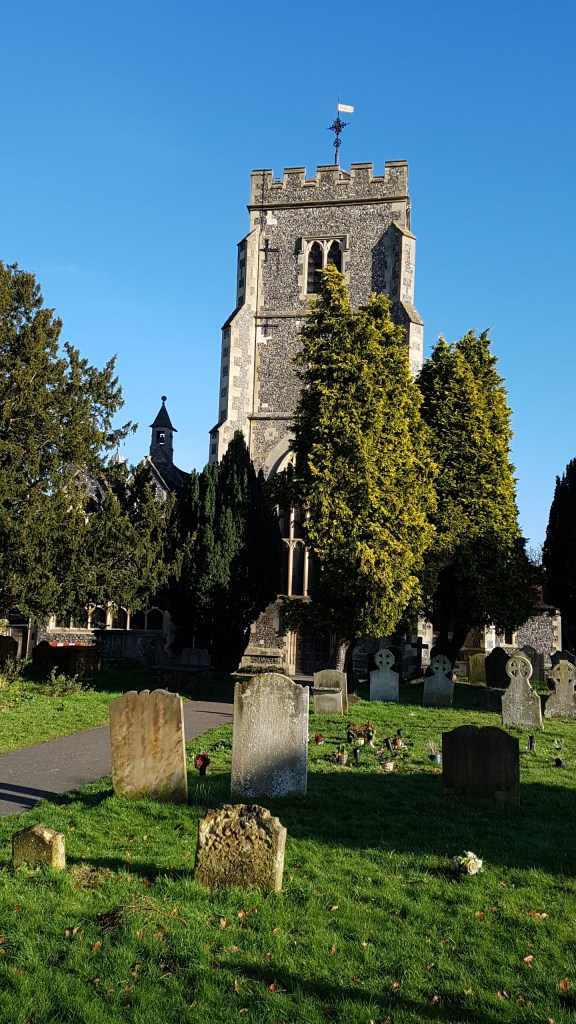
Following the river through the minor sections of the park it meanders before tumbling down weirs and passing a row of cottages. When you arrive at the main section of the park where the Manor House is, it opens up to reveal playing fields where Sunday football was taking place. Hence the Pavilion was busy (we were going to stop for food but the queue trailed outside), and the toilets appeared to be locked! Nearby is a Dovecote and St Mary’s Church before you double back over the Terracotta Bridge and head up river where we encountered some very muddy ground. We continued to Elm Pond and in to Grove Park (adjacent to Westcroft Leisure Centre) where there is a café and toilets (finally!). From here it is just a short walk to Carshalton Ponds where we ended our journey. Across the pond is Honeywood Museum which dates back to the 17th century. You will find lots of history about the area inside, and I can recommend the café!
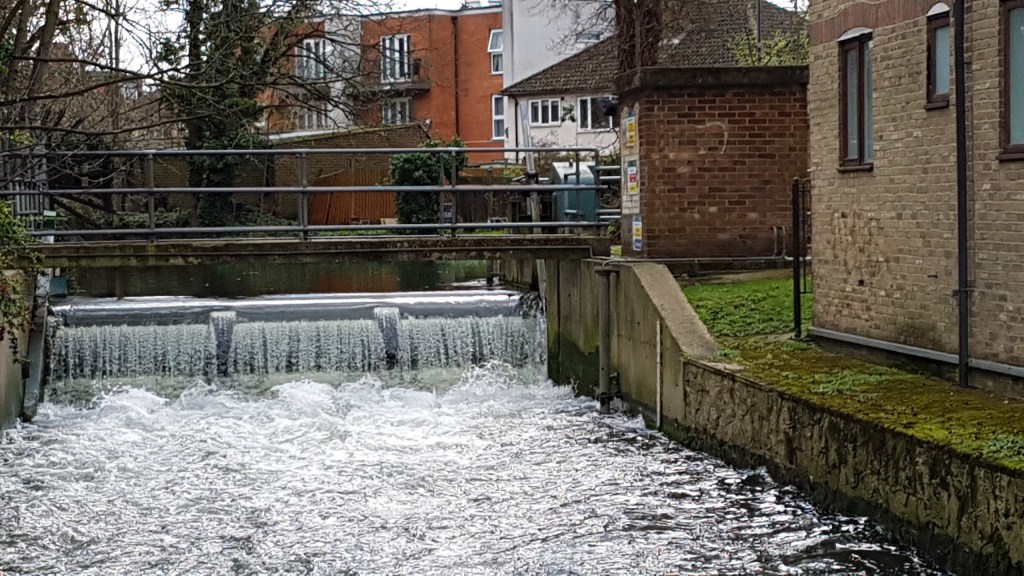
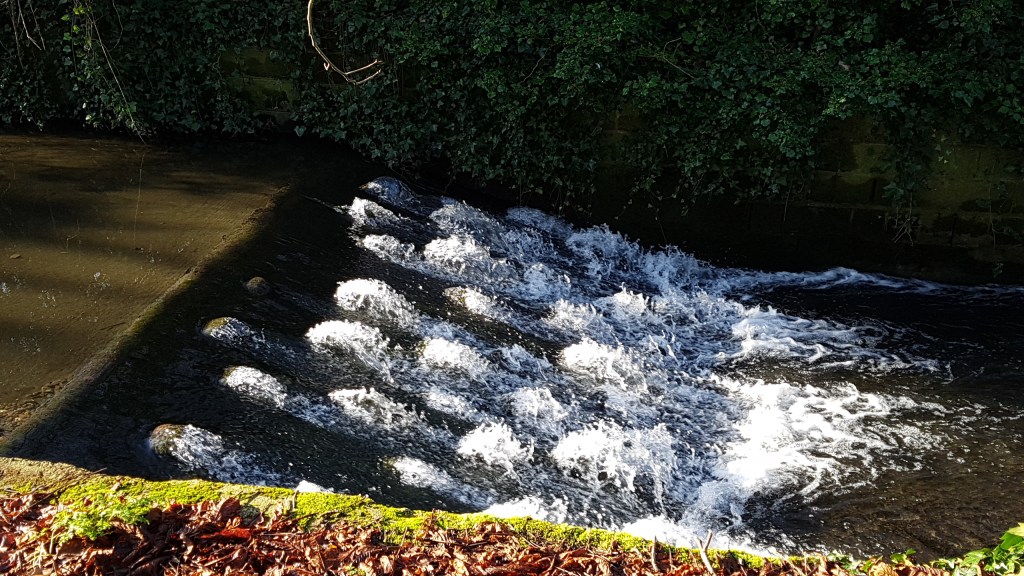
Pretty weir through a minor section of Beddington Park
Carew Manor
St Mary’s Church
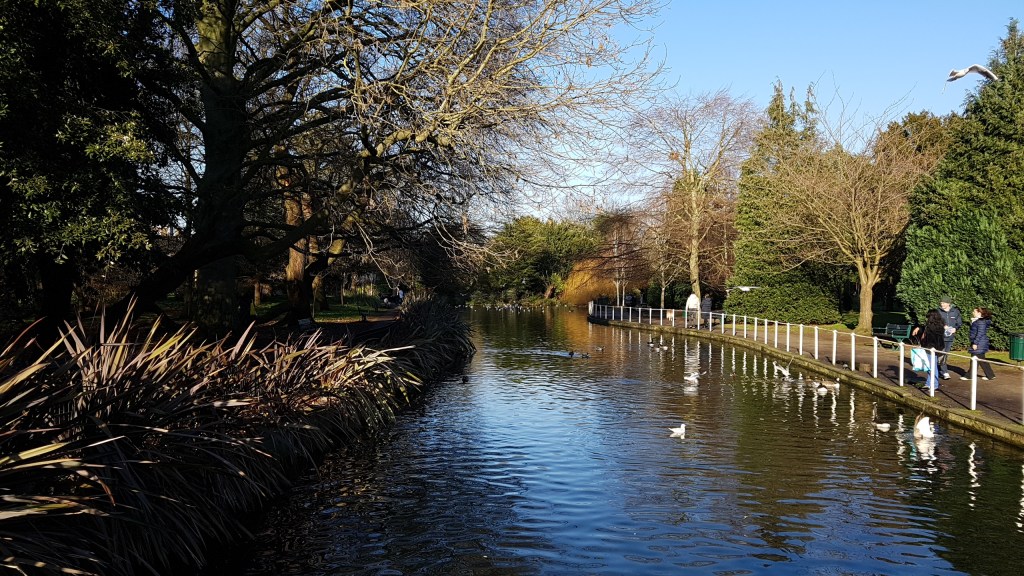
Carshalton Ponds
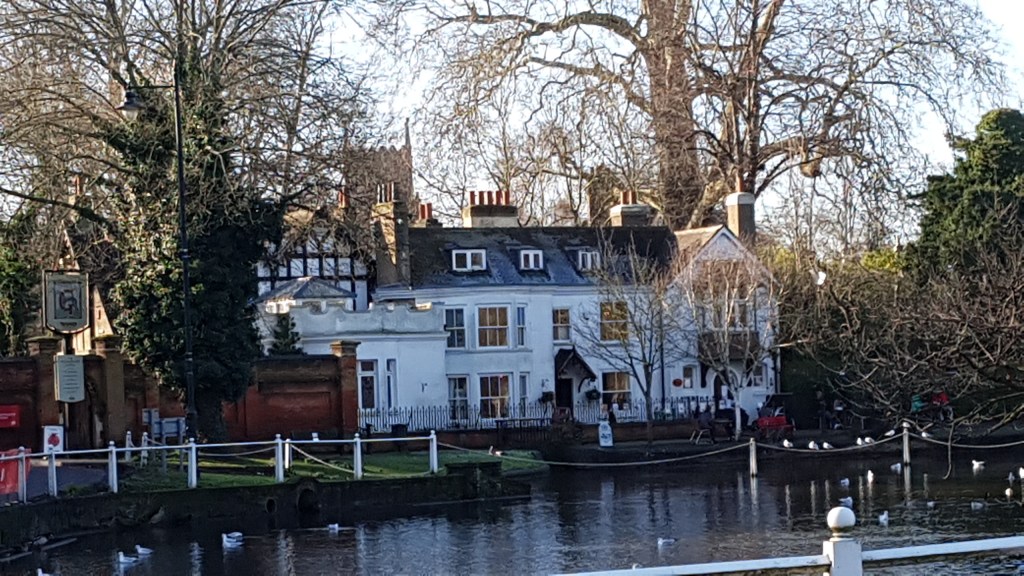
Honeywod Museum, Carshalton
Design a site like this with WordPress.com
Get started